Start With the Mill’s Wastewater and Reuse Requirements
For a Colombian sugar mill, biological treatment selection should begin with wastewater variability, solids loading, available land, reuse goals, and sludge handling—not a single generic reactor choice. The strongest local evidence comes from a southwest Colombian mill where an anaerobic pond followed by a secondary anoxic pond removed 73–82% of BOD, with 53–70% of that removal occurring in the anoxic pond (Water Science & Technology, 2000). MBR may suit constrained sites requiring compact treatment, while DAF or coagulation can protect biological systems from variable solids and dissolved sugars. A Colombian reuse study also shows that physicochemical suitability does not eliminate microbiological controls. The practical route is to screen options, establish site-specific influent data, and confirm performance through pilot testing.
Before comparing equipment, assemble at least 12 months of hourly or campaign-representative flow, BOD, COD, TSS, pH, temperature, and dissolved-sugar data. Include normal cane processing, factory cleaning, shutdown, startup, and abnormal operating periods; otherwise the design may average away the conditions that determine biological instability.
Use the commercial reference values only as screening bounds: BOD 5,000–20,000 mg/L, COD 10,000–40,000 mg/L, TSS 2,000–10,000 mg/L, and pH 4–7 (HydroChemix, Sugar Mill Wastewater Treatment Guide, 2026-08-15). These are general sugar-wastewater values, not a Colombian design basis. The design basis must reflect the mill’s measured influent envelope, biodegradability, nutrient balance, permit conditions, receiving water, and reuse pathway.
Define the decision question before selecting a route: discharge compliance, irrigation reuse, water recovery, land-constrained expansion, or replacement of an unreliable pond system. Treat reusable effluent separately from a discharge-compliance case. In the Cali study, irrigation waters met the cited physicochemical guidelines, but the two wastewater effluents did not meet WHO microbiological guidelines for E. coli and helminths; additional human-exposure controls were therefore required (Madera et al., Environmental Technology, 2009).
| Design input | Minimum evidence to obtain | Decision question | Evidence status |
|---|---|---|---|
| Flow and loading | At least 12 months of hourly or campaign-representative flow, BOD, COD, TSS, pH, temperature, and dissolved sugars | Which biological route remains stable at measured peaks? | Site measurement required |
| Screening wastewater range | BOD 5,000–20,000 mg/L; COD 10,000–40,000 mg/L; TSS 2,000–10,000 mg/L; pH 4–7 | Where does the mill fall relative to broad sugar-wastewater conditions? | Commercial screening values only (HydroChemix, 2026-08-15) |
| Land and hydraulics | Available area, elevations, gravity-flow feasibility, climate, and local operating capacity | Are ponds practical, or is compact treatment necessary? | Site engineering input required |
| Reuse pathway | Receiving water, irrigation controls, exposure pathway, and required effluent quality | Which additional treatment and monitoring steps are necessary? | Permit and reuse assessment required |
| Sludge handling | Expected biological solids and chemical sludge; authorized handling route | Can the mill dewater, transport, and dispose of the residues? | Local waste-management input required |
Compare Ponds, MBR, and Combined Biological Routes
The Providencia case provides the clearest Colombian pond benchmark: an anaerobic pond followed by a secondary anoxic pond removed 73–82% of BOD overall, with 53–70% of BOD removal occurring in the anoxic pond (Water Science & Technology, 2000). That performance makes ponds a credible benchmark, but not a default selection. The same study reported problems with biological design, construction, operation, and maintenance, and noted that unsatisfactory pond operation contributes to malfunction.
Pond selection is therefore a land, climate, hydraulic-retention, local-operations, and maintenance decision. It is most defensible where there is sufficient land, gravity-fed flow can be maintained, climate performance is acceptable, and operators can sustain biological activity and solids removal. A replacement project should not simply reproduce the original arrangement without identifying the design or operating weakness that caused the existing system to fail.
Evaluate a suspended-growth MBR when footprint, integrated solids separation, and reuse potential dominate the decision. The available catalog describes an integrated MBR membrane bioreactor range of 10–2,000 m³/day with submerged PVDF filtration below 1 μm. Those specifications support initial equipment screening, but they do not establish site capacity. Final sizing must reflect measured flow, organic loading, biodegradability, nutrient balance, membrane flux, fouling control, cleaning, and replacement provisions.
Evaluate a combined route when suspended solids, colloids, oil and grease, or floatable material could overload or destabilize the biological stage. The commercial guide places DAF or sedimentation after coagulation and flocculation in its general sugar-wastewater sequence and identifies screening and equalization as the first steps (HydroChemix, 2026-08-15). A DAF pretreatment system may therefore be appropriate ahead of biology, subject to jar testing and a solids balance.
Do not select a reactor from generic BOD ranges alone. Confirm organic biodegradability, nutrient balance, pH-correction requirements, peak loads, and final reuse criteria during engineering design. For industrial food-processing wastewater, see MBR versus activated sludge for industrial food-processing wastewater as a separate comparison; it does not replace Colombian site data.
| Decision criterion | Anaerobic and anoxic ponds | Suspended-growth MBR | DAF or solids pretreatment plus biological treatment |
|---|---|---|---|
| Land requirement | High; area availability is central to selection | Compact footprint relative to ponds | Includes equipment footprint plus civil and sludge-handling areas |
| Local performance evidence | Providencia, Colombia: 73–82% overall BOD removal; 53–70% occurred in the anoxic pond (2000) | No directly comparable Colombian mill result was supplied | No directly comparable Colombian mill result was supplied |
| Suspended solids | Requires pond solids accumulation and removal controls | Provides integrated separation but remains sensitive to fouling and pretreatment needs | Use when solids or colloids threaten biological stability |
| Operational risk | Design, construction, operation, and maintenance problems were documented in the Colombian case | Requires membrane monitoring, cleaning, control, and replacement planning | Adds chemical dosing, solids handling, and sludge-management interfaces |
| Best fit question | Is sufficient land and local operating capacity available? | Are compact treatment and integrated solids separation priorities? | Will variable solids compromise the biological stage? |
| Required confirmation | Hydraulic retention, climate, local operations, land, and sludge route | Measured influent envelope, flux, fouling, nutrients, pH, and reuse criteria | Jar tests, peak loads, chemical demand, sludge balance, and pilot performance |
Protect Biology with Equalization and Solids Pretreatment
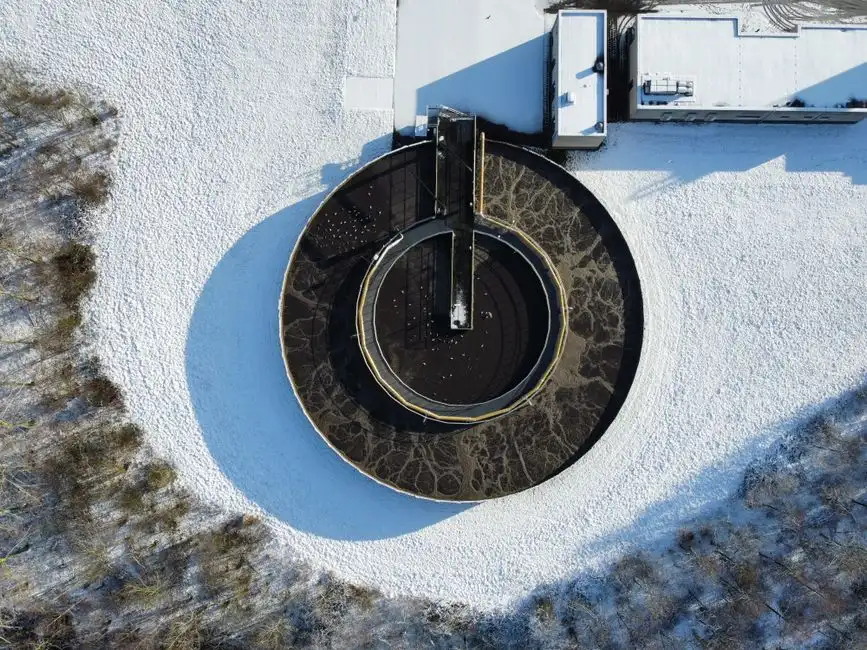
Equalization and solids control determine whether the selected biological route receives a stable feed. Install or verify coarse screening before pumps and downstream biological equipment, then confirm that the equalization basin can smooth both flow and concentration peaks. HydroChemix identifies screening and equalization as the first steps in its sugar-wastewater treatment sequence (2026-08-15), while the Colombian Providencia study identified design, construction, operation, and maintenance problems in pond systems (Water Science & Technology, 2000).
Size equalization around measured campaign and cleaning peaks, not the average production flow. The available screening ranges show how broad sugar-wastewater conditions can be, but they do not describe the mill’s own peak duration, temperature, dissolved-sugar concentration, or hydraulic shock. Obtain those records before fixing tank volume, pumping capacity, aeration, or biological retention time.
Consider DAF when suspended solids, colloids, oil and grease, or floatable material threaten downstream biology. HydroChemix presents coagulation, flocculation, and DAF or sedimentation as a general sequence, and the available equipment catalog includes 13 DAF models from 4–300 m³/h; this is an equipment range, not a recommendation to install DAF at every mill. A pilot should establish solids capture, clarified-water quality, chemical demand, recovered sludge volume, and effects on biological loading.
Use automatic dosing only with a jar-tested chemical strategy and controlled pH. HydroChemix lists PAC at 50–500 mg/L and PAM at 0.5–3.0 mg/L as screening dosage ranges, while expressly requiring actual dosing to be determined by jar testing (2026-08-15). Confirm chemical compatibility, storage, dosing equipment, mixing, and fail-safe controls.
Plan sludge separation early. Chemical pretreatment can add sludge, while the biological route creates excess biomass. Both require an authorized handling route, and the decision should identify whether dewatering, storage, transport, and final disposal are included in the project scope. Treating sludge as an afterthought can change both the footprint and the operating cost of the selected route.
Build a Site-Specific Pilot and Acceptance Plan
A pilot must test the proposed biological route under normal production and representative cleaning conditions. One production campaign alone may not capture the variability indicated by the broad screening ranges in HydroChemix’s commercial guide (2026-08-15). Select a test sequence that includes operating peaks, pH excursions, low flows, solids shocks, and the temperature conditions expected at the mill.
Track BOD, COD, TSS, dissolved sugars, pH, temperature, flow, biomass settleability, membrane flux or pond solids accumulation, and sludge production. For an MBR, include fouling trend, cleaning frequency, membrane condition, and replacement observations. For ponds, include solids accumulation, odor, surface condition, hydraulic residence, and the ability to remove accumulated solids. For a combined route, measure the effect of DAF or settling on both organic loading and biological stability.
Set project-specific acceptance criteria after confirming the receiving water, reuse pathway, Colombian permit, and client operating requirements. The values COD below 250 mg/L, BOD below 30 mg/L, and TSS below 30 mg/L appear in HydroChemix (2026-08-15) as typical examples; they are not verified Colombian permit limits and should not be copied into a bid or compliance statement without confirmation.
For irrigation reuse, include microbiological monitoring and exposure controls rather than relying only on BOD, COD, TSS, sodium absorption ratio, or electrical conductivity. The Cali study found acceptable physicochemical results but E. coli and helminth levels that did not meet the cited WHO guidelines, requiring additional human-exposure controls (Madera et al., Environmental Technology, 2009).
The pilot report should compare predicted full-scale energy, chemical, labor, maintenance, sludge-disposal, and land requirements. Accept the route only if measured performance, operability, and residual risks support the same objectives as the commercial model.
Define the Supplier Scope and Commercial Acceptance Criteria
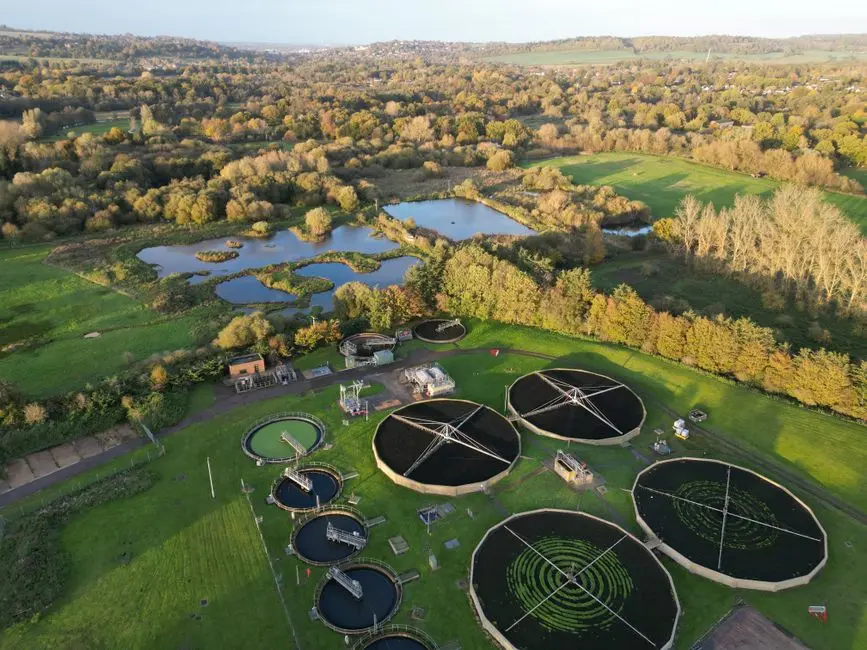
Require every bidder to state the design flow, campaign peak, design influent range, treatment objective, receiving-water or reuse route, and applicable Colombian permit basis. Without those inputs, prices and guarantees are not comparable because they may describe different treatment obligations.
Separate the bid into equipment supply, civil works, installation, commissioning, operator training, biological media or seed supply, membrane replacement provisions, chemicals, and long-term spare parts. Require guaranteed treatment performance tied to the agreed influent envelope, together with documented testing and acceptance protocols.
Clarify whether sludge dewatering is included and require a named disposal route. Where industrial sludge dewatering is selected, the plate and frame filter press can be evaluated as an alternative route, but its inclusion must follow the selected solids-handling strategy rather than being added as an unqualified accessory.
Do not convert generic chemical-cost context into a local budget. HydroChemix (2026-08-15) presents chemical cost ranges for sugar wastewater, but also states that actual dosing and cost require site-specific characterization. Require quotations based on measured wastewater, jar-test results, local chemical prices, expected operating hours, sludge route, and the selected treatment train.
| Bid item | Supplier response required | Buyer acceptance check |
|---|---|---|
| Design basis | Flow, campaign peak, influent range, treatment objective, receiving water or reuse route, and Colombian permit basis | Inputs match site records and the agreed compliance route |
| Scope boundary | Equipment, civil works, installation, commissioning, training, seed or media, chemicals, spares, and membrane replacement | No critical interface or long-term obligation is omitted |
| Performance guarantee | Guaranteed outcomes within the agreed influent envelope | Testing method, sampling points, duration, correction rules, and remedy are documented |
| Sludge route | Named handling, dewatering, transport, and disposal route | Capacity and responsibility align with the pilot solids balance |
| Commercial cost | Itemized capital and operating costs based on the selected train and site data | Assumptions, exclusions, chemical prices, energy, labor, maintenance, and sludge costs are visible |
Frequently Asked Questions
How should biological treatment for Colombian sugar mills be sized?
Size the biological stage from measured campaign and cleaning peaks, with at least 12 months of hourly or campaign-representative flow, BOD, COD, TSS, pH, temperature, and dissolved-sugar data. The broad BOD, COD, TSS, and pH ranges in HydroChemix (2026-08-15) are screening values only. The supplier must show how the proposed hydraulic and organic loading, retention time, nutrients, pH correction, membrane area or pond volume, and solids capacity follow from the site envelope.
When is an MBR more suitable than a pond for a sugar mill?
Choose an MBR when compact treatment, integrated solids separation, and reuse potential are priorities, subject to confirmation of biological loading, nutrients, pH correction, membrane fouling, and replacement costs. Choose ponds when sufficient land, gravity-fed hydraulic residence, and locally supportable operation-and-maintenance capacity are available. The Providencia pond system removed 73–82% of BOD overall, but the same study documented design, construction, operation, and maintenance problems (Water Science & Technology, 2000), so the low-footprint choice is not automatically the lower-risk choice.
What should a supplier provide to prove route suitability?
Request a Colombian site pilot covering normal production and representative cleaning periods, together with a permit-specific design basis and proposed acceptance protocol. The pilot should document BOD, COD, TSS, dissolved sugars, pH, temperature, flow, settleability, membrane flux or pond solids accumulation, sludge production, energy, chemicals, labor, maintenance, and land needs. Do not treat the illustrative COD, BOD, and TSS values in HydroChemix (2026-08-15) as verified legal limits; obtain the applicable Colombian permit conditions and receiving-water or reuse requirements.
What cost information is needed before approving a biological treatment budget?
Ask for an itemized quotation based on the selected route, measured wastewater, pilot-confirmed chemical demand, local prices, energy, labor, maintenance, and sludge handling. HydroChemix (2026-08-15) supplies generic chemical-cost context, but it also states that actual dosing and cost require site-specific characterization; therefore, a generic chemical price alone cannot support a defensible budget. For irrigation reuse, add microbiological acceptance criteria and exposure controls, because the Cali effluents did not meet the cited WHO microbiological guidelines (Madera et al., Environmental Technology, 2009).