
Identify the wastewater source and intended outcome
Peru aquaculture wastewater treatment should be selected according to the waste source, treatment objective and downstream reuse or discharge route—not by equipment type alone. Pond systems can generate effluent during harvesting and water exchanges, while aquaculture operations also accumulate fish waste. Research in Lima and elsewhere in Peru has examined fish farming with treated municipal wastewater, including tilapia, carp and prawn, although much of the cited evidence dates from 1987–1995. A current project therefore needs site-specific characterization and verified Peruvian permit requirements before selecting biological treatment, solids separation, UF or MBR equipment.
Start by separating the streams that the facility may combine. Fish waste and accumulated solids, feed residues, pond-exchange water, harvest effluent and washdown water should not be treated as one hydraulic load unless the facility genuinely combines them. Rutgers identifies pond effluent during harvest and water exchange as significant events, while its aquaculture source also identifies accumulation of fish waste as an inherent production problem. Separating these streams allows the equipment supplier to define a design basis for solids capture, organic loading and flow variability rather than relying on an average daily flow.
Define the destination before defining the equipment. A permitted discharge requires the applicable limit, receiving-water conditions and monitoring program. Irrigation or another non-potable reuse requires an end-use specification and acceptance of the residual solids. Aquaculture reuse requires additional consideration of water quality and microbiological risk. The historical Lima status report examined aquaculture using treated municipal wastewater with tilapia, carp and prawn, but it does not establish the current requirements of a new Peruvian facility.
The same limitation applies to the wider Peru evidence. The NAGA article was published in 1995 and reported technical, economic and social feasibility for growing fish with wastewater; its statement that such farms could recover 100% of wastewater treatment costs is not evidence of present-day project economics. The 1987 Lima report documents earlier studies, not a current design or permitting standard. Before selecting a treatment train, obtain the permit category, receiving water or reuse destination, applicable discharge or reuse criteria, monitoring parameters and responsible authority. An MBR versus activated sludge comparison can then be read as a general process comparison, not as a substitute for site-specific compliance review.
Map each waste source to its treatment barrier
Each aquaculture stream must be matched to a specific removal mechanism before equipment is compared. The supplied Peru studies do not provide universal concentration limits or a single process train suitable for every fish-farming discharge, so source characterization must supply the missing design inputs.
| Waste source | Dominant issue to verify | Preliminary treatment barrier | Decision condition |
|---|---|---|---|
| Fish waste and accumulated solids | Captured organic solids and variable solids loading | Solids separation followed by the required biological or disposal route | Use when the permit or reuse destination requires controlled solids removal |
| Feed residues | Suspended material and organic load | DAF or clarification; biological treatment if organic reduction is required | Use when solids and colloidal material dominate the removable load |
| Pond-exchange water | Variable flow, solids and water-quality constituents | Flow equalization followed by route-specific treatment | Use when exchange volume and event frequency determine equipment capacity |
| Harvest effluent | Intermittent solids-rich discharge | Pretreatment with hydraulic and organic buffering | Use when harvest events produce peaks that exceed normal operating conditions |
| Reuse water | Fine particles, microorganisms and reuse-specific criteria | MF/UF or MBR, potentially followed by the required disinfection stage | Use only after the receiving use and acceptance criteria are defined |
Evaluate biological wastewater treatment for organic-load reduction or integration with multi-trophic production. Rutgers describes Integrated Multi-Trophic Aquaculture as a system in which organisms consume other organisms’ by-products to create a more balanced system. That supports biological treatment as part of an aquaculture strategy, but it does not establish a universal process configuration for a Peruvian facility.
Use DAF pretreatment when high solids, oil and grease, FOG or colloidal material dominate the removable load. The supplied equipment catalog specifies DAF systems from 4–300 m³/h across 13 standard models for suspended solids, FOG, oil and grease and colloidal matter.
Use an integrated MBR treatment system where a compact biological stage and membrane separation are both required. The same catalog specifies MBR systems from 10–2,000 m³/day with submerged PVDF membranes and near-reuse-quality effluent at less than 1 μm filtration.
Request representative laboratory results for suspended solids, organic loading, nutrients, salinity, pathogens and the reused-water demand. If these data are missing, treatment selection remains preliminary; neither historical feasibility nor a generic equipment description can establish current compliance.
Compare biological, DAF and membrane treatment routes
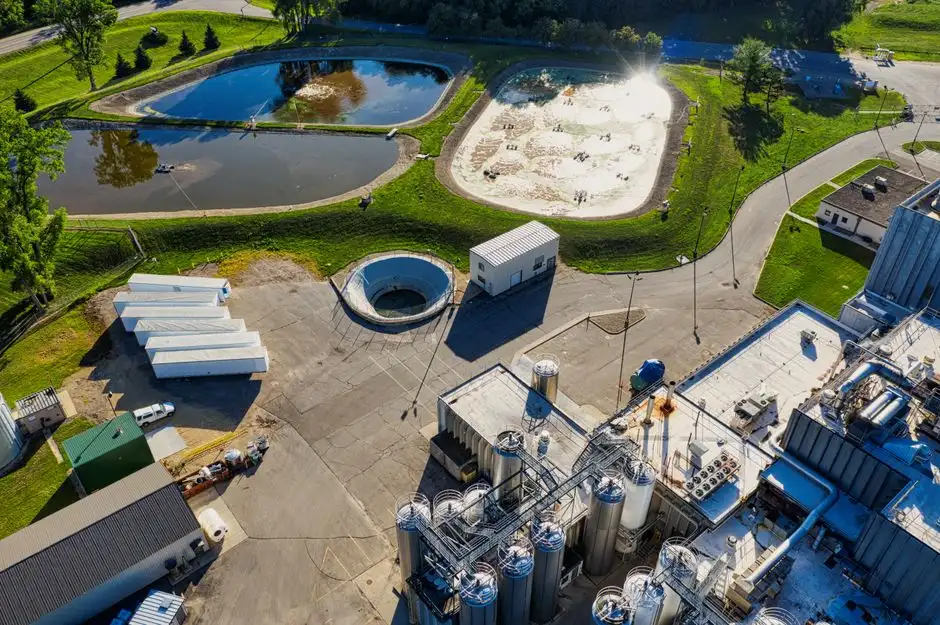
Biological, solids-removal and membrane routes solve different barriers and should be compared by the function each performs in the proposed train. A biological-first route is appropriate when organic-load reduction is the priority; DAF is a pretreatment option for removable solids and floatable material; MBR combines biological treatment with membrane solids separation; UF can provide a downstream fine-particle barrier. None should be selected from equipment capacity alone.
| Route | Primary fit | Supported specification | Main screening question |
|---|---|---|---|
| Biological treatment | Organic-load reduction and aquaculture-compatible integration | The Rutgers source supports biological treatment within an integrated aquaculture strategy but provides no universal configuration | Does the organic load and reuse objective justify the biological stage and its operating requirements? |
| DAF pretreatment | Suspended solids, colloids, oil and grease or FOG removal | 4–300 m³/h across 13 models, according to the supplied equipment catalog | Are the flow basis and contaminant mass load appropriate for DAF duty? |
| MBR | Compact biological treatment plus membrane separation | 10–2,000 m³/day, submerged PVDF membranes and filtration below 1 μm, according to the supplied equipment catalog | Does the reuse or discharge specification justify membrane operation, controls and maintenance? |
| UF | Downstream fine-particle, bacteria or colloid barrier | 2,000–40,000 L/h, 0.03 μm PVDF membranes, automatic backwash and air scour, according to the supplied equipment catalog | Does the final-water specification require UF, and is its pretreatment feed compatible? |
The biological route should remain open when organic reduction and an aquaculture-compatible process are the priorities. The supplied Rutgers evidence supports biological methods within Integrated Multi-Trophic Aquaculture, but it does not justify a fixed aeration basin, retention time or loading rate.
DAF should be screened as pretreatment when suspended solids, colloids, oil and grease or FOG dominate. Its catalog range of 4–300 m³/h and 13 models is a selection aid, not proof that any model fits the site. Confirm the design flow, peak event, solids capture, chemical demand, sludge route and treatment duty with the supplier.
MBR should be screened where compact biological treatment, automation, membrane solids separation and near-reuse-quality effluent justify the added process requirements. The catalog states a 10–2,000 m³/day capacity and a footprint 60% smaller than conventional systems; this is supplier-published equipment information, not a field result for a Peruvian aquaculture site.
UF should be considered as a downstream barrier when the reuse specification requires very fine particle, bacteria or colloid removal. The supplied catalog specifies 2,000–40,000 L/h, 0.03 μm PVDF membranes, automatic backwash and air scour. Feed quality, cleaning demand and backwash-water disposal still require verification.
Use this comparison only as a preliminary screen. Final selection needs hydraulic data, influent characterization, operating hours, reuse targets, footprint and sludge-disposal arrangements. Where two routes remain viable, compare their complete operating obligations rather than nominal effluent quality alone.
Build a site-data and equipment-screening checklist
A preliminary equipment recommendation is not defensible until the site inputs and supplier commitments are written in the same design basis. The following checklist assigns each missing input to the party best positioned to provide it.
| Input | Evidence required | Responsible party | Procurement use |
|---|---|---|---|
| Design, peak and minimum flow | Operating records, water-exchange volumes, harvest discharge frequency and operating hours | Facility operator | Sets hydraulic capacity, equalization and duty cycle |
| Influent characterization | Representative laboratory results for solids, organics, nutrients, salinity and microbiological risk | Environmental consultant and qualified laboratory | Sets the treatment barrier and process loading |
| Reuse or discharge target | Permit category, receiving water or reuse destination, applicable criteria and monitoring parameters | Permit holder and relevant Peruvian authority | Defines required performance and compliance risk |
| Site constraints | Available footprint, installation access, utilities and electrical supply | Facility operator and design engineer | Eliminates infeasible equipment layouts |
| Equipment commitment | Flow basis, process stage, duty cycle, automation, cleaning, sludge removal, power demand, installation requirements and acceptance tests | Equipment supplier | Creates comparable commercial and technical offers |
Collect flow information before requesting equipment prices. Include the average flow, maximum day, peak event, minimum flow, operating hours, water-exchange volumes and harvest discharge frequency. A low annual average can conceal a concentrated harvest discharge, while a high design flow without equalization may cause short-circuiting, washout or unstable biological operation.
Obtain representative influent and reuse-target data from a qualified laboratory. Select sampling periods that capture normal production and the events that drive peak loading. The parameters should follow the identified treatment barriers rather than a generic parameter list.
Confirm current discharge or reuse requirements with the relevant Peruvian authority or permit holder. The historical Peru research supports feasibility studies, not current site-specific obligations. Use a wastewater compliance and pretreatment framework to organize the permit and pretreatment questions, while relying on Peruvian regulatory confirmation for the applicable answer.
Ask every supplier to state the flow basis, process stage, duty cycle, automation scope, backwash or sludge-removal arrangement, power demand, installation requirements and acceptance tests. Missing inputs should remain explicitly assigned: the operator supplies flow and operating records, the environmental consultant supplies characterization and permit interpretation, and the supplier supplies guarantees and equipment drawings.
Plan sludge handling and operational verification
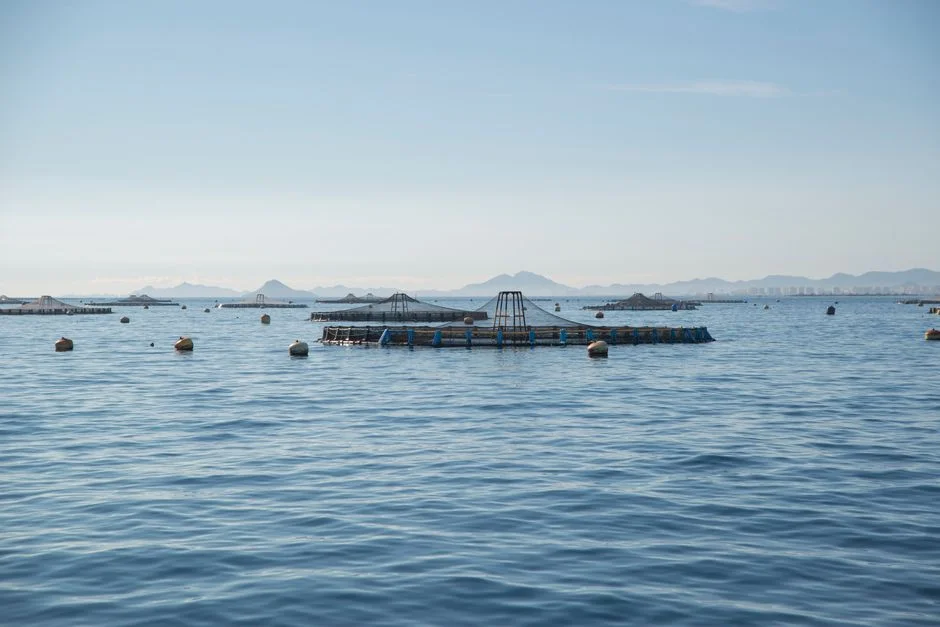
A treatment train is incomplete until the concentrated solids stream has a destination. Aquaculture generates fish waste, and any solids captured by DAF, clarification or membrane separation must be removed, contained and disposed of through an identified route. The equipment comparison should therefore state the expected solids stream, removal frequency, storage method and responsible operator.
Evaluate a lamella clarifier when solids separation requires a compact, high-rate stage. The supplied catalog specifies surface loading rates of 20–40 m/h and chemical consumption up to 30% lower than conventional clarification. Those are catalog specifications, not guaranteed site performance. Confirm them against the actual solids inventory, hydraulic profile and treatment objective.
Operational controls should be defined before acceptance. Specify automatic controls for feed, flow and backwash or sludge removal; membrane cleaning intervals; aeration requirements; power-interruption responses; and high-solids event handling. Include the consequences of equipment failure for the receiving environment, the reuse destination and the production schedule.
Require startup, performance and operating demonstrations tied to the agreed flow, influent range and reuse or discharge criteria. The acceptance protocol should define sampling points, test methods, operating conditions, corrective actions and the evidence needed to demonstrate sustained performance. A high-efficiency sedimentation system can be assessed as a solids-separation option only after those test conditions and residual-sludge arrangements are agreed.
Frequently Asked Questions
What information is required before recommending aquaculture treatment equipment?
Request representative wastewater data, the flow record and a defined discharge or reuse objective. If any one is missing, equipment selection remains preliminary. This is especially important for Peru because the historical evidence documents earlier reuse feasibility but does not define current site-specific design or permit conditions.
How should the operating budget for a treatment route be compared?
Ask each supplier for a total operating-cost breakdown covering biological media or reagents, aeration, membrane cleaning, solids handling, energy, maintenance and final water disposal. No supported project quotation is provided here, so the buyer should request current, site-specific prices with the flow basis, duty cycle and sludge route stated. Do not convert historical reported cost recovery into a present budget assumption.