
What Conditions Should Decide the Treatment Choice?
MBR is the stronger option for Chattanooga pharmaceutical wastewater when land is constrained, effluent consistency is critical, or water reuse is a project goal. Conventional activated sludge (CAS) generally fits stable, high-flow projects with available land, a lower initial capital budget, and no advanced reuse requirement. MBR combines biological treatment with membrane solids separation, while CAS uses aeration and gravity clarification. Neither technology alone resolves pharmaceutical removability, pretreatment needs, or discharge compliance. The final choice should follow a site-specific wastewater characterization, permit route, reuse objective, footprint, and lifecycle-cost review.
The comparison for MBR versus conventional activated sludge for pharma wastewater in Chattanooga begins with conditions that can reverse the technology decision. Academic research on pharmaceuticals in CAS and MBR treatment does not provide a transferable removal percentage for an unidentified plant, so compound removability and biological toxicity must remain characterization questions. A stream containing inhibitory solvents or cleaners, for example, may require pretreatment before either biological process can be evaluated.
Use this screening rule: favor MBR when space is constrained, reuse is required, or stringent effluent consistency is essential; retain CAS as a credible option for large, stable flows with available land and lower initial capital as a priority. The MBR cost per m3 guide provides a useful basis for developing a project-specific lifecycle comparison, but not a Chattanooga price.
| Project input | Evidence required | Decision effect | Responsible owner |
|---|---|---|---|
| Design and peak flow | Hourly flow records, production schedule and future capacity | Determines hydraulic loading and whether MBR capacity is credible | Operations |
| Pharmaceutical effluent composition | Relevant compounds or classes, toxicity, pH, nutrients, solids, solvents and cleaners | Identifies biological inhibition and required pretreatment | EHS and process engineering |
| Land and site constraints | Available area, geotechnical information, utilities and access | Can favor compact MBR over aeration and secondary clarification | Engineering |
| Discharge and reuse route | Permit route, sewer requirements and reuse specification | Sets the required polishing and disinfection scope | EHS |
| Budget | Initial capital and lifecycle operating allowance | Distinguishes purchase price from total project burden | Finance and procurement |
Chattanooga discharge permissions, sewer-discharge terms, geology, and other site conditions require confirmation from the responsible local authority and project designers. They should not be inferred from a general technology comparison.
Compare Biological Treatment, Clarification and Membrane Separation
CAS separates biological solids by gravity in a secondary clarifier, while MBR retains biological solids in the reactor and uses membrane filtration for solids separation. Both processes use biological treatment to reduce biodegradable organics; the downstream solids-separation method is the principal architectural difference. The supplier’s integrated MBR membrane bioreactor combines activated-sludge treatment with submerged PVDF membrane filtration and replaces the clarifier.
The supplied commercial comparison describes MBR as producing lower suspended solids, occupying less space, and maintaining more consistent effluent, while CAS is more sensitive to hydraulic and organic shocks (Eureka PatSnap, commercial comparison supplied with the research). This comparison also identifies membrane fouling and the need for specialized operator knowledge as MBR disadvantages. These are process-selection statements, not guarantees for a Chattanooga pharmaceutical installation.
| Element | Conventional activated sludge | Membrane bioreactor | Project implication |
|---|---|---|---|
| Biological treatment | Aeration tank with activated sludge | Activated-sludge reactor integrated with membranes | Both require compatible wastewater and biological control |
| Solids separation | Secondary clarification by gravity | Submerged membrane filtration; no secondary clarifier in the MBR train | MBR changes the footprint and maintenance profile |
| Effluent consistency | Clarifier performance is exposed to hydraulic and sludge-settleability changes | Membrane barrier provides consistent solids separation when properly operated | Variable influent loading still requires equalization and controls |
| Supplier specification | No comparable HydropureWater catalog specification supplied | PVDF membranes, filtration below 1 μm and a stated footprint 60% smaller than conventional systems (HydropureWater verified product catalog, 2026) | Use for preliminary supplier comparison, not final project sizing |
| Main implementation burden | Civil tanks, clarifiers, aeration, sludge handling and settleability control | Membrane systems, cleaning, controls and replacement planning | Compare complete systems rather than equipment price alone |
Membrane separation does not prove complete pharmaceutical removal, reuse suitability, or permit compliance. The supplied academic sources address pharmaceutical behavior in CAS and MBR systems, but no transferable plant-specific performance value is available. Treat compound removability as a design question requiring the relevant wastewater analysis and, where justified, bench or pilot testing.
Compare Capital Cost, Operating Burden and Implementation Risk
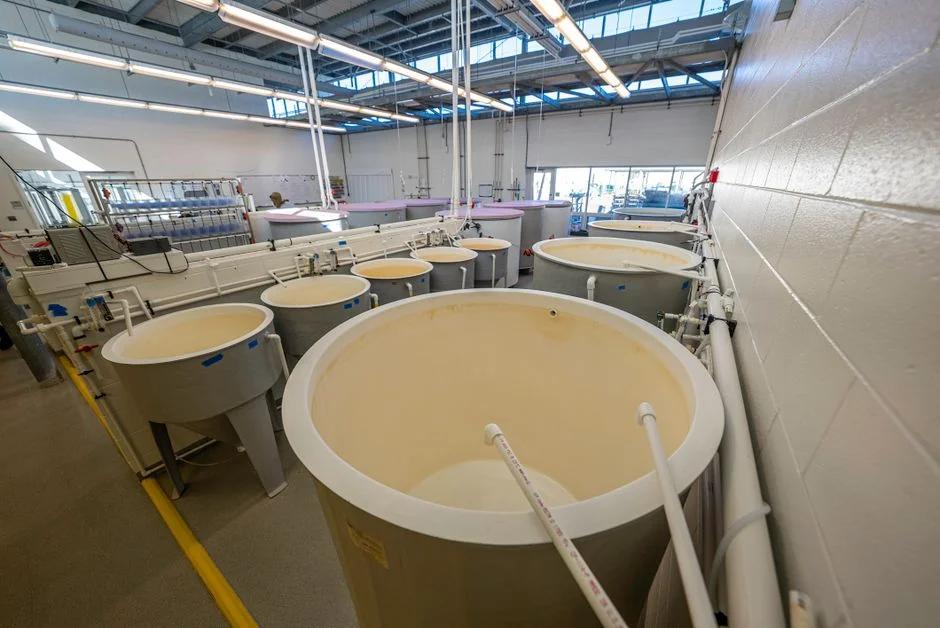
The supplied January 2026 comparison identifies higher MBR initial capital because of membrane equipment, while CAS generally requires less initial investment. The same source identifies membrane cleaning, replacement, and technical complexity as MBR operating considerations, and it describes CAS as requiring more land, clarifier maintenance, and sludge management. MBR may also reduce downstream treatment requirements when reuse-ready effluent is required (reuseinn.com, 2026-01-28). These are comparative planning statements, not a priced proposal for Chattanooga.
Do not collapse operating cost into membrane replacement alone. For MBR, request a lifecycle schedule covering cleaning, membrane replacement, energy, controls, spare parts, downtime, and operator training. The January 2026 source describes a typical membrane replacement interval of 5 to 10 years, depending on operation and maintenance; that interval is not a warranty and must not be treated as a project assumption without vendor input.
| Lifecycle item | MBR procurement question | CAS procurement question | Required quote input |
|---|---|---|---|
| Initial capital | What membrane system, tanks, controls and civil works are included? | What aeration, clarification, sludge and civil works are included? | Approved flow and wastewater characterization |
| Energy and controls | What are the connected loads, cleaning strategy and control requirements? | What aeration and pumping loads are required under the design profile? | Utilities and load profile |
| Maintenance | How are fouling, cleaning, membrane condition and downtime managed? | How are sludge settleability, clarifier and aeration maintenance managed? | O&M staffing and operating plan |
| Downstream treatment | Which polishing and disinfection steps are required for the selected route? | Which additional steps are required for the selected route? | Permit limits and reuse specification |
| End-of-life burden | What membrane replacement assumptions are in the price? | What sludge handling and disposal costs are included? | Vendor warranty and lifecycle model |
Require budgetary quotations and supplier-specific guarantees before selection. The supplied research contains no Chattanooga installation price, energy tariff, disposal cost, or total-cost-of-ownership result. A valid comparison should include civil footprint, sludge handling, downstream disinfection or reuse equipment, downtime allowances, and operator capability.
Build a Site-Specific MBR Versus CAS Decision Matrix
A decision matrix scores alternatives against project priorities without disguising missing data as a technical conclusion. Assign each criterion a weight that reflects the site’s business and regulatory priorities, score MBR and CAS against the available evidence, and document the evidence owner for every score. The location-specific MBR versus activated sludge comparison illustrates why local conditions must remain separate from generic process claims.
| Criterion | Suggested weight | MBR assessment | CAS assessment | Evidence owner |
|---|---|---|---|---|
| Effluent consistency | Project-defined | Strong when membrane performance is sustained | Clarifier and load variability must be addressed | EHS |
| Physical footprint | Project-defined | Advantage where land is constrained | Disadvantage where land is limited | Engineering |
| Reuse potential | Project-defined | Supports a more advanced biological effluent; reuse still needs polishing | Usually needs additional downstream treatment | Quality |
| Upfront capital | Project-defined | Higher initial investment | Lower initial investment | Finance |
| Lifecycle burden | Project-defined | Include cleaning, energy, controls and membrane replacement | Include aeration, sludge, clarifiers and maintenance | Operations and finance |
| Technical complexity | Project-defined | Requires membrane and controls expertise | Requires biological and sludge-management expertise | Operations |
| Load stability | Project-defined | Assess hydraulic and organic variation | Assess shock sensitivity and settling | Operations |
| Operator capability | Project-defined | Compare training and specialist support | Compare biological-process experience | Operations |
Before final scoring, require a wastewater analysis covering the relevant pharmaceutical compounds or compound classes, toxicity, pH, nutrients, solids, and solvents or cleaners that may inhibit biology. Operations should supply flow and operating records; EHS should define discharge limits and agency contacts; engineering should establish footprint, geology, and utilities; finance should define the capital and lifecycle budget; and quality should define reuse requirements.
Resolve missing pilot, vendor, or compliance evidence before assigning the final score. Generic manufacturer claims are not site-performance data. If compound behavior, membrane fouling, or permit interpretation remains unresolved, score the uncertainty explicitly and schedule the test or confirmation needed to close it.
Define the Complete Pharmaceutical Wastewater Treatment Train
The selected biological process should sit inside a complete treatment train rather than be treated as a standalone answer. Start with characterization and equalization to document pharmaceutical content, toxicity, pH, nutrients, solids, and inhibitory inputs; then use equalization to control shock loads and verify biological compatibility before selecting MBR or CAS equipment. If the discharge route or reuse specification requires additional controls, include them in the flow diagram before procurement.
The HydropureWater catalog markets an integrated MBR for municipal sewage, industrial process water, and water reuse at 10 to 2,000 m³/day (HydropureWater verified product catalog, 2026). Use that range only for preliminary supplier screening. Final sizing requires the verified design flow, peak hydraulic conditions, wastewater characterization, membrane design criteria, and vendor process calculations.
- Characterize the pharmaceutical effluent and identify inhibited or non-biodegradable constituents.
- Apply equalization and any required source controls, pretreatment, or compound-specific treatment.
- Provide the selected biological process: CAS with secondary clarification, or MBR with membrane solids separation.
- Add polishing, disinfection, or reuse treatment required by the discharge or reuse route.
- Verify final performance, controls, sludge handling, and operator response before design freeze.
Where chemical-free final disinfection is required, a UV sterilizer can be evaluated. Where pharmaceutical reuse needs further purification, an industrial RO polishing system may be relevant. Neither replaces biological treatment, and the supplied research does not establish one universal process train for pharmaceutical production wastewater.
Frequently Asked Questions
How much will MBR cost compared with conventional activated sludge for a Chattanooga pharmaceutical project?
No Chattanooga installation price or total-cost comparison is supported by the supplied research. Request separate budgetary quotations that include the selected capacity, membrane or clarification equipment, civil works, controls, utilities, pretreatment, downstream treatment, and lifecycle operating assumptions. Compare those quotations on the same wastewater and discharge basis rather than accepting a unit price without scope.
Which supplier capability matters most when selecting an MBR or CAS system?
Check whether the supplier can demonstrate sizing against the project flow and pharmaceutical wastewater analysis, define guarantees and acceptance tests, identify membrane or sludge operating responsibilities, and price the required civil, pretreatment, and downstream equipment. For MBR, also request the proposed cleaning, controls, spare-parts, and membrane-replacement strategy. For CAS, request the aeration, clarification, sludge, and settleability design basis.
Does membrane filtration remove pharmaceuticals and make the effluent suitable for reuse?
No blanket conclusion is supported. The membrane provides a solids-retention barrier, while pharmaceutical removal depends on biological treatability, compound properties, loading, and the complete treatment train. Confirm relevant constituents analytically and obtain reuse-quality requirements from the receiving use before adding disinfection or RO.
What information is needed before sizing a Chattanooga pharmaceutical treatment system?
Obtain design and peak flow, production schedules, the wastewater analysis, discharge route, reuse objective, available land, utilities, geology, local permit terms, budget, and operator capability. Operations, EHS, engineering, finance, and quality should each own the relevant inputs. Final sizing