Confirm the feed before choosing a belt press
A belt filter press can suit fruit-processing wastewater when the objective is continuous solid–liquid separation and the plant can control feed solids, remove sharp debris, condition the slurry and wash the belts. Equipment should be sized by dry-solids loading, not wastewater flow. Supplied belt-filter guidance identifies loading ranges of 40–230 kg/h/m and 300–910 kg/h/m, with typical sludge feeds at 1–10% dry solids. It also identifies four operating zones, frequent belt washing and the need to account for variable feed solids. Fruit-processing projects must first establish whether the feed is wastewater sludge or fruit/juice residue slurry.
The first decision is not whether the plant handles fruit; it is whether the belt press will receive a treatable sludge or a fruit-residue slurry. The supplied belt-filter guidance identifies mashed fruit as an application and describes use in apple juice, cider and winemaking, but it provides no fruit-specific dry-solids loading, moisture or recovery performance data (Wikipedia, Belt filter, accessed 2026). Sludge-feed guidance therefore provides a preliminary comparison point, not a performance guarantee for crushed fruit, pulp or juice-processing residue.
Request the wastewater flow, suspended-solids concentration, dry-solids mass rate, solids type, pH, oil and grease content, temperature and variation across the production cycle (S2, Wikipedia, Belt filter, accessed 2026). The same source reports a typical feed dry-solids concentration of 1–10% for most sludge types, while noting that belt presses are designed around solids capacity by mass or volume rather than wastewater flow (S2). Treat that range as a screening reference only.
| Feed classification | Evidence to collect | Selection consequence |
|---|---|---|
| Wastewater sludge | Flow, total suspended solids, dry-solids rate, pH, oil and grease, temperature and cycle variability | Use the belt filter as a candidate; size on dry-solids loading and verify feed variability. |
| Crushed-fruit or pulp slurry | Fruit solids versus inert debris, soluble solids, extractability, pH, temperature, grit and screenability | Do not transfer sludge ranges directly; test cake formation, filtrate quality and downstream use. |
| Juice-processing residue | Whether the target is extracted juice or retained solids, fibre content, solids concentration and required purity | Clarify whether the duty is a juice-extraction process or wastewater dewatering before selecting equipment. |
Where the project involves a mixed wastewater stream, use the belt-press and decanter-centrifuge sizing comparison to define alternative solids-loading bases before testing. A no-go condition is any feed whose shape, fibre content, sharpness or variability prevents stable cake formation.
Size the press by dry-solids loading
Dry-solids loading is the appropriate starting basis for belt-press sizing because wastewater flow can vary independently of the mass of solids entering the machine. The supplied guidance identifies lower loading ranges of 40–230 kg/h/m of belt width and higher ranges of 300–910 kg/h/m; these are broad belt-filter guidance values from S2, not fruit-plant performance guarantees (Wikipedia, Belt filter, accessed 2026).
- Calculate dry-solids mass flow from wastewater flow multiplied by feed dry-solids concentration, ensuring both are expressed on a consistent mass and time basis.
- Select a provisional loading basis within the supplied 40–230 or 300–910 kg/h/m range according to the feed type and test evidence. Do not choose a high-range value merely to reduce the number of belt metres.
- Calculate the provisional belt width by dividing dry-solids mass rate by the selected loading rate.
- Check the gravity-drainage constraint, cake target, filtrate recovery and feed variability before accepting the width.
S2 states that a standard gravity-drainage arrangement can be used at feed solids of 1.5% or greater, while a longer or extended drainage area should be considered for feed solids between 1.5% and 2.5% (Wikipedia, Belt filter, accessed 2026). For diluted feed below 1.5%, the same source describes an independent gravity-drainage belt. A feed near the transition therefore requires a drainage-area decision, not just a belt-width calculation.
Cake thickness is part of the hydraulic check because it affects permeability and filtration rate. S2 gives a generally applicable minimum discharge thickness of 3–5 mm and notes that horizontal belt presses are around 5 mm; cake thickness may need restriction where washing time or final moisture is critical (S2). Laboratory or pilot testing must establish the practical thickness for the actual fruit feed, together with cake moisture, solids recovery, filtrate clarity and loading.
| Worksheet field | Buyer or pilot input | Decision use |
|---|---|---|
| Wastewater flow | Average and peak production-cycle flow | Calculates dry-solids mass rate. |
| Feed dry-solids concentration | Representative and peak suspended-solids concentration | Checks gravity drainage and variability. |
| Dry-solids mass rate | Flow multiplied by dry-solids concentration | Primary belt-sizing input. |
| Provisional loading | Selected from S2 broad guidance and refined by pilot work | Converts mass rate into belt width. |
| Gravity-drainage configuration | Standard, extended or independent belt | Confirms the low-solids feed can form a stable cake. |
| Discharge cake thickness | Tested value meeting the 3–5 mm design guidance where applicable | Sets filtration-rate and washing checks. |
| Acceptance criteria | Cake moisture, solids recovery and filtrate quality | Provides a site-specific performance basis for procurement. |
Use automatic chemical dosing for flocculant and pH control only after the test identifies a repeatable dose and dilution requirement. Automated dosing does not replace conditioning validation.
Build the pretreatment and conditioning scope
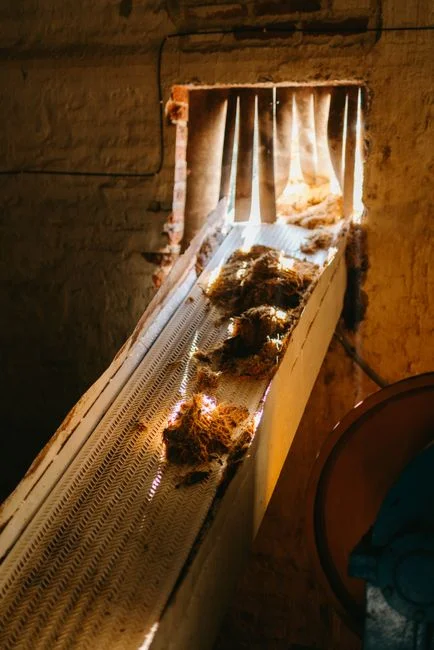
A belt-press package must protect the belts and create a stable cake; the press alone cannot correct poor screening, incompatible solids or unstable flocculation. S2 states that all feeds need screening to protect the belts from sharp objects and that high grease and oil can lower cake solids by blinding the filter (Wikipedia, Belt filter, accessed 2026).
The pretreatment sequence should normally be assessed in this order:
- Remove sharp fruit, stones, woody fragments and packaging debris. Compare a rotary mechanical bar screen with other available solids-removal methods for the actual waste stream.
- Assess whether floating oil, grease or pulp requires a physical removal step before conditioning. A dissolved-air flotation machine may be relevant where oil and floatables require separation, but the supplied research does not establish a fruit-specific DAF performance range.
- Determine polymer type, dose, dilution and mixing through conditioning tests. S2 identifies optimum polymer dosage, dilution and mixing as the basis for improved flocculation, and notes that low pH decreases flocculation (S2).
- Control feed concentration and production-cycle variability. S2 says varying solids concentration increases operator attention and may raise staffing costs (S2).
- Provide an effective belt-washing section. S2 says belts require frequent washing and that blinding reduces permeability, solids recovery and filtrate quality (S2).
| Scope item | Acceptance question | Procurement evidence |
|---|---|---|
| Screening and solids capture | Are sharp and bulky materials removed before belt contact? | Screen type, aperture basis, extracted-solids handling and captured-solids mass. |
| DAF or oil removal | Is there sufficient grease, oil or floatable material to justify the equipment? | Feed characterization, pilot removal result and waste-stream destination. |
| Flocculation | Does the selected dose and mixing method produce a stable feed? | Site-specific test with the actual fruit-processing feed. |
| pH control | Will pH remain within the tested conditioning condition? | Measured pH range and control response under production variability. |
| Belt washing | Can blinding be controlled without unacceptable water use? | Wash configuration, water source, frequency and automation. |
| Odour and volatile emissions | Does the installation need local extraction or enclosure? | Odour assessment, ventilation design and maintenance-access requirements. |
Keep chemical consumption visible in the operating-cost comparison. S2 notes that excessive polymer or mixing can increase operating expense, while flocculant cost is often a major dewatering operating cost (S2). The chemical-dosing and flocculation evaluation should therefore document actual reagent consumption under production-cycle conditions.
Match the four operating zones to the cake objective
A belt press separates water through four functional zones: preconditioning, gravity drainage, linear low-pressure compression and roller high-pressure compression (S2). The configuration should be selected around the required cake dryness, filtrate recovery and containment needs rather than around belt width alone.
Much of the dewatering occurs in the gravity-drainage zone, where S2 reports a 5–10% increase in solids concentration, with performance dependent on solids type, filter media and conditioning (Wikipedia, Belt filter, accessed 2026). Poor distribution across the belt or insufficient residence time reduces that result. The zone arrangement must therefore be matched to the feed and checked during commissioning.
Belt speed is the primary control for trade-off between cake moisture and capacity. S2 states that slower belt speed produces a drier cake but reduces capacity; adding rollers beyond the optimum does not necessarily produce a drier cake (S2). The operator must therefore set the loading and speed together while maintaining adequate solids distribution and preventing lateral overflow.
Add cake washing where filtrate recovery or downstream purity is important, but verify whether washing time requires a thinner discharge cake. For odour or volatile-emission risks, S2 describes fume hoods and gas-tight enclosures while noting that enclosure can reduce visibility, increase corrosion and require more automation (S2). Compare those implications with the alternative of comparing the belt press with a plate-and-frame filter press.
- If maximum cake dryness is the priority: reduce belt speed, verify cake thickness and confirm that the compression zone remains the bottleneck.
- If filtrate recovery is the priority: specify washing and monitor wash-water quality and consumption.
- If odour control is the priority: resolve ventilation, capture and access requirements before finalizing the enclosure scope.
- If feed variability is high: require adjustable loading and speed controls rather than relying on one fixed operating point.
Compare belt presses with alternative dewatering routes
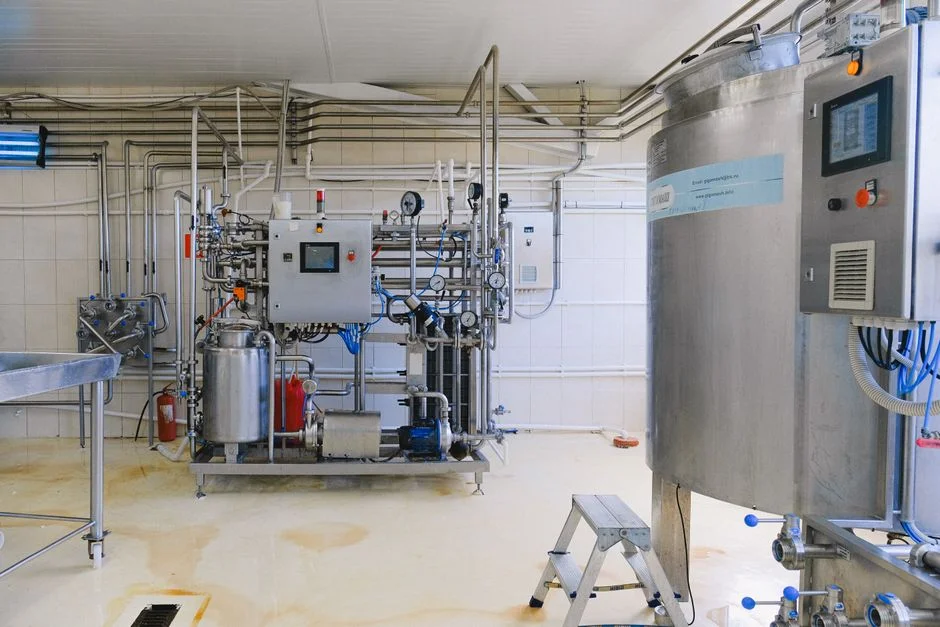
The belt press is one option within a broader dewatering train, not a default answer for every fruit-processing stream. S2 orders common options by increasing cost and decreasing product moisture as thickener, deep-bed thickening, belt press and membrane filter press; it also states that centrifuges and other technologies do not show a significant cost advantage over belt presses for the same cake dryness (S2).
| Route | Selection position | Main comparison issue |
|---|---|---|
| Thickener or deep-bed thickening | Use when the objective is concentration before dewatering rather than immediate cake discharge | Space, floor-loading requirements and downstream dewatering demand |
| Belt filter press | Use for continuous operation where the feed can form a stable conditioned cake | Dry-solids loading, cake target, feed variability, polymer use and belt washing |
| Plate-and-frame filter press | Compare where intermittent operation or a different maintenance profile warrants it | Batch cycle, cake handling, labor requirements and filtrate/cake acceptance criteria |
| Decanter centrifuge | Compare where continuous solids removal and a different feed-handling approach are relevant | Feed suitability, internal solids concentration, operating complexity and cake characteristics |
| Membrane filter press | Compare where the required dryness and operating model justify another compression route | Capital and operating cost, conditioning demand and maintenance requirements |
S2 characterizes belt presses as using relatively lower pressures than other compression filters and describes them as simple, reliable, low-staffing and easy to maintain (S2). The same source also notes that belt presses are less effective for some feeds, including feeds with variable solids content that require more operator attention (S2). Those general characteristics do not resolve the fruit-feed case.
Use these decision rules:
- If feed solids are below 1.5%, assess an independent gravity-drainage belt or upstream concentration rather than assuming a standard press configuration.
- If the feed is difficult, highly fibrous or highly variable, require pilot evidence on the actual fruit-processing stream before accepting a loading rate.
- If continuous throughput, lower-pressure operation and maintainability are priorities, the belt press remains a credible candidate.
- If batch operation or a materially different maintenance and cake-handling model is required, compare the belt press with a plate-and-frame filter press in the same cost and acceptance framework.
- If the feed is food-processing material and dewatering equipment is being selected broadly, use the dewatering-equipment comparison for food-processing solids to structure the alternatives review.
The procurement scope should close only when the selected route has a documented feed basis, an agreed solids-loading calculation, site-specific conditioning and pilot results, and acceptance criteria for cake moisture, solids recovery and filtrate quality. Without those inputs, a supplier’s broad loading range is not enough to establish suitability for fruit-processing wastewater.
Frequently Asked Questions
How should a belt filter press for fruit processing wastewater be sized?
Size it by dry-solids mass rate, not wastewater flow. The supplied guidance gives broad loading ranges of 40–230 kg/h/m and 300–910 kg/h/m of belt width (S2, Wikipedia, Belt filter, accessed 2026), but these are not fruit-plant guarantees. Confirm the provisional width through testing of the actual feed, including variability, gravity drainage, cake thickness, moisture and solids recovery.
What should a buyer request when comparing supplier pricing?
Request a priced scope that separates the press, screens, conditioning equipment, belt washing, controls, enclosure or odour control, installation, wear parts and maintenance. Also require the expected polymer and wash-water consumption. Do not compare the press price alone, because the operating and maintenance scope can materially change the project cost; no supported quotation was provided in the supplied research.
Which pretreatment is required before a fruit slurry enters the press?
At minimum, establish the need for sharp-debris screening and assess oil and grease. Then determine whether DAF or another removal step is justified and optimize flocculant dose, dilution, mixing and pH using the actual feed. Belt washing must also be included because blinding can reduce permeability, solids recovery and filtrate quality (S2).
How should a supplier be selected without relying on generic belt-press performance?
Require site-specific pilot evidence using the actual fruit-processing feed and written acceptance criteria for cake moisture, solids recovery, filtrate quality and sustained loading. The supplier should also document belt-washing demand, polymer consumption, wear-part maintenance, control response to feed variability and the selected operating zone. A generic sludge loading range is not sufficient acceptance evidence.