How a PAC dosing system works
A PAC dosing system meters polyaluminum chloride into wastewater so aluminum species neutralize particle charge and form flocs that settle or float. At doses of 5–50 mg/L, typical results are 92–98% TSS removal and 70–90% COD reduction when pH, mixing, and solids capture are controlled. Dry storage, slurry make-down, injection, flocculation, and sludge withdrawal must stay aligned for permit compliance.
In plant language, "PAC" usually means polyaluminum chloride, a pre-hydrolyzed coagulant for colloids and phosphorus. The same acronym can mean powdered activated carbon for adsorption of taste, odor, and micropollutants. This article covers polyaluminum chloride solids-removal trains; hopper and slurry hardware principles still apply when powdered carbon is the media. Carbon powders used in adsorption duty are often <0.075 mm with 500–1,500 m²/g surface area, while coagulation duty here follows the Al-salt path at 5–50 mg/L (EPA 2024 benchmarks cited in prior plant summaries).
Compared with alum (aluminum sulfate), polyaluminum chloride commonly cuts sludge volume by 30–50% and remains effective across pH 5.0–9.0. Reaction stability arrives in 1–2 minutes versus 5–10 minutes for many alum recipes (HydropureWater field data, 2025). Most plants we size for textile and food effluent run toward the lower dose once pH sits near 6.5–7.5. Discharge checks still reference China’s GB 8978-1996 and the EU Urban Waste Water Directive 91/271/EEC. According to EUR-Lex, Directive 91/271/EEC will be repealed and replaced by Directive (EU) 2024/3019 as of 1 August 2027.
| Contaminant Type | Removal Efficiency (%) | EPA 2024 Benchmark / Standard |
|---|---|---|
| Total Suspended Solids (TSS) | 92% – 98% | <30 mg/L (Secondary Treatment) |
| Turbidity | 85% – 95% | <1.0 NTU (Potable standard) |
| Chemical Oxygen Demand (COD) | 70% – 90% | GB 8978-1996 Class I |
| Total Phosphorus (TP) | 60% – 80% | <0.5 mg/L (Eutrophication control) |
| Heavy Metals (As, Pb, Cr) | 50% – 85% | EU 91/271/EEC Compliance |
Engineering Mechanics: Five Process Steps from Storage to Sludge
Mechanical efficiency depends on preparation quality and mixing energy applied to the coagulant. Miss one stage—from silo to sludge pump—and you waste chemical or breach a permit. Walk the five steps before freezing equipment specs.
Step 1: PAC Storage and Handling
Storage spans 1m³ bulk-bag unloaders for small industrial plants to 50–150m³ carbon steel or GRP silos for municipal works. The coagulant absorbs 20–30% of its weight in atmospheric moisture, so hoppers need dehumidification and bridge-breaking fluidizers. HydropureWater’s PLC-controlled chemical dosing skids use negative-pressure hoppers to keep loading dust-free.
Step 2: PAC Preparation and Slurry Mixing
Dry product enters a make-down tank at about 5–10% by weight. High-shear mixing prevents fish-eyes—dry cores sealed inside wet shells. Slurry settles at 0.5–1.2 mm/s, so continuous recirculation or a low-speed agitator is mandatory before the dosing pump.
Step 3: Dosing and Injection
Slurry moves into the process line through diaphragm pumps or venturi ejectors. Inline injection keeps footprint small across roughly 1–1,000 m³/h when flow pacing works. Diaphragm pumps hold about ±1% accuracy for tight industrial limits; ejectors at ±5% suit remote municipal sites because no moving parts sit in the abrasive stream.
Step 4: Flocculation and Sedimentation
Flash mix runs at a G-value of 3,000–5,000 s⁻¹ for 1–2 seconds. Slow mix follows at 30–60 s⁻¹ for 10–30 minutes so microflocs become macroflocs. Oily or low-density solids often go to DAF systems for post-PAC flocculation instead of gravity settling. According to Miranda et al. (Frontiers in Chemistry, 2020), high-basicity PAC removed about 85% of suspended solids from paper-mill process water in DAF trials, with charge neutralization at low aluminum dose and sweep flocculation at high dose.
Step 5: Sludge Handling
PAC sludge typically contains 2–5% solids versus 1–3% for many alum programs, which shortens dewatering. Facilities aiming at Zero Liquid Discharge (ZLD) often add high-efficiency sludge dewatering for PAC-generated sludge to reach 25–35% cake solids and cut disposal mass by up to 40% compared with centrifuges alone.
Inline vs Batch and Pumps vs Ejectors
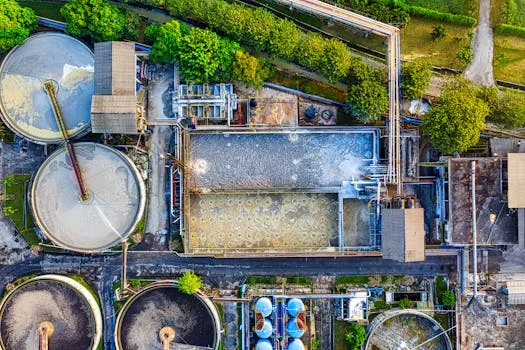
Choose architecture by CAPEX, OPEX, and how often technicians can reach the skid. Batch tanks remain useful; inline and ejector packages dominate newer automated projects where flow signals are trustworthy.
Inline once-through trains avoid large mix tanks and scale from about 1 to 1,000 m³/h with flow-paced control. Batch trains fit flows below about 50 m³/h when influent quality swings hard and operators want to retune each tank. Diaphragm pumps give the best volumetric precision but wear on abrasive slurry. Venturi ejectors driven at 3–5 bar motive pressure trade water energy for fewer wearing parts—preferred on unmanned municipal sites.
| Feature | Inline Ejector System | Batch Pump System | Comparison Note |
|---|---|---|---|
| Flow Range | 10 – 1,000 m³/h | 1 – 50 m³/h | Inline is more scalable |
| Dosing Accuracy | ±5% | ±1% | Pumps are more precise |
| Maintenance | Low (No moving parts) | High (Valve/Diaphragm wear) | Ejectors favor reliability |
| CAPEX | Moderate-High | Low-Moderate | Inline requires more automation |
| OPEX | Lower (Less labor) | Higher (Labor + Spares) | 20% OPEX saving with Inline |
Efficiency Benchmarks by Wastewater Type
Removal efficiency tracks the influent matrix—pH, temperature, and competing ions—more than the coagulant label. Municipal streams often meet a WHO turbidity goal of <5 NTU at 5–20 mg/L and can reach about 80% COD reduction when organics travel with solids.
Textile and pulp-and-paper duties commonly need 30–50 mg/L or more because of dyes and lignin. Peak coagulation sits near pH 6.5–7.5, so many trains pair PAC with lime dosing for pH adjustment in PAC systems. Skip that correction and chemical use can climb about 25% for the same clarity.
How does lime dosing support PAC performance?
Lime dosing restores alkalinity and holds pH inside the band where PAC floc strength is highest. Soft or acidic industrial water without that step overspends coagulant and raises residual aluminum. Always jar-test lime or caustic with PAC before locking the P&ID.
| Application | Typical Dose (mg/L) | TSS Removal (%) | COD Removal (%) | Effluent Benchmark |
|---|---|---|---|---|
| Municipal Wastewater | 5 – 20 | 90% – 95% | 70% – 80% | <5 NTU Turbidity |
| Textile / Dyeing | 30 – 60 | 85% – 95% | 60% – 85% | <50 Color Units (ADMI) |
| Pulp & Paper | 40 – 80 | 92% – 98% | 70% – 90% | <100 mg/L COD |
| Drinking Water | 1 – 5 | N/A (Adsorption) | N/A | 90% Taste/Odor Removal |
| Sludge Conditioning | 100 – 200 | N/A | N/A | 25% – 30% Cake Solids |
How is PAC used for EGCS dosing?
PAC for EGCS dosing applies the same charge-neutralization sequence to scrubber washwater before discharge or reuse. The set point still comes from jar tests against turbidity, metals, and the local washwater permit—not from a fixed catalog dose. Scrubber bleed we see in the field usually needs stronger mixing and denser sludge handling than municipal primary clarification.
What Clarifier Criteria Apply After PAC Coagulation?
Clarifier selection after PAC coagulation hinges on floc settling velocity, peak hydraulic load, and sludge withdrawal—not on coagulant brand alone. Primary clarifiers fit dense PAC flocs at moderate TSS. Secondary clarifiers after biology need gentler weir rates so biofloc is not sheared. Tertiary polishing may add DAF or filters when turbidity targets fall below about 5 NTU.
Design on peak m³/h, not average day flow. Influent above 500 NTU needs larger sludge volume and often dual-stage dosing. When civil space is tight, compact trains that combine equalization, dosing, and clarification may use an Underground Package Sewage Treatment Plant (WSZ Series) as the downstream biological package after coagulation.
How to Select Equipment: A 5-Step Decision Framework
Selecting a PAC dosing system after the jar test prevents undersizing that fails permits and oversizing that freezes unused capital. Work this checklist before the purchase order.
- Define treatment goals: Separate TSS removal, phosphorus cut, and COD compliance. That decides polyaluminum chloride coagulation versus powdered activated carbon adsorption.
- Characterize the influent: Log peak flow (m³/h) and contaminant load. Turbidity above 500 NTU needs stronger mixing and larger sludge capacity.
- Select the dosing method: Use inline ejectors for high-flow municipal duty; use diaphragm pumps when industrial precision and chemical economy dominate.
- Size chemical consumption:
Formula: PAC Consumption (kg/day) = [Flow Rate (m³/h) × Dosing Rate (mg/L) × 24] / 1,000
Example: For a 100 m³/h system dosing at 20 mg/L, the daily consumption is 48 kg of PAC. - Check ROI and reporting: Confirm HydropureWater’s PLC-controlled chemical dosing skids can interface with SCADA for GB 8978-1996 or EU 91/271/EEC reporting.
| Influent TSS (mg/L) | Recommended PAC Dose (mg/L) | System Configuration |
|---|---|---|
| <50 | 5 – 10 | Standard Inline Ejector |
| 50 – 200 | 15 – 30 | Inline with Static Mixer |
| 200 – 500 | 30 – 60 | Batch Mixing + Diaphragm Pump |
| >500 | 60 – 120 | Dual-stage Dosing + DAF |
CAPEX, OPEX, and ROI Drivers
Chemical cost often equals 60–80% of lifetime spend. Budget figures used for 2025 projects still place a skid-mounted unit for 5–50 m³/h between $15,000 and $50,000, driven by automation level and materials such as 316L stainless versus HDPE.
OPEX typically lands at $0.05–$0.20 per cubic meter: PAC chemical $0.02–$0.10/m³, mixer and pump energy $0.01–$0.03/m³, and maintenance $0.02–$0.07/m³. Industrial payback of 12–36 months is common when sludge disposal shrinks. A textile plant treating 100 m³/h can save about $50,000 per year versus alum through ~30% lower sludge volume and less secondary pH chemical.
| Cost Component | Estimated Range (USD) | Key Drivers |
|---|---|---|
| CAPEX (Skid-mounted) | $15,000 – $50,000 | Automation level, Material (SS316) |
| CAPEX (Containerized) | $50,000 – $200,000 | Flow capacity, Climate control |
| OPEX (per m³) | $0.05 – $0.20 | Chemical price, Energy efficiency |
| Maintenance (Annual) | 10% – 15% of CAPEX | Pump spares, sensor calibration |
Who This Is For / Next Step
This page serves plant engineers, EPC designers, and procurement managers sizing coagulation ahead of clarifiers, DAF, or package biological trains. Look elsewhere if the duty is only powdered-carbon taste-and-odor control with no solids-removal skid, or if you need a full membrane ZLD flowsheet rather than a dosing package. When peak flow, influent TSS, and effluent targets are known, request a coagulant dosing skid quotation with those three figures so the design stays inside the proven dose bands above.
Frequently Asked Questions
What’s the difference between PAC and PAM in dosing systems?
PAC (polyaluminum chloride) is a primary coagulant that neutralizes particle charge to form microflocs. PAM (polyacrylamide) is a high-molecular-weight flocculant that bridges those microflocs into larger macroflocs that settle or float faster. Plants almost always dose them in sequence—coagulant first, then polymer—to reach the lowest residual turbidity at the lowest total chemical mass.
How do I calculate the correct PAC dosing rate?
Run a jar test on the actual wastewater. Fill six 1-liter beakers, dose PAC at 5, 10, 15, 20, 25, and 30 mg/L, then mix 1 minute at 100 RPM and 15 minutes at 30 RPM. Choose the lowest dose that yields clear supernatant and a strong floc; scale that mg/L value with the consumption formula above for kg/day ordering.
What are the maintenance requirements for a PAC dosing pump?
Diaphragm pumps need monthly diaphragm checks and quarterly suction/discharge valve service because PAC slurry is abrasive. Ejector systems need far less attention—typically an annual venturi nozzle inspection and cleaning to remove scale or debris. Stock wear parts for pumps if the site runs continuous industrial duty above 50 m³/h.
Can polyaluminum chloride dosing handle high-turbidity wastewater?
Yes, but efficiency falls when turbidity exceeds about 1,000 NTU unless dose rises into the 50–120 mg/L band. Primary sedimentation or coarse screening ahead of the injection point usually costs less than forcing that entire solids load through coagulant alone. Dual-stage dosing plus DAF is the common fix above 500 mg/L influent TSS.
What are the environmental risks of PAC dosing?
Residual aluminum in effluent and sludge is the main risk. The EU Landfill Directive 1999/31/EC and many local rules limit aluminum in sludge going to land application. Operators should track effluent pH and residual Al³⁺, typically keeping finished drinking water below 0.2 mg/L Al and industrial discharge often below about 2.0 mg/L Al unless the permit sets a tighter number.