Start with the wastewater and reuse decision
Choosing an effluent treatment plant in Islamabad begins with the wastewater and intended use of the treated water, rather than a packaged-equipment catalogue. Record average and peak flows, the source of each stream, industrial pretreatment requirements, discharge destination and whether recovered water will support process reuse, irrigation, landscaping or compliant discharge. EEC’s project record provides a useful distinction: its 5,500 m³/day Nestlé Sheikhupura plant was designed for high-strength industrial wastewater, not ordinary domestic sewage. The buyer should obtain the applicable acceptance criteria in writing before selecting a treatment route.
Reuse can become a central design objective rather than an afterthought. EEC lists 100% water recycling/reuse through advanced filtration for its Benazir Bhutto International Airport project in Islamabad. That evidence demonstrates an airport reuse requirement; it does not establish the reuse standard or approval pathway for every Islamabad site. The project’s environmental consultant and relevant authority must confirm the applicable discharge or reuse conditions.
Use the following fillable record as the basis for an industrial ETP Islamabad feasibility check. A larger engineered treatment train becomes necessary when the wastewater composition or reuse specification cannot be addressed by a standard package.
| Project input | Record before quotation | Decision effect |
|---|---|---|
| Average and peak flow | Measured or verified flow by source and operating period | Sets hydraulic and biological capacity |
| Wastewater composition | Domestic sewage, high-strength industrial stream or a documented mixture | Determines biological and pretreatment design |
| Industrial pretreatment | Oil, grease, suspended solids, toxic compounds and equalization requirements | May require equipment outside a sewage package |
| Discharge destination | Approved sewer, receiving water or another receiving system | Establishes the compliance route |
| Intended reuse | Process, irrigation, landscaping or potable-related assessment | Sets required effluent quality and polishing |
| Site constraints | Available footprint, geology, access, power and installation method | Distinguishes package, MBR and engineered configurations |
For hotel or similar facility comparisons, wastewater treatment selection for a Peshawar hotel illustrates how the source flow and reuse objective should precede equipment selection. For an industrial application, industrial wastewater treatment selection in Khulna provides a process-and-equipment framework that must be adapted to the project’s own wastewater data and Islamabad approvals.
Compare package A/O and MBR treatment routes
The WSZ underground A/O package sewage plant combines anoxic/aerobic biological contact oxidation, sedimentation and disinfection in one buried unit; its stated capacity range is 1–80 m³/h, with no operator required. The integrated MBR membrane bioreactor combines activated-sludge treatment with submerged PVDF membrane filtration. Its stated filtration performance is below 1 μm, and its stated footprint is 60% less than conventional systems. These figures describe the catalog systems; they do not establish guaranteed performance for a particular site without an agreed influent basis and design.
Select the A/O package when the wastewater is predominantly domestic, compact deployment is the controlling constraint and automated operation is required without routine resident attendance. Select MBR when membrane solids separation, tighter solids control or a smaller conventional-treatment footprint has technical value for the project. Establish the required effluent quality and test whether the proposed route can sustain it under the expected loading.
| Criterion | Packaged A/O route | MBR route |
|---|---|---|
| Preferred wastewater basis | Predominantly domestic sewage | Sewage or mixed wastewater requiring membrane solids separation |
| Installation | Buriable package arrangement | Integrated equipment within an engineered plant layout |
| Stated system configuration | Anoxic/aerobic contact oxidation, sedimentation and disinfection | Activated sludge with submerged PVDF membrane filtration |
| Stated solids-separation performance | Clarification by sedimentation | Filtration below 1 μm |
| Land implication | Compact package option | Stated footprint of 60% less than conventional systems |
| Industrial wastewater | Not a substitute for process-specific pretreatment | Not a substitute for process-specific pretreatment |
Neither route automatically solves oil, grease, suspended solids, toxic compounds or flow equalization. For industrial wastewater treatment Pakistan, a supplier must first assess the industrial stream and identify any necessary pretreatment. A generic sewage-package offer should be rejected when the wastewater characteristics fall outside its stated design basis.
Match the plant to Islamabad project conditions
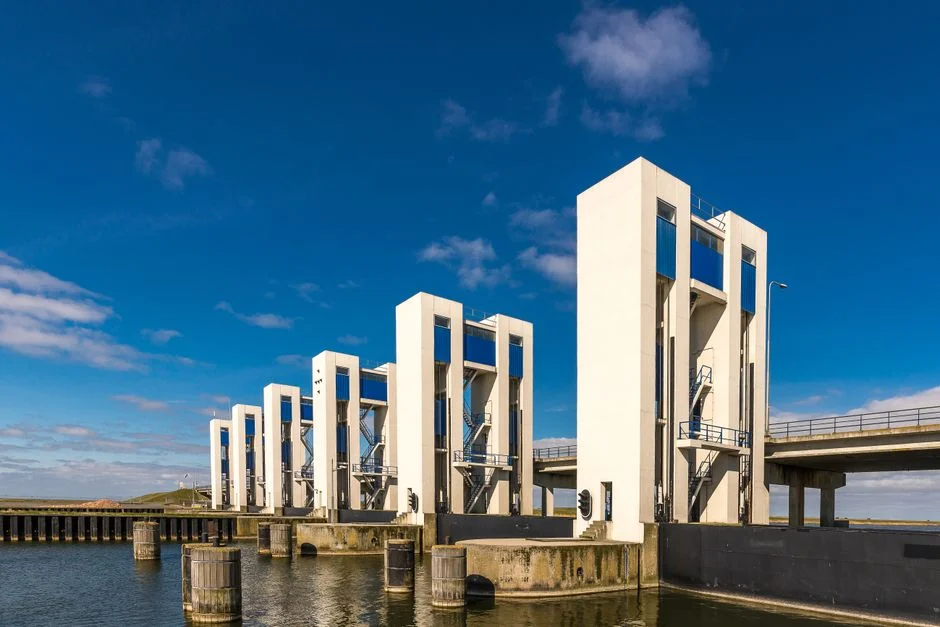
EEC lists detailed design and engineering of a 1.5 MIGD effluent treatment plant for Benazir Bhutto International Airport, Islamabad, covering process and hydraulic engineering, electrical and mechanical works, automation and control. The airport plant is described as fully automatic, with SCADA operation and 100% water recycling/reuse through advanced filtration. This project evidence shows the engineering scope that can accompany a major airport facility with full reuse objectives; it is a benchmark, not a universal specification for hotels, hospitals or industrial premises.
EEC also lists detailed design and engineering of a 600 m³/day wastewater treatment plant for Quaid-e-Azam Hospital Complex. These entries demonstrate that institutional and transport projects can require dedicated wastewater engineering. They do not disclose enough project-specific information to infer current Islamabad effluent limits, capital cost, delivery time or required guarantees for a new procurement.
The project file should record the evidence separately from the assumptions. Use the airport project to define questions about reuse, automatic operation and advanced filtration; use the hospital project to benchmark the need for a purpose-designed treatment plant. Confirm current site conditions, procurement requirements and applicable approvals rather than assuming that either project scope applies elsewhere.
For institutional or hospitality facilities, the package sewage plant versus MBR comparison and A/O package plant versus MBR for hotel wastewater can help structure the discussion, but their conclusions should be tested against measured flows, local reuse requirements and sludge arrangements. These references do not replace an Islamabad-specific design basis.
Build a procurement-ready selection record
A comparable quotation must begin with the same design basis, because an equipment price without agreed influent assumptions, effluent duties and scope boundaries cannot support a valid comparison. Request the design flow, peak factor, process-stage capacities, effluent guarantees, retention time, sludge-production estimate and a complete equipment schedule. Require each supplier to identify included civil works, pumping, power distribution, controls, chemicals, commissioning, training, spares and sludge removal. This approach also supports a water reclamation plant because reuse quality and downstream polishing must be visible in the offer.
Each technical proposal should state its treatment basis, incoming wastewater assumptions, reuse or discharge route, control philosophy and exclusions. Ask for the SCADA wastewater automation scope separately: alarms, setpoints, historian data, remote access, local controls, power-failure arrangements and operator training should not be implied by the word “automatic.”
- Issue one design-basis schedule with the same flow, wastewater, effluent and site inputs for every supplier.
- Require stage-by-stage capacities and the treatment equipment boundary, including excluded civil, pumping and sludge-disposal work.
- Compare lifecycle inputs: membrane or media replacement, chemicals, operator attention, backwash, sludge handling, electricity and maintenance support.
- Define a site-specific commissioning and acceptance test tied to agreed influent and effluent parameters.
| Quotation field | Required supplier response | Buyer check |
|---|---|---|
| Design basis | Flow, wastewater assumptions, treatment objective | Same inputs across quotations |
| Performance | Stage capacities, hydraulic and treatment duties, effluent guarantee | Conditions and test method stated |
| Equipment boundary | Complete schedule with exclusions | No unpriced civil or pumping assumptions |
| Automation | Control philosophy, alarms, local panel and SCADA scope | Interfaces and operator responsibilities defined |
| Sludge | Production basis, storage, removal and disposal route | Responsibility and operating burden clear |
| Lifecycle | Power, chemicals, replacement items, backwash and maintenance | Costs compared over the same basis |
| Acceptance | Site-specific commissioning and test protocol | Linked to agreed influent and effluent parameters |
The need to define treatment and polishing separately is consistent with the University of Twente’s PhD thesis, Direct nanofiltration of wastewater treatment plant effluent, which describes membrane technology as a way to polish treatment-plant effluent for reclamation objectives. That research concerns nanofiltration as a downstream step; it does not establish that an MBR alone satisfies a specific reuse specification.
Frequently Asked Questions
How should an Islamabad ETP be sized?
Size it from documented average and peak wastewater flows, the characteristics of each source stream and the required treatment objective, not from floor area alone. For a mixed industrial and domestic system, obtain the wastewater characterization before finalizing biological loading, equalization and pretreatment.
How should package A/O and MBR quotations be compared on cost?
Request quotations on one basis: design flow, effluent targets, included civil works, sludge removal, controls, energy, consumables, maintenance and commissioning tests. Ask suppliers to identify exclusions and price them separately. A buyer should request project-specific commercial schedules rather than apply an assumed market price.
What should be checked before selecting a supplier for an Islamabad sewage treatment plant?
Check the supplier’s ability to demonstrate the proposed process against the project wastewater and reuse requirements, and ask for the design calculation, equipment schedule, control scope, commissioning plan and local maintenance support. The airport and hospital examples from EEC show the value of project-specific engineering, but current references and site capability still require verification.
Which Islamabad approvals should be confirmed before design is frozen?
Confirm the environmental and sewer discharge requirements with the relevant authority and the project’s environmental consultant, including the required reuse route and acceptance criteria. Performance guarantees and acceptance tests must reflect these requirements in writing.
How should high-strength industrial wastewater change the procurement?
Determine whether equalization, oil and grease removal, dissolved-air flotation, filtration or another dedicated step is required. A supplier offering only a generic sewage package without an industrial process assessment is not qualified for the duty. For equipment-screening purposes, review a dissolved-air flotation machine and a plate-and-frame filter press, then require the selected treatment train to specify their relevance, duty and sludge route.