Separate the Wastewater Streams Before Selecting Equipment
Cooling-tower blowdown is normally the principal process-wastewater stream in a large data center, while sanitary sewage is usually a smaller flow requiring a separate route. RSP Engineers states that blowdown should be distinguished from domestic sanitary flow because the two have different discharge characteristics and permitting pathways (RSP Engineers, undated). Other possible streams include water-treatment backwash, equipment-cleaning wastewater and air-handling condensate; each should be characterized separately rather than combined by default.
Blowdown chemistry is more complicated than elevated TDS alone. It can contain chlorides, sulfates, phosphates, biocides, corrosion inhibitors, antiscalants and metals leached through corrosion. RSP Engineers identifies pH, temperature, residual chlorine, heavy metals and the complete treatment-chemical package as matters that can affect pretreatment and permitability (RSP Engineers, undated). Closed-loop liquid cooling changes the pattern but does not eliminate wastewater: commissioning flushes, repairs, chemical changes, equipment replacement and eventual coolant disposal can create discrete events. Valicor describes these events as significant wastewater-generating activities despite closed circulation during normal operation (Valicor, undated).
The tender boundary must cover normal blowdown, startup and commissioning discharge, maintenance waste and eventual decommissioning waste. Event streams may require temporary storage or diversion because their chemistry and duration differ from routine blowdown.
| Stream | Design treatment | Permit or route status | Required verification |
|---|---|---|---|
| Cooling-tower blowdown | Filtration, chemistry control, separation and possibly concentration | Reuse or lawful discharge route | Measured flow, makeup analysis, chemical package and target cycles |
| Sanitary sewage | Sanitary collection and treatment | Separate domestic route | Local utility acceptance and connection requirements |
| Water-treatment backwash | Source-specific pretreatment or return to a compatible process stream | Do not combine without compatibility review | Backwash chemistry, frequency and flow |
| Cleaning and air-handling condensate | Segregate pending characterization | Event-waste route | Contaminants, temperature and discharge frequency |
| Glycol, commissioning flushwater and decommissioning waste | Collection, segregation and approved treatment or disposal | Separate from routine blowdown | Fluid type, volume, concentration and authorized receiving route |
Characterize the Blowdown Before Fixing the Treatment Train
Makeup-water analysis and the target cycles of concentration are the two operating inputs that determine the downstream treatment parameters. At four cycles of concentration, a cooling tower loses 25–30% of makeup water to blowdown; the blowdown carries dissolved solids at four to eight times the makeup-water concentration, typically 1,200–6,000 mg/L TDS. These figures were cited by Genesis Water Tech in the HydropureWater Krasnoyarsk research (HydropureWater, undated). They provide a screening basis, not a Novokuznetsk design value.
Calcium, magnesium, silica and alkalinity establish the scaling envelope. Biocides, corrosion inhibitors and dispersants must also be quantified because they influence biological fouling, membrane compatibility and discharge acceptance. The supplied research reports blowdown suspended solids of 10–50 mg/L originating from corrosion products, biofilm fragments and airborne dust, while planktonic bacteria and biofilm formers affect downstream membrane fouling (HydropureWater, undated).
Treatment volume should be reduced at the cooling system before equipment is sized. DOE guidance quoted by HOBI states that raising concentration from three to six cycles can reduce makeup water by about 20% and blowdown by about 50% (HOBI, undated). Cooling optimization is part of the wastewater design, yet it does not authorize uncontrolled cycling: saturation, corrosion, scaling and discharge chemistry still require review.
| Design input | Why it controls the train | Evidence or required site data |
|---|---|---|
| Makeup-water analysis | Sets baseline TDS, hardness, silica and alkalinity | Current laboratory analysis required |
| Target cycles of concentration | Controls blowdown flow and dissolved-solids loading | Operator target required; research cites 25–30% makeup loss at four cycles |
| Measured blowdown flow | Determines filtration, membrane and storage capacity | Not supplied for the Novokuznetsk site |
| Temperature and pH | Influences membrane performance, chemical dosing and receiving conditions | Continuous or logged operating data required |
| Chemical package | Defines pretreatment and permit parameters | Product names, concentrations and dosing records required |
| Suspended solids and biological load | Sets filtration and UF requirements | Representative sampling required |
Choose Reuse, Compliant Discharge or Zero Liquid Discharge
Cooling-tower makeup reuse is generally the preferred endpoint when a smaller concentrate stream can lawfully leave the site and freshwater has value. Genesis Water Tech figures cited in the HydropureWater research report 60–85% recovery from the blowdown stream for this route. Reuse converts a discharge problem into a treatment-train problem: the principal stages are filtration, antiscalant control, reverse osmosis, permeate storage and controlled blending back into cooling makeup (HydropureWater, undated).
RO removes 95–99% of dissolved solids and produces 10–50 mg/L TDS permeate, with blowdown recovery of 50–85% depending on scaling potential. Nanofiltration operates at 75–150 psi, recovers 70–85% of feed and produces permeate with 30–50% of feed TDS; it is more relevant where hardness, rather than total TDS, controls the endpoint. Full zero liquid discharge combines RO with mechanical vapor compression or another brine-concentration step and crystallization, achieving 95–99% overall recovery and leaving 1–3% solid waste (HydropureWater, undated).
The cited cost difference is decisive. A 50,000 GPD RO skid is $250,000–$500,000, while full ZLD requires $3–8 million in capital expenditure and $5–15 per thousand gallons in operating cost. These are research-supported indicative anchors attributed to Genesis Water Tech, not quotations for Novokuznetsk (HydropureWater, undated).
| Decision option | Select when | Principal stages | Open verification items |
|---|---|---|---|
| Cooling-makeup reuse | Partial concentrate discharge is permitted and freshwater is scarce or costly | Side-stream filtration, antiscalant, RO, storage and makeup blending | Reuse-water quality, blend limits, concentrate route and freshwater cost |
| Compliant discharge | A receiving utility or surface-water route accepts the treated stream | pH control, filtration and NF or RO; polishing if required | Current local limits, receiving capacity, temperature acceptance and permit conditions |
| Partial or full ZLD | Discharge is effectively prohibited or freshwater is unavailable | RO, brine concentrator or MVC, and crystallization | Waste classification, solids handling, heat source, energy balance and operating cost |
A Novokuznetsk decision matrix remains conditional until the receiving route is confirmed. The supplied research concerns Krasnoyarsk and the Yenisei basin; it does not establish Novokuznetsk limits or an accepting utility. Current basin requirements must be obtained from the competent Russian authorities and the proposed receiving utility rather than transferred from another region.
Build Pretreatment and Cold-Climate Protection
Side-stream filtration is the first mechanical barrier protecting downstream membranes. The cited framework specifies self-cleaning filters at 10–25 microns, treating 1–5% of circulation flow, with $50,000–$200,000 installed capital cost. Feed filtration below 10–15 microns, chemistry-matched antiscalant and pH adjustment are also cited as pretreatment targets (HydropureWater, undated).
Ultrafiltration removes bacteria, colloids and suspended solids before RO. The supplied framework cites a 0.01–0.1-micron range, 10–30 psi operating pressure and 90–95% recovery. UF concentrate returns to the blowdown stream, so UF is selected principally for downstream protection rather than maximum water yield. The ultrafiltration pretreatment specification should be tied to membrane warranty conditions, measured feed quality and the selected RO feed criteria.
Cold weather changes the installation, not the hydraulic balance. The cited Krasnoyarsk guidance calls for enclosure, heat tracing and freeze-protected chemical-dosing lines for outdoor membrane skids and RO vessels, with thermal stages integrated into buildings rather than installed as unprotected pad-mounted equipment. The same project requirements should be transferred to Novokuznetsk, but its winter ambient design temperature was not supplied and must be obtained from the operator before freeze protection is priced or guaranteed.
| Package element | Procurement requirement | Acceptance evidence |
|---|---|---|
| Side-stream filtration | 10–25-micron self-cleaning unit sized for 1–5% of circulation flow | Duty/standby arrangement, differential-pressure control and filtration performance |
| UF pretreatment | 0.01–0.1-micron treatment at 10–30 psi and 90–95% recovery | Feed data, permeate quality, recovery and RO warranty compatibility |
| RO stage | Filtration below 10–15 microns, matched antiscalant and pH adjustment | Process model based on measured makeup chemistry and target cycles |
| Enclosure and utilities | Enclosure, heat tracing, freeze-protected dosing and building-integrated thermal equipment | Design-temperature narrative and component ratings |
| Winter controls | Freeze protection, low-temperature interlocks and restart sequence | Functional test against the project winter ambient design temperature |
Convert the Selection into a Tenderable Equipment Package
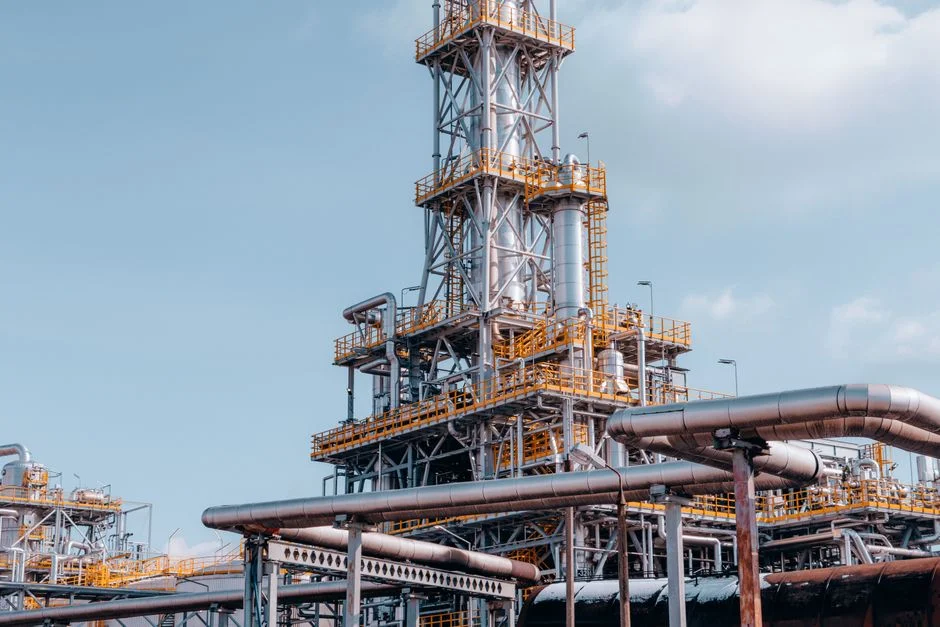
A tender-ready package should begin with a mandatory information request, not a fixed treatment diagram. The client must provide the makeup-water analysis, measured blowdown flow, target cycles of concentration, winter ambient design temperature, available waste-heat sources and current applicable receiving-basin limits. The operator must also identify the confirmed receiving route and its technical acceptance conditions. The supplied research contains no current numeric Novokuznetsk receiving-basin limits, so those remain a verification gate rather than an assumed design value (HydropureWater, undated).
Ask bidders to complete the following sequence:
- Separate routine blowdown from sanitary, commissioning, cleaning and decommissioning waste.
- Perform a complete chemical package review, including TDS, hardness, silica, alkalinity, chlorides, sulfates, phosphates, treatment chemicals, metals, suspended solids, biological load, pH and temperature.
- Model the selected endpoint against the target cycles and measured blowdown flow.
- Define pretreatment, storage, separation, concentrate handling and reuse or discharge interfaces.
- Complete cold-climate and permit-risk verification before equipment cost is treated as comparable.
Bidder selection should require documented cold-climate references covering skid enclosure, heat tracing and freeze-protected chemical dosing. Require a winter-operability narrative tied to the project design temperature rather than a generic cold-weather statement. The industrial reverse osmosis system offer should define a process guarantee naming permeate TDS, silica and recovery at the specified cycles target, with antiscalant dosing matched to the makeup analysis.
Where MVC or brine concentration is proposed, require an energy balance for district-heating return lines or generator waste heat. The tender must document the heat source, exchanger arrangement and coordination with relevant Russian authorities. Use the industrial RO membrane design criteria as the technical reference set, but require project-specific calculations rather than accepting generic permeate or recovery guarantees. A fuller route comparison is available in the guide to compare cooling-blowdown treatment trains.
Frequently Asked Questions
What inputs are required to size blowdown treatment for a Novokuznetsk data center?
Start with measured blowdown flow, a current makeup-water analysis and the target cycles of concentration. The HydropureWater research identifies the analysis and cycles target as the inputs that set downstream parameters; it does not provide a Novokuznetsk flow or site chemistry (HydropureWater, undated). Request those items, plus the chemical package and winter design temperature, before asking for a final skid size.
How should the preliminary budget compare RO reuse, compliant discharge and ZLD?
Use separate capital and operating-cost allowances. The cited 50,000 GPD RO skid is $250,000–$500,000, while full ZLD is $3–8 million with $5–15 per thousand gallons in operating cost, according to Genesis Water Tech figures in the
Frequently Asked Questions
How should cooling tower blowdown be treated at a data center in Novokuznetsk?
Due to the extreme climate in Novokuznetsk, blowdown treatment must prioritize frost protection and high-efficiency recovery to minimize makeup water demand. The recommended treatment train involves initial filtration, followed by softening to remove scale-forming ions, and high-recovery reverse osmosis (RO) to concentrate impurities. Given the local water chemistry and low ambient temperatures, systems should utilize heat tracing and insulated enclosures to prevent freezing of process lines during the winter months.
What is the cheapest practical treatment route for data center blowdown reuse?
The most cost-effective approach for reuse is a side-stream softening process combined with high-recovery RO, targeting a recovery rate of 75% to 85%. By reducing the total dissolved solids (TDS) in the recirculating loop, operators can increase cycles of concentration (COC) from typical levels of 3-4 up to 8-10, significantly lowering both water consumption and the volume of liquid waste requiring discharge or further treatment.
How much does a data center blowdown RO or zero liquid discharge system cost?
Capital expenditure (CAPEX) for a standalone RO blowdown recovery system typically ranges from $150,000 to $400,000 depending on flow rates and material specifications. Implementing a full Zero Liquid Discharge (ZLD) system, which includes thermal evaporators or crystallizers to eliminate liquid waste entirely, is significantly more capital-intensive, often ranging from $1.5 million to over $4 million due to the high energy requirements and complex metallurgy needed to handle concentrated brines.
What should I require from a wastewater equipment supplier for a Siberian winter site?
You must specify that all equipment be rated for extreme cold ambient conditions, specifically requiring NEMA 4X or IP65-rated enclosures for electrical components and redundant trace heating on all external piping. Suppliers should provide a thermal design calculation confirming that the system can maintain fluid temperatures above 5°C at minimum regional ambient temperatures of -40°C. Additionally, request a site-specific "winterization package" that includes dry-contact alarms for freeze protection failure and redundant pump configurations to ensure operational continuity.
What information is needed before sizing the blowdown treatment train and confirming discharge compliance?
Engineers require a full water chemistry analysis of the makeup source and the cooling tower blowdown, including conductivity, pH, alkalinity, hardness (calcium/magnesium), silica, and sulfate levels. You must also provide the design cooling load, the current cycles of concentration, the local discharge permit limits regarding heavy metals and TDS, and the available space for the treatment skid. Finally, provide the planned daily water usage to accurately calculate the required throughput capacity of the treatment system.