Define the Rural Project Before Selecting Equipment
A buried A/O package plant is the practical starting point for rural sewage treatment in Pakistan when the priority is a compact, largely automated decentralized installation with limited site infrastructure. The WSZ combines A/O biological contact oxidation, sedimentation and disinfection in one buried unit, handles 1–80 m³/h and is described as requiring no operator. An MBR is the stronger alternative when the project prioritizes a small footprint, near-reuse-quality discharge below 1 μm, or tighter solids separation. Final selection requires verified design flow, land, reuse and discharge objectives, operator availability and local approval—not catalogue capacity alone.
Start by defining the project boundary and the wastewater streams entering it. For a housing estate, hotel, institution or village system, obtain current and projected average and peak flows, occupancy assumptions, development phases and seasonal variation. Identify whether the flow is domestic sewage only or includes industrial, agricultural or healthcare discharge. That distinction changes both the treatment process and the pretreatment required.
The receiving environment and intended service must be documented before selecting equipment. Map whether the treated water will be discharged to a drain, watercourse or groundwater recharge area, used for irrigation, or directed to another reuse destination. Ask the relevant local authority for the applicable discharge criteria, reuse requirements, construction approval process and applicable environmental conditions. The supplied research does not establish a current Pakistan-wide effluent limit for this application, so a generic catalogue claim cannot replace approval.
Keep separate wastewater streams out of the design basis unless their impacts are assessed. A 2021 PLOS ONE study found that wastewater from more industrialized regions had higher concentrations of heavy metals than sewage from less industrialized areas. It also reported that heavy metals can accumulate in sewage sludge during treatment, making sludge handling relevant even where the liquid-stream objective is conventional treatment.
The World Bank’s Pakistan Rural Water Supply and Sanitation Project record establishes rural-sanitation programme context, but the supplied excerpt contains no project-specific funding, design or equipment rules. Use the approach in wastewater treatment selection for Peshawar as a decision method rather than assuming that a regional programme specifies equipment.
Compare Buried A/O and MBR Treatment
System selection depends on whether the project requires a straightforward biological approach or high-clarity effluent. The A/O package has fewer process interfaces, while the MBR trades additional mechanical and membrane complexity for tighter solids separation and smaller site requirements. The following comparison uses the verified product catalogue and supplier claims identified in the brief; performance at the intended duty remains a matter for demonstration and acceptance testing.
| Decision item | Buried WSZ A/O package | MBR system |
|---|---|---|
| Process configuration | Anoxic/aerobic biological contact oxidation, sedimentation and disinfection in one buried package | Activated sludge with submerged PVDF membrane filtration |
| Stated capacity | 1–80 m³/h | 10–2,000 m³/day |
| Installation | Below grade, with landscaping above, or trailer-mounted | Requires a defined plant arrangement; verify footprint and civil scope |
| Operating proposition | Fully automated and described as requiring no operator | Requires membrane operation, controls and maintenance support |
| Effluent claim to verify | Disinfection is included; applicable effluent performance must be demonstrated at project conditions | Near-reuse-quality discharge below 1 μm |
| Site proposition | Compact, buried deployment | Stated footprint 60% smaller than conventional systems |
| Best fit | Limited routine staffing and a conventional biological treatment route | Severe footprint constraints, tighter solids separation or reuse potential |
Choose the buried A/O option when compact deployment, limited routine staffing and a conventional treatment route are the controlling priorities. Its underground A/O package sewage treatment plant combines several process stages in one unit, which simplifies the mechanical scope compared with an MBR containing submerged membranes.
Choose an MBR when the effluent route requires tighter solids separation, the available footprint is severely constrained, or sewage treatment reuse is central to the project. The catalogue describes the MBR membrane bioreactor as an activated-sludge system with submerged PVDF filtration and a stated footprint 60% smaller than conventional systems. The additional membrane, control and maintenance requirements must be priced and assigned to an operator.
Treat reuse wording as a claim to verify, not an automatic permission. Require each supplier to demonstrate performance against the actual influent, intended water use, disinfection requirements and applicable discharge permission. The detailed A/O package plant versus MBR comparison and package sewage plant versus MBR selection provide further context, but the final decision should follow the project inputs rather than another site’s headline requirements.
Test the Choice Against Land, Power and Operations
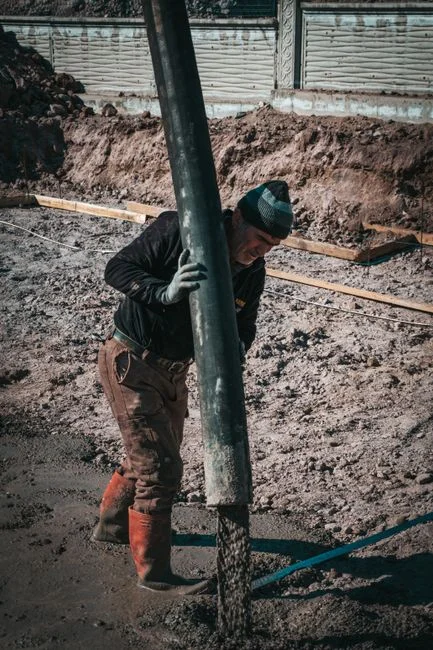
A buried treatment unit can become a poor choice if excavation, groundwater, flooding or maintenance access undermines its installation advantage. Before accepting the A/O option, confirm the excavation depth, soil conditions, groundwater level, flood exposure and arrangement for removing equipment or accessing inspection and service points. Record whether the area above the unit can support landscaping and whether that cover will be disturbed during maintenance. An MBR may avoid deep burial, but it still requires foundations, access zones, electrical service and room for membrane maintenance.
Power and staffing can reverse the initial preference. Obtain each supplier’s connected-load requirement, control philosophy, backup-power arrangement, start-up procedure and routine attendance requirement. The WSZ is described in the verified product catalogue as fully automated with no operator required; that statement still needs confirmation for local alarms, routine inspections, sampling, maintenance response and sludge collection. For the MBR, define who will inspect membranes, replace damaged elements or modules, clean the system and control process upset.
Compare the remaining operating obligations explicitly: odor control, spare-parts availability, remote or local support, maintenance intervals, consumables and warranty response. Avoid comparing only equipment purchase prices. A system with fewer routine visits can still be expensive if local technicians, replacement parts or site access are inadequate.
Complete the comparison with a responsible sludge route. Specify where residuals will be collected, dewatered, stored, transported and finally disposed of or reused. The 2021 PLOS ONE study reports that heavy metals accumulate in sewage sludge during treatment and raises concerns about agricultural use where sludge contains those metals. Consequently, sewage treatment reuse decisions must cover both the liquid effluent and the residual stream. If dewatering is required, the available plate-and-frame filter press option should be assessed against the expected sludge quantity, moisture requirement, operating effort and final disposal route.
Build a Supplier-Ready Sizing and Procurement Sheet
A defensible quote requires the same verified duty basis from every supplier. Populate the project inputs below, attach flow and wastewater records, and require the supplier to identify any missing design information rather than silently assume it.
| Fillable field | Project entry |
|---|---|
| Current average flow | Enter measured or documented value and period |
| Projected design and peak flow | Enter basis, development phase and peaking method |
| Wastewater profile | Enter domestic, industrial, agricultural or healthcare contributions |
| Treatment objective | Enter discharge route, reuse destination and required effluent characteristics |
| Available footprint | Enter usable dimensions, access and installation constraints |
| Ground and groundwater | Enter soil, groundwater, excavation and flooding constraints |
| Power and utilities | Enter supply, backup arrangement, controls and required connections |
| Operator model | Enter attendance, remote support, laboratory and maintenance responsibilities |
| Sludge route | Enter collection, dewatering, storage, transport and disposal responsibilities |
| Budget and commercial scope | Enter supply scope, civil works, installation, commissioning, training and delivery conditions |
Ask each bidder to state the design flow, process stages, performance guarantees and test basis. The quotation should identify installation requirements, commissioning tasks, operator training, maintenance intervals, recommended spares, warranty support and exclusions. If pretreatment is needed, define its responsibility; a rotary mechanical bar screen can be quoted as a separate upstream item, but its suitability depends on the wastewater characteristics and debris path.
Request a clear explanation of how the proposed design protects the receiving water. A 30 September 2026 RSC Advances study of urban and industrial wastewater treatment plant effluents in Pakistan’s twin cities found microplastics in all 12 samples, at concentrations ranging from 477 to 1,354 microplastics per litre. The study concerned urban and industrial facilities rather than rural package plants, so it does not establish performance for this application; it does support asking suppliers how plastics and other solids in the influent will be addressed.
Make compliance verification an explicit procurement item. Obtain the applicable local effluent criteria, reuse conditions, construction requirements and approval process from the responsible authorities. The supplied research contains no current Pakistan-wide limit for the proposed rural installation, so neither the A/O nor the MBR should be described as compliant until the relevant authority confirms the basis.
Frequently Asked Questions
What will a buried A/O package plant or MBR cost for a rural site in Pakistan?
The supplied evidence does not support a price for either system. A defensible quotation requires the design and peak flows, wastewater characteristics, treatment objectives, civil and installation scope, power arrangement, sludge handling, delivery terms and commissioning requirements. Request an itemised offer that separates equipment, buried installation or foundations, utilities, controls, training, spares, warranty support and sludge-management items; without these inputs, a headline price is not comparable.
How should a supplier be selected and sized for the project?
Require all suppliers to quote the same duty and acceptance basis, then verify their proposed process stages, guarantees and test method against the verified influent and required effluent use. Check whether the stated capacity applies at the project flow and wastewater profile, and whether membrane replacement, controls, operator attendance, maintenance and spare-parts support are included. The separate WSZ underground integrated sewage treatment plant and MBR product information can support initial screening, but the commercial evaluation must use one common scope.
Which local approvals are required before selecting a treatment system?
Confirm the discharge, reuse, construction and environmental approvals that apply to the site with the relevant local authorities before selecting equipment. The supplied research does not state a current Pakistan-wide effluent limit for this application, so the project must obtain the applicable criteria and approval process. Record the authority, applicable requirement, evidence expected and any conditions attached to reuse or discharge.
What is the practical difference between a WSZ A/O package and an MBR?
The WSZ combines anoxic/aerobic biological contact oxidation, sedimentation and disinfection in a buried package, while the MBR uses activated sludge with submerged PVDF membrane filtration. The MBR catalogue claim of near-reuse-quality discharge below 1 μm and the WSZ automation claim are not project-specific performance guarantees. Require each supplier to demonstrate its claim against the actual influent, duty flow, intended reuse or discharge route and acceptance method.