Start with the discharge route, not the equipment catalogue
A Yokohama hotel usually starts with a buried WSZ A/O package plant when it has a municipal sewer connection, no reuse commitment, limited space and moderate flows; MBR becomes stronger when the site lacks a convenient sewer connection or requires high-quality water reuse. Supplied planning data indicates 0.5–0.7 m³/room·day for a business hotel with off-site laundry, 0.8–1.1 m³/room·day for a resort with on-site laundry, and 50–80 L/cover for peak food-and-beverage demand. Apply a 1.3–1.5× peak factor, then add FOG or onsen pretreatment where required. Yokohama permits must be confirmed locally.
Confirm the route before selecting a process. A hotel A/O package plant versus MBR comparison is useful for equipment selection, but it cannot establish the authority’s approval conditions for a specific Yokohama parcel. The supplied Y-PORT excerpt describes a public-private wastewater-treatment case collection and does not state Yokohama sewer discharge limits, connection procedures or basin requirements (Y-PORT, 2026).
The property may have three possible routes:
- Direct sewer connection: the treatment train must demonstrate compliance with the authority’s current connection and discharge conditions.
- Indirect or trucked disposal: treatment, storage, tanker capacity and collection logistics must be evaluated together; equipment size alone does not establish feasibility.
- On-site reuse: toilet flushing, laundry use, cooling-tower makeup or irrigation requires a defined quality target and confirmation that the proposed reuse arrangement is acceptable.
The Aichi-scoped figures in the supplied commercial source are useful only as reference points. Its sewer-grade tier is BOD ≤120 mg/L and SS ≤150 mg/L, while its reuse tier is BOD ≤10 mg/L and SS ≤5 mg/L. Those figures relate to the Nagoya/Aichi discussion and must not be represented as Yokohama limits (HydropureWater, Nagoya hotel and resort guide, 2026).
Before freezing the specification, obtain the current sewer-connection conditions, discharge permit, sampling requirements, connection timetable and any applicable reuse notification from the Yokohama authority. Ask the authority whether connection approval, local basin controls or pretreatment requirements change the selected route.
Build the hotel wastewater flow and quality profile
The preliminary flow must separate domestic wastewater from kitchen, laundry and hot-spring streams because each stream changes the pretreatment and biological loading. The supplied HydropureWater planning data reports 0.5–0.7 m³/room·day for a business hotel with off-site laundry and 0.8–1.1 m³/room·day for a resort with on-site laundry. It also assigns 50–80 L/cover to food-and-beverage service during peak meal periods and calls for a 1.3–1.5× peak factor on average dry-weather flow (HydropureWater, 2025-12 field-data summary).
Use the room and meal figures as preliminary planning inputs, not as Yokohama regulatory criteria. Obtain occupied-room schedules, staff numbers, laundry ownership, meal covers and measured flows before procurement. Sampling should establish whether the combined stream can be treated directly or whether kitchen FOG, laundry discharge or onsen overflow needs an independent branch.
| Design input | Supplied preliminary basis | Information required for verification |
|---|---|---|
| Business-hotel domestic flow | 0.5–0.7 m³/room·day with off-site laundry (HydropureWater, 2025-12) | Room count, occupancy pattern, staff and measured wastewater flow |
| Resort domestic flow | 0.8–1.1 m³/room·day with on-site laundry (HydropureWater, 2025-12) | Laundry configuration, linen volume and wash-cycle schedule |
| Food-and-beverage flow | 50–80 L/cover during peak meal periods (HydropureWater, 2025-12) | Meal covers, catering functions and kitchen discharge temperatures |
| Peak design flow | Apply 1.3–1.5× to average dry-weather flow (HydropureWater, 2025-12) | Measured diurnal profile and confirmed peak period |
| Onsen influence | Post-DAF biological influent: BOD 200–400 mg/L, SS 150–300 mg/L, FOG <30 mg/L and T-N 30–60 mg/L (HydropureWater, 2026) | Spring flow, temperature, sulfate, dissolved sulfide, FOG and water chemistry |
Separate toilet wastewater, shower and basin greywater, laundry wastewater, kitchen FOG and any onsen overflow. The supplied onsen bands are screening values for preliminary process selection; they are not measurements from the Yokohama site. Temperature, sulfate and dissolved sulfide can change the performance of the biological stage and therefore need verification through sampling.
For the physical flow profile, check how the property generates wastewater in the morning meal and laundry periods, how long laundry discharges persist and whether kitchen flow is intermittent. A dissolved-air flotation unit may need to precede biological treatment when kitchen FOG or solids must be removed, but its duty should follow measured flow and quality rather than room count alone.
Choose WSZ or MBR against the property constraints
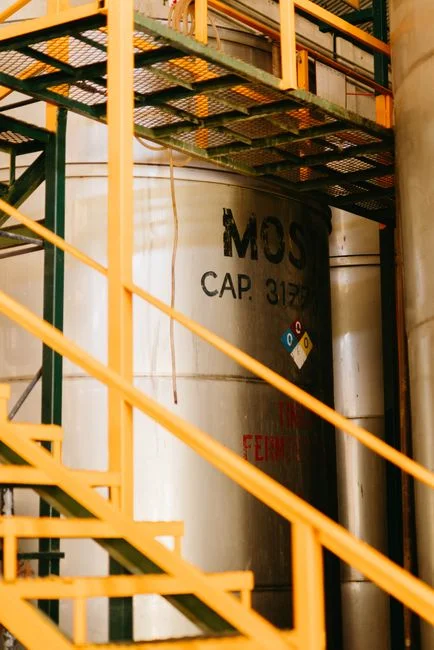
The WSZ package is the stronger preliminary choice for a conventional sewer-discharge hotel with moderate flows, limited above-ground space and no firm reuse requirement; MBR is stronger when reuse quality, sewer independence or footprint constraints dominate the design brief.
| Selection factor | Buried WSZ A/O package plant | Integrated MBR wastewater treatment system |
|---|---|---|
| Supplied capacity basis | 1–80 m³/h | 10–2,000 m³/day; the supplied DF-module information gives 32–135 m³/day across 80–225 m² configurations |
| Process configuration | Buried integrated package combining anoxic/aerobic biological contact oxidation, sedimentation and disinfection | Activated sludge with submerged PVDF membrane filtration; supplied DF information specifies a 0.1 μm pore size |
| Best-fit property condition | Municipal sewer connection, no committed reuse, moderate flows and priority on low operational complexity | High-quality reuse, no convenient sewer connection or priority on a compact installation |
| Principal maintenance burden | Routine inspection, biological process control, sludge handling and site-specific compliance; no membrane CIP | Submerged DF configuration uses weekly 30–60-minute integrity checks, CIP every 6–12 months and a stated 5–7-year membrane life (HydropureWater, 2026) |
| Buyer’s main lifecycle question | Does the package meet the confirmed sewer route and operating requirement without unnecessary pretreatment? | Do membrane replacement, CIP chemicals, energy and monitoring justify the reuse or footprint value? |
These are equipment-selection facts, not a Yokohama compliance determination. The buried WSZ A/O package plant is appropriate for a straightforward sewer-discharge case where below-grade installation and operational simplicity are priorities. Its capacity still has to cover the calculated peak flow, not merely the average occupancy load.
The integrated MBR wastewater treatment system becomes more compelling when the property lacks a convenient sewer connection or has committed to water reuse. The supplied comparison describes near-reuse performance and a footprint reduction of approximately 60% against a comparable concrete A²/O tank, but those are product-comparison statements from HydropureWater’s 2026 source rather than site guarantees.
Compare lifecycle obligations rather than purchase price alone. MBR adds membrane replacement, CIP and integrity monitoring. WSZ avoids membrane replacement and CIP, but it still requires inspection, sludge removal, process control and compliance with the confirmed discharge conditions. For reuse, define the endpoint before buying: toilet flushing, laundry service, cooling-tower makeup and irrigation cannot share one assumed quality target.
Apply three decisions in order. First, if sewer discharge is permitted and reuse is unnecessary, compare WSZ against the connection design. Second, if reuse is committed, compare MBR performance and maintenance with the owner’s reuse plan. Third, if there is no convenient sewer route, evaluate both package options against collection, storage and logistics constraints rather than assuming that MBR removes the need for a legal discharge route.
Add pretreatment only where the wastewater demands it
Pretreatment should be triggered by measured wastewater properties and downstream process risk, not added automatically to every hotel package. Kitchen-heavy properties may require FOG and solids removal before biological treatment; laundry and onsen flows require their own load checks; sludge handling must be included before either biological route is priced.
For a kitchen with significant oil, grease and suspended-solids discharge, use DAF when those constituents must be removed ahead of the biological stage. The supplied DAF catalogue covers 4–300 m³/h across 13 standard models (HydropureWater DAF catalogue, 2026). That range identifies available equipment scale; it does not establish the required duty for a Yokohama hotel. Select the model from measured kitchen flow, FOG concentration, solids loading, discharge timing and the required removal performance.
For the onsen condition described in the supplied commercial source, cool the discharge below 35 °C in equalization and use DAF before biology. The source reports sulfur-spring effluent containing sulfate 200–600 mg/L and dissolved sulfide 1–10 mg/L, with onsen temperatures of 40–70 °C (HydropureWater, 2026). These values describe the cited Aichi source conditions, not Yokohama geology or permit limits. If the hotel has no hot-spring discharge, that branch should not be included in the quotation.
Plan sludge removal and dewatering as part of the process. The supplied filter-press catalogue covers filtration areas from 1 m² to 500 m² and manual, hydraulic and fully automatic PLC-controlled operation (HydropureWater filter-press catalogue, 2026). The operator should compare expected sludge production, dewatering time, polymer demand, cake handling, collection frequency and operator access.
Do not specify final disinfection or reuse equipment until the authority confirms the discharge route and the owner confirms the reuse endpoint. A chlorine-dioxide generator may be relevant to one design, but adding it without a defined residual requirement or contact objective adds cost without a design basis.
Turn the selection into a supplier-ready scope
A comparable quotation requires the same design basis, boundary and acceptance criteria from every bidder. The supplied Yokohama pages establish the property setting but provide no site-specific wastewater flow, temperature or permit data, so those items remain bidder verification inputs rather than assumed project facts.
Send suppliers the room count, occupancy profile, laundry ownership, meal covers, measured or estimated flow, discharge route, reuse target, available footprint, power availability, soil conditions and required construction schedule. Include a stream diagram separating toilet wastewater, shower and basin greywater, laundry wastewater, kitchen FOG and any onsen overflow. Ask each supplier to identify which streams are included in the equipment boundary and which are excluded.
Require guaranteed treatment capacity to cover the calculated peak flow. The supplied HydropureWater commercial source gives a buried WSZ installation period of 6–8 weeks, compared with a 6–9-month sequence for an equivalent cast-in-place concrete A²/O tank (HydropureWater, 2026). Those are planning statements from the cited source, not guaranteed Yokohama project dates; approvals, excavation, utilities and site conditions must still be confirmed.
| Supplier data request | Required response |
|---|---|
| Design basis | Room count, occupancy, meal covers, laundry arrangement, measured flow, peak-factor calculation and on/off-site discharge route |
| Process train | Equalization, screening, FOG or onsen pretreatment, biological treatment, sedimentation, filtration, disinfection and sludge handling where applicable |
| Performance guarantee | Guaranteed flow basis and effluent parameters agreed with the relevant authority and owner |
| Controls and maintenance | Control philosophy, alarm functions, inspection frequency, operator workload, membrane or media life, spare parts and consumables |
| Installation and approvals | Civil works, excavation, power, drainage, commissioning, local approvals, operator training, warranty and delivery schedule |
| Commercial basis | Full installed price with the treatment boundary, exclusions, replacement costs and maintenance assumptions stated separately |
For screening and final sampling, obtain equipment requirements from the bidder rather than insert a generic unit. If a mechanical screen is proposed, require it to be matched to the wastewater profile and maintenance plan; the rotary mechanical bar screen is one referenced option, not a mandatory hotel component.
The quotation should also state who verifies each flow and temperature range. Treat the per-room quantities, peak factor, wastewater bands and equipment capacities as supplied planning references. Replace them with measured site data or the bidder’s documented design assumptions before accepting the equipment guarantee.
Frequently Asked Questions
Are the hotel flow rates and wastewater limits official Yokohama requirements?
No. The 0.5–0.7 m³/room·day business-hotel figure, 0.8–1.1 m³/room·day resort figure, 50–80 L/cover meal allowance and 1.3–1.5× peak factor are preliminary HydropureWater planning figures published in 2025-12. They are not Yokohama regulatory limits. Obtain current sewer conditions directly from the Yokohama authority and verify the project’s actual flow by measurement.
When is package A/O more economical than MBR?
Package A/O is the first candidate when the property has an approved municipal sewer route, no firm high-quality reuse requirement and moderate peak flow. Ask bidders for full installed prices, annual energy and chemical costs, sludge removal, operator hours, inspection and replacement costs, membrane life and CIP expenditure. Compare these over the owner’s stated evaluation period rather than comparing tank price alone; the supplied research does not provide a Yokohama-specific quotation.
What documents and measured inputs should a supplier receive before sizing equipment?
Provide the room count, occupancy schedule, staff basis, laundry ownership, meal covers, measured wastewater flow, kitchen and onsen discharge data, discharge route, reuse endpoint, authority correspondence, available footprint, power data, soil information and construction milestones. If no metered flow exists, require the bidder to state each estimating assumption and the sampling method proposed for verification.
Does the quoted installation period guarantee the project schedule?
No. The supplied source states a 6–8-week buried WSZ installation period and a 6–9-month sequence for an equivalent cast-in-place concrete A²/O tank (HydropureWater, 2026). A binding schedule must separately identify equipment manufacturing, approvals, excavation, concrete work, utility connections, commissioning and operator training. Ask the supplier to state which activities it controls and which remain the contractor’s or authority’s dependencies.