Confirm Which Coal-Water Stream Needs Dewatering
One candidate feed should not be assumed for every coal-mining wastewater stream. Map the source to coal washing, slurry, tailings, drainage, drilling-fluid recovery or process-water recycle, then define whether the duty is bulk solids removal, continuous sludge dewatering, process-water recovery, dry-solids discharge or a combination. Mining tailings can consist largely of ultra-fine kaolinite, making dewatering difficult; particle composition and size therefore affect separation equipment selection (Minerals, 2025).
Request representative samples across the operating cycle, not only an average flow. The basic characterization package should include total flow, suspended-solids concentration, dry-solids mass rate, particle-size distribution, mineral composition, abrasiveness, temperature, chemistry and any flocculant or coagulant used. If the objective is only to remove bulk suspended solids before clarification, first compare DAF for upstream suspended-solids removal or a sedimentation tank with the need for a downstream dewatering step.
| Candidate stream | Primary objective | Information needed before selection | Initial equipment decision |
|---|---|---|---|
| Coal-washing slurry | Recover water and reduce suspended solids | Flow, dry-solids rate, particle distribution, conditioning | Compare clarification plus dewatering with direct continuous separation |
| Fine tailings | Produce handleable solids and recover process water | Kaolinite content, fine fraction, settling behavior, required liquid quality | Proceed conditionally after representative-feed testing |
| Mine drainage or runoff | Remove suspended solids before discharge or reuse | Flow variability, solids type, chemistry, discharge or reuse target | Clarification may be the controlling duty |
| Plant washdown or process residuals | Reduce sludge volume | Solids loading, batch versus continuous generation, abrasiveness | Compare centrifuge and batch dewatering |
The key distinction is whether the feed requires separation itself or merely preparation for another process. Bulk clarification can reduce the solids burden before a centrifuge or filter press, but it does not replace the downstream step if the required outcome remains a dewatered solids stream.
Understand the Separation Variables You Will Control
A decanter centrifuge separates suspended solids by rotating the bowl to generate centrifugal force; denser particles settle toward the bowl wall, while a differential-speed screw conveys the solids toward the discharge end. Clarified liquid leaves through the opposite end, and adjustable weir plates set the liquid-pool depth (Waste Water Machinery, 2025). Differential speed and pond depth are the principal operating links between feed behavior and separation results.
The differential screw conveyor should be matched to the expected solids rate and transport characteristics, not selected from bowl diameter alone. A higher differential speed may move compacted solids more rapidly, but the appropriate setting must be demonstrated with the proposed feed. Adjustments to weir plates and differential speed should respond to measured feed changes rather than compensate for an unsuitable feed or incomplete characterization.
| Published mining-machine parameter | Supplier-published scope | How a buyer should use it |
|---|---|---|
| Capacity | 1–120 m³/h | Screening envelope only; not a coal-slurry duty guarantee |
| Bowl diameter | 220–550 mm | Mechanical descriptor, not a separation-performance criterion |
| Maximum speed | Up to 4000 RPM | Supplier envelope; operating limits must be confirmed for the proposed feed |
| Maximum centrifugal force | Up to 4000 G | Supplier envelope; particle recovery requires test-backed substantiation |
| Drive | Backdrive with VFD | Confirms adjustable differential speed |
These values belong to one supplier’s mining equipment envelope and do not establish performance for coal wastewater (Waste Water Machinery, 2025). Decanter separation is also dynamic: particle settling, sediment build-up, consolidation and sediment transport complicate performance prediction (ChemEngineering, 2025). A duty calculation should identify the design flow, solids load and feed condition; representative testing should then confirm the proposed operating window.
Match Centrifuge Suitability to the Coal Slurry
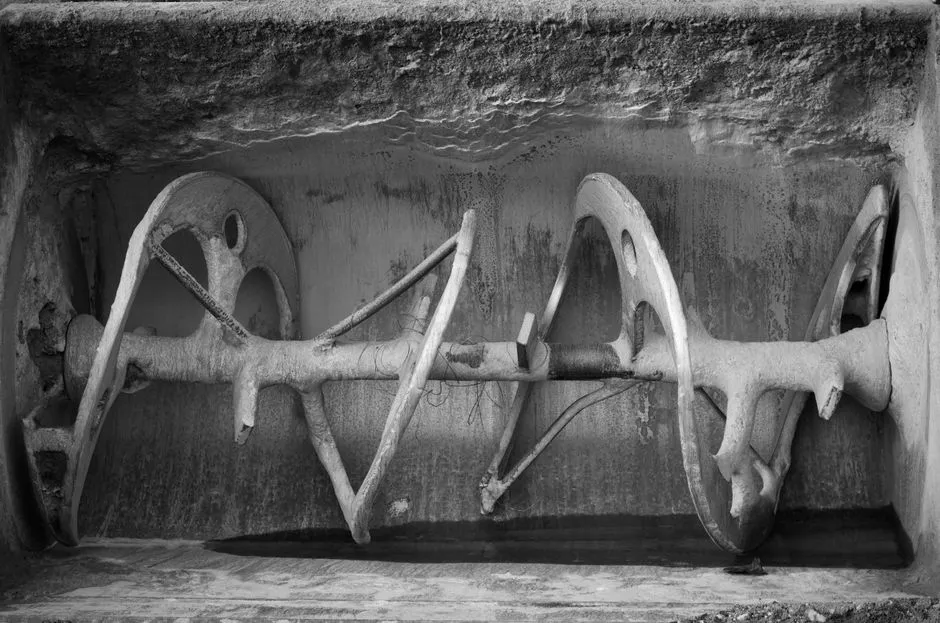
A decanter centrifuge is a conditional go for coal slurry when continuous solids capture, water recovery and manageable discharged solids are central, and the feed can be characterized without relying on model capacity alone. The referenced mining machine lists duplex stainless steel or SS316L contact parts, replaceable wear liners and a hardened-steel planetary gearbox (Waste Water Machinery, 2025). These features are useful screening criteria, but they do not demonstrate that a particular unit will meet the required clarified-water quality.
Fine solids are the principal separation-risk condition. The Minerals study identifies ultra-fine, kaolinite-dominated tailings as challenging to dewater (Minerals, 2025). For coal, the actual mineralogy and particle distribution may differ, so the buyer should request settling or centrifuge testing with representative material. A successful water balance and flow measurement alone will not establish whether the fine fraction will report to the liquid or solid phase.
Abrasiveness requires a separate qualification check. Mining service is associated with abrasive solids, but the supplied research does not provide coal-specific wear-life figures. Require the supplier to identify contact materials, wear-part configuration, replaceable liners, service intervals and the expected effect of particle size on wear. Chemical addition should be treated as an engineered part of the duty. An automatic chemical dosing system may be relevant if test work establishes that conditioning improves the selected separation route; it should not be assumed necessary before testing.
| Decision condition | Go | Conditional go | Reject or redirect |
|---|---|---|---|
| Continuous water recovery and solids capture | Representative feed supports the duty | Benefits appear after conditioning or clarification | Continuous operation is unnecessary |
| Fine-particle separation | Test demonstrates required capture | Solid-liquid split can be established with revised solids handling | Fine solids dominate and recovery remains inadequate |
| Abrasive solids | Wear construction addresses the duty | Test confirms life and replacement plan | Unqualified wear exposure |
| Upstream bulk solids | Clarification is an accepted process step | Clarifier duty must be validated | Clarifier is assumed but no solids balance exists |
Compare Decanter Centrifuges with Filter Presses
Decanter centrifuges suit continuous operation and automated solids discharge, while a plate and frame press can provide manual, hydraulic or fully automatic PLC-controlled dewatering. The comparison must include the complete operating system rather than equipment purchase price alone: feed conditioning, footprint, labor, washdown, filtrate quality, wear-part replacement, electrical demand and the operational value of recovered water.
HydropureWater plate and frame filter presses have published filtration areas from 1 m² to 500 m². These are catalog limits, not guarantees for coal slurry. To compare a plate and frame filter press for solids dewatering, request a duty calculation based on dry-solids loading, feed solids concentration, target cake condition, cycle requirements and filtrate quality.
| Selection factor | Decanter centrifuge | Plate and frame filter press |
|---|---|---|
| Operating pattern | Continuous | Batch or cyclic; manually, hydraulically or automatically controlled |
| Main separation variable | Differential speed, bowl speed and pond depth | Filtration area, pressure, cycle time and conditioning |
| Primary suitability question | Can the fine fraction be separated continuously while recovering water? | Can the required cake dryness and filtrate quality be achieved for the stated cycle? |
| Commercial evidence required | Proposed-feed duty curve and wear plan | Proposed-feed cycle calculation and included ancillary equipment |
| Key operating burden | Wear-part management and solids discharge consistency | Labor, washdown, plate handling and cycle time |
Neither bowl diameter nor filter area is a sufficient selection criterion. Require a representative-feed test or an engineering performance calculation based on dry-solids loading and required capture. Upstream clarification should remain in the comparison because reducing the solids burden can change the most appropriate downstream machine.
Build the Equipment Sizing and Procurement Worksheet
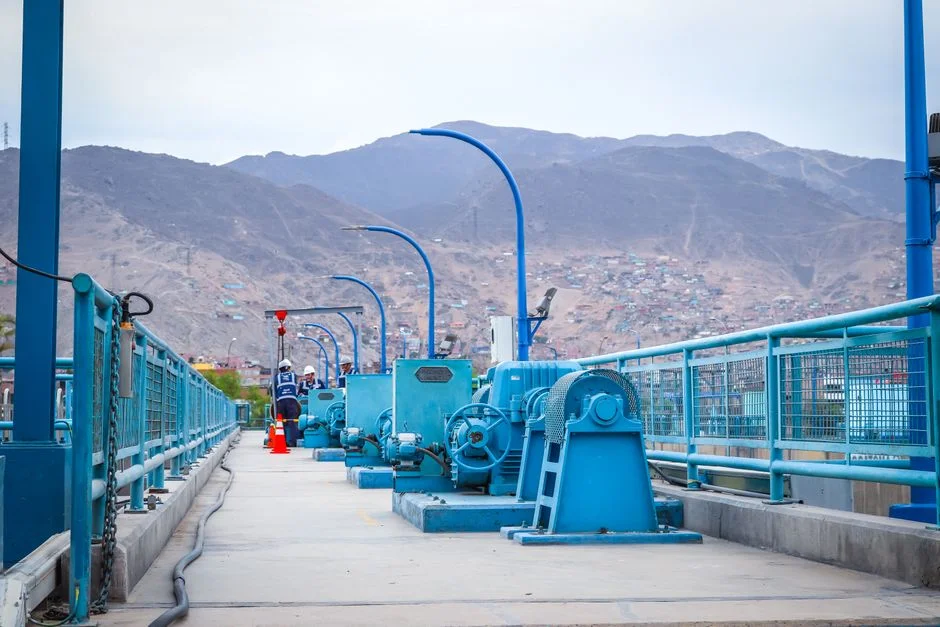
A coal-wastewater centrifuge sizing worksheet should convert each stream into a measurable duty and leave unresolved data visible. One published mining model family spans 0.5–150 m³/h across its listed models (Waste Water Machinery, 2025); that range is useful for screening suppliers, not for assigning a model without project data.
| Worksheet input | Buyer entry | Supplier response required |
|---|---|---|
| Stream and operating mode | Source, location, continuous or intermittent | Applicable equipment configuration |
| Feed flow | m³/h, including minimum, normal and peak | Selected model and operating range |
| Feed solids | Suspended-solids concentration and dry-solids mass rate | Solids balance and dry-solids capacity |
| Particle properties | Particle-size distribution, composition, settling behavior | Separation calculation and proposed-feed test |
| Abrasiveness | Known wear constituents and operating conditions | Materials, liners, service interval and replacement assumptions |
| Feed chemistry | Temperature, pH, dissolved solids and conditioning | Compatibility, conditioning and control requirements |
| Acceptance targets | Solids capture, clarified-water quality, discharge consistency | Duty curve and test protocol |
| Commercial scope | Operating schedule and cost boundary | Included ancillaries, wear parts, exclusions and commercial terms |
- Complete the feed characterization and identify any missing sample or test.
- Define the required clarified-water quality and solids-discharge condition.
- Require the supplier to submit a separation calculation and a proposed-feed duty curve.
- Define a representative-feed test protocol, including measurements and acceptance criteria.
- Confirm materials, instrumentation, wear parts, discharge consistency and continuous operating availability.
Ownership should be explicit. The operator supplies feed characterization and acceptance targets; the centrifuge supplier supplies separation calculations, materials information and performance substantiation; both parties agree the test protocol. The same worksheet can be used to ask suppliers to apply a flow-and-solids centrifuge sizing method, while keeping the coal-specific feed data and reuse objective in control.
Frequently Asked Questions
What feed data is needed to size a decanter centrifuge for coal-mining wastewater?
Request flow, suspended-solids concentration, dry-solids mass rate, particle-size distribution, mineral composition, abrasiveness, temperature, chemistry, conditioning and required clarified-water quality. Use the duty curve and proposed-feed test to select the machine, not a model’s maximum capacity.
How should a buyer compare supplier pricing for a coal-wastewater centrifuge?
Request an itemized commercial scope covering the centrifuge, drive, controls, feed and discharge auxiliaries, foundations, installation, wear parts, commissioning, test support and exclusions. Compare the complete lifecycle scope for the stated duty; no supported quotation is provided in the research, so a buyer should request a project-specific price rather than rely on a generic figure.
When may a filter press be more appropriate than a decanter centrifuge?
A filter press may be preferable when batch or cyclic operation suits the solids-generation pattern and the required cake and filtrate can be achieved within an acceptable cycle. Request a coal-feed calculation and cycle comparison before choosing it over continuous centrifugation.
What should be included in centrifuge supplier acceptance criteria?
Define measured solids capture, clarified-water quality, solids-discharge consistency, continuous operating availability, materials, instrumentation and wear-part scope. Require substantiation using the proposed feed and an agreed test protocol rather than accepting catalogue performance claims.