Confirm the Site, Operator and Applicable Permit Scope
Wastewater at a Samsung Electronics site in Germany should be handled by segregating each stream, identifying its contaminants, selecting the legally appropriate discharge route and treating it to the stricter applicable limit. Under the supplied German framework, direct discharge under WHG Section 57 requires a full site treatment chain, while indirect discharge under Section 58 requires pretreatment to the municipal Klärwerk’s requirements. A practical fab train can combine headworks, equalization and pH control, DAF, MBR, activated-carbon polishing and, where needed, RO. Exact limits and equipment sizing must be verified against the current permit, municipal Entwässerungssatzung, influent testing and applicable AbwV provisions.
The permit scope follows the operator, installation and wastewater fingerprint—not merely the brand name on the site. A semiconductor front end, back-end operation, battery facility, HVAC or data-center installation and an acquired mixed-tenant industrial property cannot be treated as one regulatory case. The supplied 2026 guidance states that AbwV Annex 31 applies to primary-cell, secondary-cell and battery manufacture; it does not automatically fit HVAC or semiconductor back-end facilities (HydropureWater, 2026).
For an operator change, review existing BImSchG and WHG approvals, determine whether a material change must be notified under Section 16 BImSchG, and assess the discharge route under Section 57 WHG for direct discharge or Section 58 WHG for indirect discharge. The supplied 2026 source describes discharge rights as attaching to the permit holder, so a change of control can require notification and reapplication even where the process plant and effluent remain unchanged (HydropureWater, 2026). Confirm this position with the competent Bezirksregierung.
Before choosing a treatment train, assemble the permit register, current discharge and pretreatment limits, sewer agreement, municipal Entwässerungssatzung, enforcement history, process descriptions, tenant boundaries and baseline influent data. An AbwV Annex 31 BAT-AEL gap analysis is necessary where applicable, but the authority must confirm which sector requirements and municipal limits govern the installation.
| Site or legal condition | Permit-path decision | Information required before equipment selection |
|---|---|---|
| Semiconductor fab or back-end operation | Determine the applicable sector requirements; do not assume Annex 31 applies automatically. | Process description, wastewater inventories, current approvals and authority confirmation. |
| Cell or battery manufacture | Assess AbwV Annex 31 together with the applicable BImSchG and BAT-AEL requirements. | Annex applicability, operating changes, BAT-AEL gap analysis and discharge limits. |
| HVAC or data-center site | Assess cooling blowdown, condensate and humidification streams separately. | Cooling chemistry, tenant discharge terms, reuse options and sewer acceptance. |
| Acquired mixed-tenant industrial property | Map each operator and stream; address Section 16 BImSchG notification and WHG permit needs. | Property boundaries, tenant contracts, permit register, enforcement records and baseline monitoring. |
| Direct discharge under Section 57 WHG | Site must provide the applicable treatment chain before discharge to a receiving water. | Receiving-water constraints, dilution basis, permit limits and polishing requirements. |
| Indirect discharge under Section 58 WHG | Use the Indirekteinleiter route and pretreat to municipal acceptance conditions. | Entwässerungssatzung, sewer agreement, Klärwerk capacity and surcharge rules. |
Map Each Wastewater Stream Before Equipment Selection
Each stream should have a measured contaminant fingerprint, a defined pretreatment objective and a nominated discharge route before it enters a common treatment train. The supplied 2026 engineering guidance separates NMP-bearing coating wastewater, fluoride-bearing electrolyte or formation wastewater, assembly rinse water containing trace metals and oil, sanitary wastewater, and lower-contamination cooling or humidification water (HydropureWater, 2026). Mixing these streams before characterization can increase chemical demand and make compliance harder to demonstrate.
For NMP-bearing coating wastewater, the supplied treatment logic places vacuum-distillation recovery upstream of biological polishing. Fluoride-bearing electrolyte and formation streams require pH control and fluoride precipitation; the stated approach uses calcium chloride after pH adjustment. Assembly rinse water is generally lower-volume and is associated with suspended solids, trace metals and oil, supporting DAF followed by metal-hydroxide removal. Lower-contamination cooling and humidification streams may have a reuse route if their chemistry and tenant arrangements allow it (HydropureWater, 2026).
Request flow, pH, COD, AOX, fluoride, sulfate, nitrogen, copper and other applicable metal data for each stream. For preliminary planning only, the supplied 2026 source gives 1.2–1.6 m³ of process wastewater per kWh of annual cell capacity and peak daily flows at 3–5 times the daily average when formation cycling is batched (HydropureWater, 2026). These are preliminary planning inputs, not German permit limits or guaranteed site design values; they do not automatically apply to a semiconductor fab, HVAC property or acquired facility.
Use a rotary mechanical bar screen as the first physical barrier where packaging debris, suspended solids, rags and fibrous material can reach the wastewater system. The supplied 2026 source identifies it as protection for downstream DAF and biological stages (HydropureWater, 2026). Screening reduces blockage and solids-loading risk but does not remove dissolved COD, fluoride, AOX or metals, so separate sampling remains necessary.
| Wastewater stream | Key fingerprint to verify | Preliminary treatment package | Route and acceptance focus |
|---|---|---|---|
| NMP-bearing coating wastewater | Flow, COD, NMP, pH, AOX and batch pattern | Screening; segregation; NMP recovery by vacuum distillation; equalization; biological polishing | Confirm recovered-solvent performance, COD/AOX outlet limits and the approved discharge route. |
| Electrolyte or formation wastewater | Flow, pH, fluoride, sulfate, nitrogen and applicable metals | Equalization; PLC-controlled pH adjustment; fluoride precipitation; clarification as required | Demonstrate compliance with the applicable AbwV or municipal fluoride, pH and sulfate conditions. |
| Assembly rinse water | Suspended solids, oil, COD, copper and other applicable metals | Mechanical screening; DAF; pH control; metal-hydroxide removal | Verify solids, oil and metal limits at the point of discharge or sewer connection. |
| Sanitary wastewater | Flow, COD, nitrogen and site acceptance conditions | Normally excluded from industrial wastewater pretreatment unless local rules require otherwise | Confirm sewer acceptance and separate metering. |
| Cooling or humidification water | Flow, pH, conductivity, residual chemicals and biocide profile | Segregation and reuse assessment; side-stream treatment only where chemistry requires it | Check tenant controls, reuse quality and permit or sewer conditions before routing to the ETP. |
Select Direct or Indirect Discharge by Permit and Capacity
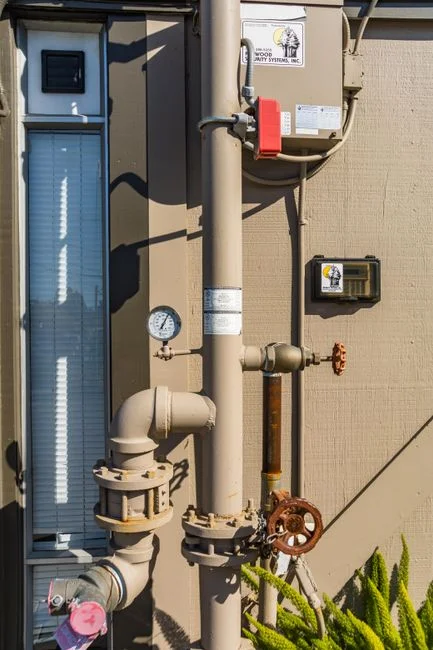
Section 57 WHG direct discharge places the full applicable treatment burden at the industrial site, whereas Section 58 WHG indirect discharge requires pretreatment to the conditions for acceptance into a municipal Klärwerk. The supplied 2026 source states that indirect discharge is often selected when municipal treatment capacity is available, while direct discharge can be appropriate where municipal capacity is constrained or advanced polishing and reuse justify the broader treatment scope (HydropureWater, 2026).
For an indirect route, obtain written confirmation from the municipality of sewer acceptance, available hydraulic capacity, surcharge rules and the applicable Entwässerungssatzung before sizing the pretreatment train. The supplied 2026 guidance also reports that municipal requirements under ATV/DVWK worksheet A 198 can tighten heavy-metal and AOX values by 20–50% relative to the AbwV band and identifies sulfate limits of around 200 mg/L as common where sewer corrosion is a concern (HydropureWater, 2026). Those values are municipal guidance in the supplied source, not universal conditions for every German Klärwerk.
For battery manufacture, the supplied 2026 source lists an AbwV Annex 31 discharge-point band of pH 6.5–9 and COD 150–300 mg/L, with fluoride, sulfate, several metals, total nitrogen and AOX also identified (HydropureWater, 2026). Do not transplant that band to a semiconductor fab, HVAC site or mixed industrial property. The authority must identify the applicable annex or negotiated sector limits, while the municipal rules and sewer agreement govern indirect discharge.
Use a BAT-AEL gap analysis to identify where the proposed train misses applicable benchmarks, especially for NMP, fluoride, AOX and direct-discharge polishing. The supplied 2026 source also identifies the 2024 STM BREF and 2024 Waste Treatment BREF as benchmarks where installation thresholds are crossed and notes that a gap analysis may still be expected by the state authority (HydropureWater, 2026).
| Decision factor | Indirect discharge: Section 58 WHG | Direct discharge: Section 57 WHG |
|---|---|---|
| Receiving route | Pretreated wastewater enters a municipal sewer and Klärwerk. | Treated wastewater is discharged to a receiving water under the site permit. |
| Treatment responsibility | The Klärwerk provides biological polishing; the site must meet sewer-acceptance conditions. | The site carries the full applicable treatment chain. |
| Indicative scope in supplied 2026 guidance | Screen, equalization, DAF or clarification, MBR and carbon polishing. | Add advanced polishing; the supplied source identifies RO and tighter AOX treatment as likely additions. |
| Critical external dependency | Written municipal acceptance, hydraulic capacity, surcharge rules and Entwässerungssatzung. | Receiving-water conditions, applicable permit limits and the required BAT-AEL gap analysis. |
| Water-reuse objective | Assess whether RO is needed for the intended reuse quality. | Assess RO and disinfection within the direct-discharge and reuse design. |
| Selection rule | Select if the Klärwerk can accept the stream and the pretreatment train meets municipal conditions. | Select if municipal capacity is unsuitable and the site can justify the additional treatment scope. |
Build the Treatment Train from Verified Stream Loads
The supplied baseline treatment sequence is rotary screening; equalization with PLC-controlled pH or chemical dosing; DAF or lamella clarification; MBR for COD and ammonia reduction; activated-carbon polishing; and optional RO for reuse (HydropureWater, 2026). Preserve upstream segregation: NMP recovery, fluoride precipitation and source-specific removal should not be replaced by a larger downstream biological or membrane system.
The integrated MBR wastewater treatment system is catalogued at 10–2,000 m³/day and with filtration below 1 μm. The DAF system for fab wastewater pretreatment is catalogued from 4–300 m³/h across 13 standard models (HydropureWater product catalogue). These catalogue ranges indicate available equipment configurations; they are not a substitute for sizing from measured peak flow, contaminant load and required residence time.
Use automatic chemical dosing for pH adjustment and precipitation, with interlocks that prevent chemical addition outside the approved operating envelope. The supplied 2026 treatment logic includes DAF for suspended solids, oils and metal-hydroxide flocs, followed by MBR and activated-carbon polishing for COD, ammonia, AOX and trace organics (HydropureWater, 2026). NMP-bearing streams require upstream vacuum distillation because biological polishing cannot be assumed to provide reliable solvent removal.
Close the solids-management loop. The supplied 2026 source calls for a plate-and-frame filter press to dewater hydroxide sludge before licensed disposal as metal-bearing waste (HydropureWater, 2026). Confirm sludge characterization, acceptance by the disposal contractor, storage conditions and the applicable waste-code determination before selecting the dewatering equipment.
For direct-discharge and reuse cases, treat RO and advanced AOX polishing as design options to be justified by the permit gap analysis and reuse specification. The supplied 2026 source describes RO as an engineering deliverable for process-water reuse and identifies additional RO and AOX polishing for direct discharge (HydropureWater, 2026). It does not establish that RO is mandatory at every German site.
| Stage | Primary function | Sizing and acceptance inputs |
|---|---|---|
| Rotary mechanical bar screen | Remove packaging debris, suspended solids, rags and fibrous material. | Peak flow, debris type, extracted-material handling and downstream solids resilience. |
| Equalization and chemical dosing | Balance batch flows; control pH; support fluoride or metal precipitation. | Diurnal and batch flow data, chemical consumption, mixing response and dosing interlocks. |
| DAF or lamella clarification | Remove suspended solids, oil and precipitated flocs. | Measured flow, oil and solids load, floc properties and required removal efficiency. |
| MBR | Reduce COD and ammonia while providing a compact biological treatment stage. | Organic and nitrogen loads, hydraulic peaks, required outlet quality and membrane cleaning strategy. |
| Activated-carbon polishing | Reduce AOX and residual trace organics. | Contaminant profile, carbon dose, replacement cycle and permitted AOX limit. |
| RO and disinfection, if required | Produce the specified reuse-water quality and, where approved, add direct-discharge polishing. | Reuse target, dissolved salts, recovery, pretreatment needs and site-specific process compatibility. |
| Plate-and-frame filter press | Dewater metal-bearing hydroxide sludge before licensed disposal. | Sludge volume and properties, dewatering result, cake handling and disposal acceptance. |
Convert the Design into Permitting and Procurement Acceptance Criteria
The supplied 2026 implementation schedule divides the work into permit review and operator notification at the start, a Vorbescheid and municipal-capacity confirmation during the first 6 months, detailed engineering and BAT-AEL gap analysis during months 6–18, and ongoing monitoring and reporting thereafter (HydropureWater, 2026). This is a project-planning framework supplied in the research, not a statutory deadline.
Convert the permit and design basis into enforceable supplier requirements. Require capacity against measured peak flows, guaranteed outlet performance for permit-relevant parameters, automatic controls, chemical storage and dosing, sludge handling and compliance with the approved pretreatment train. The supplier should document performance through witnessed tests using representative or agreed influent, startup procedures, calibration records and an operating manual.
Corporate water targets belong in the design review but do not replace the permit. The supplied 2026 source reports a DX Division target of 100% global water replenishment by 2030, while also stating that site-specific reuse economics and regulatory approval still require verification (Samsung Electronics 2024 Sustainability Report, as cited by HydropureWater, 2026). A water-reuse case should therefore identify the receiving process, required water quality, treatment losses, residual disposal and regulatory acceptance.
Commission in a controlled sequence: establish baseline monitoring, verify stream segregation, calibrate pH and chemical dosing, test each unit against its acceptance criteria, and then confirm integrated performance at the discharge point. Reporting links to Samsung’s N-EHS System should be implemented only after the legal reporting basis and corporate data requirements are confirmed. The supplied 2026 source identifies monthly reuse reporting through N-EHS System, while wastewater reporting and self-monitoring remain permit-dependent (Samsung Water Management Process and HydropureWater, 2026).
| Procurement package | Minimum evidence required | Acceptance criterion |
|---|---|---|
| Permit and sewer basis | Current approvals, Entwässerungssatzung, sewer agreement and written municipal capacity confirmation | Design limits traceable to the approved route and discharge point. |
| Influent characterization | Stream-level flow and analytical data, including pH, COD, AOX, fluoride, sulfate, nitrogen and applicable metals | Final sizing uses measured or validated loading data, not gross factory flow alone. |
| Equipment guarantee | Performance guarantee, hydraulic basis, controls logic, chemical and sludge scope | Demonstrated compliance with all permit-relevant outlet parameters. |
| BAT-AEL gap analysis | Applicable benchmark, present performance, proposed control and residual gap | Competent authority accepts the proposed compliance approach. |
| Acceptance testing | Factory and site test protocols, representative influent, calibration and training | Each unit passes before the integrated train is accepted. |
| Reuse and reporting | Reuse specification, losses, residual route and approved reporting fields | Water balance and regulatory or corporate reporting interfaces are demonstrably functional. |
Frequently Asked Questions
Is indirect discharge always the smaller and less expensive wastewater treatment option?
Not necessarily. Indirect discharge can reduce the site-side biological burden because the municipal Klärwerk provides polishing, but equipment scope, chemical consumption, sludge disposal, sewer surcharges and connection works still drive cost. Request a total-cost comparison using the sewer agreement, Entwässerungssatzung, confirmed hydraulic capacity and measured influent. No supported quotation is available in the supplied research, so any equipment price should be obtained through a site-specific budget quotation.
When is RO required for a Samsung Electronics site in Germany?
RO is not automatic. It becomes relevant when the approved direct-discharge design requires additional dissolved-solids or polishing control, or when a defined process-water reuse target cannot be met by screening, DAF, MBR and activated carbon. Confirm the reuse specification and remaining contaminants before including RO, and verify that the recovered water is acceptable to the receiving process.
What data should determine treatment capacity instead of total factory wastewater flow?
Use stream-level flow, batch and peak profiles, contaminant concentrations and load calculations. For the streams in the supplied framework, that means COD and NMP for coating wastewater, fluoride and pH for formation wastewater, suspended solids, oil and metals for assembly rinse water, and chemistry plus reuse requirements for cooling or humidification water. Final capacity must also pass the applicable permit, municipal acceptance conditions and BAT-AEL gap analysis.
Which credentials should buyers require from a wastewater treatment supplier?
Require relevant wastewater experience, a performance guarantee tied to the agreed outlet parameters, hydraulic-capacity substantiation, automatic-control documentation, service support and a site acceptance-test protocol. Ask the supplier to state exactly which duties are excluded, especially civil works, chemicals, sludge disposal, permit fees and authority acceptance. No catalogue configuration should be described as approved until the site-specific permit and municipal review are complete.