Start with the treatment route your site can support
Domestic sewage treatment in Pakistan depends on the site, available flow, land, reuse objectives, and discharge route, but two practical options are an underground A/O package plant or an MBR system. The WSZ combines anoxic/aerobic contact oxidation, sedimentation, and disinfection in one buried unit rated from 1–80 m³/h. Its MBR combines activated sludge with submerged PVDF filtration below 1 μm and is rated from 10–2,000 m³/day. These catalog ranges support preliminary screening only; the final choice depends on project-specific flow, reuse and operating requirements.
Begin by fixing the project objective. Safe discharge, irrigation or process reuse, and provision for a later polishing stage impose different treatment requirements. A buyer should also define whether the priority is a decentralized installation serving one campus or connection to a centralized sewer and treatment route. The comparison of packaged versus centralized sewage treatment is therefore a project-boundary decision, not simply a technology preference.
Request the average and peak domestic flow, contributing population or fixture units, wastewater characteristics, available footprint, groundwater conditions, power supply and the responsible approving authority. For a hotel or hospital, obtain the operating profile because laundry, kitchens, clinical wastewater and guest-flow variation can materially affect the duty basis. An irrigation assessment must examine the intended crop or process, receiving land, seasonal demand and the applicable approval pathway.
Pakistan-focused research confirms that treatment choice is not confined to two products. The National Academies presentation, Small Scale Sewage Treatment and Wastewater Reuse System for Pakistan, published in April 2020, investigated dual digestion, trickling filters, constructed wetlands and membrane systems. Those processes demonstrate several credible routes, but their laboratory findings do not establish a universal answer for a commercial site.
Use the verified underground A/O package sewage treatment plant range of 1–80 m³/h and the submerged-membrane MBR wastewater treatment system range of 10–2,000 m³/day only as preliminary screening boundaries. Neither range establishes the selected configuration, project duty cycle, treatment guarantees or required civil works.
Compare packaged A/O and MBR against site constraints
The packaged A/O unit is the stronger candidate when the site needs a compact, below-grade installation with a defined domestic treatment train, while the MBR is the stronger candidate for further evaluation when the reuse specification or operating arrangement makes membrane performance and process control central to the project. Site conditions dictate the final technology choice.
The HydropureWater verified catalog describes the WSZ as an anoxic/aerobic A/O biological contact oxidation process followed by sedimentation and disinfection in a single buried package unit. It is fully automated and is described as requiring no operator. The same catalog identifies residential communities, hotels, hospitals, factories and rural areas as intended applications and allows either below-grade installation with landscaping above or trailer mounting for mobile deployment.
These catalog statements define a useful procurement scope, but they do not remove site engineering. The buyer must establish excavation conditions, access arrangements, inlet and outlet works, lifting provisions, odor control, power availability, sludge handling, maintenance clearances and the responsible operator. “No operator required” should also be tested against the practical need for routine inspection, sampling, housekeeping, fault response and regulatory recordkeeping.
The catalog for the MBR describes activated sludge combined with submerged PVDF membrane filtration and describes effluent filtration below 1 μm. Its stated capacity is 10–2,000 m³/day. The catalog also claims a 60% smaller footprint than conventional systems; that is a vendor comparison, not a site-specific design. Compare the complete civil and operational footprint, including tank access, membrane withdrawal or replacement arrangements, lifting requirements, standby provisions and maintainable space.
The National Academies presentation reported more than 99.9% removal of all tested contaminants in a laboratory membrane configuration. The result applies to that laboratory test and its tested conditions; it does not establish performance for every commercial MBR or every domestic sewage application. Project acceptance criteria must instead relate to the agreed effluent use, discharge route, influent variability and applicable approval requirements.
| Selection factor | Packaged A/O WSZ | MBR | Buyer’s decision check |
|---|---|---|---|
| Catalog screening capacity | 1–80 m³/h | 10–2,000 m³/day | Compare the rated flow with measured average and peak domestic flow. |
| Treatment train | Anoxic/aerobic biological contact oxidation, sedimentation and disinfection in one buried unit | Activated sludge with submerged PVDF membrane filtration | Confirm the proposed train and all project-specific stages in the quotation. |
| Installation | Below grade or trailer-mounted for mobile deployment | Requires site-specific civil, lifting and maintenance arrangements | Compare total installed footprint, access and construction boundary, not equipment area alone. |
| Effluent description | Disinfection is included in the catalog process description | Catalog describes filtration below 1 μm | Specify the required effluent use and applicable performance basis in writing. |
| Operations | Catalog states fully automated with no operator required | Membrane and process controls require an agreed maintenance regime | Confirm attendance, sampling, response time, spare parts and sludge route. |
| Reuse and discharge | Potential fit where the agreed treatment route and footprint support the package | Potential fit where the project requires the specified membrane route and can support its operation | Define irrigation, process reuse or discharge requirements before selecting equipment. |
| Commercial evidence | Catalog capacity and operating description | Catalog capacity, filtration description and footprint claim | Request project references, commissioning evidence and guarantees applicable to the offered configuration. |
A practical shortlist follows a simple sequence: if the site has constrained land and a conventional domestic discharge objective, evaluate the WSZ; if reuse quality, process flexibility or a smaller total installation footprint is important and the operator can support membrane maintenance, evaluate the MBR. If neither assumption survives the site review, retain another route for comparison rather than forcing a packaged selection.
Recognize where alternative processes add value
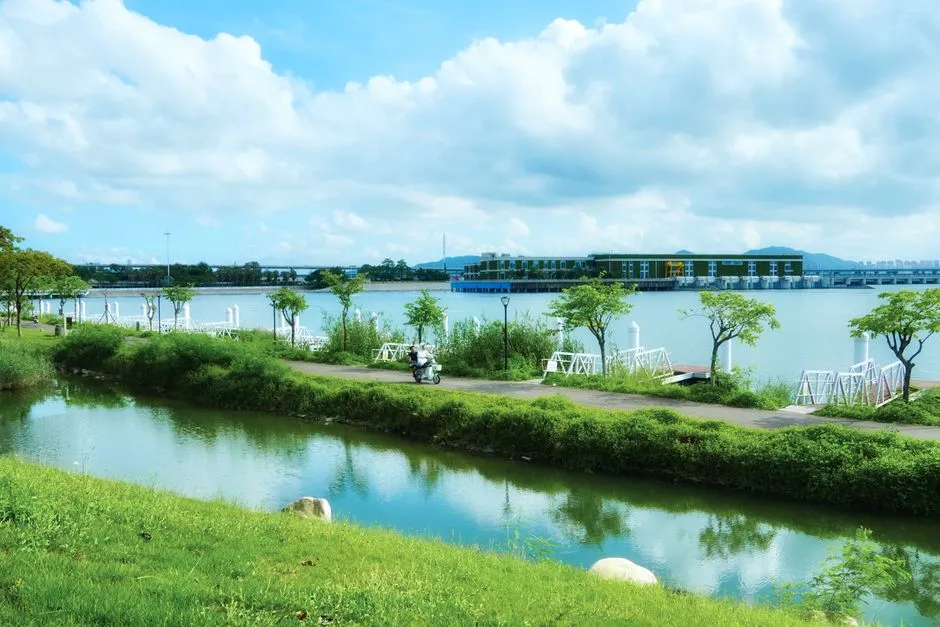
The Pakistan research project evaluated biological, wetland and membrane processes that can add value where their land, operating and reuse characteristics match the project. These alternatives provide viable options for specific site conditions.
The National Academies project investigated dual digestion, trickling filters, constructed wetlands, forward osmosis and membrane distillation as small-scale treatment and reuse approaches. In laboratory dual digestion at 25°C and 45°C, the reported results were a 95% decrease in BOD, 90–95% COD reduction, 99% TKN reduction, and 100% reduction in turbidity and color. These figures belong to the tested laboratory configuration and cannot be transferred directly into a commercial performance guarantee.
A free-water-surface constructed wetland reported reductions of 97.69% for BOD5, 97.69% for COD, and 100% for turbidity, odour and pathogens. The same 2020 National Academies presentation described constructed wetlands as low-energy, easy to operate, environmentally friendly and suitable for reuse, while also identifying disadvantages: large area requirements and susceptibility to seasonal variation.
These findings suggest a wetland as a serious option where land is available and the project can accommodate seasonal and hydraulic constraints. They do not establish that a wetland can replace a commercial A/O package or MBR at a hotel, hospital or residential community. A buyer should request current design criteria, full-scale or pilot references, seasonal performance evidence, odor and mosquito controls, solids management and a clear allocation of construction and operating responsibilities.
Membrane processes should also be separated from the broader MBR category. The reported forward-osmosis and membrane-distillation work examined a dual membrane configuration, including synthetic wastewater and selected contaminants. It supports further investigation of advanced treatment or reuse barriers, but it does not establish the performance of the commercial submerged-membrane MBR under the site’s actual sewage conditions.
For any alternative process, ask what evidence supports the proposed duty: the design influent, tested flow range, seasonal conditions, effluent target, fouling or solids-management behavior, operator requirements and reference installations. The submerged-membrane MBR wastewater treatment system remains a relevant commercial route when membrane treatment is central to the project, but advanced membrane research should not be used to overstate that catalog specification.
Build the information package before requesting a proposal
A comparable proposal cannot be evaluated until both suppliers receive the same design basis and scope. Standardizing the requirements ensures that differences in quotations reflect actual technology or service variations rather than mismatched assumptions.
Start with measured or defensibly estimated average and peak flow, including seasonal variation. Include contributing population and fixture units as checks rather than using them alone to size the plant. Provide wastewater characteristics, the required effluent use, site geometry, soil and groundwater information, available utilities and expected operating attendance. Where data are missing, identify who will complete the flow study, sampling program, geotechnical review or regulatory check.
Each supplier should then state the proposed treatment train, duty basis, materials, controls, disinfection stage, sludge-handling method, installation boundary, commissioning tests and warranty scope. Performance commitments should refer to the agreed discharge or reuse basis. The buyer should identify whether the supplier or the client must close gaps such as the flow study, civil design, power backup or environmental approval.
| Fillable project input | Information to provide or confirm | Why it affects the selection |
|---|---|---|
| Average and peak flow | Daily average, peak rate, seasonal profile, contributing population and fixture units | Defines sewage plant capacity selection and equipment duty. |
| Wastewater characteristics | Sampling results, expected variation and any non-domestic contributions | Tests whether the proposed biological and membrane processes remain appropriate. |
| Treated-water objective | Discharge route, irrigation requirement, process reuse or later polishing | Defines the required treatment performance and equipment configuration. |
| Site and installation | Boundary drawing, levels, footprint, access, soil, groundwater, utilities and lifting routes | Distinguishes packaged footprint from the complete installed installation. |
| Controls and utilities | Power availability, backup provision, control philosophy, SCADA requirements and attendance | Defines the operating responsibility and resilience needs. |
| Sludge and residuals | Sludge route, storage, extraction, transport and disposal responsibility | Prevents the treatment process from being separated from its residuals plan. |
| Approval pathway | Authority, discharge or reuse conditions, application documents and review responsibility | Connects the equipment specification to the site’s compliance route. |
| Commercial assurance | Selected configuration, rated flow, project duty cycle, site-specific engineering, references, commissioning tests and warranty | Prevents catalog specifications from being mistaken for an offer-specific commitment. |
The WSZ and MBR capacities, process descriptions and footprint statements are catalog specifications. A compliant proposal should confirm the selected configuration, actual rated flow, project duty cycle and any site-specific engineering. For context, wastewater treatment selection for a Peshawar hotel illustrates why the operating profile and reuse objective must lead the technical comparison.
The National Academies source demonstrates that Pakistan projects have examined multiple treatment and reuse routes. For procurement, however, request commercial references and commissioning evidence for the offered system rather than extrapolating academic results. The final recommendation should record why the selected route satisfies the stated duty and which unresolved inputs remain conditions of the offer.
Frequently Asked Questions
What is the best sewage treatment system for a residential community in Pakistan?
There is no universal best system. Compare a packaged A/O plant and an MBR against measured average and peak flow, available land, installation access, treated-water use, sludge route, operator availability and approval conditions. If the site has limited space and a conventional domestic treatment objective, evaluate the buried A/O option; if the reuse specification and operating capacity justify membrane treatment, evaluate the MBR.
How much does a packaged sewage treatment plant or MBR cost in Pakistan?
The supplied evidence does not provide current Pakistan market prices, so a defensible budget cannot be stated. Request comparable quotations using the same average and peak flow, treatment train, effluent target, installation boundary, civil works, sludge handling, controls, commissioning and warranty scope. Compare the quotation scope before comparing headline prices.
How should sewage plant capacity be selected?
Use measured or defensibly estimated average and peak domestic flow, then check them against seasonal variation and contributing population or fixture units. Do not infer capacity from population alone. The WSZ and MBR catalog ranges are preliminary screening limits only; the supplier should confirm the selected configuration and project duty cycle against the documented flow basis.