Confirm the discharge route before selecting equipment
Mining and metals plants discharging to a sewer near Bay Minette generally need an industrial pretreatment train designed around the applicable federal category, current MAWSS local limits, and the site’s ADEM permit conditions. EPA promulgated the Mineral Mining and Processing Effluent Guidelines under 40 CFR Part 436; its requirements are incorporated into NPDES permits (US EPA, “Mineral Mining and Processing Effluent Guidelines,” accessed 2026). The supplied Bay Minette pretreatment guide also references 40 CFR Part 437 and notes that Part 440 contains daily-maximum and monthly-average metals limits (HydropureWater, 2026). Those references do not replace confirmation of the current permit, applicable ore subcategory, and site-specific limits.
Ask the pretreatment coordinator for the current MAWSS industrial discharge limits, the industrial user permit, the applicable federal subcategory, and the current ADEM NPDES language. Identify whether chloride, TDS, sulfate, or ammonia-nitrogen requirements apply in the Mobile Bay watershed before freezing equipment specifications. The supplied guide says the ADEM overlay can add chloride, TDS, sulfate, and ammonia-nitrogen caps beyond the federal metals limits (HydropureWater, 2026). Treat those as permit-verification items, not as universal limits.
| Requirement layer | What it controls | Buyer action before design |
|---|---|---|
| Federal mineral-mining rules | Requirements incorporated into NPDES permits under 40 CFR Part 436; the supplied guide also references Part 437 and Part 440 metals limits (US EPA, accessed 2026; HydropureWater, 2026) | Confirm the facility category, ore subcategory, regulated analytes, averaging periods, and current permit language. |
| MAWSS local sewer limits | Site-specific industrial pretreatment conditions applicable to discharge to the POTW (HydropureWater, 2026) | Obtain the current local limits and the industrial user permit from the pretreatment coordinator. |
| ADEM NPDES conditions | Potential chloride, TDS, sulfate, and ammonia-nitrogen overlay in the Mobile Bay watershed (HydropureWater, 2026) | Request the current permit language and confirm which conditions apply to the discharge point. |
| Operational constraints | Flow, footprint, reuse, sludge handling, and chemical delivery | Complete the site-input sheet below and send the same data package to every bidder. |
Use this fillable site-input sheet:
- Permit path: industrial user permit status; MAWSS contact; ADEM permit numbers; federal subcategory; current local limits; each analyte, limit, and averaging period.
- Wastewater: hourly average flow; peak flow; TSS; FOG; pH; temperature; BOD/COD; hardness as CaCO3; sulfate; TDS; and metals regulated for the confirmed subcategory.
- Operational contributors: cyanide, ammonia, and thiosulfate where cyanidation is used; production, washing, machining, and lubrication schedules; metal-pulse events.
- Site and reuse: available footprint; indoor or outdoor installation; power supply; clean-water source; sludge-dewatering route; make-up-water value; brine-disposal cost; reuse destination.
Characterize the wastewater that can change the train
A clarification unit cannot be selected from TSS alone because heavy mineral fines and oil-bearing light solids require different removal mechanisms. Collect hourly and peak flow, TSS, FOG, pH, temperature, and a metals scan covering species regulated under the confirmed mining subcategory (HydropureWater, 2026). Add diurnal sampling and targeted sampling during metal, cyanide, or lubricant releases; equalization and biological loading should reflect measured variability rather than an averaged laboratory result.
The supplied field characterization reports a BOD/COD ratio below 0.3, hardness in the thousands of mg/L as CaCO3, sulfate often above 1,000 mg/L, and TDS above 5,000 mg/L under constrained Mobile-area conditions (HydropureWater field data, 2026). Those are feed characteristics, not a guarantee of every plant’s discharge. They are decision-relevant because low biodegradable organic content can limit biological treatment, while sulfate, hardness, and TDS can affect biological stability, membrane fouling, and chemical consumption.
For cyanidation operations, document cyanide, ammonia, and thiosulfate contributions separately (HydropureWater field data, 2026). Record their relationship to production cycles and metal pulses. The design questions are:
- Does FOG remain high after upstream source control, or can leaks and lubricants be eliminated at the machine?
- Are the solids mainly high-density mineral fines, light colloids, or a mixed population?
- Does the wastewater have enough biodegradable carbon to support the proposed biological stage?
- Are hardness, sulfate, TDS, and temperature stable enough for the biological process and membrane materials?
Do not infer filterability from particle name. Ask the laboratory to report the solids characterization needed by the selected solids-removal process, and obtain sludge-volume and dewatering expectations from the same data set. Otherwise, a plant can select an apparently suitable clarifier and then discover that the resulting sludge cannot be dewatered with the available filter press.
Use the results to assign each measured constituent to a treatment barrier: dissolved metals to precipitation, heavy fines to lamella clarification, FOG and light solids to DAF, biodegradable organics or ammonia to biological polishing, and residual particulate matter to filtration or membrane separation. This assignment keeps biological equipment from being asked to remove a dissolved contaminant it was not designed to precipitate.
Remove metals before biological or membrane treatment
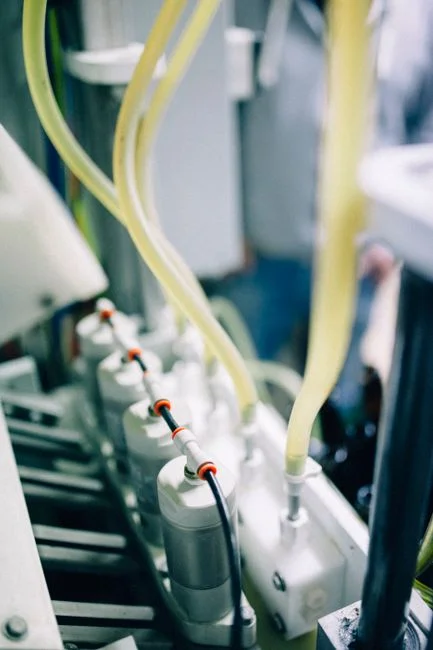
Both MBR and conventional activated sludge require upstream precipitation to meet the cited federal metals requirements (HydropureWater, 2026). A membrane retains biomass and particulate material; biological floc can carry some metals, but neither is a substitute for controlled conversion of dissolved metals into recoverable solids.
The supplied source identifies two precipitation operating windows: pH 8.5–9.5 with lime or caustic for a conventional activated-sludge train, and pH 6.5–7.5 before an MBR to keep dissolved metals in hydroxide form (HydropureWater, 2026). These windows must be confirmed through jar and pilot testing using the actual wastewater. Ore type, metal species, alkalinity, hardness, and competing ligands can shift the optimum dose and residual chemistry.
Sequence the metal-removal barrier as follows:
- Characterize the metal-bearing fraction and alkalinity demand.
- Run jar tests across the candidate precipitation pH and dose range.
- Select lime or caustic and, where necessary, coagulant or flocculant.
- Install automatic chemical dosing with flow-proportional and pH feedback control.
- Provide mixing and contact time before solids separation.
- Route the metal-bearing precipitate to sludge handling and confirm its disposal route.
Automatic chemical dosing is a process requirement rather than an optional convenience because it holds the selected pH and feed consistently (HydropureWater, 2026). Specify the required control loops, calibrated pumps, chemical storage, alarms, and operator verification points. Include the maximum expected flow, minimum residual demand, and upset conditions in the control narrative.
Also define what happens when precipitation chemistry fails. A low-pH upset can release metals before they reach a clarifier, while an overdose can raise downstream salt loading or impair biological treatment. The acceptance test should therefore verify pH control, metal removal, sludge generation, and chemical use under representative flow—not merely demonstrate that the discharge is clear.
Match DAF or lamella clarification to the solids
DAF is the stronger candidate when oil and grease or light solids dominate; lamella clarification is the stronger candidate when heavy, fast-settling mineral fines dominate and FOG is limited (HydropureWater, 2026). A mixed mineral-solids and lubricant-FOG stream may justify clarification upstream of DAF, with both waste streams routed to sludge dewatering (HydropureWater, 2026). The mining sewer pretreatment equipment comparison provides a useful framing for this equipment decision.
DAF generates micro-bubbles of 30–50 microns in a pressurized saturation loop. Its standard conditioning sequence includes 15–45 seconds of flash mixing for coagulant, pH adjustment, and polymer flocculant; the saturation loop requires clean water at startup (Clearwater Industries, 2026-04, as cited by HydropureWater, 2026). Lamella clarification shortens settling distance with inclined plates, making it suitable for high-density, fast-settling fines, but it does not provide the buoyancy that lifts oil and emulsions.
| Decision condition | First equipment candidate | Required proof before sizing |
|---|---|---|
| FOG and light suspended solids dominate | DAF with chemical conditioning and skimming | FOG composition, treatability results, peak flow, clean-water startup provision, and sludge route. |
| Heavy mineral fines dominate and FOG is limited | Lamella clarifier | Settling data, surface-loading basis, sludge density and dewatering characteristics, and site footprint. |
| Heavy fines and lubricant FOG occur together | Clarifier followed by DAF | Measured solids split, oil removal after each stage, hydraulic profile, and combined sludge-dewatering test. |
| Downstream membrane requires oil protection | DAF or clarifier–DAF before equalization | Residual oil and solids after polishing, membrane compatibility, and backwash or clean-water capacity. |
Compare bids over the same basis. Require each supplier to price the same flow basis, materials, controls, sludge withdrawal, clean-water startup, installation utilities, and downstream sludge handling. Material selection matters in saline or metal-bearing service because corrosion protection affects lifecycle cost (HydropureWater, 2026).
Add biological polishing and control shock loading
MBR should be selected when effluent stability and compact solids separation justify its additional equipment and operating burden; CAS remains an option where a usable aeration basin, low incremental capital requirement, and limited reuse value support conventional treatment. The supplied comparison of MBR versus activated sludge for Bay Minette mining wastewater provides the project-specific cost and operating context.
Under steady-state conditions, the cited MBR performance is 0.01–1.31 NTU turbidity and 0.10–0.72 mg/L TSS, based on EPA Calls Creek and Cauley Creek facility data in the EPA Membrane Bioreactor Fact Sheet (HydropureWater, 2026). The source also states that upstream precipitation remains necessary; membrane retention does not eliminate the metal-removal barrier.
Provide 8–24 hours of hydraulic equalization ahead of an MBR when the feed contains metal pulses and ammonia swings (HydropureWater field data, 2026). Equalization protects biology, smooths chemical demand, and allows operators to inspect or divert an upset. Confirm volume against measured pulse duration, flow variability, and required reaction time rather than adopting it as a universal tank size.
| Selection factor | MBR indication | CAS or hybrid indication |
|---|---|---|
| Solids separation | Retains biomass without a gravity secondary clarifier | Requires stable secondary clarification; the supplied source reports susceptibility to bulking in the described mining matrix. |
| Feed variability | Equalization and pretreatment remain required before membranes | Requires reliable settling after shock loads; the source reports a 30–60% removal loss for 24–72 hours after a metal pulse (HydropureWater field data, 2026). |
| Footprint and civil work | Eliminates the secondary clarifier and sand filter but adds membranes, screens, permeate pumps, controls, and CIP skidding | Can reuse an existing aeration basin and secondary clarifier. |
| Reuse economics | More attractive where permeate has clear value or brine-disposal cost is significant | Lower incremental cost when no material reuse driver exists. |
Freeze screening requirements with the module format: 1–2 mm for hollow-fiber modules and 2–3 mm for flat-plate systems; the HydropureWater DF flat-sheet module uses a 0.1-micron pore size (HydropureWater, 2026; HydropureWater product catalog, 2026). An integrated MBR wastewater treatment system can be evaluated against this basis, but the selected module must be matched to the plant’s screening and control architecture.
For the supplied 1,000 m3/day example, MBR capital cost was 20–40% above equivalent-flow CAS, while operating cost was 15–30% higher per m3. Reuse payback was typically 4–6 years when make-up water exceeded about $2/m3 and electricity exceeded about $0.09/kWh (HydropureWater field data, 2026). These are source conditions, not quotations for a specific plant. Enter the actual utility tariff, make-up-water value, and brine-disposal cost into the project model.
Build the procurement package and verify performance
A comparable bid requires the same four information blocks: influent characterization, applicable effluent targets, site constraints, and the proposed reference equipment (HydropureWater, 2026). Put the current permit limits in the second block; do not ask bidders to infer them from flow or product literature.
Require evidence of a comparable mining or metals installation. Ask for the most recent reference date, influent and effluent results, and confirmation that the proposed material suits the site’s conductance and chloride profile (HydropureWater, 2026). Also request the pilot method, chemical consumption, sludge-generation estimate, controls narrative, utilities demand, clean-water requirement, and installation schedule. Normalize these items across bids rather than comparing skid prices alone.
Before committing capital, the supplied source recommends a 60–90-day MBR cassette pilot using actual Bay Minette feed and identifies the DF-series 0.1-micron flat-sheet module for that pilot (HydropureWater, 2026). Define acceptance criteria before the trial: applicable metal and TSS limits, pH control, oil carryover, normalized membrane flux, cleaning frequency, recovered solids handling, and behavior during a representative pulse.
Make the final equipment decision only after the pilot confirms that precipitation chemistry, solids removal, equalization, and biological treatment operate as an integrated train. A compliant individual unit is not sufficient if the complete train fails under a real metal pulse or cannot route its wastes for disposal.
Frequently Asked Questions
When should a Bay Minette plant choose DAF, lamella clarification, or both?
Choose DAF when measured FOG and light solids dominate, lamella clarification when heavy fast-settling fines dominate and FOG is limited, and a clarifier–DAF sequence when both populations are significant. Obtain the flow, TSS, FOG, pH, metals, and sludge-dewatering data before making that selection; this is the decision basis in the supplied 2026 mining pretreatment guide.
How should the MBR-versus-CAS cost difference affect the budget?
Do not use the 1,000 m3/day example as a quotation. The supplied figures are 20–40% higher MBR CAPEX, 15–30% higher OPEX per m3, and a 4–6-year reuse payback under stated water-value and power-cost conditions (HydropureWater field data, 2026). Ask bidders for itemized capital and operating costs using the plant’s actual tariff, make-up-water value, brine-disposal cost, staffing, and chemical-cleaning assumptions.
What site data and supplier evidence are needed before requesting a defensible bid?
Provide peak and hourly flow, TSS, FOG, pH, temperature, relevant metals, current permit limits, footprint, utilities, sludge route, and reuse economics. Require a comparable reference installation, its most recent date, influent and effluent results, proposed materials, and the pilot or acceptance plan. That gives procurement a common technical basis for comparing DAF, lamella, MBR, and CAS bids.
Who must confirm the permit limits and final treatment design?
Confirm the applicable federal subcategory, current MAWSS local limits, industrial user permit, and current ADEM NPDES conditions with the pretreatment coordinator and permitting authority. Then have the design engineer reconcile those requirements with measured wastewater data, pilot results, equipment guarantees, and the available sludge-disposal route.