Choose the Equipment from the Sludge Stream
GN Solids Control identifies fiber, mixed, biological, coating, de-inking and hydroxide sludge as pulp and paper centrifuge applications, confirming that the dominant solids stream must drive the configuration rather than a generic machine selection (GN Solids Control, accessed 2026). For primary and mixed fiber sludge, GN specifies a hydraulic scroll drive because fiber-induced vibration can impair solids conveying. For slippery de-inking sludge, it recommends a narrow bowl-to-scroll gap; for sticky coating sludge, it requires a purpose-designed solids-discharge arrangement to prevent stalling. These requirements then become explicit RFQ items.
The practical selection sequence is therefore: classify the sludge, identify the dominant handling risk, specify the drive and wear protection, and only then compare equipment or price. A mill handling several streams should assess whether they can be blended into one controlled feed or require separate machines, because the applicable configuration changes with the dominant sludge type.
| Dominant sludge stream | Principal handling risk | Configuration to request in the RFQ |
|---|---|---|
| Primary fiber sludge | Fiber-induced vibration and unstable solids conveying | Hydraulic scroll drive; vibration-tolerant conveying arrangement |
| Mixed fiber sludge | Combined fiber vibration, variable solids loading and mixed-solids behavior | Hydraulic scroll drive; documented torque and solids-loading limits |
| De-inking sludge | Slippery solids and fine-particle carry-over | Narrow bowl-to-scroll gap; centrate solids and capture criteria |
| Coating sludge | Sticky solids that can stall unprotected scroll flights | Purpose-designed solids discharge; wear-protected conveying surfaces |
| Biological sludge | Variable compressibility and dependence on conditioning | Conditioning-sensitive geometry and controls; measured-feed trial |
| Hydroxide sludge | Chemical precipitate characteristics and corrosion risk | Material selection verified against precipitate chemistry |
Abrasion and corrosion resistance are core pulp and paper requirements, according to GN Solids Control (accessed 2026). HydropureWater’s 2026 engineering guide also identifies ceramic or tungsten-carbide protection for abrasive applications. The RFQ should name the wetted materials, wear components, their replaceable positions and the proposed service intervals; “wear resistant” without a defined material or application boundary is not an adequate specification.
Size the Centrifuge from Measured Feed Data
Model selection requires specific feed data because the research contains no verified universal feed range for pulp and paper sludge. The mill must provide hourly and daily feed flow, total solids, suspended solids, ash or filler content, solids type, viscosity, temperature, pH and the applicable centrate-quality limit. It should also state the operating-hours profile and whether the feed comes directly from clarification or DAF, biological treatment and secondary clarification.
HydropureWater’s 2026 guide gives an industrial application envelope of 5–15 m³/h, an L/D ratio of 3:1 to 4:1 and bowl speed of 2,500–4,000 RPM. These are preliminary comparison points, not guaranteed selection values; the same guide describes a wider general decanter range of 1,500–3,500×g. ANDRITZ states that separation performance depends on feed characteristics, operating conditions and sludge conditioning, with its portfolio spanning 0.1–500 m³/h depending on application (ANDRITZ, accessed 2026).
| Selection or acceptance input | What the buyer must obtain | Why it affects the decision |
|---|---|---|
| Feed flow | Hourly peak, daily average and operating-hours profile | Defines hydraulic loading and turndown |
| Solids concentration | Total solids and suspended solids, with the dry-solids basis stated | Sets dry-solids throughput and polymer demand |
| Solids composition | Fiber, fines, filler or ash, and dominant de-inking or coating constituents | Determines geometry, drive and wear protection |
| Process conditions | Viscosity, temperature and pH | Affects conditioning, materials and separation behavior |
| Performance targets | Required cake dry-solids fraction, capture rate, centrate solids target and polymer ceiling | Converts selected equipment into measurable acceptance criteria |
| Operating profile | Start-up frequency, batch periods and expected feed variability | Checks whether continuous operation is justified |
Specify the required cake dry-solids fraction, solids capture rate, centrate solids limit, maximum active-polymer dosage and representative feed during the guarantee test. The 2024 academic energy study by Energy Conversion and Management X found operating conditions and differential speed central to both energy consumption and product quality, making a representative trial or supplier performance guarantee necessary before final sizing.
Compare Centrifuges with Alternative Dewatering Routes
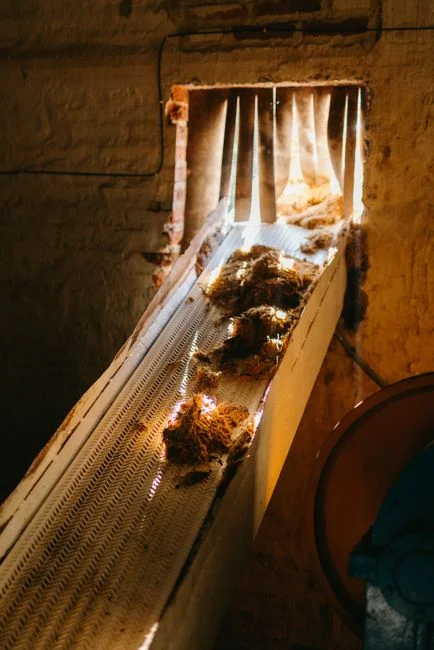
HydropureWater’s 2026 guide selects a decanter when floor space is constrained, the sludge is fiber- or coating-rich, or enclosed operation is required for odor and hygiene. It assigns a belt filter press to capital-constrained biological-only sludge with low fines, a screw press to low-fines non-sticky sludge, and a plate-and-frame press to smaller mills or backup duty.
These are stream-specific selection rules rather than universal rankings, and equipment choice should reflect the specific handling requirements of the mill. A continuous decanter handles difficult feed reliably and meets measurable cake and centrate targets. It may be an unnecessary complication for a low-fines biological stream where the capital priority dominates, while a batch route may be more practical where continuous operation, enclosed odor control or high throughput cannot be justified.
| Technology | Most suitable stated condition | Main decision issue |
|---|---|---|
| Decanter centrifuge | Constrained floor space; fiber- or coating-rich sludge; enclosed odor control | Continuous solids handling, capital cost, polymer demand and machine availability |
| Belt filter press | Biological-only sludge with low fines when capital cost is the priority | Whether the selected sludge behavior and cake target suit continuous belt operation |
| Screw press | Low-fines, non-sticky sludge | Sticking and wear risk outside its stated feed range |
| Plate-and-frame press | Smaller mills or backup duty | Batch operation and high labor demand |
HydropureWater estimates that a plate-and-frame press can reach 30–40% dry solids, though this range must be verified for the selected mill and equipment (HydropureWater, 2026). Its comparison also states that polymer can be the largest variable operating cost for coating and de-inking sludge, exceeding power and maintenance combined. For those streams, a low-energy machine has limited economic value if conditioning cost is excessive.
The comparison should also include the centrate destination, cake handling and cleaning arrangements. A decanter route may require centrate-return pumping, an enclosed feed and cake conveyor, while a plate-and-frame installation adds plate handling, wash-water demand and batch labor. The plate-and-frame sludge filter press is relevant where batch duty is the actual requirement, but the selected stream and operating schedule must justify it.
Build the RFQ Around Operating and Acceptance Criteria
Each bid should identify the flow and feed-solids basis, proposed model, bowl geometry, drive arrangement, wear protection, polymer system, utilities and operating controls. ANDRITZ highlights adjustable bowl and scroll speeds, automatic controls, automatic shutdown, service access and energy-recovery options as relevant decanter features (ANDRITZ, accessed 2026), but the mill should require only those functions that form part of its operating or acceptance basis.
HydropureWater’s 2026 estimate places a 5–15 m³/h decanter package, including bowl, skid, controls and polymer dosing, at USD 150K–600K. This is a screening range rather than a quotation, and it excludes civil works and the polymer make-up room, which the source estimates may add 20–40% on a greenfield site. Parallel-unit configurations sit at the upper end of the stated package range (HydropureWater, 2026).
| RFQ package | Required disclosure | Responsibility before award |
|---|---|---|
| Basis of design | Measured feed flow, total solids, solids type, operating hours and design solids load | Mill process engineer |
| Machine and materials | Model, bowl geometry, drive, wetted materials, wear protection and solids-discharge arrangement | Equipment supplier |
| Conditioning | Polymer type, active dosage, make-down concentration, maturation, injection point and controls | Mill and supplier jointly |
| Performance test | Representative feed, cake dry solids, capture rate, centrate solids and polymer ceiling | Agreed before the trial |
| Energy | Main-drive assumptions, operating point and whether recovery is included | Supplier to disclose |
| Exclusions | Civil work, feed and centrate pumps, polymer room, cake handling, installation and commissioning | Define contractually |
| Commercial support | Controls, alarms, acceptance-test responsibility, spares pricing and service scope | Procurement and engineering |
Polymer maturation and controlled dosing belong in the budget. HydropureWater’s 2026 guide states that de-inking sludge commonly requires 3–8 kg of active polymer per dry metric ton, while its coating-sludge example uses 6 kg/t DS. These figures are application estimates, not guaranteed consumption, so the offer must state the dosage basis and test method. The same source describes 1% active make-down aged for 30–60 minutes before injection, subject to the selected polymer and process trial. The PLC-controlled chemical dosing system should be scoped with make-down, maturation, dilution and controlled injection functions where polymer conditioning is part of the guarantee.
Prepare Upstream Treatment for the Centrifuge
A centrifuge in a typical mill train receives sludge that has already passed through screening, primary clarification or DAF, biological treatment and secondary clarification. HydropureWater’s 2026 guide places it at the final dewatering stage rather than directly on raw mill wastewater. The upstream clarification stage determines the solids concentration and much of the fiber content entering the centrifuge.
Polymer type and dosage affect dewatering performance, and ANDRITZ identifies conditioning as a factor affecting sludge thickening and dewatering (ANDRITZ, accessed 2026). HydropureWater explains that conditioning must produce mature flocs without over-shearing them before they enter the bowl; inadequate maturation or excessive shear can reduce capture. The trial must therefore examine the complete feed-conditioning-centrifuge train, not only the rotor and bowl.
Where polymer is used, include make-down, maturation and dilution functions, together with metering, injection control and alarms. HydropureWater’s 2026 example specifies a 1% active make-down aged for 30–60 minutes before injection, subject to the selected polymer and process trial. The DAF or clarifier, polymer skid and centrifuge should share one design basis for feed chemistry, solids loading and control strategy.
Use the DAF configuration for pulp and paper effluent to examine the upstream removal stage. Coordinate its outlet concentration and residual chemical conditions with the centrifuge supplier before issuing the performance guarantee. If a different decanter approach is under consideration, the decanter centrifuge selection methodology and centrifuge sizing and selection workflow provide broader structuring examples, but the final basis must remain the measured paper mill sludge.
Frequently Asked Questions
What preliminary cost should a buyer use for a 5–15 m³/h decanter centrifuge package?
HydropureWater’s 2026 guide gives USD 150K–600K as a screening range for a 5–15 m³/h package including the bowl, skid, controls and polymer dosing. It excludes civil works and the polymer make-up room, which the source estimates may add 20–40% on a greenfield site. A buyer should not convert that range into an approved budget without requesting a feed-specific quotation and a written scope showing exclusions for foundations, installation, feed and centrate pumping, cake handling, electrical works, commissioning and polymer-room facilities.
How should a supplier prove that its centrifuge configuration fits fiber, de-inking or coating sludge?
The guarantee must map the selected configuration to the measured feed and its handling risks. For fiber sludge, require confirmation of
Frequently Asked Questions
How much does a decanter centrifuge for paper mill wastewater cost?
Capital costs for a decanter centrifuge system typically range from $150,000 to over $600,000, depending on the throughput capacity, materials of construction (such as duplex stainless steel for corrosion resistance), and the complexity of the integrated control system. Total project costs, including installation, polymer feed systems, and sludge conveyance, often double the equipment purchase price.
Operating costs are primarily driven by power consumption, which averages 0.5 to 1.2 kWh per cubic meter of sludge processed, and polymer dosing, which typically ranges from 2 to 10 kg of active polymer per dry ton of sludge. Maintenance cycles, including bowl balancing and scroll hard-facing, should be budgeted at approximately 3% to 5% of the capital cost annually.
Which centrifuge configuration handles fiber, de-inking and coating sludge?
For high-fiber content, a standard decanter with a high-torque gearbox is sufficient, but de-inking and coating sludges require specific configurations to handle high ash content and abrasive fillers like calcium carbonate or clay. These applications necessitate centrifuges with steep-angle beach designs, high-wear protection (tungsten carbide tiles on the scroll flights), and adjustable pond depths to manage the high density of the solids.
In cases where de-inking sludge contains high concentrations of fine contaminants, a centrifuge with a high-speed clarification zone is preferred to prevent turbidity in the centrate. For mixtures containing coating pigments, the centrifuge must be capable of variable bowl speeds—typically between 2,500 and 4,000 RPM—to generate the high G-forces required to separate fine, inorganic particles from the sludge matrix.
What feed data do I need to request a paper mill centrifuge quotation?
To receive an accurate quotation, you must provide the feed flow rate in cubic meters per hour (m³/h) and the feed solids concentration, typically expressed as a percentage of total suspended solids (TSS). You must also specify the sludge composition, including the ratio of organic fiber to inorganic ash, as this significantly impacts the required G-force and scroll torque.
Additionally, provide data on the chemical properties of the wastewater, specifically pH levels and temperature, to determine metallurgy requirements. If available, include a particle size distribution analysis and the results of a bench-scale capillary suction time (CST) test to help the manufacturer predict sludge dewaterability and optimal polymer dosing requirements.
When is a plate-and-frame filter press better than a decanter centrifuge?
A plate-and-frame filter press is generally superior when the process requires the highest possible cake dryness, often exceeding 40% to 50% solids, which is difficult for centrifuges to achieve consistently. Filter presses are also more effective for low-flow applications (typically under 10 m³/h) where the high capital expense of a centrifuge cannot be justified by continuous operation.
Furthermore, filter presses are preferred if the sludge has highly variable solids concentrations or if the facility requires a very high degree of filtrate clarity without the need for sophisticated polymer conditioning. Unlike centrifuges, filter presses are batch processes, making them more suitable for facilities that prioritize maximum solids capture efficiency over automated, continuous throughput.
How should I specify centrifuge performance and acceptance tests in an RFQ?
Your RFQ should define performance based on three key metrics: minimum cake solids percentage (e.g., 25% dry solids), maximum solids capture rate (typically >95%), and the maximum allowable polymer consumption rate in kg/ton. Specify that these metrics must be met while processing the design flow rate under the mill's specific sludge characteristics.
The acceptance test protocol should mandate a continuous 72-hour trial run where samples are taken at four-hour intervals to calculate a weighted average of performance. Ensure the contract stipulates that if the equipment fails to meet the guaranteed dryness or capture rate, the vendor is responsible for mechanical adjustments, software tuning, or component upgrades at no additional cost to the mill.