Separate the wastewater before choosing treatment
A Vilnius data center should separate cooling-tower blowdown from sanitary and process wastewater, then characterize each stream before selecting equipment. Cooling blowdown is concentrated because evaporation leaves dissolved solids and treatment chemicals behind; its quality may include elevated TDS, metals, residual biocides, corrosion inhibitors and altered pH (Water Utility Report, 2026-04-14). The practical choice is municipal discharge, reuse for lower-priority services, or advanced treatment for cooling makeup. No supplied source establishes Vilnius sewer limits, permit conditions or reuse rules, so those must be verified before equipment is ordered.
Begin with a source-by-source inventory rather than a site-wide “wastewater” flow. Include cooling-tower blowdown, closed-loop purge, cooling makeup, sanitary wastewater and any process discharge. For each stream, record its source water, cooling chemical program, cycles of concentration, flow and duration, temperature, pH, conductivity or TDS, suspended solids, relevant metals and residual treatment chemicals (Water Utility Report, 2026-04-14). This information determines whether a stream can be discharged, redirected to a suitable service, treated for cooling makeup or held for further investigation.
Keep cooling blowdown and sanitary wastewater hydraulically and operationally separate unless a valid reuse route requires them to be combined. Their contaminants and likely treatment requirements differ: blowdown carries concentrated cooling chemicals and dissolved solids, while sanitary effluent requires biological treatment and solids removal before most reuse. To assist in this process, compare data-center blowdown treatment trains.
| Wastewater stream | Characterization required | Provisional route | Decision gate |
|---|---|---|---|
| Cooling-tower blowdown | Flow, temperature, CoC, conductivity/TDS, pH, suspended solids, metals, biocide and inhibitor residuals | Municipal discharge, non-contact process reuse or cooling-makeup reuse | Receiving-system acceptance and measured water quality |
| Closed-loop purge | Fluid type, heat-transfer-fluid concentration, pH, metals and flow profile | Further investigation or segregated treatment | Fluid-specific disposal and reuse restrictions |
| Cooling makeup | Source-water analysis, flow, seasonal variation and required cooling-loop chemistry | Not wastewater; define as a separate demand in the water balance | Compatibility with recovered water and treatment train |
| Sanitary wastewater | Flow, load, suspended solids, biological characteristics and discharge destination | Municipal discharge or approved non-potable reuse | Local discharge acceptance and reuse specification |
| Process wastewater | Source, chemicals, temperature, flow, pH, solids and identified contaminants | Stream-specific route after characterization | No blended route until compatibility is demonstrated |
Quantify the blowdown recovery opportunity
Actual measured flows should determine the recovery opportunity, not an assumed concentration ratio or total IT load. At 4 cycles of concentration, theoretical blowdown equals 25% of makeup-water volume; at 6 cycles, it falls to 20% (Genesis Water Technologies, undated research excerpt). The change from 4 to 6 cycles reduces blowdown by 5 percentage points, or 20% (Genesis Water Technologies, undated research excerpt).
The water balance must also distinguish evaporation, controlled blowdown, leaks, unmeasured losses and emergency dumps. Genesis Water Technologies reports that actual blowdown can exceed theoretical calculations by 15–30% because of unmeasured losses and emergency dumps (undated research excerpt). Therefore, install or verify metering for makeup water, evaporation and blowdown, and maintain a log of bypasses, overflows and emergency discharges.
Build the economic case from the full water and treatment cost structure. This should include water supply, wastewater disposal, cooling chemicals, labor, energy, monitoring and the capital and operating cost of recovery equipment. A cheaper utility charge does not establish that reuse is economic, because more concentrated cycles can increase chemical use and downstream treatment difficulty (Genesis Water Technologies, undated research excerpt).
| Water-balance item | How to establish it | Use in the business case |
|---|---|---|
| Makeup water | Meter total and, where practical, each cooling system | Baseline freshwater demand and avoided water cost |
| Controlled blowdown | Meter continuous discharge separately from dumps and emergency events | Recoverable-water volume |
| Evaporation | Calculate from the reconciled water balance and cross-check operational data | Identifies consumptive loss that reuse cannot replace directly |
| Unmeasured losses | Investigate leaks, overflows and inconsistent meter records | Explains divergence from theoretical blowdown |
| Emergency dumps | Maintain a dated event register with volume and cause | Design peak flow and equalization requirements |
| Total cost | Price water, disposal, chemicals, energy, labor and treatment | Compare routes on avoidable cost rather than utility price alone |
Compare discharge, process reuse and cooling-makeup reuse
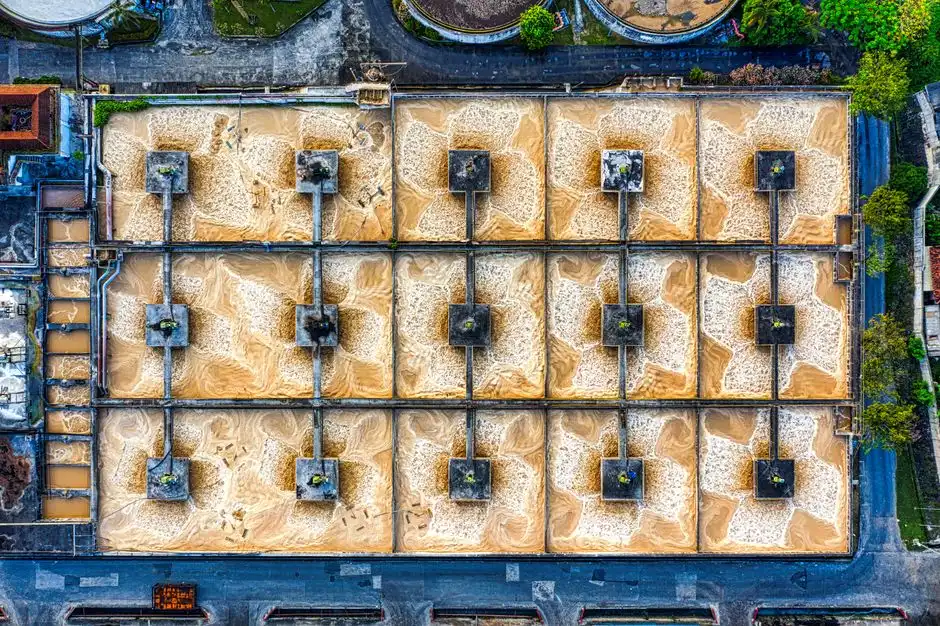
Municipal discharge is feasible only after the receiving utility confirms the proposed volume, chemistry, pretreatment requirements and cumulative-capacity position. Cooling blowdown can contain concentrated salts, metals, biocides, corrosion inhibitors and altered pH, depending on source water and chemical treatment (Water Utility Report, 2026-04-14). A pretreatment train may be needed even when the final destination is the sewer.
Process reuse offers a lower-severity route where the destination has a compatible quality specification. Genesis Water Technologies identifies irrigation, toilet flushing and outdoor equipment washing as potential uses for suitably treated blowdown (undated research excerpt). The water is not automatically suitable because it has been treated; it must remain controlled for the intended use, including public-health, irrigation and equipment-material requirements.
Cooling-makeup reuse is the most demanding option because concentrated salts and treatment chemicals must be addressed before the water returns to the cooling system. Xylem identifies wastewater treatment and reuse as part of a water lifecycle approach intended to minimize waste and maximize recycling (Xylem, undated research excerpt). That supports reuse as an operating objective, but it does not establish that advanced treatment is justified at a particular Vilnius facility. Scale, measured flows, treatment capability and operating economics must support that decision.
| Route | Best-fit condition | Evidence required before approval | Principal risk |
|---|---|---|---|
| Municipal discharge | Measured discharge quantity and chemistry fall within confirmed receiving-system conditions | Written sewer route, permit conditions, pretreatment requirements and cumulative-capacity assessment | Local acceptance is unknown because no Vilnius rule was supplied |
| Non-contact process reuse | Destination has an explicit acceptable water-quality specification | Characterized stream, destination demand profile and confirmation of reuse restrictions | Using one treated stream where multiple quality specifications apply |
| Cooling-makeup reuse | Makeup demand, treatment complexity and operating resources justify advanced reuse | Measured water balance, full chemistry, treatment-development data and lifecycle cost | Salts, metals and chemical residuals remain unsuitable for the cooling loop |
Select a treatment train that fits the contaminants
The treatment train should follow measured contaminants rather than a generic wastewater recipe. For enterprise and colocation facilities, the cited implementation path is physical separation—such as media filtration or dissolved air flotation—followed by treatment for identified contaminants (Genesis Water Technologies, undated research excerpt). The next step depends on whether the selected destination is municipal discharge, non-contact reuse or cooling makeup.
Use dissolved air flotation (DAF) when suspended solids, colloidal matter, oil and grease or FOG require physical separation. A DAF system for cooling-blowdown solids separation must be selected against measured flow, load and required separation performance. For sanitary or process wastewater requiring biological treatment and membrane solids separation, evaluate an MBR system for sanitary and process wastewater against the measured organic load, hydraulic profile and treated-water specification.
Ultrafiltration can remove bacteria, colloids and suspended solids before sensitive reuse or reverse-osmosis pretreatment. It does not, by itself, remove dissolved salts, metals or treatment chemicals, so UF should not be presented as a complete blowdown-to-cooling-makeup solution. Final selection may require additional dissolved-solids removal and control of residual chemicals, depending on the measured composition and the receiving cooling system’s requirements.
Advanced blowdown-to-makeup reuse should be selected only where sufficient scale, treatment capability and operating economics support the added complexity (Genesis Water Technologies, undated research excerpt). Use the industrial wastewater treatment process-selection guide to match processes to contaminant measurements.
| Treatment step | Use it when the characterization identifies | What it does not establish | Required design input |
|---|---|---|---|
| Media filtration | Suspended matter that can be removed by depth filtration | Acceptance of the final effluent for sewer discharge or cooling makeup | Peak flow, solids profile, turbidity and required filtrate quality |
| DAF | Suspended solids, colloids, oil and grease or FOG requiring physical separation | Removal of dissolved salts, metals or residual chemicals | Flow and mass loading, chemical demand, flotation performance and sludge handling |
| MBR | Sanitary or process wastewater requiring biological treatment and membrane solids separation | A basis for sizing from IT load alone | Measured flow, organic load, temperature, solids and reuse specification |
| UF | Bacteria, colloids or suspended solids ahead of sensitive reuse or RO pretreatment | Complete blowdown-to-makeup treatment | Feed chemistry, flow, required permeate quality and cleaning strategy |
| Advanced polishing | Dissolved solids, metals or chemical residuals remain unsuitable for the selected reuse route | Economic justification without site data | Full water analysis, recovery target, operating resources and lifecycle cost |
Build a site-specific acceptance checklist
Equipment should be ordered only after the site has a reconciled water balance and a written receiving-system decision. Require measured makeup, evaporation, controlled blowdown and dump flows, together with at least one season of operating data where available. Do not size the plant from a generic cycles-of-concentration assumption or total IT load alone.
- Request source-water analysis, blowdown analysis, the chemical program, flow-duration data, temperature records and a register of emergency dumps.
- Obtain written confirmation of the municipal sewer route, applicable permit conditions, pretreatment requirements and the receiving utility’s cumulative-capacity assessment, as recommended by Water Utility Report (2026-04-14).
- Define treated-water acceptance criteria separately for discharge, process reuse and cooling-makeup reuse. Include the parameters relevant to each destination rather than applying one generic specification.
- Require automatic controls, monitoring, redundancy, maintenance access, commissioning tests and operator training to be included in supplier scope.
- For reuse, confirm that the receiving service—not just the treatment plant—has an acceptable water-quality specification.
A comparable decision structure is set out in the data-center wastewater reuse versus discharge assessment. For Vilnius, written site-specific confirmation is a procurement gate rather than an optional clarification.
Frequently Asked Questions
How should the budget for cooling-blowdown treatment be calculated?
Identify whether projected savings come from reduced makeup water, avoided disposal charges, lower chemical consumption or a combination, then compare those avoided costs with capital, energy, labor, monitoring and maintenance costs. Genesis Water Technologies advises using total-cost accounting rather than utility charges alone (undated research excerpt). Request a vendor cost model based on the site’s measured water balance; no supported Vilnius quotation is available.
What data should determine treatment-train capacity?
Size each train from measured peak flow, flow duration, contaminant loading and required treated-water quality. Sanitary wastewater, blowdown and cooling makeup should not share one capacity basis. A generic IT load or concentration ratio is not an adequate substitute for site data.
How should treatment suppliers be evaluated?
Ask bidders to show relevant industrial or data-center blowdown experience, controls, monitoring, redundancy, service support and commissioning methodology. Require proposed guarantees to reference the characterized influent and the defined receiving destination. The blowdown treatment-train comparison provides a useful framework for comparing those submissions.
What must be verified before a Vilnius discharge or reuse route is approved?
Obtain written confirmation of the applicable permit, sewer route, receiving requirements and cumulative-capacity assessment. Equipment selection should not assume that discharge or reuse is locally authorized without site-specific verification.