
Which treatment route fits the Elyria discharge and reuse plan?
For fabricated-metals wastewater in Elyria, MBR is usually the stronger option when low-turbidity effluent, a constrained site, water reuse, or difficult solids separation justifies higher capital and operating costs. The supplied Erie comparison reports MBR effluent below 5 mg/L TSS and below 1 NTU, versus 10–30 mg/L TSS and 5–15 NTU for conventional activated sludge (CAS). CAS remains attractive for simpler flows where energy and capital cost dominate. EPA cautions that MBRs cost more to operate and require screening, fouling control, membrane cleaning, and eventual replacement. Neither option alone determines compliance: the actual Elyria POTW permit, local limits, influent variability, and pretreatment needs must be verified.
Start with the destination, not the treatment name. If the treated water is destined for POTW discharge, build the selection around the current permit, local limits, sampling requirements, and surcharge exposure. If it will enter a rinse-water or process-reuse loop, define the reuse specification—including turbidity, solids, metals, oil and grease, and any application-specific requirements—before comparing equipment.
EPA identifies better effluent quality, smaller space requirements, and easier automation as MBR advantages, while also noting higher capital and operating costs than conventional systems for the same throughput (EPA Membrane Bioreactors Fact Sheet, 2021). MBR is therefore a logical candidate when reuse is credible, the available plot area is limited, or the project values automated solids separation. CAS is more defensible for comparatively simple influent, available land, and a budget dominated by initial capital and energy.
A hybrid CAS retrofit deserves separate evaluation. Retaining an existing aeration basin while adding membrane solids separation may reduce brownfield disruption, but reuse demand, peak flow, equalization, membrane redundancy, and the condition of the existing aeration and blower equipment must be checked before treating it as economical.
| Selection condition | Preferred starting point | Decision to verify locally |
|---|---|---|
| Rinse-water reuse or low-turbidity effluent | MBR, with polishing if the reuse specification requires it | Elyria POTW permit, local limits, and reuse criteria |
| Simple influent, available land, lower capital and energy priority | CAS, with polishing if required | Influent variability, settling performance, and polishing need |
| Existing CAS basin and brownfield site | Hybrid retrofit after engineering review | Basin condition, aeration, blowers, equalization, controls, and peak flow |
Request the current permit, local limits, sampling and reporting requirements, flow basis, and reuse criteria directly from the receiving POTW. Generic federal values cannot substitute for those documents. The MBR versus activated sludge for metals wastewater comparison provides additional process context, but the procurement basis must remain the Elyria site and receiving authority.
What wastewater characteristics change the process choice?
Influent variability and constituent chemistry determine whether biological treatment can operate reliably and whether the membranes require additional protection. The supplied Erie comparison describes typical fabricated-metals influent at 5–80 mg/L total metals, 50–500 mg/L oil and grease, 300–2,500 mg/L COD, and 100–800 mg/L TSS; these are regional comparison ranges, not Elyria permit limits (HydropureWater, “MBR vs Conventional Activated Sludge for Fabricated Metals,” 2026). The same source identifies excursions from chelated cleaning chemistries and emulsified cutting fluids as important variables for process selection.
Oil and grease should be addressed before either biological system. The supplied comparison recommends DAF upstream of the biological process to remove free oil and grease to below 20 mg/L, helping protect downstream biology and reduce membrane-fouling risk (HydropureWater, 2026). For a Elyria plant, that recommendation must still be tested against the actual wastewater and equipment performance. The fabricated-metals DAF versus clarifier comparison is useful for developing that pretreatment basis.
Do not select a process from COD and TSS alone. EPA states that MBR membranes remove solids effectively but do not remove dissolved wastewater components without additional treatment steps (EPA Membrane Bioreactors Fact Sheet, 2021). A metals-containing stream can therefore require biological treatment, chemical precipitation, filtration, or another polishing step depending on the constituent and receiving-water or reuse requirement.
| Input | Why it affects selection | Buyer action |
|---|---|---|
| Metals | Speciation, chelated forms, and precipitation potential affect biological removal and sludge handling | Obtain total and dissolved metals analyses across representative operating conditions |
| Oil and grease | Free oil can inhibit biology; emulsions can foul membranes and impair settling | Characterize free and emulsified fractions and verify DAF performance |
| COD and BOD | They define organic loading and biological treatment demand, but do not fully describe metals or reuse suitability | Submit a constituent analysis with flow-weighted and event samples |
| TSS and grit/debris | Solids loading affects clarifier performance, membrane flux, screening demand, and equalization | Define screening, grit removal, and peak-load criteria |
| pH, temperature, conductivity, and chelants | They affect biological activity, chemical dosing, membrane behavior, and corrosion | Include operating ranges, not only averages |
For an DAF pretreatment system for fabricated-metals wastewater, ask the supplier to define the oil-removal objective, hydraulic loading, chemical demand, recovered-sludge handling, and performance under the plant’s worst documented oily load. Confirm the integrated submerged-PVDF MBR system screening basis and chemical compatibility with the resolved wastewater chemistry.
How do CAS and MBR compare at the treatment plant?
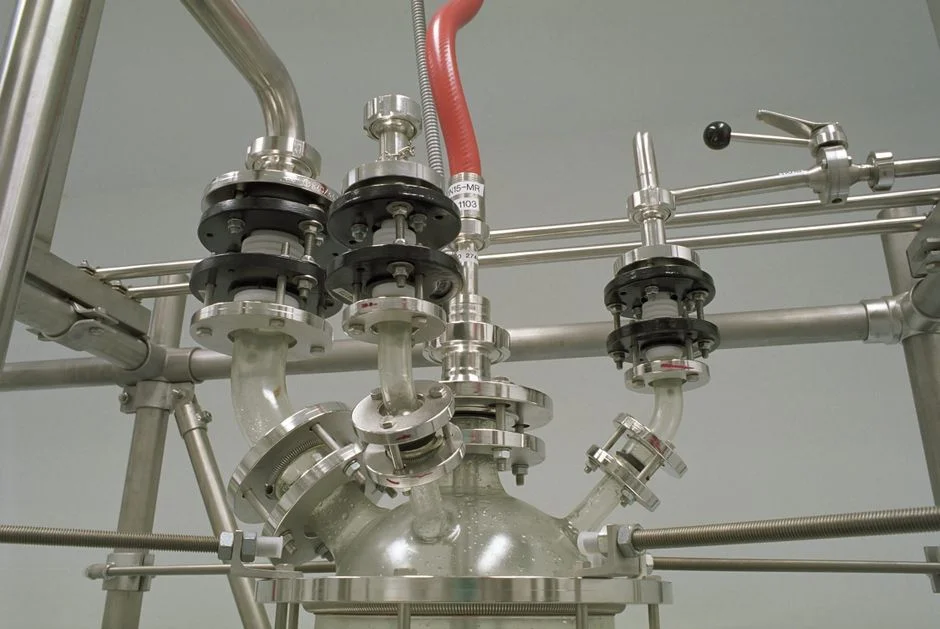
The main process difference is how solids are separated: CAS uses gravity settling in a secondary clarifier, while MBR uses membrane filtration to retain solids in the biological system. The supplied Erie comparison reports CAS operation at 3–15 days SRT and 2,000–4,000 mg/L MLSS versus MBR at 20–60 days SRT and 8,000–12,000 mg/L MLSS (HydropureWater, 2026). MBR therefore maintains a higher biomass concentration, but it does not remove the need for biological reaction, aeration, or solids wasting.
Reported effluent ranges are below 5 mg/L TSS and below 1 NTU for MBR versus 10–30 mg/L TSS and 5–15 NTU for CAS; these are comparison figures from the supplied article, not Elyria permit guarantees (HydropureWater, 2026). The difference matters where the receiving authority, process user, or reuse specification is more demanding than the basic discharge requirement. It should not be represented to a reviewer as a guaranteed result for an untested Elyria wastewater.
EPA states that MBR filtration can replace the secondary clarifier and sand filters in a conventional treatment train, permits higher biomass concentrations, and can reduce bioreactor space requirements (EPA Membrane Bioreactors Fact Sheet, 2021). That configuration may also simplify solids handling because the solids are physically retained, although the retained solids still return to the biological reactor and must be wasted and handled.
The trade-offs are operational as well as financial. EPA identifies higher energy use for air scouring, membrane cleaning and fouling control, and eventual membrane replacement. MBR waste sludge may also have a lower settling rate, potentially requiring chemicals to produce biosolids acceptable for disposal. A buyer should therefore evaluate membrane flux, cleaning frequency, chemical consumption, sludge dewatering, and plant labor alongside effluent quality.
| Design or operating factor | CAS | MBR |
|---|---|---|
| Solids separation | Secondary clarifier | Submerged membrane filtration; clarifier may be omitted in the selected train |
| Comparison SRT | 3–15 days | 20–60 days |
| Comparison MLSS | 2,000–4,000 mg/L | 8,000–12,000 mg/L |
| Comparison effluent | 10–30 mg/L TSS; 5–15 NTU | Below 5 mg/L TSS; below 1 NTU |
| Principal burdens | Clarifier area, settling performance, polishing for tighter targets | Fine screening, membrane fouling control, cleaning, energy, and replacement |
| Configuration relevance | Retain or retrofit existing basin and clarifier | Specify membrane material, pore size, aeration, flux, cleaning, and redundancy |
The supplied product catalog describes submerged PVDF flat-sheet modules with 0.1 μm pore size and integrated aeration for continuous scouring (HydropureWater verified product catalog). Those specifications should be checked against the required pretreatment, expected flux, cleaning chemistry, and replacement strategy; they are not, by themselves, a site-performance guarantee.
What does MBR add to total installed and operating cost?
MBR should be priced as a complete treatment system, not as a membrane-package premium. The supplied Erie comparison estimates MBR CAPEX at 1.4–1.8 times the basin-and-clarifier cost of an equivalent CAS system and OPEX at 10–25% higher (HydropureWater, 2026). These are comparison estimates from the supplied commercial source, not a quotation for an Elyria installation.
The cost boundary must include the items that can erase the apparent simplicity of a lower-cost CAS bid. The same source identifies membrane cassettes, stainless frames, larger blowers, periodic chemical cleaning, membrane replacement, tertiary polishing, clarifier retrofits, and sludge-handling upgrades as cost drivers to include in a like-for-like comparison. For MBR, also price fine screening, equalization, control systems, backup capacity, operator labor, cleaning chemicals, and membrane withdrawal logistics. For CAS, include clarifier construction, polishing, chemical conditioning, and any required solids-retention improvements.
The supplied comparison cites Karim and Mark’s result that MBR becomes the lowest-cost option only beyond an approximately 67-year design horizon (as summarized by HydropureWater, 2026). That long-horizon result is not a budgeting horizon for most buyers. It is a warning not to use simple payback as the only selection criterion. Compliance reliability, reuse value, avoided rewrites, and the ability to operate within the available footprint may justify a different decision from simple energy cost.
| Cost package | CAS | MBR |
|---|---|---|
| Biological treatment | Aeration basin, blower system, clarifier | Aeration reactor, membrane tank, scouring aeration, blowers, screens |
| Polishing and reuse | Add filtration or other polishing if required | Add polishing if required by discharge or reuse specification |
| Operation | Sludge wasting, clarifier maintenance, chemical conditioning as needed | CIP chemicals, integrity testing, membrane cleaning, higher energy use, replacement reserve |
| Resilience | Clarifier redundancy and equalization | N+1 membrane capacity and equalization |
| Brownfield option | Retain and refurbish existing basin and clarifier where practical | Evaluate retention of the aeration basin with membrane solids separation |
Request a quotation that states the flow basis, design peak, treatment train, guarantees, exclusions, and pricing for N+1 configuration, equalization review, spare parts, CIP chemicals, labor, energy assumptions, membrane warranty, and replacement schedule. The MBR cost and operating-cost guide can support budget development, but an installed-project quotation should remain the procurement benchmark.
What should a buyer request before selecting a system?
A defensible Elyria procurement starts with a signed design basis, not an equipment model. Require the parties to identify the discharge destination, current permit limits, POTW local limits, sampling points and frequencies, flow basis, peak factors, reuse specifications, and future expansion assumptions. If the water will be reused, identify the receiving process and the quality limits set by that process. “Reuse quality” without a defined application is not an acceptance criterion.
Require representative influent and effluent datasets covering metals, oil and grease, COD, TSS, pH, temperature, conductivity, and relevant chelants. The package should identify who performs sampling and laboratory analysis, how samples are collected across production and cleanup cycles, and which constituent determines each sizing calculation. Keep verified permit obligations separate from supplier assumptions and from regional comparison ranges.
Require sizing calculations that show average and peak flow, hydraulic retention time, SRT, MLSS, oxygen-transfer demand, membrane flux, equalization, fine screening, and N+1 availability. EPA notes that peak MBR design flow should generally be no more than 1.5–2 times average design flow and that equalization or additional membrane capacity may be necessary (EPA Membrane Bioreactors Fact Sheet, 2021). The supplier must explain how the selected design handles the site’s documented peaks, not simply state that the system can accept them.
- Lock the design basis: permit, local limits, reuse criteria, flow data, constituent analyses, utilities, footprint, future expansion.
- Define pretreatment: DAF performance, screening, equalization, chemical compatibility, residual-oil control, and protection of biology and membranes.
- Review process calculations: SRT, MLSS, oxygen transfer, membrane flux, hydraulic residence time, peak handling, and N+1 configuration.
- Set acceptance criteria: guaranteed effluent parameters, sampling method, test duration, membrane flux and cleaning requirements, warranty exclusions, and remedy for nonperformance.
- Close the operating package: controls, operator training, maintenance support, spare parts, CIP chemicals, membrane-replacement terms, and brownfield construction constraints.
For a retrofit, the buyer should not assume that existing infrastructure is usable. Check aeration capacity, basin condition, hydraulics, equalization, controls, blowers, piping, electrical service, and construction access. A retained basin may reduce civil work while leaving insufficient oxygen-transfer, membrane-zone, or peak-flow capacity.
Frequently Asked Questions
Should the budget compare MBR with CAS or with CAS plus polishing?
Compare the complete discharge and reuse trains, not the bioreactor packages alone. Request installed costs for MBR, CAS, and CAS plus the polishing required to meet the same signed effluent specification. Include equalization, DAF, sludge handling, energy, operator labor, CIP chemicals, membrane replacement, redundancy, and disposal. The supplied 2026 Erie comparison estimates MBR CAPEX at 1.4–1.8 times the CAS basin-and-clarifier cost and OPEX at 10–25% higher, but an Elyria project requires a site-specific quotation.
What data should be given to an MBR supplier for sizing?
Provide average and peak flow, current permit and local limits, reuse targets, representative constituent analyses, available footprint, pretreatment performance, utility limits, and future expansion assumptions. Also provide the flow basis for each value and identify who performed sampling and laboratory analysis. This allows the supplier to calculate SRT, MLSS, oxygen transfer, membrane flux, screening, equalization, and N+1 availability against the same basis.
How should a buyer evaluate a supplier’s performance claim?
Ask for guaranteed effluent values, the demonstrated process basis, N+1 design, membrane warranty terms, maintenance support, operator training, spare-parts availability, and delivered operating costs. Require a clear allocation of responsibility for pretreatment, controls, testing, and performance remedy. A comparison range from a commercial article is not a guarantee, and a reuse claim is not acceptable without the intended application and its quality specification.
When is a hybrid CAS-to-MBR retrofit worth considering?
Retain an existing CAS basin only after checking aeration capacity, basin condition, hydraulics, equalization, controls, blowers, electrical service, and brownfield construction constraints. The retrofit may be attractive when reuse demand is credible, membrane solids separation is needed, and the existing biological reactor has sufficient capacity. It is not justified merely because a basin already exists; peak flow, oxygen transfer, redundancy, and membrane-zone requirements still need an engineering basis.