Define the wastewater and recovery objective
A decanter centrifuge can support edible-oil wastewater treatment when the project requires continuous separation of suspended solids, free oil or oily sludge. Selection depends on the wastewater phase, particle characteristics, required recovery and discharge route—not bowl size alone. A two-phase unit separates clarified liquid from solids; a three-phase arrangement may be considered where separated oil must be recovered. Academic work on edible-fat separation identifies pool depth, flowrate, differential speed and centripetal acceleration as important operating variables. For wastewater projects, request feed analysis, duty, materials, controls, wear protection, CIP requirements and pilot-test acceptance criteria before specifying equipment.
The first engineering decision is to define what must leave the machine in each stream. Clarified liquid may proceed to collection or further treatment; separated oil may enter recovery or controlled disposal; dewatered solids may require handling, stabilization or a downstream dewatering route. A decanter should not be credited with removing emulsified oil or dissolved contaminants unless the supplier demonstrates those results on representative feed.
Request a feed analysis covering free oil, emulsified oil, suspended solids, particle-size distribution, water content, temperature and solids loading. These are application inputs, not universal supplied values. Also identify whether the feed is primarily liquid-liquid, solid-liquid or mixed oily sludge. The available research addresses both solid-liquid decanters and edible-fat/oil separation duties, but it does not provide a complete wastewater application specification.
Where free oil and suspended solids are both present, consider whether upstream oil removal is needed. DAF pretreatment for oil and suspended solids may change the decanter feed condition; compare that route against DAF versus clarifier for food and beverage wastewater using the actual feed analysis.
| Feed or objective | Separation question | Information required before selection |
|---|---|---|
| Free oil with suspended solids | Two-phase or three-phase separation? | Free and emulsified oil, solids concentration, particle-size distribution, required oil recovery and clarified-liquid specification |
| Oily sludge | Continuous sludge dewatering or pretreatment? | Water content, solids loading, particle characteristics, abrasivity, target cake condition and downstream handling route |
| Clarified liquid for further treatment | Which contaminants must be removed before discharge or collection? | Water content, temperature, oil and solids results, required liquid clarity and treatment compatibility |
| Separated oil for recovery | Is recovered oil product-contact or disposal-only material? | Oil quality objective, material contact requirements, cleaning regime, collection method and acceptance tests |
Select the separation configuration
Choose a two-phase decanter for clarified liquid and solids, a three-phase arrangement for separate liquid and oil phases, or a pretreatment-centered route when solids removal would overload or destabilize the centrifuge. Alfa Laval describes the operating principle: denser solids migrate outward, the less-dense liquid forms an inner layer, and the screw conveyor transports solids along the conical beach for discharge. Its decanter page also describes three-phase separation in which multiple liquid phases are collected through separated outlets.
DAGYEE states that food-processing decanters may be configured for two-phase or three-phase separation. That statement should be converted into a phase-by-phase quotation: identify every outlet, its expected stream, the required recovery objective and how cross-contamination will be prevented. The supplied research does not demonstrate that every wastewater stream can be treated by every three-phase configuration.
The 2026 edible-fat study used a laboratory decanter to separate fat-crystal agglomerates from oil. It evaluated particle size, polydispersity, pool depth, flowrate, differential speed and centripetal acceleration as interacting factors affecting oil-fat separation. This is a useful pilot-test reference, not proof of performance for wastewater containing emulsified oil or variable biological solids.
| Configuration | Use when | Key procurement check | Main alternative |
|---|---|---|---|
| Two-phase solid-liquid | The required outputs are clarified liquid and dewatered solids | Specify liquid clarity, solids recovery and discharged-solids condition on representative feed | Clarifier or solids-removal pretreatment |
| Three-phase liquid-liquid solid | Separated oil and clarified liquid are both required alongside concentrated solids | Define oil-water interface quality, phase collection, oil recovery target and solids outlet performance | DAF or other oil-removal pretreatment followed by two-phase dewatering |
| Oil-recovery pretreatment | Free oil is the priority and the solids load would interfere with oil separation | Measure oil removal and downstream solids response before and after treatment | DAF followed by a separate dewatering step |
| Continuous sludge dewatering | The feed is an oily sludge with a defined dewatering objective | Define the required cake condition and downstream handling limitations | plate and frame filter press sludge dewatering for a batch alternative |
Set the capacity and process-control requirements
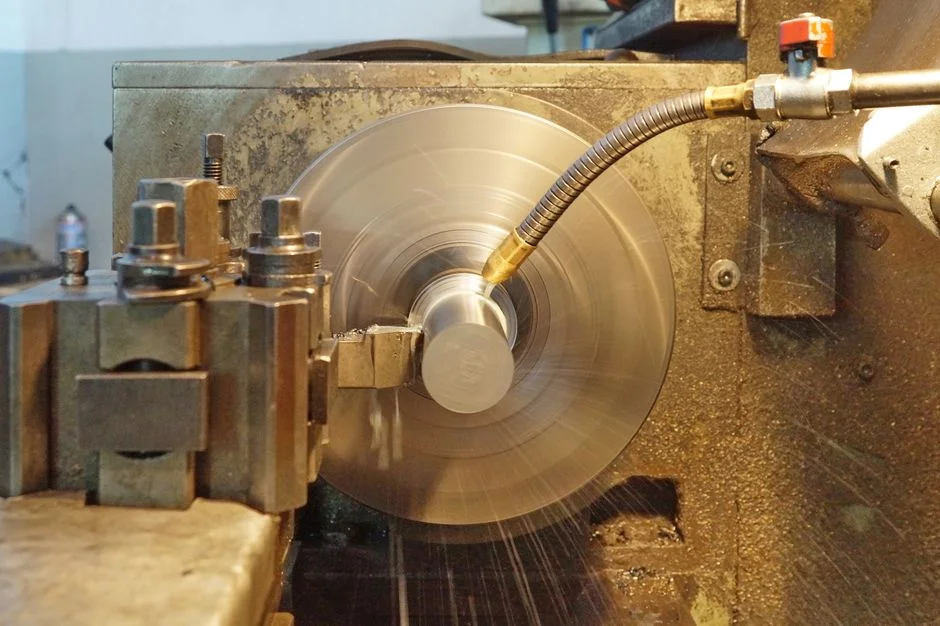
Size the decanter from the feed duty and required separation results, not from nominal throughput alone. DAGYEE lists a 250–720 mm bowl diameter, 2000–4600 RPM bowl speed, 0.5–100 m³/h capacity, 0.5–40% feed solids concentration and 15–30% DS solid-phase dryness. These are manufacturer specifications published by DAGYEE in 2026, not universal application guarantees, and they must be verified against the proposed edible-oil wastewater duty.
Require the supplier to explain how peak flow, feed solids, required liquid clarity and target cake dryness affect the final machine selection. Ask for separate design and operating cases: normal duty, peak hydraulic demand, maximum expected solids loading and upset conditions identified from the feed analysis. The basis of each calculation should be visible; a quoted capacity without feed data is not a sizing statement.
Alfa Laval describes automatic adjustment of conveyor differential speed through a VFD with torque control as solids loading changes. The stated function is to protect against torque overload, maintain stable operation and preserve solids dryness as loading changes; under lighter load, differential speed can be reduced to limit wear and energy use. Ask whether the proposed control response has been demonstrated over the expected solids range.
Pond depth, meaning the liquid depth inside the rotating bowl, should be adjustable or explicitly defined for the duty. The 2026 edible-fat study found that pool depth and differential speed influenced separation, while Alfa Laval describes fast pond-depth adjustment as a means of adapting separation conditions, cleanability and start-up. Record the selected pond-depth range and its permitted operating adjustment in the final technical schedule.
| Parameter | Supplier-stated value or requirement | Buyer verification |
|---|---|---|
| Bowl diameter | 250–720 mm selectable; DAGYEE manufacturer specification, 2026 | Confirm that the selected geometry supports the feed phase, residence requirement and output quality |
| Bowl speed | 2000–4600 RPM; DAGYEE manufacturer specification, 2026 | Request the operating recipe and evidence for the selected feed |
| Capacity | 0.5–100 m³/h; DAGYEE manufacturer specification, 2026 | Confirm the flow basis, feed composition and whether parallel units are required |
| Feed solids concentration | 0.5–40%; DAGYEE manufacturer specification, 2026 | Compare with measured and design solids loading, including short-duration peaks |
| Solid-phase dryness | 15–30% DS; DAGYEE manufacturer specification, 2026 | Acceptance must state the test method, sampling point and feed condition |
| Differential-speed control | VFD with torque control described by Alfa Laval | Verify response to solids-loading changes and alarm handling |
| Pond depth | Adjustable liquid depth; separation-affecting variable in the 2026 edible-fat study | State adjustment method, limits and locked recipe values |
Specify materials, cleaning and abrasion protection
Separate food-contact requirements from wastewater durability. DAGYEE lists SS316L construction, a product-contact finish of Ra ≤ 0.8 µm and CIP compatibility for its food-processing decanter configuration. Require the supplier to identify which wetted parts are treated as product-contact, what surface finish applies to each and whether recovered oil will enter a controlled food or food-contact collection system. If oil is recovered but not intended for food use, the hygiene boundary still needs to be defined rather than assumed.
Alfa Laval states that its decanters use stainless-steel contact parts and abrasion-resistant materials tailored to the process. Its identified wear-prone areas include the feed zone, solids discharge, bowl and scroll. Those are manufacturer statements, not a site-specific wear analysis. Oil-contaminated solids can contain abrasive grit, filler material or other contaminants that change the erosion profile.
Ask the supplier to identify hardfacing, wear tiles or other wear-protection measures for the expected solids composition and to state replacement intervals and inspection points. The quotation should distinguish replaceable wear parts from the base machine and identify which surfaces are exposed to the feed, cake and discharge. A generic “abrasion-resistant” description is not sufficient for comparison.
| Specification item | Evidence available | Information to request |
|---|---|---|
| Contact materials | SS316L listed by DAGYEE; stainless-steel contact parts described by Alfa Laval | Material grade by wetted component and confirmation for feed chemistry |
| Surface finish | Ra ≤ 0.8 µm product-contact finish listed by DAGYEE, 2026 | Drawing reference, finish scope and product-contact boundary |
| CIP | CIP compatibility stated by DAGYEE, 2026 | Cleaning route, chemical compatibility, recovery procedure and validation protocol |
| Wear protection | Feed zone, discharge, bowl and scroll identified by Alfa Laval; wear-tile concept described by Alfa Laval | Application-specific hardfacing or tile specification, life estimate and replacement procedure |
| Seals and connections | FDA-compliant seals listed by DAGYEE, 2026 | Elastomer identification, exposed-surface mapping and change-out interval |
Build the supplier and pilot-test acceptance checklist
A comparable quotation must begin with a feed-specific separation objective, not a catalog model. Request the flow basis, feed analysis, phases to recover, target liquid clarity, recovered-oil objective, solids condition, materials, drive and controls, utilities, footprint, wear parts, CIP requirement, installation scope and service support. Ask the supplier to state which items are excluded from the offer.
Alfa Laval offers small-scale on-site pilot testing and scalable production equipment, demonstrating that pilot testing can form part of equipment selection. Use a representative feed and agree acceptance criteria before the test. Define sampling points, duration, test-feed variation, analytical methods and how startup, shutdown and cleaning are treated. Separate acceptance for clarified liquid, recovered oil and discharged solids prevents one favorable result from masking an unmet objective.
Ask each supplier to state energy consumption at defined operating conditions. DAGYEE claims up to 30% lower energy consumption than conventional centrifuge designs, but this is a supplier-specific comparison published in 2026 and must be verified against the proposed duty. Request the reference machine, feed, operating point and measurement boundary behind the claim; otherwise it should remain a commercial claim rather than an acceptance value.
Include PLC/HMI, alarms, remote monitoring and variable-frequency-drive requirements only where they support the plant’s control architecture. DAGYEE lists PLC/HMI and remote SCADA connectivity, while Alfa Laval describes connected-service options. Ask whether these are included, optional and compatible with plant cybersecurity or site integration requirements.
| RFQ or pilot item | Required response | Acceptance record |
|---|---|---|
| Feed and duty | Analysis, normal and peak flow basis, solids loading, temperature and expected variability | Signed feed characterization and agreed test conditions |
| Separation objective | Outlet-by-outlet duty and required liquid, oil and solids results | Results for clarified liquid, recovered oil and discharged solids |
| Equipment and utilities | Bowl geometry, drive arrangement, utilities, footprint, installation and exclusions | Guaranteed operating envelope and utility demand |
| Materials and wear | Wetted-part materials, surface finish, wear-protection detail and replacement parts | Approved drawings and maintenance schedule |
| Controls | VFD functions, differential-speed strategy, pond-depth control, PLC/HMI, alarms and remote access | FAT and SAT procedures with agreed signals |
| Cleaning | CIP scope, chemicals, cleaning sequence and recovery requirements | Cleaning validation on representative material |
| Pilot test | Representative feed, protocol, sampling plan and analytical methods | Pass/fail decision against pre-agreed criteria |
| Commercial claims | Energy basis, warranty, delivery scope, lead time, spares and service support | Contract language replacing unsupported catalogue claims |
Use the pilot result to confirm the selected route within the broader food and beverage wastewater treatment process. The final equipment schedule should carry the tested feed definition, operating settings, acceptance results and all exceptions; otherwise the pilot does not create a defensible basis for supply.
Frequently Asked Questions
Should we select a two-phase, three-phase or solid-liquid decanter for edible-oil wastewater?
Select a two-phase unit when clarified liquid and dewatered solids are the required outputs. Consider a three-phase configuration only when separated oil is a defined output and the supplier demonstrates oil-water and solids separation on representative feed. Use a pretreatment-centered route when upstream removal of free oil is necessary to protect or improve downstream solids dewatering.
How do we size a decanter centrifuge without overstating its capacity?
Provide the measured feed composition, normal and peak flow basis, solids loading, required liquid clarity, oil-recovery objective and target solids condition. Ask the supplier to state the operating envelope supporting those results. Treat DAGYEE’s 2026 values of 0.5–100 m³/h, 0.5–40% feed solids and 15–30% DS solid-phase dryness as manufacturer specifications, not guarantees for an uncharacterized wastewater stream.
How much should the equipment cost, and what should the quotation include?
The supplied research provides no quotation for this application, so request a budgetary and firm offer rather than applying a generic price. Require itemized pricing for the machine, motors, controls, skid, installation, piping, commissioning, pilot testing, training, spare wear parts and service. Compare offers using the same feed basis, pilot acceptance criteria, utilities, warranty and delivery scope.
What should a buyer check before selecting a supplier?
Check whether the supplier can demonstrate experience with the actual feed phase and solids behavior, not merely edible-fat fractionation or generic food-processing equipment. Require application drawings, material traceability, wear-protection details, control narratives, pilot data and a clear acceptance protocol. Verify whether the proposed unit is genuinely food-contact when recovered oil requires that boundary, or corrosion- and abrasion-resistant for a disposal-only wastewater duty.
Can we rely on quoted energy savings and solids dryness?
No. DAGYEE’s 2026 claim of up to 30% lower energy consumption and its quoted solids-dryness range are supplier claims unless tied to the proposed feed and operating conditions. Require the test method, energy boundary and representative-feed results, then incorporate confirmed values into the purchase specification and acceptance procedure.