Start with the wastewater objective and site facts
For a Kinshasa hotel or resort in 2026, choose a buried WSZ A/O package plant when the property is below roughly 80 m³/day and will discharge to a soakaway or municipal sewer; choose an MBR when water reuse is required or discharge is near a Congo River tributary. The initial design should use 1.8 guests per room, 70% occupancy and 220 L per guest, with a 2.5× peak factor. For a 100-room example, this produces about 28 m³/day average and 70 m³/day peak. The 2026 HydropureWater guide also calls for outage buffering, automatic restart, sludge storage, odor control and corrosion-resistant electrical enclosures.
The decision sheet must begin with the receiving route and intended water use, followed by the facts needed to confirm that route. The project team should provide:
- Occupied room count, guests per room, forecast occupancy and any day-event demand.
- Kitchen, restaurant, laundry, pool-backwash and AC-condensate flows.
- The receiving point, distance to it, soil conditions and whether a soakaway or sewer connection is legally available.
- The intended reuse application, available footprint, access for maintenance and tank-removal operations.
- Generator or stored-power arrangements, outage records and the expected duration of interruptions.
- Sludge-removal access, off-site haulier arrangements and local operating constraints.
This is a project-specific selection exercise, not a universal equipment rule. The HydropureWater guide, Hotel & Resort Wastewater Treatment in Kinshasa, DR Congo, dated 2026, provides product ranges and a preliminary decision rule, but it does not establish verified current Kinshasa permit conditions for every receiving route. Confirm the applicable authority and discharge standard before freezing the specification. Related context is available in its hotel and resort wastewater treatment in Angola guide.
Calculate average and peak wastewater flow
Average daily flow is calculated as rooms multiplied by guests per room, occupancy and litres per guest; the HydropureWater 2026 guide applies a 2.5× peak factor to equalization and downstream hydraulic sizing. These are preliminary design assumptions, not a substitute for measured hotel water data or the project engineer’s hydraulic review.
- Enter the number of occupied rooms.
- Apply the guide’s preliminary assumption of 1.8 guests per room and 70% occupancy.
- Apply 220 L per guest to obtain average daily flow.
- Multiply average daily flow by 2.5 to obtain the preliminary peak flow.
- Add a separate water balance for kitchen, laundry, pool backwash and AC condensate.
| Input or output | Preliminary value or method | Procurement use |
|---|---|---|
| Average daily flow | Rooms × guests per room × occupancy × 220 L per guest | Initial biological and equalization basis |
| Occupancy assumption | 70% | Replace with the property’s forecast when available |
| Peak flow | Average daily flow × 2.5 | Equalization and downstream hydraulic sizing |
| 100-room worked example | About 28 m³/day average; about 70 m³/day peak | Example enquiry basis from the HydropureWater 2026 guide |
| Non-room wastewater | Separate water balance required | Do not conceal kitchen, laundry, pool or condensate flow in the guest calculation |
For the guide’s 100-room case, the preliminary equipment choices are WSZ-30 for discharge to sewer or a soakaway and MBR-50 where reuse is targeted. These are starting points for an enquiry, not final selections. The engineer must reconcile the calculated peak with inlet, screen, equalization, biological, membrane, disinfection and effluent-flow requirements.
Define how the estimate changes for events, full occupancy, staff accommodation and seasonal demand. Request a separate hotel wastewater flow calculation sheet showing measured or forecast flows for each source, the design occupancy used and any margin the project engineer applies. Do not let a supplier assume that a nominal package capacity automatically covers every non-guest stream.
Compare WSZ and MBR against the project requirements
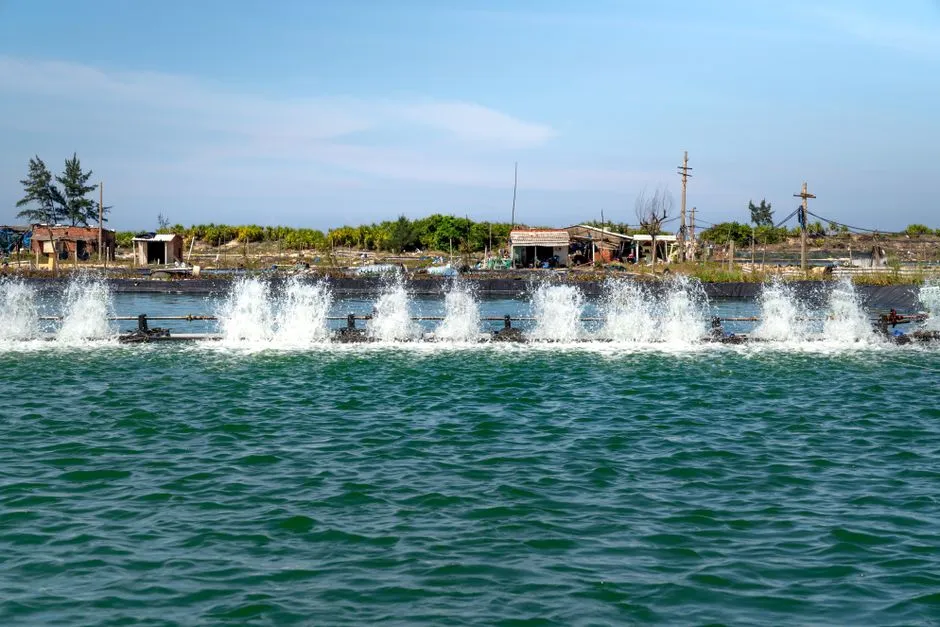
The WSZ is the lower-complexity option when the property’s flow, footprint and receiving route fit; the MBR is the stronger fit for reuse, tighter effluent quality or a sensitive receiving location, but it adds membrane and maintenance obligations. The HydropureWater 2026 guide provides the following direct comparison.
| Criterion | WSZ A/O package plant | MBR membrane bioreactor |
|---|---|---|
| Process | Anoxic and aerobic contact oxidation, sedimentation and disinfection | Activated sludge combined with submerged PVDF membrane filtration |
| Stated flow range | 1–80 m³/h | 10–2,000 m³/day |
| Installation | Can be buried below grade and landscaped over | Described as having a footprint about 60% smaller than conventional systems |
| Stated effluent targets | BOD ≤30 mg/L; TSS ≤30 mg/L | BOD ≤5 mg/L; TSS ≤5 mg/L |
| Best fit | Below roughly 80 m³/day, limited set-back, soakaway or municipal-sewer discharge | Water reuse or discharge near a Congo River tributary |
| Operating burden | Lower energy demand and no membrane replacement | Aeration and cross-flow energy demand; membrane replacement described at 5–8-year intervals |
| Outage response | Buffering and PLC auto-restart; no membrane-stall risk | Buffering and PLC auto-restart; soft-start VFDs required for cross-flow pumps |
The quoted flow ranges, footprint comparison and effluent targets are from the HydropureWater guide, Hotel & Resort Wastewater Treatment in Kinshasa, DR Congo, dated 2026. They are equipment-selection inputs, not proof that a proposed installation will satisfy a Kinshasa permit.
Apply this rule:
- If water reuse is required, the discharge is near a Congo River tributary, or the tighter MBR effluent envelope is necessary, then evaluate the MBR membrane bioreactor system, including membrane cleaning, replacement and spare-parts obligations.
- If the site is below roughly 80 m³/day, requires a buried installation or has limited set-back, and can use a soakaway or municipal sewer, then evaluate the buried WSZ A/O package treatment plant.
- If the receiving route, reuse application or required effluent quality remains unresolved, then keep the equipment selection open until those inputs are verified.
Require each supplier to state the design flow, process route, treated-water outlet, overflow and emergency-disposal arrangements, occupied footprint, above-ground service access and performance obligations for the proposed duty. Compare the systems against the same project criteria rather than selecting from nominal capacity alone.
Specify power, odor, disinfection and corrosion resilience
A package plant is not procurable as a process tank alone: outage response, odor containment, disinfection and electrical protection need contractual acceptance criteria. The HydropureWater 2026 guide specifies a 4–8-hour power-outage buffer sized at roughly 25–30% of average daily flow and PLC auto-restart sequencing for aeration, recirculation and disinfection.
- Power: require confirmation that the buffer supports the stated outage period, that stored influent does not overload the downstream process, and that automatic restart returns aeration, recirculation and disinfection to operation sequentially rather than simultaneously. For an MBR, require soft-start VFDs for the cross-flow pumps.
- Odor: for buried systems near guest or food-service areas, require sealed, vented covers and carbon-stage odor control. Include a site plan showing vents relative to occupied areas and access for media replacement.
- Disinfection: specify an on-site chlorine dioxide generator with the required duty, storage arrangement, dosing controls and safety provisions appropriate to the treatment duty.
- Corrosion: require 304 or 316 stainless-steel or FRP electrical enclosures because the guide reports that Kinshasa humidity routinely exceeds 80% relative humidity.
Turn these requirements into measurable tender responses. Ask the supplier to document buffer volume and outage duration, restart logic, electrical enclosure material, cover and vent arrangement, odor-control media, disinfection controls and available local service support. The supplier should also provide the control narrative, alarm list, spare-parts list and commissioning tests.
Do not present the guide’s BOD, TSS, ammonia-nitrogen or fecal-coliform envelope as a verified Kinshasa permit. The guide states a design envelope for surface-water or land discharge and recommends the WHO 2006 wastewater-agriculture guidelines for reuse, but the locally applicable permit and receiving-route standard must be confirmed with the responsible authority. For reuse, also define whether the water will be used for landscape irrigation, toilet flushing or laundry, because the required treatment and disinfection scope differs by application.
Plan sludge, maintenance and the total purchase case
Sludge handling can turn a nominally complete treatment package into an operating liability if storage, dewatering and haulage are omitted from the quotation. The HydropureWater 2026 guide estimates approximately 0.5–1.2 m³ of dewatered cake per 100 m³ treated and recommends a plate-and-frame filter press for sites above 50 m³/day; smaller installations may depend on scheduled third-party hauling.
| Early-budget CAPEX band | Indicative 2026 factory-direct equipment price | Important exclusion |
|---|---|---|
| Below 50 m³/day | USD 25,000–50,000 | Installation and civil works |
| 50–150 m³/day | USD 50,000–80,000 | Installation and civil works |
| Above 150 m³/day | USD 100,000-plus | Installation and civil works |
These bands come from the HydropureWater guide dated 2026 and are for early budgeting only. They are not quotations and exclude installation and civil works. Require a supplier to separate equipment, freight, installation, civil works, commissioning, power backup, sludge handling, consumables, membrane replacement and operator training in its offer.
Require on-site sludge storage for at least 30 days because the guide identifies delayed off-site hauling as a road and river-crossing risk. Confirm that the stored volume matches the selected dewatering method, available footprint and removal frequency. Where the calculated duty exceeds 50 m³/day, evaluate a plate-and-frame filter press; compare that route with the available hotel wastewater sludge dewatering options.
Before award, request the following procurement acceptance package:
- A signed flow calculation showing all room and non-room wastewater inputs.
- A process diagram, equipment schedule, site layout and civil-works boundary.
- Buffer-volume calculations, restart sequence, power-availability inputs and outage test procedure.
- Written effluent and reuse targets, sampling points and commissioning acceptance criteria.
- Odor-control, disinfection, enclosure-material and maintenance-access details.
- Sludge-generation basis, storage calculation, dewatering arrangement and haulage responsibility.
- A priced scope separating equipment, freight, installation, civil works, commissioning, training, consumables and lifecycle obligations.
Frequently Asked Questions
How should I calculate hotel wastewater flow for WSZ or MBR sizing in Kinshasa?
Use the HydropureWater 2026 preliminary method: average daily flow equals rooms × 1.8 guests per room × 70% occupancy × 220 L per guest. Multiply average daily flow by 2.5 for preliminary peak sizing. For 100 rooms, the guide gives about 28 m³/day average and 70 m³/day peak, then identifies WSZ-30 for sewer or soakaway
Frequently Asked Questions
How much wastewater does a 100-room hotel in Kinshasa generate?
A 100-room hotel in Kinshasa typically generates between 15,000 and 25,000 liters of wastewater per day. This estimate assumes an average occupancy rate and a per-guest consumption rate of 150 to 250 liters per day, which accounts for laundry, kitchen operations, and guest room usage.
Is a WSZ package plant or an MBR better for a Kinshasa resort?
For a Kinshasa resort, an MBR (Membrane Bioreactor) is generally superior if the goal is high-quality water reuse for irrigation or toilet flushing, as it produces an effluent with near-zero turbidity and pathogens. A WSZ (Waste Stabilization Zone) or conventional activated sludge plant is simpler to operate and more cost-effective if the effluent is intended for discharge into a municipal sewer or a natural water body where stringent reuse standards are not required.
What does a packaged hotel wastewater treatment system cost in 2026?
In 2026, a packaged wastewater treatment system for a 100-room hotel typically ranges from $80,000 to $180,000 USD, excluding civil works such as excavation and concrete pads. The price variance depends heavily on the chosen technology, with MBR systems sitting at the higher end of the spectrum due to membrane costs and sophisticated control instrumentation.
Which site information should I give a wastewater-system supplier for an accurate quotation?
To receive an accurate quotation, you must provide the supplier with the total daily flow rate, the peak hourly flow rate, and a chemical analysis of the influent wastewater (BOD, COD, TSS, and FOG levels). Additionally, provide the site topography, the depth to the groundwater table, the distance to the final discharge point, and any local site constraints regarding power availability or space limitations.
Which discharge permit and effluent standards apply to a Kinshasa hotel wastewater system?
Hotel wastewater systems in Kinshasa must comply with the environmental regulations enforced by the Agence Congolaise de l'Environnement (ACE). Effluent must typically meet standards for BOD5 (below 30 mg/L), TSS (below 30 mg/L), and fecal coliform counts suitable for safe discharge into local drainage channels or the Congo River, as stipulated by the national environmental code for industrial and commercial wastewater.