Define the permit and wastewater before choosing equipment
In Astana, manufacturers generally treat high-COD trade effluent with a sequenced train rather than one universal machine. The usual logic is source control and characterization, equalization, DAF or clarification for FOG, oil and solids, biological treatment for soluble organics, then filtration or membranes when the permit or reuse target requires them. HydropureWater’s 2026 Astana guide cites general limits of 50 mg/L COD and 10 mg/L BOD₅, while an academic study of a municipal plant in Western Kazakhstan reported COD reduction from 845 to 30 mg/L. Final selection must follow the actual permit, sewer acceptance rules, influent variability and winter conditions—not a generic COD limit alone.
Begin with four decision inputs: contaminant type, discharge route, winter operating condition and procurement acceptance criteria. COD indicates oxidizable load, but it does not show whether the factory discharge contains free oil, emulsified oil, FOG, suspended solids, metals, salinity or readily biodegradable organics. Each fraction creates a different treatment demand and can invalidate a biological system selected from COD alone.
Request the current Kazakhstan environmental permit, sewer acceptance conditions and supporting influent data before final sizing. The characterization record should cover flow, pH, COD, BOD₅, TSS, oil and grease, FOG, relevant metals, salinity, temperature and production variability. Obtain a representative sampling plan covering normal production, cleaning, batch dumps and shutdown conditions; a single short sample can hide the shock loads that determine equalization and pretreatment capacity.
Separate the discharge route before comparing equipment. A discharge to a municipal sewer is governed by acceptance conditions and pretreatment obligations, while direct discharge to the Yesil River or another sensitive water body may require a more stringent permit. HydropureWater’s 2026 Astana engineering guide cites Ministry Decree No. 350 (2023) general limits of 50 mg/L COD, 10 mg/L BOD₅ and 20 mg/L TSS for most sectors. It also states that COD and BOD₅ limits may tighten to 30 mg/L and 5 mg/L for direct Yesil River or sensitive-waterbody discharge. These are general references, not a substitute for the site-specific permit or confirmation from the competent authority.
| Design input | Evidence to obtain | Decision consequence |
|---|---|---|
| Wastewater characterization | Flow and production variability; COD, BOD₅, TSS, pH, oil and grease, FOG, metals, salinity and temperature | Determines pretreatment, biological loading, sludge generation and winter requirements |
| Discharge route | Environmental permit and municipal sewer acceptance conditions | Separates sewer pretreatment from direct-discharge or reuse obligations |
| General regulatory reference | Ministry Decree No. 350 (2023), as summarized by HydropureWater’s 2026 Astana guide | 50 mg/L COD, 10 mg/L BOD₅ and 20 mg/L TSS for most sectors; verify applicability |
| Sensitive receiving-water reference | Authority confirmation for the Yesil River or other sensitive water body | HydropureWater’s 2026 guide states limits may tighten to 30 mg/L COD and 5 mg/L BOD₅ |
| Buyer acceptance basis | Design flow, load basis, effluent duty, winter guarantee, documentation and commissioning tests | Creates the basis for comparable bids and a vendor performance guarantee |
Fill this matrix before evaluating suppliers. Use the high-COD trade wastewater treatment guide as a secondary process reference, but retain the Astana permit and sewer agreement as the controlling documents.
Match each contaminant group to its removal step
Equalization and screening must precede the main treatment train because variable flow, solids and batch discharges determine whether biological and membrane systems can operate reliably. Equalization dampens shock loading and provides a controlled feed; screening or coarse solids removal protects pumps, transfer equipment and downstream treatment. Free oil, emulsified oil and FOG should be removed before biological treatment when those fractions are significant, because they can interfere with aeration, biomass separation and membrane fouling.
Use dissolved air flotation where floatable oil, FOG, colloids or suspended solids control performance. HydropureWater’s 2026 Astana guide reports 95% oil removal for DAF at 3–5 bar saturation pressure and a 10–20% recycle ratio. Those are reference design values, not a guaranteed result for every factory effluent. For an oil-bearing or food-processing discharge, review the DAF versus clarifier selection guide before fixing the separation method.
Where neutralization, coagulation and flocculation are required, specify controlled chemical dosing followed by lamella clarification. HydropureWater’s 2026 guide reports 90% TSS removal and a footprint 50% smaller than traditional settling tanks for this duty. The buyer should still obtain the design feed characteristics, chemical consumption, sludge yield and verified drawings because the published figures do not establish performance for a different wastewater.
Biological wastewater treatment addresses soluble biodegradable organics; it is not a substitute for upstream oil and solids removal. Membrane filtration then provides solids separation where the permit, reuse requirement or footprint constraint justifies it. HydropureWater’s 2026 guide describes MBR operation at 10–20 LMH with typically 0.1 μm membranes. It also identifies an integrated MBR membrane bioreactor as an option when biological treatment and membrane separation are required together.
| Dominant contaminant or condition | Required step | Selection evidence and verification |
|---|---|---|
| Variable flow or shock loads | Equalization and screening | Confirm peak flow, batch discharge and retained volume against production records |
| Free oil, emulsified oil or FOG | DAF with skimming; DAF pretreatment for high-COD industrial effluent | HydropureWater’s 2026 guide reports 95% oil removal at 3–5 bar and 10–20% recycle |
| pH-sensitive solids or metals | Neutralization, coagulation, flocculation and clarification | HydropureWater’s 2026 guide reports 90% TSS removal and 50% smaller footprint for lamella clarification |
| Soluble biodegradable organics | Biological treatment | Verify BOD₅/COD ratio, toxicity, nutrients, temperature and biological loading |
| Fine solids or reuse requirement | Membrane separation or polishing | HydropureWater’s 2026 guide describes 10–20 LMH operation with typically 0.1 μm membranes |
| Municipal and industrial mixed flow | Reference treatment train only | An MDPI study in Western Kazakhstan reported COD falling from 845 to 30 mg/L, or 96.5%; this is not a factory guarantee |
Treat the MDPI study as regional reference evidence, not an equipment-selection shortcut. The study examined one municipal facility treating domestic and industrial wastewater in Western Kazakhstan; its 96.5% COD reduction does not establish guaranteed performance for an Astana factory with different contaminant fractions, temperature conditions or hydraulic loads.
Choose between package treatment, DAF and MBR
Package treatment is appropriate when the wastewater is domestic-dominated or predictably biodegradable and the application can use a compact, largely automated A/O contact-oxidation process. DAF is not an alternative biological process; it is the preferred pretreatment route when oil, FOG, colloids or suspended solids threaten downstream biology. MBR becomes more compelling when the required effluent quality, small footprint or reuse application justifies the added membrane, aeration, control and maintenance complexity.
Make the comparison at the process-train level. A DAF followed by a package biological system may be the rational arrangement for food-processing effluent with FOG and soluble organics. A standalone package plant may be inappropriate if incoming oil or variable solids are outside its biological design envelope. An MBR may remove the need for a separate secondary clarifier and can support more demanding effluent or reuse duties, but it introduces membrane cleaning, replacement and tighter control requirements. HydropureWater’s 2026 Astana guide states that MBR systems produce near-reuse-quality effluent; the actual acceptance value must still come from the permit, reuse specification and bidder’s guarantee.
| Decision condition | Preferred route | Main issue to resolve |
|---|---|---|
| Domestic-dominated, predictably biodegradable wastewater | Package biological treatment | Confirm flow, loading, biodegradability, footprint and automation scope |
| Significant oil, FOG, colloids or suspended solids | DAF pretreatment, followed by the required biological or membrane step | Verify flotation performance, skimming, recycle and downstream feed quality |
| Strict effluent quality, small footprint or reuse | MBR or DAF–MBR train | Require membrane data, cleaning method, replacement provision and performance guarantee |
| Municipal and industrial mixed flow | Process train sized from verified characterization | Do not assume the performance of the Western Kazakhstan municipal reference |
Compare total installed and operating cost rather than equipment price alone. HydropureWater’s 2026 Astana guide identifies chemical dosing as 30% of OPEX, energy as 25%, and membrane or media replacement as 20%. Require bidders to state what those categories include, how they are calculated and which costs remain with the owner. A lower purchase price can be offset by higher chemical use, aeration demand, membrane cleaning or sludge-disposal obligations.
Design for Astana winter operation and reliable automation
Astana’s winter specification must cover equipment, piping, biological operation and controls rather than only the outdoor enclosure. HydropureWater’s 2026 guide identifies an operating-temperature range of -40°C to +35°C and recommends insulated, heated outdoor installations. The RFQ should therefore identify every outdoor item, exposed pipe section, instrument enclosure, heat-trace circuit and drain or vent that could freeze or lose operating accuracy.
Protect biological activity by maintaining the reactor liquor at the temperature stated in the selected process design. HydropureWater’s 2026 guide recommends at least 10–15°C for biological systems, using heat exchangers or submerged heaters. The bidder should show the heat source, insulation, redundancy, power demand and control sequence. A winter COD guarantee must identify whether it applies to equalized influent, diluted test water or the minimum permitted temperature; otherwise the result is not comparable or verifiable.
Require PLC-controlled chemical dosing, automated skimming and sludge handling, with defined alarms, fail-safe actions and standby operating modes. Clarify what happens during power loss, low reagent supply, high-level conditions, membrane-fouling indications and heater failure. Local instrument approval should be addressed where applicable, and the supplier should provide the controls narrative, cause-and-effect list, alarm setpoints and logic diagrams rather than only a panel layout.
- Define minimum influent temperature, equalized temperature and biological operating temperature.
- Identify outdoor equipment, piping and utilities requiring insulation or heat tracing.
- State the heat source and auxiliary-power requirements, including redundancy.
- Define PLC alarms, fail-safe actions and operating responses for each critical failure.
- Require a duty-by-duty guarantee tied to the selected winter influent condition.
Do not infer a guaranteed winter COD result from a general biological reference. Request temperature-sensitive influent testing, define the coldest operating condition and require the supplier to accept the consequence if the agreed performance test fails.
Turn the process selection into a vendor RFQ and acceptance plan
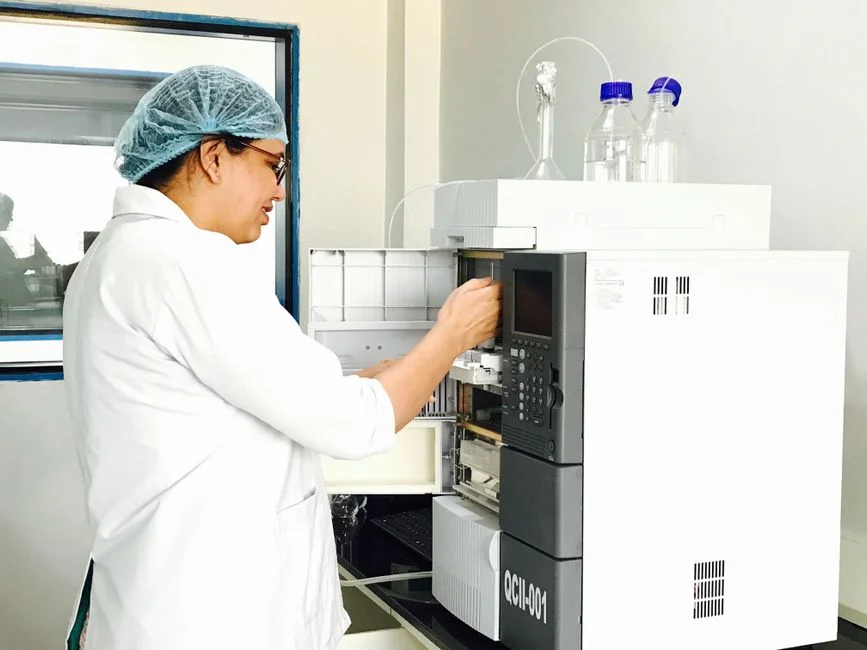
A comparable RFQ must require bidders to submit the complete process train rather than isolated equipment quotations. The technical package should include hydraulic and loading calculations, process flow diagrams, equipment drawings, materials, controls philosophy, utility demand, chemical storage and dosing, sludge balance, commissioning methods and a duty-by-duty performance guarantee. Specify the design flow, influent concentrations, discharge route, winter condition and reuse objective so every bidder is solving the same problem.
For Kazakhstan procurement, request Russian- and Kazakh-language technical passports and evidence of applicable EAEU conformity. HydropureWater’s 2026 guide identifies TR CU 010/2011 for machinery safety and TR CU 004/2011 and TR CU 020/2011 as relevant electrical checks. Confirm the current applicability of each regulation and any operator-specific prequalification with the purchasing authority rather than treating a certificate list as a universal approval.
Budget separate line items for chemical supply, sludge removal, winterization, utility connections, installation, commissioning, training and membrane replacement. HydropureWater’s 2026 guide gives package-system CAPEX of $150–$300 per m³ of capacity and mobile-system CAPEX of $200–$400 per m³. These are comparative procurement references, not quotations for the factory’s selected train. Bidders should identify exclusions, taxes, freight, customs, local works, spares and future replacement assumptions.
| RFQ package | Required submission | Acceptance check |
|---|---|---|
| Technical basis | Design flow, load calculations, process description and mass balance | Inputs match the current permit, characterization and discharge route |
| Equipment and controls | Drawings, materials, PLC narrative, alarm list and utilities demand | Check sizing, redundancy, local instrument requirements and fail-safe operation |
| Winterization | Insulation, heat tracing, heating, freeze protection and minimum operating temperature | Confirm the guarantee applies to the agreed coldest influent condition |
| Sludge and residuals | Sludge balance, chemical use, storage and disposal route | Price treatment, removal and disposal separately |
| Conformity documentation | Russian- and Kazakh-language technical passports and applicable EAEU evidence | Verify TR CU 010/2011, TR CU 004/2011 and TR CU 020/2011 applicability |
| Cost | Equipment, freight, customs, installation, utilities, chemicals, training and replacement | Compare installed and lifecycle cost against the same scope |
| Schedule and commissioning | Manufacturing, shipping, customs, certification verification, installation and site start-up dates | Hold named milestones and define delay remedies |
Plan procurement against HydropureWater’s 2026 indicative standard lead time of 12–18 weeks, but require the supplier to confirm manufacturing, shipping, customs, local certification verification and site commissioning dates in writing. Acceptance should include document review, factory tests where applicable, site inspections, training, startup and a performance test using the agreed influent and effluent acceptance parameters.
Frequently Asked Questions
When is DAF required instead of biological treatment alone?
Require DAF when characterization shows that free oil, emulsified oil, FOG, colloids or suspended solids would destabilize the downstream biological system or exceed its feed limits. HydropureWater’s 2026 Astana guide reports 95% oil removal at 3–5 bar saturation pressure and 10–20% recycle, but the buyer must require proof for the actual oil-bearing effluent rather than rely on the reference figure.
How should package treatment and MBR be compared on cost and reuse requirements?
Compare them on the same influent, effluent duty and lifecycle boundary. Request equipment price, installation, utilities, chemicals, sludge removal, operator labour, cleaning and membrane replacement separately. If reuse is required, add the specified water-quality target and ask each bidder to guarantee it; if reuse is not required, test whether MBR’s added membrane and control costs provide value for the required footprint or discharge quality.
Which Kazakhstan documentation should a supplier provide?
Request the current environmental permit interface, sewer acceptance evidence, Russian- and Kazakh-language technical passports and applicable EAEU conformity records. HydropureWater’s 2026 guide specifically identifies TR CU 010/2011 for machinery safety and TR CU 004/2011 and TR CU 020/2011 for electrical requirements. Have the procurement team or local conformity specialist verify their current scope rather than relying on a supplier’s generic certificate statement.
How can a buyer verify a COD performance guarantee?
Define the test influent, flow, temperature, sampling points, analytical method and acceptance values in the contract. Include production-representative sampling rather than a synthetic-water demonstration, and specify how disputed results are resolved. The Western Kazakhstan MDPI study reported COD declining from 845 to 30 mg/L at one municipal plant, but that regional reference cannot verify an Astana factory’s guarantee; acceptance must rest on the contracted duty and witnessed test protocol.
Related Equipment
- DAF pretreatment for high-COD industrial effluent — specifications, capacity range, and technical data