
Confirm the available treatment route
A municipal sewer connection is the preferred route only where a suitable connection point, receiving-network capacity and authority approval are confirmed for the parcel. Berlin’s sewer planning has depended on topography, gradients and drainage areas: the historical radial plan included 12 drainage systems and 12 planned pumping stations, so the existence of a nearby street sewer does not prove that a connection is technically available (Water and sewage infrastructure in divided Berlin, 1945–1990). If the utility check fails, begin a preliminary decentralized sewage treatment comparison without assuming that either a package plant or membrane bioreactor is compliant.
Ask the sewer operator to map the public network, identify the legal connection point and confirm whether anticipated domestic flow can enter it. Separate the commercial sewer-connection work from the private collection system: a property sewer still needs a defined route to the public network. Obtain the applicable connection, discharge and development conditions in writing.
The absence of a confirmed municipal connection is a screening trigger, not a technical conclusion. It requires two parallel assessments: an overview of sewage treatment equipment for Germany and site-specific verification of the receiving route.
| Screening check | Evidence required | Decision consequence |
|---|---|---|
| Public sewer availability | Operator-confirmed network map, connection point and access restrictions | If confirmed, develop a sewer-connection option and its civil scope |
| Receiving capacity | Operator confirmation for the anticipated domestic flow | If unavailable or unconfirmed, retain decentralized treatment alternatives |
| Local routing constraints | Confirmation that local topography and drainage areas affect the route | Do not infer connection feasibility from distance alone |
| Authority route | Current sewer-connection and discharge conditions | Make approval and timing explicit in the project schedule |
| Receiving point for treated wastewater | Written route to sewer, surface water or property reuse | Select treatment objectives only after the route is defined |
Match the wastewater profile to the treatment process
The treatment process should follow the verified wastewater characteristics and discharge objective rather than the equipment label. For conventional domestic sewage, the treatment sequence documented for Berlin, New Hampshire provides a useful comparison framework: screening and grit removal, primary clarification, aeration, secondary clarification and disinfection (Berlin, New Hampshire, Wastewater Processing). That sequence describes a municipal conventional activated-sludge facility; it does not establish the configuration required for a Berlin-area package plant.
For a biological package route, the underground WSZ package sewage treatment plant combines anoxic/aerobic A/O biological contact oxidation with sedimentation and disinfection in one buried unit. Its catalog capacity is 1–80 m³/h, with fully automated operation and no operator required (HydropureWater verified product catalog). Treat that range as an initial screening envelope, not a guaranteed project capacity.
The integrated MBR membrane bioreactor combines activated sludge with submerged PVDF membrane filtration and is cataloged at 10–2,000 m³/day (HydropureWater verified product catalog). It becomes the more relevant starting point when the preliminary duty is above the package-plant envelope or the project requires a higher-grade effluent objective. However, the supplied evidence does not establish a Berlin-specific reuse guarantee or performance under local wastewater conditions.
| Decision input | Conventional package-process question | MBR screening question |
|---|---|---|
| Wastewater source | Is the feed representative of domestic sewage, and are kitchen or laundry contributions material? | How do variable loads, solids and cleaning chemicals affect membrane operation? |
| Capacity basis | Does the 1–80 m³/h catalog range cover the required flow basis? | Does the 10–2,000 m³/day catalog range cover the required duty? |
| Effluent objective | What treatment stages and disinfection are included? | What membrane performance and effluent quality are contractually guaranteed? |
| Reuse | Is reuse part of the project, and what reuse standard applies? | Is the higher-grade process justified by the confirmed reuse criterion? |
| Operation | What automated controls, inspections and service visits are required? | What membrane cleaning, replacement and recovery provisions are included? |
Compare footprint, installation and operating constraints
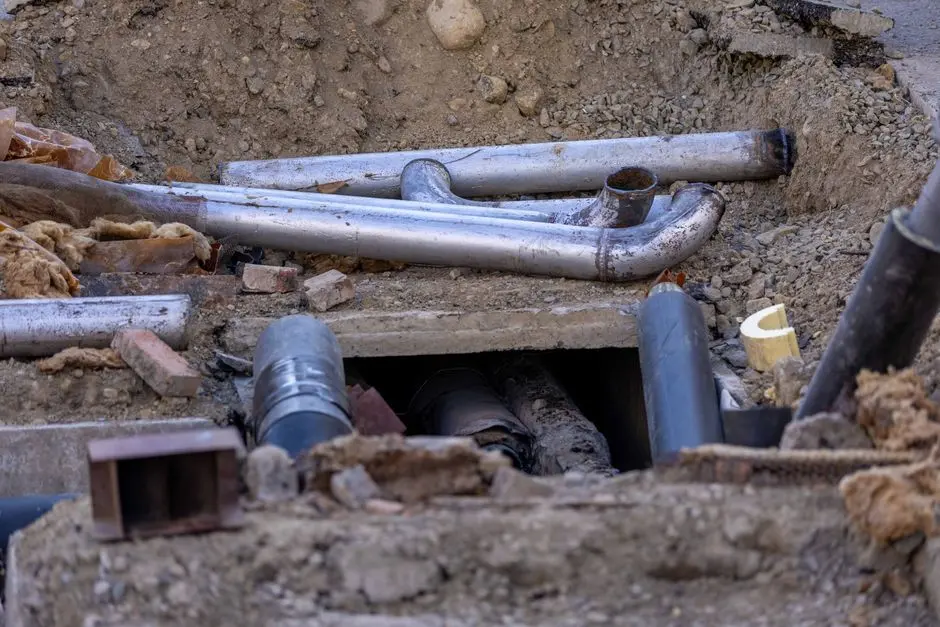
A package plant is technically unsuitable if it cannot be installed and maintained on the parcel. The WSZ route is offered as a below-grade installation with landscaping above or as a trailer-mounted system for mobile deployment (HydropureWater verified product catalog). Require the supplier to identify the applicable installation mode, excavation volume, lifting constraints, access covers and restoration scope; “package” does not remove the associated civil work.
The MBR catalog states a 60% smaller footprint than conventional systems and gives a capacity range of 10–2,000 m³/day (HydropureWater verified product catalog). Request the equipment footprint and required clearances for the quoted configuration rather than applying the percentage to the site.
Collect site information under the headings of civil, process and operational constraints. Civil inputs include soil, groundwater, excavation access, utilities and future expansion. Process inputs include odor control, noise, sludge and effluent handling. Operational inputs include maintenance access, electrical supply, controls, spare parts and remote supervision. The site team should also record landscaping constraints without allowing them to replace geotechnical or access requirements.
Request automatic-operation evidence from each supplier, including control narratives, alarm handling, duty arrangements and what constitutes operator attendance. The WSZ is described as fully automated with no operator required (HydropureWater verified product catalog), but the contract must still allocate inspection, testing, maintenance, call-out and regulatory responsibilities. Use the compact sewage treatment unit selection guide to structure that verification.
| Constraint | Information to collect | Question to require in the proposal |
|---|---|---|
| Installation | Soil, groundwater, excavation access and utilities | Which installation mode and civil works are included? |
| Footprint | Available plant area and maintenance clearances | What are the dimensions, envelopes and expansion allowances? |
| Environmental nuisance | Odor, noise and sludge-handling requirements | What containment and control measures are provided? |
| Automation | Electrical supply, controls and supervision requirements | What functions are automatic, and what routine attendance remains? |
| Maintenance | Access, spare-parts support and service terms | Which tasks remain with the owner? |
Build the sizing and supplier information request
Comparable quotations require the same flow basis, wastewater definition, duty statement and commercial boundary. Send every supplier one information request containing current and peak domestic wastewater flow, wastewater characteristics, average and peak daily loading, project phase, design horizon and anticipated water reuse. Add the treatment objectives, receiving point, available footprint, installation constraints and required operating service level.
Require a guaranteed treatment capacity and state its basis explicitly: average, peak hourly, peak daily and any reserve or turndown assumptions. Use the catalog ranges only for initial screening: 1–80 m³/h for WSZ and 10–2,000 m³/day for MBR (HydropureWater verified product catalog). A quoted flow cannot be compared until both suppliers use the same duty definition.
Each proposal should include a process flow diagram; treatment-stage descriptions; hydraulic and organic loading assumptions; electrical requirements; civil footprint; installation method; control philosophy; routine maintenance; spare-parts support; commissioning responsibilities; performance criteria; and exclusions. The headworks-aeration-clarification-disinfection sequence documented for Berlin, New Hampshire is a useful technical checklist, but it is not proof that a package plant follows the same configuration (Berlin, New Hampshire, Wastewater Processing).
Use the decentralized wastewater treatment systems proposed for German hotels and resorts as a reminder to define operating assumptions clearly: a domestic property package plant should not inherit hospitality-sector demands without project evidence.
| Fillable information request | Response required | Supplier declaration |
|---|---|---|
| Current and peak flow | Values with units and measurement basis | Guaranteed capacity at the stated flow basis |
| Wastewater characterization | Parameters and sampling period | Process loading and limits of application |
| Design horizon and project phase | Development stages and forecast | Capacity allocation by stage |
| Treatment objective | Discharge route and applicable criteria | Included stages and performance criteria |
| Civil and installation | Footprint, access, soil and groundwater information | Equipment dimensions, installation method and exclusions |
| Controls and maintenance | Electrical and service requirements | Automation scope, routine service and spare parts |
| Commissioning | Training, testing and documentation needs | Supplier and owner responsibilities |
Verify compliance and total project risk
Compliance must be tied to a named receiving point before an equipment offer becomes a procurement recommendation. Direct discharge to surface water, discharge through a municipal sewer and reuse within the property are different regulatory routes, and each must be confirmed with the responsible authority or operator. A generic statement that equipment is “compliant” is not evidence that the proposed discharge route is permitted.
Ask each supplier to complete a compliance matrix identifying the proposed route, each applicable German and Berlin requirement, the evidence supplied, responsible authority and items outside the supplier’s scope. Do not treat the equipment catalog as a permit, discharge consent or sewer-connection approval.
The supplied research does not establish current Berlin discharge limits, permit procedures, sewer-connection conditions or acceptance-testing requirements. Those are open verification items for the project owner. The historical sewer source explains infrastructure logic but does not provide current Berlin development rules.
Compare proposals under three decision scenarios. If sewer access is unavailable, prioritize a technically feasible decentralized route, permit pathway and total site works. If sewer access exists with restrictions, price and schedule the connection conditions against the decentralized alternative. If reuse requires a higher-grade treatment process, verify the reuse criterion first and compare the MBR route against any additional pretreatment, testing and distribution requirements.
| Project scenario | Primary decision | Risk to close before order |
|---|---|---|
| Sewer unavailable or unconfirmed | Screen package plant and MBR against flow, wastewater and site constraints | Discharge approval, receiving point, civil works and lifecycle responsibilities |
| Sewer available with restrictions | Compare the confirmed connection with decentralized treatment on a common scope | Capacity, connection conditions, contribution charges, program and approval status |
| Property reuse | Define the reuse objective before selecting the process | Effluent criteria, verification testing, distribution controls and downstream operational risks |
| All scenarios | Make the award conditional rather than process-led | Guaranteed flow basis, performance criteria, exclusions and named responsible parties |
Frequently Asked Questions
Can a package sewage treatment plant be installed in Berlin?
It can be considered only after the site, receiving route and approvals are verified. The WSZ is available as a below-grade unit or trailer-mounted system with a catalog capacity of 1–80 m³/h (HydropureWater verified product catalog), but the supplied research does not establish current Berlin installation or discharge rules. Obtain written confirmation of the route and site conditions before ordering.
How much does a domestic sewage treatment system cost in Berlin?
The research provides no project-specific price or quotation basis. Request itemized pricing for equipment, process guarantees, installation, civil works, electrical supply, controls, commissioning, maintenance, sludge or effluent handling, and authority-related work. Separate the municipal connection option from the decentralized option on the same scope so the comparison reflects actual project cost rather than equipment price alone.
How do I choose between an A/O package plant and an MBR system?
Use the same flow and wastewater inputs for both proposals. The WSZ catalog envelope is 1–80 m³/h, while the MBR envelope is 10–2,000 m³/day (HydropureWater verified product catalog). Also compare the required effluent objective, footprint, civil work, automation, maintenance and performance guarantees. Do not select MBR solely from a reuse label without a confirmed reuse criterion.
What should I ask a wastewater equipment supplier before requesting a quote?
Send a written request for the design flow basis, wastewater characteristics, treatment objective, process flow diagram, performance criteria, footprint, installation method, electrical load, controls, maintenance, spare parts, commissioning responsibilities and exclusions. Require every excluded item and every local-authority verification to be named in the offer.