Identify the Limits That Control a Lyndhurst Discharge
Chemical plants near Lyndhurst meet pretreatment limits by identifying the controlling sewer authority, characterizing the wastewater, and selecting treatment around the most stringent applicable requirements. EPA’s pretreatment framework addresses categorical pretreatment standards, POTW local limits, and prohibited discharges that cause pass-through or interference. Lyndhurst’s code requires a permit for industrial or commercial sewer discharge and allows inspection and ordered pretreatment. This guide provides a fillable method for matching pollutants, flow patterns, and SIU status to a treatment train, while the current numeric local limits must be obtained from the Control Authority rather than inferred.
EPA explains that POTW local limits are site-specific and may be numeric or narrative, including best management practices; they apply at the end-of-pipe discharge from an industrial user, meaning the point of connection to the POTW collection system (EPA, “Pretreatment Standards and Requirements-Local Limits,” accessed 2026). Use the industrial pretreatment workflow for sewer discharge as a document-control model, but rely on Lyndhurst’s controlling authority for the enforceable requirements.
The plant engineer must confirm the applicable federal categorical subpart from actual manufacturing operations. Chemical-related subparts cited in EPA-related industry guidance include 40 CFR Parts 414, 415, 417, 419, and 433 (EPA). Because that source is commercial rather than a current EPA publication, the engineer should verify the applicable subpart and current limits against the Code of Federal Regulations and the issued control mechanism.
Lyndhurst’s sewer code requires industrial or commercial dischargers to obtain a permit and comply with rules of the Joint Meeting of North Arlington and Lyndhurst and the Passaic Valley Sewerage Commission (Township of Lyndhurst, “Chapter 12: Sewer and Water,” accessed 2026). The code also allows inspection by township and commission personnel and permits orders requiring pretreatment. Before selecting equipment, request the following controlled documents:
- Current industrial or commercial discharge permit and industrial user control mechanism.
- Approved pretreatment-program rules, local-limit tables, and applicable narrative prohibitions.
- Categorical-standard subpart and current monitoring, reporting, and recordkeeping requirements.
- Written batch-release, slug-control, sampling, and notification instructions.
| Decision layer | Evidence to obtain | Equipment-design consequence |
|---|---|---|
| General prohibitions and pass-through/interference screens | Current prohibited-discharge provisions and permit narrative | Eliminate prohibited constituents and provide treatment that protects POTW operations |
| Categorical pretreatment standards | Manufacturing-category analysis and current 40 CFR subpart | Set pollutant-specific treatment and monitoring targets |
| POTW local limits | Control Authority’s current numeric or narrative limits | Design to the most stringent applicable discharge requirement |
| Control mechanism | Permit conditions, inspection access, reporting, and slug-control duties | Define alarms, diversion, sampling, records, and operating procedures |
Characterize the Wastewater and SIU Exposure
Representative wastewater data determines which unit operations belong in the chemical wastewater treatment train; permit limits alone cannot size equalization, DAF, clarification, or biological polishing. Document flow, batch releases, pH, suspended solids, oil and grease, metals, COD/BOD, and chemical constituents before finalizing equipment.
SIU status changes the compliance burden. Under 40 CFR 403.3(v), SIU status can arise from categorical-standard coverage, an average discharge of 25,000 gpd or more of process wastewater, or a process stream contributing 5% or more of the POTW’s average dry-weather hydraulic or organic capacity (EPA). A chemical plant may therefore be an SIU even when the discharge volume appears modest if its process stream materially contributes to POTW capacity.
Use two regulatory screens during characterization. EPA defines pass-through under 40 CFR 403.3(p) as a discharge that exits the POTW into waters of the United States in quantities or concentrations that cause, alone or with other discharges, a violation of the POTW’s NPDES permit. Interference under 40 CFR 403.3(k) requires both disruption or inhibition of POTW treatment or sludge operations and a resulting permit or sludge-use violation (EPA). Equipment selection must therefore address both pollutant concentration and the hydraulic and operational effect on the receiving system.
For batch operations, identify non-routine releases, hydraulic surges, incompatible stream combinations, and abnormal pH or concentration events. These inputs determine the working volume and control logic for batch wastewater equalization and the slug load control plan. The fabricated-metals wastewater pretreatment framework provides a related sequence, but the Lyndhurst engineer must enter project-specific measurements rather than transfer another plant’s assumptions.
| Fillable field | Plant entry | Why it controls design |
|---|---|---|
| Manufacturing category and applicable categorical subpart | ____________ | Determines SIU exposure and categorical requirements |
| Average and peak process-wastewater flow | ____________ | Sizes equalization, pumping, and treatment capacity |
| Batch releases and non-routine surges | ____________ | Defines slug-control and diversion actions |
| pH range, including excursions | ____________ | Determines equalization and acid/caustic dosing requirements |
| Oil and grease, TSS, metals, COD/BOD | ____________ | Maps pollutants to DAF, clarification, biological, or polishing steps |
| Chemical constituents and compatibility | ____________ | Identifies prohibited or treatment-incompatible constituents |
| Current permit and SIU status | ____________ | Sets monitoring, reporting, and operating obligations |
Build the Pretreatment Unit Train
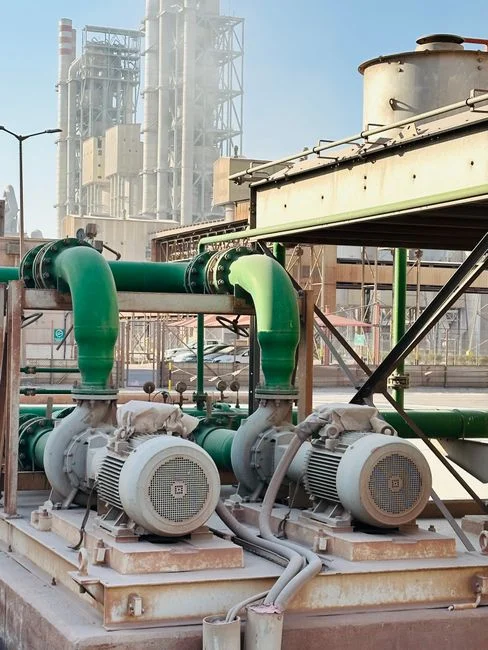
The pretreatment train should follow the pollutant hierarchy: equalize and control pH first, remove the controlling solids or oil fraction, address soluble biodegradable load where required, and dewater the resulting sludge. The sequence should be verified against the permit, not treated as a standard configuration for every chemical plant.
- Provide equalization. Batch wastewater equalization dampens pH, flow, and concentration swings before downstream treatment. Record the batch volume, release duration, maximum flow, and chemical mass of each non-routine release so the basin volume and mixing arrangement can be engineered around actual events.
- Install controlled pH adjustment where required. If the permit requires pH control, use PLC-controlled acid or caustic dosing with calibrated pH measurement, high-high alarm, high-high shutdown, and diversion logic. Confirm chemical compatibility and the permitted discharge range before finalizing the reagent scheme.
- Add biological polishing only for a compatible biodegradable load. Biological treatment may address COD/BOD when the categorical or local requirement controls those parameters and the stream is biologically treatable. It does not substitute for pH control, removal of regulated metals, oil capture, or slug-load control.
- Handle residual solids. Use sludge dewatering after solids-generating treatment. Select the filter press from measured suspended-solids inventory, batch solids generation, chemical conditioning demand, target cake consistency, and available cake-handling route. The industrial sludge treatment and dewatering guide provides the downstream solids-design context.
| If the controlling condition is… | Then select… | Required verification |
|---|---|---|
| Batch pH, flow, or concentration swing | Equalization plus controlled dosing | Batch inventory, release duration, mixing response, alarm and diversion sequence |
| Oil, grease, TSS, or colloidal matter | DAF, with equalization upstream | Representative loads, flotation performance data, residual solids, and permit target |
| Precipitated or flocculated metals | Chemical precipitation and lamella clarification | Metal species, pH, reagent demand, sludge quantity, and clarified-water quality |
| Biodegradable COD/BOD load | Biological polishing after upstream protection | Biodegradability, toxicity, nutrients, local discharge limit, and sludge effects |
| Soluble constituent not removed by the selected train | Additional physical, chemical, or polishing step | Control Authority’s current limit and demonstrated removal capability |
Prove Compliance Before and During Discharge
Compliance begins with the issued control mechanism, not the equipment purchase order. Lyndhurst’s code requires permitted dischargers to allow inspection by township, Joint Meeting, and Passaic Valley Sewerage Commission personnel and requires compliance with orders to pretreat (Township of Lyndhurst, “Chapter 12: Sewer and Water,” accessed 2026). Refusal to permit inspection or refusal to obey a treatment order can result in permit revocation.
To ensure operational readiness, perform an integrated check of the control system before commissioning:
- Calibrate instruments. Verify flow, pH, and other required monitoring instruments using traceable methods and establish documented calibration frequencies.
- Test the response sequence. Simulate high pH, low pH, high flow, excessive turbidity, and control-signal failures. Confirm alarm notification, automatic diversion where designed, and manual release authorization.
- Verify sampling representativeness. Define sampling points, sample preservation, laboratory methods, chain of custody, and the relationship between spot samples and composite or batch monitoring.
- Reconcile permits with records. Compare monitoring and reporting duties in the issued control mechanism with confirmed SIU status. Do not infer additional obligations—or assume their absence—from a general SIU definition.
- Maintain an audit trail. Keep batch-release records, operating logs, calibration records, laboratory results, deviations, corrective actions, and disposal records available for inspection.
Lyndhurst reports 990 catch basins and 67 outfalls in its drainage network (Township of Lyndhurst Public Works, accessed 2026). That confirms the municipal drainage and sewer context, but it does not establish the plant’s applicable industrial discharge limits. The code’s requirement to comply with more stringent federal, state, township, Joint Meeting, and Passaic Valley Sewerage Commission standards does not disclose the current numeric table. Obtain that table and the issued permit from the Control Authority before issuing a compliance-based equipment specification.
For an auditable design review, compare each permit condition against a corresponding operating control, instrument, sample point, alarm, corrective action, and record. This links the final train to the evidence the authority may inspect rather than demonstrating only that wastewater passes through equipment.
Frequently Asked Questions
What inputs are needed to size equalization, DAF, or lamella clarification for a Lyndhurst chemical plant?
Request representative flow and pollutant data, batch-release records, pH range, oil and grease, suspended solids, metals where relevant, and the current permit limits. Use peak flow and hydraulic surges for equalization, then match DAF or lamella clarification to the contaminant that controls compliance. Catalogue capacity and loading values must be checked against those plant inputs rather than treated as a guaranteed site performance.
How should a buyer compare treatment suppliers without accepting unverified performance claims?
Require each supplier to identify the governing permit parameter, proposed removal mechanism, design flow, pollutant loading basis, equipment dimensions, control sequence, guarantee conditions, and required pre-treatment. Ask for demonstrated performance under comparable wastewater and define what happens when influent exceeds the guaranteed envelope. Also require electrical, chemical, sludge, maintenance, and operating-cost assumptions so the comparison covers the complete treatment train.
What should be included in a pretreatment compliance budget when local limits are not yet available?
Request written quotations for equalization, pH-control equipment, DAF or clarification, biological polishing if justified, sludge dewatering, instrumentation, controls, installation, start-up, training, and monitoring. Require each price to identify exclusions, power and chemical assumptions, solids-handling assumptions, and validity period. Do not accept a compliance guarantee based only on equipment capacity; the guarantee should reference the current permit or Control Authority limits when they are issued.
What operating actions are required if a batch release could cause pass-through or interference?
Use the permit’s written slug-control procedure to stop or divert the release before it reaches the sewer connection. Confirm batch notification, equalization capacity, high-flow diversion, pH interlocks, sampling, and restart authorization in a commissioning test. If the issued mechanism lacks adequate instructions, obtain written direction from the Control Authority rather than relying on a generic operating assumption.