What Wastewater Stream Can a Belt Press Actually Dewater?
A belt filter press can be used for soft drink wastewater sludge when solids have first been concentrated into a filterable stream. The process typically combines upstream solids removal, sludge conditioning, belt filtration, continuous cake discharge, wash-jet cleaning, and cake discharge to a hopper or container. Beverage residues can adhere strongly to filter cloth, causing blinding and fouling; wash jets are therefore a critical design consideration, not an optional accessory. Final suitability, belt material, cloth selection, capacity, and polymer demand should be established from the actual wastewater and confirmed through pilot testing.
A belt filter press is a sludge-dewatering device. It is not a substitute for source control, flow equalization, upstream solids or FOG removal, or biological treatment where required. Alfa Laval, in its 2026 commercial product information, positions its AS-H belt presses for sludge from municipal and industrial wastewater treatment and for residuals from fresh-water production. That supports the equipment’s broader process use, but it does not establish performance for soft drink wastewater.
Before comparing machines, characterize suspended solids, oil and grease, FOG, fibrous material, adhesive beverage residues, pH, temperature, flow variability, and the intended cake-disposal route. Also identify whether the proposed feed is settled or chemically concentrated sludge, or simply a solids-rich liquid. If the stream remains dilute, removing it upstream is usually the more direct process solution. DAF pretreatment for soft drink wastewater may be relevant where suspended solids, FOG, oil and grease, or colloidal material must be removed before filtration.
The supplied research contains no universal dry-solids result, hydraulic capacity, recovery rate, or polymer dose for soft drink wastewater. Do not accept those figures without testing on representative solids. Food Engineering Reviews also warns that cohesive filter cakes require complete discharge for subsequent batches to filter efficiently, making discharge performance part of the initial equipment definition.
Build the Treatment Train Before Selecting the Press
A belt press should be evaluated as the final dewatering step in a treatment train, not as a stand-alone solution for untreated production wastewater. The required sequence begins with source control and equalization, followed by removal of unsuitable suspended material, controlled conditioning, belt filtration, cake collection, and management of filtrate and wash water.
- Control the source. Identify where beverage residues, product losses, and cleaning chemicals enter the wastewater system.
- Equalize the flow and load. Prevent short-duration solids or chemical spikes from determining press performance.
- Remove upstream solids and FOG. Use settling or a DAF pretreatment for soft drink wastewater where the selected wastewater characterization shows it is needed.
- Condition the sludge. Adjust coagulation, flocculation, pH, or other chemical treatment before filtration.
- Filter and discharge. Dewater on the belt, discharge the cake into the selected collection system, and route filtrate and wash water appropriately.
The PLC-controlled chemical dosing system is the appropriate control point where coagulants, flocculants, pH adjusters, or other treatment chemicals must be dosed consistently. The supplied sources do not support a universal polymer dose for beverage wastewater sludge, so jar and pilot testing must establish the conditioning chemistry.
Food Engineering Reviews states that production conditions, including temperature and cake size, can favor residue adhesion. That observation changes how the treatment train should be specified: cake release and cleaning capability belong in the process design, not as additions after commissioning.
| Process stage | Design question | Evidence required before selection |
|---|---|---|
| Source control and equalization | Which production and cleaning discharges enter the system, and how variable are they? | Flow and constituent records across representative production conditions |
| Upstream solids or FOG removal | Must oil, grease, fibers, colloids, or adhesive residues be removed before filtration? | Suspended-solids, oil-and-grease, FOG, and residue characterization |
| Sludge conditioning | Which chemical sequence produces a filterable sludge? | Representative conditioning trials and measured chemical consumption |
| Belt filtration | Can the selected cloth form a manageable cake and release it completely? | Pilot feed consistency, filtrate quality, cake behavior, and wash performance |
| Residue and wash-water management | Where do filtrate, wash water, and chemical rinses go? | Hydraulic balance, disposal route, and downstream treatment requirements |
Choose Belt, Cloth, and Wash-Jet Configuration
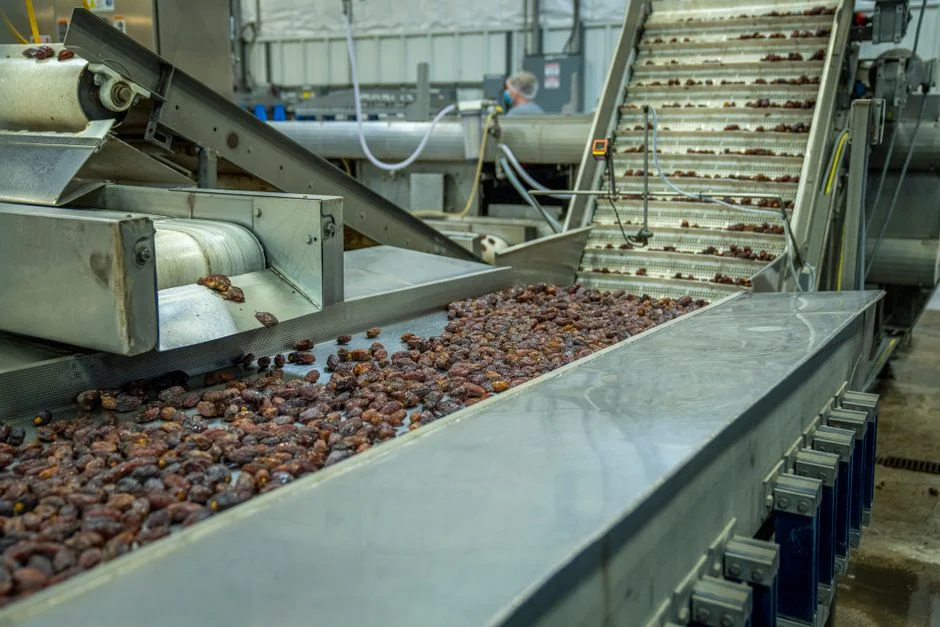
Filter-cloth selection must balance filtration performance against cleanability. Food Engineering Reviews identifies polypropylene, polyethylene, polyester, and polyamide as state-of-the-art polymeric filter-cloth materials, but the supplied research does not establish that any one is universally best for soft drink wastewater.
The same review explains why this is not a simple material substitution: filter cloths are designed primarily to provide filtration performance, not optimal cleanability. Cake formation is necessary to achieve useful filtration, while adhesive beverage residues can blind the cloth and biological deposits can adhere to its surface. Water-insoluble contamination inside the filter structure may be difficult to remove with water or cleaning agents alone.
Treat the wash-jet cleaning system as a core performance component. Food Engineering Reviews identifies wash-jet systems as established cleaning equipment in filter presses and belt filters and specifically examines their use in beverage production. Nozzle arrangement must be evaluated against belt geometry, cloth travel, residue location, drainage, and the plant’s wash-water routing rather than accepted as a generic accessory.
| Inquiry item | Supplier information required | Why it matters for beverage wastewater |
|---|---|---|
| Belt and cloth materials | Available options, surface characteristics, compatibility with the selected conditioning chemicals, and replacement arrangements | Adhesion, blinding, cleanability, and mechanical durability must be matched to the residue |
| Wash system | Coverage, nozzle locations, control method, wash-water demand, drainage, and cleaning-agent compatibility | Residue may remain on the surface or penetrate the inner filter structure |
| Cake discharge | Gravity, cutting, vibration, or another arrangement matched to the proposed belt configuration | Incomplete discharge can impair filtration of the next batch|
| Food-contact documentation | Material declarations, cleaning validation, sanitization expectations, and traceability | The RFQ should state site hygiene requirements without inventing unsupported numerical criteria |
| Operating exposure | Temperature exposure, chemical compatibility, drive guarding, drainage, and access for maintenance | These conditions define the actual mechanical and hygiene risk |
Food Engineering Reviews distinguishes gravity cake discharge in filter presses from mechanical discharge by cutting or vibration equipment. The selected arrangement must match the belt configuration and the cohesiveness of the tested cake. Additional hardware and service items can be scoped through the supplier’s water-treatment parts and filtration media inquiry.
Pilot the Duty Before Fixing Capacity and Operating Settings
Pilot testing is the appropriate basis for selecting a belt filter press because the supplied research provides no transferable performance figures for soft drink wastewater. Alfa Laval’s 2026 product information specifically describes laboratory and pilot testing to determine sludge thickening and dewatering solutions.
Use representative soft-drink wastewater solids, including the expected range of beverage residues, rather than a clean synthetic slurry. The test should establish how feed consistency, conditioning, filtration, washing, and cake release interact. Document feed consistency and chemical conditions, filtrate quality, cake discharge behavior, wash performance, operating stability, and any interruptions or cleaning events.
Require the supplier to define the acceptance protocol before the trial. That protocol should identify how feed representativeness will be established, how normal production variability will be represented, which instruments will be used, how samples will be collected, and what constitutes an acceptable result. Without an agreed protocol, measured results can be difficult to compare between suppliers.
Ask for documented test outputs rather than selecting a catalog configuration. Relevant outputs include dewatered-cake consistency, filtrate return volume, chemical consumption, wash-water demand, labor involvement, operating stability, and compatibility with the downstream cake-disposal route. The supplied research does not establish target dry-solids percentages, hydraulic loading rates, belt speeds, recovery rates, or polymer consumption for this application, so those values must come from the representative trial and clearly state their test conditions.
This approach also turns the procurement decision into a business comparison. A configuration that meets cake-handling requirements but consumes excessive wash water or chemical may not be the most practical choice; a lower-capacity trial may be inadequate if production variability was not represented. More detail on this test logic appears in the guide to belt filter presses for detergent wastewater.
Diagnose Poor Dewatering and Filter-Cloth Fouling
Poor performance should be diagnosed in sequence: process feed first, then conditioning, then equipment and cloth condition, and only then individual settings. Changing belt speed or wash pressure before checking upstream solids removal and feed consistency can mask the real cause.
Food Engineering Reviews provides the central cloth-fouling mechanism: cohesive cakes require complete discharge, while production conditions can increase residue adhesion, causing blinding and fouling. Contamination inside the filter structure can remain difficult to remove with water or cleaning agents, which makes wash-jet performance and cake release inseparable parts of the diagnosis.
| Symptom | First checks | Likely technical relationship |
|---|---|---|
| Weak dewatering or excessive filtrate | Upstream solids removal, feed consistency, conditioning effectiveness, cloth condition, belt tension, and wash-jet performance | Poor upstream separation or inadequate floc structure prevents the intended cake formation |
| Declining filtration performance or cloth blinding | Complete cake-discharge cycle, retained residues, production temperature, cake size, and cloth accessibility | Residue retained on or within the cloth interferes with subsequent filtration |
| Excessive wash-water use | Nozzle coverage, wash pressure and alignment, spray consistency, cloth condition, and inaccessible fouled areas | Cleaning demand increases when coverage is incomplete or residue has penetrated the filter structure |
| Inconsistent cake discharge | Feed placement and filtration-zone behavior, belt tracking, tension, cake cutting, and mechanical discharge components | The problem may be hydraulic or mechanical rather than a conditioning failure |
| Intermittent operation | Drive condition, drainage, wash controls, chemical feed, feed variability, and sequence interlocks | Several subsystems can produce the same visible symptom |
Preventive maintenance should inspect belt tracking, tension, cloth integrity, wash nozzles, drainage, drives, and cake discharge before performance falls. Check that wash jets remove residue from the surfaces that actually foul the belt and that drainage does not direct contaminated water back onto clean cloth. If plate-and-frame operation has already been considered, the same cloth-cleaning and cake-release questions also apply to the plate and frame sludge dewatering alternative.
Compare Belt Press and Plate-and-Frame Dewatering
A belt press offers continuous gravity filtration and continuous cake discharge, while a plate-and-frame press operates in batches. That operating-pattern difference often matters more than a general claim that one machine is “better.” Alfa Laval’s 2026 product information states that multiple belt-press models and configurations are available for sludge-dewatering duties.
HydropureWater’s plate and frame filter presses range from 1 m² to 500 m² of filtration area and are offered in manual, hydraulic, and fully automatic PLC-controlled configurations. Those configurations create different labor, batch-turnaround, and control requirements, so the RFQ must specify the operating model rather than compare filtration area alone.
| Decision criterion | Belt filter press | Plate-and-frame press |
|---|---|---|
| Operating pattern | Continuous gravity filtration with continuous belt movement and cake discharge | Batch operation with plate filling, cake formation, release, and plate cleaning |
| Configuration basis | Model and belt configuration selected around the tested sludge and production pattern | Manual, hydraulic, or fully automatic PLC-controlled configurations; available filtration area from 1 m² to 500 m² |
| Cleaning focus | Wash-jet coverage, cake release, cloth access, and belt drainage | Cloth cleaning, cake release, plate handling, labor, and batch turnaround |
| Operational fit | Continuous production and recurring sludge handling | Intermittent sludge production, batch operation, space constraints, or a different handling model |
| Evidence requirement | Representative pilot with the proposed cloth, wash system, conditioning, and discharge arrangement | Representative trial documenting batch time, cleaning, labor, cake handling, and filtrate return |
Cleaning remains a major comparison point. Wash jets are established in belt-filter systems, while a plate-and-frame evaluation must address cloth cleaning, cake release, labor, and batch turnaround. Neither technology should be credited with a drier cake or lower total cost without a side-by-side trial using the same conditioned sludge and agreed operating basis. The equipment-selection approach in belt filter presses for detergent wastewater illustrates why wastewater-specific testing is necessary.
Questions to Put in the Supplier RFQ
A technically complete RFQ should require each bidder to define the duty from site data rather than quote a press from nominal plant flow alone. Request a proposed process flow showing source control, equalization, upstream removal, conditioning, filtration, filtrate return, cake discharge, and wash-water management. Attach the wastewater characterization and state what additional testing remains necessary.
- Ask for the proposed belt and cloth options, including chemical compatibility, expected cleanability considerations, and replacement-part identification.
- Define the wash-system scope, including nozzle coverage, controls, utilities, drainage, and wash-water routing.
- Identify the drive, controls, guarding, cake-discharge arrangement, collection equipment, and included accessories.
- Request pilot evidence using representative sludge. The supplier should state which performance figures were measured, the feed characteristics, conditioning conditions, and the operating basis.
- Require installation drawings, utility and civil-interface requirements, commissioning activities, operator training, spare-parts strategy, and maintenance support.
- Address filter residues, wash-water disposal, chemical handling, cleaning validation, sanitization expectations, and downstream cake handling.
Do not invent a price, delivery period, recovery rate, or service-level commitment. Require each bidder to document them for the proposed configuration. When comparing capital cost, ask for a boundary that includes equipment, installation, controls, sludge-conditioning chemicals, wash water, energy, labor, maintenance, and cake handling. If no quotation is available, request the inputs needed to price the scope rather than accepting a generic budget figure.
Frequently Asked Questions
Is a belt filter press suitable for soft drink wastewater?
It can be suitable when the wastewater has first been converted into dewaterable sludge through appropriate upstream treatment and conditioning. Suitability must still be confirmed with representative sludge because the supplied research contains no universal soft-drink performance figures.
How should a belt press be sized for beverage wastewater sludge?
Request site flow and solids characterization, conditioning trials, and pilot results rather than sizing from flow rate alone. The pilot should define how production variability is represented and document dewatered-cake consistency, filtrate return, chemical consumption, wash-water demand, labor, and operating stability.
What should buyers compare when determining total cost?
Ask bidders to use the same test basis to compare equipment, installation, conditioning chemicals, wash water, energy, labor, maintenance, and downstream cake handling. No supported quotation exists in the supplied research, so require a site-specific commercial offer instead of using an assumed price.
How is filter-cloth fouling controlled?
Evaluate complete cake discharge, wash-jet coverage, cloth selection, and operating controls together. Food Engineering Reviews reports that production conditions can promote residue adhesion and that contaminants inside the filter structure may resist removal with water or cleaning agents alone.