Determine Which Limits Control the Discharge
Glens Falls City Code 177 Article VII is the local sewer use ordinance, while 40 CFR Part 414 supplies the categorical standards for organic-chemical manufacturing; whichever applicable requirement is tighter controls at the discharge point. SIC 2869 Industrial Organic Chemicals, corresponding to NAICS 325199, must be assigned to the correct Part 414 subpart before selecting treatment equipment. A Categorical Industrial User is subject to categorical standards, and a Significant Industrial User is subject to additional local pretreatment requirements under 40 CFR Part 403.
Use EPA’s Attachment 3-1: Summary of Categorical Standards, dated December 2024, as the consolidated reference, but verify the current federal text and the plant’s assigned subpart. Do not accept a catalog performance value or a more permissive categorical limit as proof of local compliance. For each parameter, build a line-by-line comparison among the applicable local limit, the categorical limit, monitoring requirements, and the proposed treatment guarantee.
| Control layer | What it establishes | Engineering decision |
|---|---|---|
| Glens Falls City Code 177 Article VII | Local sewer use conditions and any tighter parameter limits | Use the applicable local condition as the discharge-point constraint where more restrictive |
| 40 CFR Part 414 | Categorical limits for the SIC 2869 plant’s assigned subpart | Identify the subpart and its numerical tables before sizing the process |
| 40 CFR Part 403 | CIU and SIU status, permitting, monitoring, reporting, and enforcement provisions | Determine both classifications and the applicable pretreatment obligations |
| Approved industrial discharge permit | Site-specific discharge authorization and operating conditions | Define the enforceable acceptance basis for the selected equipment |
The framework must carry through equipment selection to ensure regulatory alignment. The DAF versus clarifier comparison illustrates why solids-removal claims must be tied to an identified wastewater condition, while the 2026 pretreatment workflow for nearby industrial plants provides a structure for tracing limits into treatment and monitoring.
Trace the Wastewater from Plant to Sewer
The Moreau industrial discharge route is a 6-inch Schedule 40 PVC tie-in into the Moreau collection system and then to the City of Glens Falls WWTP, according to the Studio A Wastewater Engineer’s Report (2022). The collection system uses an 8-inch Class 50 ductile iron force main along the east side of Farnan Road. Documented allocation is 190,000 GPD for Moreau against 75,000 GPD reported discharge, leaving roughly 60% headroom on paper; that headroom is not an automatic discharge right because the Glens Falls WWTP chief operator controls allocation through the industrial discharge permit.
Hydraulic design involves two separate tests: average allocation and instantaneous discharge behavior. The referenced lift station is rated for 369 GPM at a minimum 2.0 ft/s scouring velocity. Equalization and peak-flow controls must keep the plant’s discharge envelope inside the receiving sewer’s operating envelope, rather than merely within the documented daily allocation.
Request the current allocation decision, permitted discharge point, flow restrictions, surcharge conditions, and wet-weather or batch-release rules from Glens Falls. For treatment-equipment sizing, document average flow, peak flow, batch duration, diurnal profile, and the plant’s proposed release schedule. A treatment train that meets pollutant limits but discharges faster than the collection system can accept is not a complete design.
Build a Treatment Train Around the Waste Profile
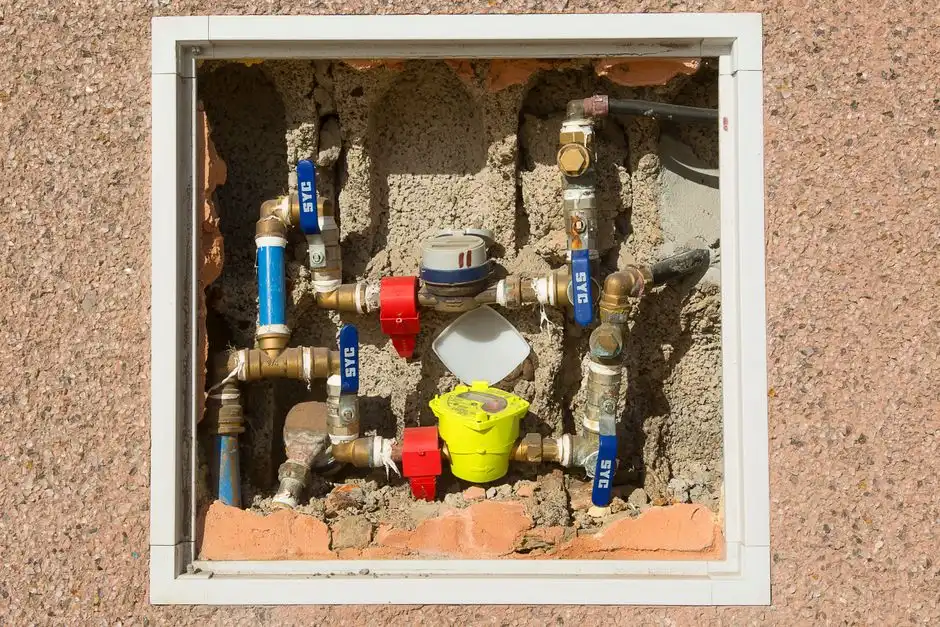
An industrial organic chemicals wastewater treatment train should assign each pollutant family to a specific unit operation, operating action, or analytical control rather than expecting one device to meet every requirement. Characterize waste streams before finalizing the train. For this application, the DAF selection checklist for FOG and TSS is a technical reference for separating oil-removal duties from biological loading, while the PVDF MBR membrane specifications provide the starting point for evaluating solids separation and biological loading.
- Screening: Use a rotary mechanical bar screen to remove rags, plastics, and large solids before pumping, equalization, or biological treatment. The referenced GX design includes overload protection and a self-cleaning brush discharge.
- Equalization: Mix and gently aerate the basin to dampen slug loads from batch organic reactions. Size the basin around both the sewer allocation and the hydraulic peak-discharge envelope.
- DAF: Remove free and emulsified oils, FOG, and colloidal solids that could interfere with downstream biology. The supplied commercial research reports a catalog range of 4–300 m³/h across 13 standard models; these are catalog limits, not permit limits, and final sizing must reflect peak batch flow.
- Biological treatment: Use acclimated biological treatment for BOD, COD, and toxicity-driven priority pollutants. The supplied research reports packaged MBR options covering 10–2,000 m³/day and filtration below 1 μm; compare that separation performance with the site’s assigned categorical and local limits.
- Clarification and polishing: Use solids separation after biology. The supplied research identifies lamella clarification as the polishing stage and states that an MBR has a roughly 60% smaller footprint than a conventional aeration-plus-clarifier arrangement.
- Disinfection: The supplied research identifies on-site chlorine dioxide as a practical option and reports capacities from 50 g/h to 20,000 g/h. Chlorine dioxide is preferred because it forms fewer halogenated organics downstream; the equipment supplier must substantiate that claim for the selected chemistry.
- pH control: Use PLC-controlled acid or caustic dosing tied to an in-line probe with PID feedback. Validate the selected local limit and the applicable Part 414 subpart during design.
| Pollutant family or control | Primary treatment response | Design or verification requirement |
|---|---|---|
| Rags, plastics, and large solids | Rotary mechanical bar screen | Confirm overload protection, brush discharge, and accessible solids removal |
| Free/emulsified oil, FOG, and colloidal solids | DAF followed by solids handling | Base peak sizing on batch flow and characterize emulsification behavior |
| BOD, COD, and toxicity-driven priority pollutants | Acclimated biological treatment | Establish the applicable subpart limits and conduct representative waste testing |
| Residual suspended solids | Lamella clarification or MBR membrane separation | Set the guarantee point from the tighter applicable discharge limit |
| Pathogenic indicators, where required | On-site chlorine dioxide option identified in the supplied research | Confirm contact conditions and downstream effects with the Control Authority |
| pH | PLC-controlled acid or caustic dosing | Use in-line probe with PID feedback and permit-required confirmation sampling |
Use the industrial DAF system and MBR membrane bioreactor pages as equipment references, not as substitutes for a site-specific design basis.
Choose DAF, MBR or Packaged Treatment
Choose DAF when oil, emulsified oil, FOG, or colloidal solids are the principal pretreatment problem and biological protection is the main objective. Choose MBR when biological removal, footprint, batch-load tolerance, or low suspended-solids separation drives the decision. The supplied research states that MBR’s enclosed tankage and high MLSS help maintain nitrification and BOD removal at 8–10 °C, where open activated-sludge basins slow below approximately 12 °C.
For lower-flow applications, the supplied research gives a WSZ range of 1–80 m³/h and describes WSZ as a space-efficient biological option. This is not evidence that every Part 414 parameter, priority pollutant, and local limit will be met. The WSZ still needs a site-specific waste characterization, confirmation of the required pretreatment steps, and an acceptance basis tied to the permit.
| Decision condition | Preferred equipment basis | Buyer’s required evidence |
|---|---|---|
| Oil, FOG, or colloidal solids dominate and could upset biology | DAF-based pretreatment | Representative oil/FOG testing, peak batch flow, guarantee point, and downstream biological loading |
| Organic loading, footprint, or low TSS separation is the priority | MBR membrane bioreactor | Influent characterization, temperature and load envelope, membrane cleaning plan, and parameter-by-parameter performance guarantee |
| Lower-flow packaged treatment is appropriate | WSZ-class biological option | Confirmation that the full required treatment train is included and that applicable limits—not generic catalog values—define acceptance |
Require each supplier to define the design influent, average and peak flow, batch-loading envelope, guarantee point, required pretreatment, controls scope, sludge handling, and permit-compliance responsibility. Treat all catalog flow ranges and generic effluent figures as screening information. The negotiated guarantee must follow confirmation of the plant’s Part 414 subpart, Glens Falls local limits, and site-specific design conditions.
Secure the Permit and Prove Ongoing Compliance
The industrial discharge permit application and Baseline Monitoring Report should proceed in parallel. The supplied commercial research states that permit issuance typically takes 60–120 days from a complete application. Starting only after one deliverable is finished delays the project without creating a shorter regulatory path.
For a new SIC 2869 discharger, the Baseline Monitoring Report requires four sampling events within the first 90 days of discharge, with composite or grab sampling as required, outfall identification, and a process description. The analytical program must cover the priority pollutants applicable to the plant’s Part 414 subcategory plus conventional parameters such as BOD5, TSS, oil and grease, pH, ammonia, and sulfides. Confirm the exact analytical slate and sampling protocol with Glens Falls and the assigned laboratory before sampling.
After issuance, follow the permit’s self-monitoring schedule and retain compliance records. Glens Falls retains right-of-entry inspection authority under 40 CFR 403.8. Use continuous in-line pH monitoring where required, but treat permit-compliant composite or grab sampling as the compliance record rather than relying solely on control-system readings.
Operational readiness should include calibrated instruments, reagent and spare-parts inventories, a sludge handling route, laboratory turnaround planning, alarm response procedures, and a clear distinction between process adjustments and permit deviations. Equipment readiness should be demonstrated through installation and operating documentation linked to each permit condition. A supplier’s statement that a unit is “compliant” is insufficient unless it identifies the limit, test method, sampling point, and acceptance condition.
Frequently Asked Questions
Should the treatment system use DAF or MBR?
Use DAF to remove oil, FOG, and solids before biological treatment; use MBR when biological load reduction, footprint, batch tolerance, or low suspended-solids separation is the priority. The correct choice depends on representative waste characterization and the tighter applicable limit.
Can equipment capacity replace permit approval?
No. Capacity only shows whether equipment can process a defined flow; it does not establish permit approval or verify every local and categorical parameter. Obtain the assigned Part 414 subpart, applicable Glens Falls local limits, and approved permit conditions before treating an equipment proposal as compliant.
What should a buyer request before comparing supplier prices?
Request the design influent, average and peak flow, batch-loading envelope, guarantee point, pretreatment requirements, controls scope, sludge handling, and responsibility for permit-compliance evidence. Ask each supplier to price the same documented design basis; a defensible cost comparison requires current vendor proposals based on the same inputs.
Should the permit application and Baseline Monitoring Report be filed together?
Yes. Typical permit issuance takes 60–120 days from a complete application, so proceeding in parallel avoids administrative delay while preserving the required monitoring schedule.
Related Equipment
- industrial DAF system — specifications, capacity range, and technical data