
Is a Belt Press the Right Fit for Starch Sludge?
A belt filter press can dewater starch wastewater sludge continuously, but it is usually most suitable for high-throughput plants where wetter cake can be managed. HydropureWater’s 2026 starch guide identifies approximately 30 m³/h as the threshold below which a belt press generally loses its capital-cost advantage to a batch plate press, and reports belt cake at 18–25% dry solids. Starch fines, especially cassava fiber or sweet-potato pectin, can blind cloth and resist compression, so upstream thickening, flocculant conditioning, and an appropriate belt-cloth specification are essential. Selection should be based on peak wet-tonnage, feed dry solids, required cake dryness, polymer demand, and final disposal route.
That screening point is a procurement starting point, not an automatic selection rule. HydropureWater’s 2026 guide says the capital advantage of continuous dewatering is generally realized above 30 m³/h, while polymer and labor requirements can erode that advantage at lower throughputs. The same source gives belt-press cake as 18–25% dry solids, compared with 30–45% for a recessed-plate press and 45–50% for a membrane press.
Whether 18–25% dry solids is acceptable depends on the destination. HydropureWater’s 2026 guide associates this range with plants able to route wetter cake to drying beds or a thermal dryer. It may not satisfy a landfill, composting, co-drying, or combustion specification that requires a drier cake. Confirm the receiving limit before comparing equipment.
The press should also not be confused with a raw starch-water treatment process. The supplied 2026 evidence concerns dewatering of sludge, not direct treatment of washing or extraction water. For a batch-press application, the guide identifies a 3–5% dry-solids upstream thickening target. A continuous belt system may use a different feed condition, but that condition must be established from plant data rather than copied from the plate-press example.
Before requesting quotations, compile peak wet tonnes per hour, average flow, feed dry-solids percentage, operating days, required cake dryness, and the disposal route. A campaign plant must be checked against peak-period load rather than annual average flow. A plate and frame filter press for starch sludge may remain the better machine class when the plant is below the throughput point or needs drier cake.
Identify the Starch Wastewater Stream Being Dewatered
The starch stream must be identified before equipment selection because the dry-solids concentration and solids composition differ by feedstock and by treatment stage. HydropureWater’s 2026 starch wastewater filter press engineering guide characterizes combined washing, extraction, and gluten-recovery water at 8,000–25,000 mg/L COD and 2,000–8,000 mg/L suspended solids after secondary clarification.
Those process-water figures are not belt-press feed specifications. The source treats biological sludge separately: a mid-sized cassava or corn starch plant may produce 40–80 m³/day of waste activated sludge at 1.0–2.5% dry solids. Dewatering that biological sludge is a different duty from recovering suspended starch from raw process water.
| Starch stream | Dry-solids concentration reported by HydropureWater, 2026 | Selection implication |
|---|---|---|
| Cassava sludge | 1.0–2.0% | Fine cell-wall fiber can blind cloth and resist compression. |
| Corn gluten-bearing sludge | 2.0–4.0% | Coarser germ and gluten residuals may filter more freely. |
| Wheat sludge | 1.5–3.0% | Higher protein content may compress more readily. |
| Sweet-potato sludge | 1.0–2.5% | Pectin and starch fines can form a gel-like cake and resist dewatering. |
| Waste activated sludge | 1.0–2.5% | Apply the biological-sludge duty; do not substitute raw-process-water data. |
The table is a screening aid, not a guarantee of performance. HydropureWater’s 2026 guide identifies cassava fines and sweet-potato pectin as difficult-to-compress fractions, while corn and wheat streams present different fiber and protein behavior. These characteristics affect flocculant demand, cloth selection, cake release, and wash-system requirements.
Ask the plant laboratory to measure dry solids, particle-size distribution, fiber or pectin content, pH, and settleability on representative samples. Sampling should cover normal production and relevant campaign conditions. The composition and availability of the sludge are also relevant: a bench test of clean starch fines will not represent a biological sludge carrying process residuals.
Then define the flow and solids balance:
- Identify the origin of each sludge stream.
- Measure peak and average wet-sludge flow.
- Determine dry-solids percentage and hourly dry-solids load.
- Identify seasonal and campaign variability.
- Record the proposed cake destination and filtrate recycle point.
That sequence prevents a belt press from being selected for a process-water recovery duty when the actual requirement is continuous sludge dewatering.
How Conditioning Controls Belt-Press Performance
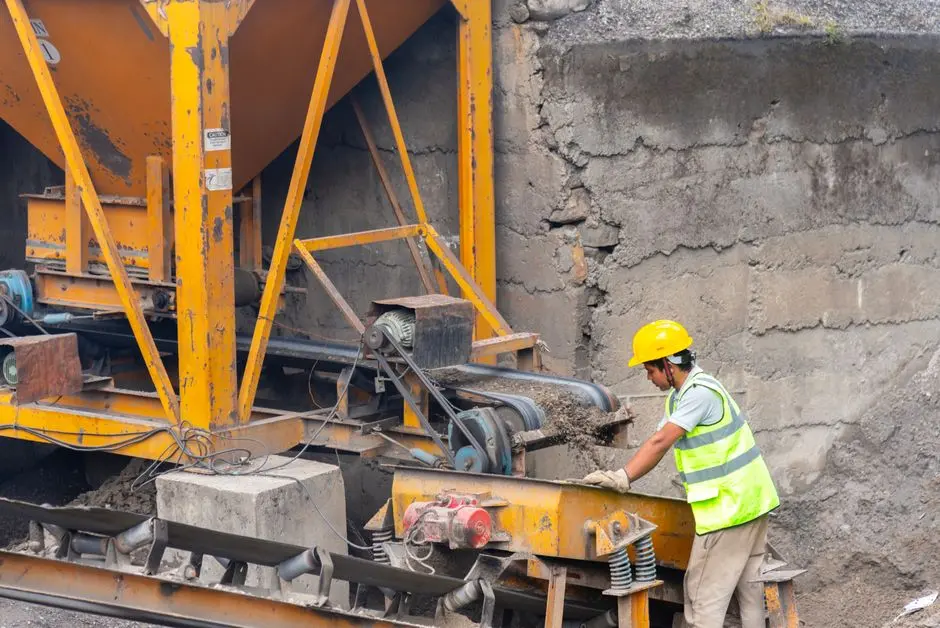
Conditioning quality governs whether starch sludge forms stable flocs that release water and pass through the belt. Alfa Laval describes a belt press as using filter cloths and belts over rollers, with pressure increasing through the roller sequence to separate water from the solids. It also identifies flocculant pretreatment as a common way to improve separation.
HydropureWater’s 2026 guide gives cationic polyacrylamide demand of 2–6 kg per tonne of dry solids for corn and wheat starch sludge, versus 8–12 kg per tonne for cassava fines. These are reported screening ranges, not universal operating setpoints. The correct dose must be established using the plant’s mixed feed, dry-solids concentration, and selected mixing system.
The source specifies a mixing target of G = 200–400 s⁻¹ for 30–60 seconds. HydropureWater’s 2026 guide also reports that shear above approximately 500 s⁻¹ can break flocs and re-fine the solids. Excessive shear can therefore increase cake moisture even when more polymer is added. A properly sized automatic polymer and pH adjustment system should maintain the prepared dose and feed rate against the measured solids load.
HydropureWater’s 2026 guide gives polyaluminum chloride as a pre-dose option of 50–200 mg/L for high-protein or high-pectin streams. It states that PAC can neutralize colloidal charge before CPAM is added, but compatibility and final polymer demand must be verified through site testing. The pre-dose should therefore be treated as a trial option, not an automatic prescription.
pH is another control point. HydropureWater’s 2026 starch guide specifies adjustment to 6.5–7.5 before cationic PAM dosing to make charge demand more predictable. If the process stream falls outside that range, the quotation should include the chemical required, metering capacity, and injection location.
| Conditioning item | Reported basis | Engineering check |
|---|---|---|
| CPAM for corn and wheat starch sludge | 2–6 kg/tonne DS, HydropureWater, 2026 | Run a dose-response trial on representative mixed sludge. |
| CPAM for cassava fines | 8–12 kg/tonne DS, HydropureWater, 2026 | Confirm fines content and whether mixing or filtration is limiting performance. |
| Mixing | G = 200–400 s⁻¹ for 30–60 seconds; excessive shear above approximately 500 s⁻¹, HydropureWater, 2026 | Measure mixing energy during commissioning. |
| PAC pre-dose | 50–200 mg/L, HydropureWater, 2026 | Verify compatibility and total chemical demand by jar or pilot testing. |
| pH before CPAM | 6.5–7.5, HydropureWater, 2026 | Include pH correction in the pretreatment train. |
If cake remains wet after representative testing, review conditioning before increasing press capacity. Also inspect for torn cloth, blinding, or wash-system failure. More pressure cannot correct unstable flocs or a blocked filtration path.
Size the Belt Press Around Solids Capacity
Belt-press sizing must be based on dry-solids loading and verified peak feed, not hydraulic flow alone. HydropureWater’s 2026 sizing framework is:
Filter area (m²) = daily wet sludge volume × (feed dry solids ÷ 100) ÷ (cycle length in hours × cake yield per m² per cycle).
The worked example in HydropureWater’s 2026 guide is explicitly a batch-plate-press calculation: 20 m³/day at 3% dry solids equals 0.6 tonne of dry solids per day; over three four-hour cycles, that is 50 kg of dry solids per hour. At 3 kg of dry solids per square metre per cycle, the source calculates approximately 17 m² and rounds to 20 m².
That equation must not be transferred to a continuous belt press. A belt press has no fixed four-hour chamber cycle, and its area must be tied to the vendor’s belt-specific loading rate, belt width, filtration arrangement, pressure profile, feed consistency, and expected cake thickness. Treat the published example as a method for organizing the solids balance, not as a belt-press selection calculation.
| Input | Why it controls belt selection | Evidence to request from vendor |
|---|---|---|
| Peak wet tonnes per hour | Defines the maximum hydraulic feed duty. | Maximum feed rate at the guaranteed feed consistency. |
| Dry solids per hour | Defines the actual solids-removal duty. | Dry-solids capacity and the associated feed-solids range. |
| Feed consistency | Affects floc formation, filtration, and pump behavior. | Permitted dry-solids range and feed-pump duty. |
| Belt width and filtration area | Sets the available dewatering surface. | Effective filtration area and area utilization basis. |
| Cake thickness | Affects cake release and downstream handling. | Design cake thickness and associated solids loading. |
| Throughput guarantee | Defines what the supplier is actually promising. | Guarantee basis, test conditions, feed limits, and exclusions. |
HydropureWater’s 2026 guide identifies 3–5% dry solids as the upstream thickening target for its batch-press sequence. That is a useful checkpoint for concentrating sludge, but it does not guarantee equivalent belt performance in every starch stream. Cassava fines, sweet-potato pectin, and variable biological solids can change the required loading rate.
For a starch project, the quotation should state peak wet throughput, hourly dry-solids capacity, feed-solids limits, conditioning assumptions, and the downstream wet-cake route. A high-efficiency sedimentation tank may form part of the upstream train, but its selected outlet concentration must be included in the belt guarantee basis.
Select the Belt, Cloth, and Washing System
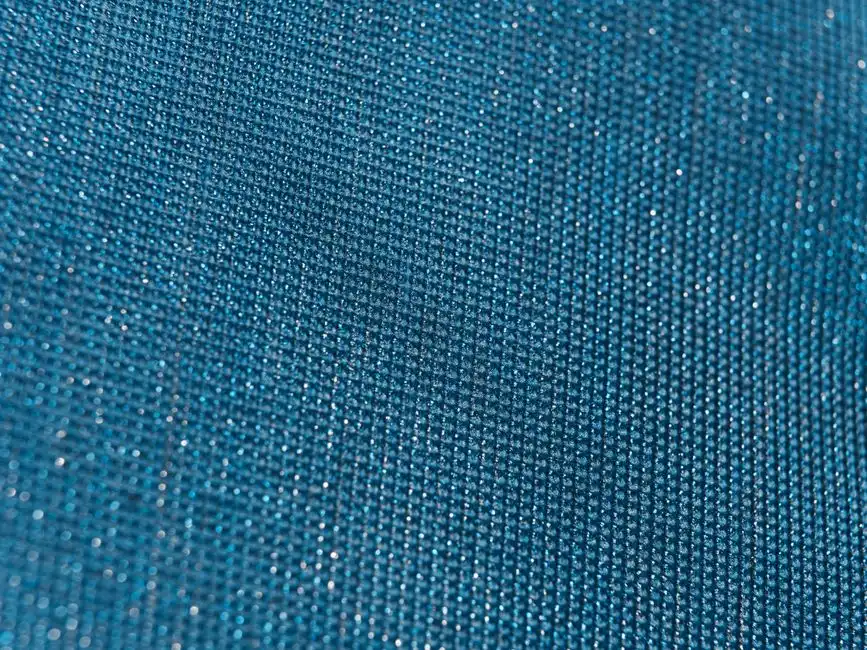
Cloth selection for a belt filter press for starch wastewater must balance filtrate clarity against blinding from starch fines. HydropureWater’s 2026 guide identifies polypropylene and polyester monofilament cloths with apertures from 5–25 µm as the starch-plant norm and describes 10–15 µm as a practical compromise for mixed starch streams.
The source explains the trade-off: finer apertures can improve filtrate clarity but blind faster when cassava fines are present. A finer cloth is therefore not automatically the better specification. The correct choice depends on the actual solids distribution and the acceptable filtrate quality at the intended recycle point.
Alfa Laval describes the mechanical sequence as filtration through cloth and belts, increasing pressure along the rollers, and progressive cake formation. As fines lodge in the cloth, permeability falls and filtration performance deteriorates. The washing arrangement must therefore be designed as part of the dewatering process, not treated as an accessory.
Ask each supplier to document:
- Belt material and cloth construction;
- Aperture or weave specification relevant to the actual feed;
- Seam and joining method;
- Wash-cycle duration, pressure, and frequency;
- Expected replacement interval under the stated duty;
- Performance results using representative starch sludge;
- Filtrate TSS and recycle implications.
HydropureWater’s 2026 guide reports filtrate quality of 50–300 mg/L TSS for its press arrangement and describes it as potentially suitable for recycle to the head of the biological stage. That range belongs to the cited plate-press context; it must not be presented as a universal belt-press guarantee. A proposed belt system should demonstrate filtrate quality on the same representative feed used to establish its cake and throughput performance.
Run a site trial where practical. The supplied research does not establish a universal cloth life or cake-solids guarantee for all cassava, corn, wheat, and sweet-potato streams. Testing should use the mixed sludge expected during the relevant production campaign, not a narrow laboratory sample selected only for convenience.
Belt Press or Plate Press for a Starch Plant?
The machine class should follow the required cake dryness and route, with throughput as a major but not exclusive screening criterion. HydropureWater’s 2026 guide reports belt-press cake at 18–25% dry solids, recessed-plate cake at 30–45%, and membrane-press cake at 45–50%.
| Selection factor | Continuous belt press | Recessed plate press | Membrane plate press |
|---|---|---|---|
| Reported cake dry solids | 18–25% | 30–45% | 45–50% |
| Operating pattern | Continuous | Batch cycle | Batch cycle with squeeze phase |
| Reported throughput screening point | Generally fits starch applications above 30 m³/h | May retain its advantage at lower starch-plant throughputs | Selected when the required cake dryness justifies added complexity |
| Downstream cake route | Must accept wetter cake, such as drying beds or thermal drying | Requires a route accepting its drier cake | Selected for demanding dryness targets |
| Main constraint to test | Polymer and labor costs at lower throughput | Cycle management and labor | Higher capital and squeeze-system wear |
The dry-solids and cycle values above are reported by HydropureWater in 2026. For a recessed plate press, the source gives a 45–90 minute cycle and 30–45% dry-solids cake. For membrane equipment, it reports a 15–20 bar squeeze phase that lowers cake moisture by another 5–10 percentage points.
Above 30 m³/h, a belt press may offer a practical continuous route, but only if the plant accepts 18–25% dry-solids cake. Below that threshold, HydropureWater’s 2026 guide says chemical and labor operating costs can eliminate the belt press’s capital advantage within 18–24 months. A plant can therefore be above the hydraulic screening point and still select a plate press because cake dryness, campaign duration, labor availability, or disposal economics dominate the decision.
The reverse is also possible: a smaller plant may accept wet cake, have continuous labor coverage, and justify a belt installation, but that requires a site-specific operating-cost comparison. The 30 m³/h figure does not settle the choice by itself.
For a clearer benchmark, compare the plate and frame filter press for starch sludge configuration against the belt quotation using the same feed, required cake dryness, filtrate limit, and labor basis. The comparison should include polymer consumption, wash-water demand, utilities, maintenance, staffing, and wet-cake handling.
Build the Vendor Request for Quotations
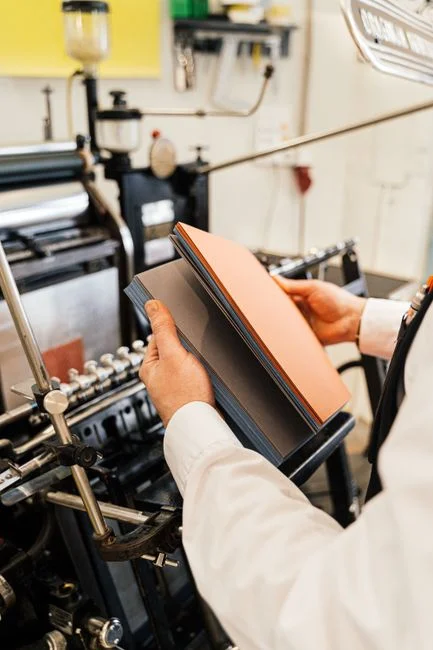
A comparable RFQ requires vendors to quote the same feed, throughput, and downstream basis. The first package should contain peak and average wet sludge flow, feed dry-solids percentage, hourly dry-solids load, operating and campaign days, and feedstock composition. Add laboratory results for particle-size distribution, pH, and representative filtrate and cake samples.
The performance schedule should state required cake dry solids, acceptable filtrate TSS, intended recycle point, disposal method, available floor area, utilities, and local environmental permit conditions. Do not omit the cake route: it determines whether 18–25% dry solids is useful or creates another handling stage.
| RFQ package | Items to include | Required supplier response |
|---|---|---|
| Core equipment | Belt press, filtration area, belt width, feed pumps, controls and washing system | Performance basis, feed limits and throughput guarantee |
| Conditioning | Polymer preparation, PAC option, pH adjustment and metering | Chemical assumptions, dose range and control method |
| Upstream handling | Sludge thickening and equalization | Design feed condition and outlet concentration |
| Downstream handling | Cake discharge, conveying and disposal interface | Cake properties and handling assumptions |
| Commercial scope | Installation, commissioning, training, spares and cloth replacement | Itemized pricing and exclusions |
Request separate itemized pricing for the belt press, polymer preparation and dosing equipment, sludge thickening, feed pumps, washing system, controls, installation, commissioning, spares, and cloth replacement. A separate automatic polymer and pH adjustment system line exposes the dosing assumptions, while a DAF sludge thickening system line exposes the upstream feed concentration and its price impact.
Each supplier should state the test feed used, polymer assumptions, dry-solids capacity, peak wet throughput, cake dryness, filtrate quality, and all conditions attached to the guarantee. A quote that gives only m³/h without feed solids and conditioning assumptions is not comparable.
Frequently Asked Questions
Can a belt filter press replace a plate press at a small starch plant?
Not solely because continuous operation is attractive. HydropureWater’s 2026 guide uses 30 m³/h as the screening point above which a belt press generally fits starch applications; below it, polymer and labor costs can erode the capital advantage within 18–24 months. The belt-press cake range of 18–25% dry solids also differs from the 30–45% reported for a recessed plate press. Check both the plant’s peak feed and the disposal specification before deciding.
How should a buyer compare belt-press suppliers?
Ask every supplier to document peak wet throughput, dry-solids capacity, representative test sludge, feed-solids range, cake dry solids, filtrate quality, polymer assumptions, and the conditions of its performance guarantee. Use the same feed basis for each quotation. Require clarification where the guarantee was established with different sludge, conditioning, or washing conditions.
What information is needed to size a continuous belt press?
Provide peak and average wet sludge flow, dry-solids percentage, hourly dry-solids load, feed consistency, operating days, and expected cake thickness. The vendor must then apply its belt-specific solids-loading calculation and state the assumed belt width and effective filtration area. HydropureWater’s 2026 filter-area example is a batch-plate-press method and should not be used unchanged for a belt press.
What drives the operating cost of a starch belt press?
Polymer demand and labor are the main issues to test, particularly below the 30 m³/h screening point. HydropureWater’s 2026 guide reports CPAM demand of 2–6 kg/tonne DS for corn and wheat starch sludge versus 8–12 kg/tonne DS for cassava fines. Request a chemical-cost estimate based on site trial data, then add wash-water, power, cloth replacement, and staffing before comparing the belt press with a batch machine.