How Chennai Factories Build a High-COD Treatment Train
In 2026, Chennai manufacturers generally treat high-COD trade waste as a separation-and-reduction problem: segregate incompatible streams, characterize COD and flow, equalize the wastewater, remove oil, grease and suspended solids, then use biological treatment such as an aerobic SBR where the wastewater is biologically treatable. High-strength or resistant streams may require electrocoagulation, while polishing, reuse and ZLD depend on the intended water quality and disposal route. No universal process fits every factory: wastewater analysis and a treatability study must precede equipment sizing.
A defensible treatment train normally follows seven stages:
- Segregate industrial trade waste by production process and contaminant profile, then equalize the accepted streams.
- Characterize each stream for COD, BOD and the parameters that may inhibit or disrupt treatment.
- Remove screenings, oil, grease, floatable solids and suspended solids.
- Reduce biodegradable organic load biologically or use an advanced reduction process where the stream is not biologically treatable.
- Separate biological solids or advanced-treatment flocs.
- Apply membrane polishing, disinfection or other finishing steps only where the reuse or disposal specification requires them.
- Route the verified effluent to reuse, controlled discharge or ZLD.
An industrial DAF system for oil, solids and colloid removal belongs after characterization and equalization. Aerobic SBR is an evidenced biological route for high-COD wastewater, but S3 does not establish that every factory stream is suitable. The study must confirm biodegradability, inhibitory substances, process stability and the required outlet quality.
For reuse-oriented treatment, an MBR wastewater treatment system can provide fine solids separation, with industrial RO considered downstream when dissolved contaminants must also be rejected. These units are stages in an auditable process, not substitutes for source control or pretreatment.
| Stage | Primary function | Decision basis |
|---|---|---|
| Segregation and equalization | Prevents incompatible loads from mixing and smooths flow and concentration | Process origin, flow profile and contaminant compatibility |
| Characterization and treatability | Establishes design inputs and biological or advanced-treatment feasibility | COD, BOD, pH, suspended solids, oil and grease, toxicity indicators and variability |
| Primary separation | Removes material that can overload or inhibit later stages | Screenings, floatables, colloids and solids characteristics |
| COD reduction | Reduces biodegradable organic load or separates it through advanced treatment | Biodegradability, resistance to treatment and study results |
| Clarification | Separates biomass or generated sludge | Solids loading and required downstream clarity |
| Polishing and disinfection | Meets the specified reuse or disposal quality | Written outlet and end-use requirements |
| Reuse or disposal | Completes the selected compliance route | Reuse application, permitted discharge route and concentrate management |
Characterize the Waste Before Choosing Equipment
COD alone cannot specify a high-COD treatment plant because it measures oxidizable demand without identifying the compounds, flow variation or treatment constraints that determine equipment performance. Each segregated process stream requires its own sampling plan and design basis.
Request COD and BOD characterization together with flow, pH, suspended solids, oil and grease, colloid behavior and temperature. Sampling should represent normal production, batch dumps, cleaning operations and abnormal discharges rather than rely on one composite sample. Chemical cleaning and incompatible process liquors can change both load and treatment requirements, so the source of COD must be mapped before the treatment train is fixed.
The biological decision also requires evidence of biodegradability. Potential inhibition from toxicity, salinity, pH or persistent compounds must be measured rather than assumed. The result should identify whether the stream can support an aerobic SBR, whether dilution or segregation is required, or whether electrocoagulation should precede or replace biological treatment.
S1 provides a research precedent rather than a Chennai performance claim. The MDPI study evaluated electrocoagulation for Pb/Zn sulfide mineral-processing wastewater with an initial COD of 424.29 mg/L. Its assessment covered anode material, current density, initial pH and additives. Those results demonstrate the variables examined; they do not establish the output or applicability of an EC unit for a Chennai factory.
Define the final route before selecting polishing equipment. Specify the reuse application, permitted discharge route or ZLD objective, and the receiving, sewer or reuse quality requirements that will apply. This prevents a membrane being selected before the feed has been shown suitable and gives suppliers a defined basis for guarantees.
| Design input | Why it affects selection | Evidence to request |
|---|---|---|
| COD and BOD | Defines organic-load reduction needs | Stream-specific laboratory results and sampling method |
| Flow and variation | Determines hydraulic capacity, equalization and control requirements | Continuous flow record plus batch and dump profile |
| pH, suspended solids, oil and grease | Identifies chemical demand and pretreatment needs | Representative analysis across operating conditions |
| Colloid behavior and temperature | Affects separation, precipitation and biological performance | Jar or pilot observations and temperature data |
| Toxicity, salinity and persistent compounds | Tests whether biological treatment is viable | Toxicity or inhibition assessment and compound information |
| End-use requirement | Defines polishing, disinfection and disposal scope | Written reuse or discharge criteria |
Automatic chemical dosing and pH-control systems should be specified only after the treatability study establishes the required chemicals, dose range and control sequence.
Remove the Interferents That Limit COD Reduction
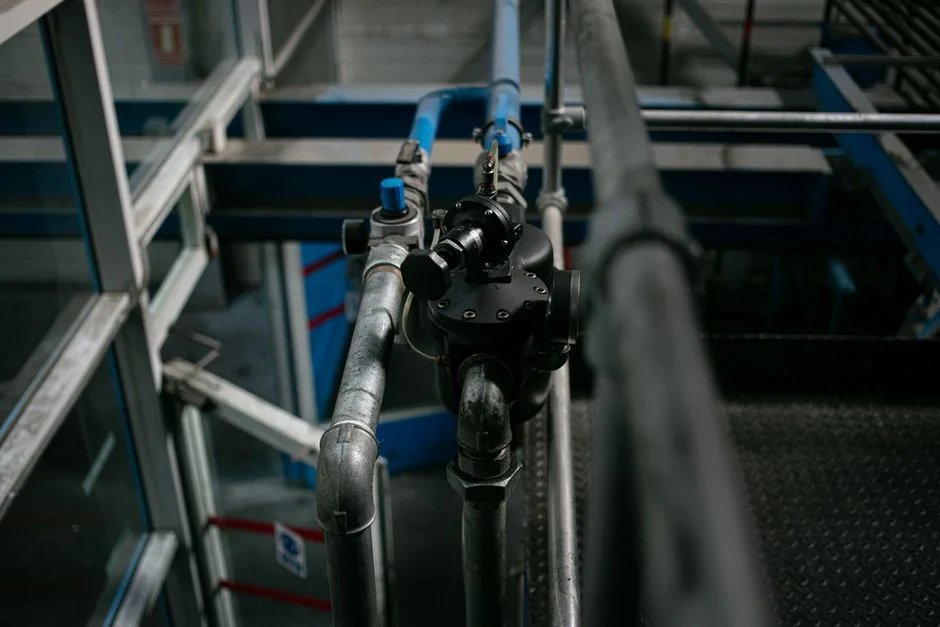
Primary separation determines whether downstream COD reduction can operate reliably because oil, colloids, suspended solids and screenings can overload biological systems or consume the chemicals required for controlled treatment. Screening is appropriate where rags, plastics or fibrous debris can enter the plant; a rotary mechanical bar screen for municipal and industrial headworks can protect downstream pumps, valves and biological processes from such material.
DAF is the relevant primary unit where oil, grease, floatable solids and colloidal material must be removed before biological treatment. The supplied DAF catalogue covers 4–300 m³/h across 13 standard models. That range describes the offered equipment; it is not a recommendation to size a Chennai plant without confirming the actual flow, peak demand, floatable load and required removal performance.
Chemical dosing is a supporting control rather than a substitute for process design. A PLC-controlled, skid-mounted dosing system can coordinate coagulants, flocculants and pH adjustment, but the chemicals and operating window must come from the treatment study. Uncontrolled dosing can create excess sludge, residual chemicals or unsuitable downstream water chemistry.
Where solids separation and sludge recirculation are required in a compact footprint, the supplied lamella sedimentation specification states surface-loading rates of 20–40 m/h and chemical-consumption reduction of up to 30%. Those figures are equipment specifications. The application remains subject to feed characterization, hydraulic loading, sludge properties and downstream compatibility.
| Interferent or control need | Applicable role | Critical validation |
|---|---|---|
| Rags, plastics and fibrous debris | Mechanical screening | Material type, peak flow and captured-screen disposal |
| Oil, grease, floatables and colloids | DAF with controlled chemical preparation | Float loading, pH, coagulant or flocculant requirement and recovered sludge |
| pH and chemical consistency | Automatic dosing | Dose range, interlocks, calibration and chemical compatibility |
| Separated solids and sludge recirculation | Lamella clarification | Solids loading, floor-level recovery and downstream pumping |
| Biological-stage compatibility | Treatability study before sequencing | Residence time, chemical demand, pH range and residual effects |
Do not place primary equipment immediately before the biological stage until chemical requirements, pH range, residence time and downstream compatibility have been demonstrated. This sequencing check is more useful than selecting a DAF, clarifier or dosing skid from a composite COD value alone.
Choose Biological or Electrocoagulation for COD Reduction
Aerobic SBR is the appropriate starting hypothesis when the stream is biodegradable and the plant requires a recognized biological route for organic-load reduction. S3, titled “High COD wastewater treatment in an aerobic SBR,” is direct evidence that aerobic SBR has been studied for high-COD wastewater. It is not evidence of equal performance for every Chennai industry or contaminant profile; treatability testing must establish the applicable reaction rate, operating sequence and effluent response.
Electrocoagulation becomes a candidate when the wastewater characteristics support it or when it can remove contaminants that interfere with biological treatment. S1 investigated EC for mineral-processing wastewater with an initial COD of 424.29 mg/L and assessed anode material, current density, initial pH and additives. The study’s initial COD must not be transferred into a Chennai factory design as a guaranteed operating value.
The decision should compare biological and advanced-treatment options across several engineering factors:
- Biodegradability: whether organic compounds can be biologically oxidized at an acceptable rate.
- Contaminant composition: whether salts, metals, toxic compounds or persistent products inhibit biology or alter EC demand.
- Variability: whether batch dumps or cleaning discharges would disrupt a biological reactor or electrical dosing.
- Footprint and utilities: available area, electrical demand, compressed air and process-water requirements.
- Chemicals and sludge: reagent consumption and the quantity and handling requirement of generated solids.
- Controls and maintenance: operator intervention, instrumentation, electrodes or blower maintenance, and local service access.
| Decision question | Favours aerobic SBR when | Favours electrocoagulation when |
|---|---|---|
| Waste composition | The stream is shown to be biodegradable and non-inhibitory | Specific contaminants or physicochemical properties support EC |
| Role in the train | Provides primary biological COD reduction | Provides advanced reduction or pretreatment before another stage |
| Principal operating inputs | Reaction kinetics, aeration, cycle timing and sludge management | Anode material, current density, initial pH and additives evaluated in S1 |
| Main implementation checks | Inhibition, loading variation, settleability and cycle control | Energy demand, electrode consumption, floc separation and passivation or fouling |
| Supporting equipment | Equalization, aeration, clarification and chemical control as proved necessary | Power supply, electrode system, chemical preparation and solids separation |
For either route, automatic dosing systems for pH, coagulant and flocculant control become necessary only where the study confirms the control demand. A sensible trial compares achievable COD removal, final quality, chemical consumption, energy use and sludge handling under representative feed conditions.
Prepare Treated Effluent for Reuse or ZLD
The reuse application and its required quality must be defined before selecting a final process. CEEW’s March 2023 report, “Reuse of Treated Wastewater in India,” recommends use-based treated-wastewater quality standards as part of stronger reuse governance. Without an agreed end use and acceptance criteria, “reuse-ready” has no auditable technical meaning.
CEEW also identified evidence that Chennai and Nagpur local bodies were selling secondary treated wastewater to industrial users. This demonstrates that industrial reuse is not merely conceptual in Chennai. It does not establish that a factory’s high-COD trade waste can meet an industrial user’s quality specification without additional treatment.
MBR is relevant where fine solids separation is needed for a reuse-oriented train. The supplied system specification states filtration below 1 μm, a footprint 60% smaller than conventional systems and capacity from 10–2,000 m³/day. These are supplied equipment specifications, not guaranteed output for a particular waste stream. Feed screening, biological condition, membrane fouling and cleaning requirements still need validation.
Industrial RO belongs downstream where dissolved salts or specific contaminants must be rejected for process reuse. The supplied RO specification states recovery rates up to 95%, but feed analysis and the required permeate quality determine applicability. Pretreatment, concentrate disposal and membrane replacement affect whether that stated recovery is achievable in operation.
ZLD is a broader disposal strategy, not another equivalent polishing unit. It requires review of the latest permitted technology, brine or concentrate management and lifecycle obligations. Trade.gov identifies ZLD as a high-potential segment for India but does not establish a Chennai requirement for a given factory.
CEEW estimated that 11,622 MCM of treated wastewater was available for reuse in India in 2021. This indicates national reuse scale; it cannot be used to estimate the volume available from a specific Chennai plant. For the equivalent treatment-selection questions, see high-COD trade-waste treatment methods used by manufacturers.
Plan Procurement, Testing and Compliance in 2026
A supplier enquiry should define the treatment duty rather than request a generic high-COD system. Include feed characterization, design flow and variation, required outlet quality, operating mode, utilities, controls, documentation and site constraints. Ask each supplier to state which equipment roles it is pricing, what is excluded and what performance basis supports its guarantees.
Translate the accepted design into a staged commissioning plan. Require factory acceptance, installation qualification, operational verification and performance testing against written criteria. Unspecified claims such as “high COD removal” should not appear in the purchase order without defined influent conditions, sampling methods, test durations and outlet parameters.
Trade.gov identifies high tariffs, price sensitivity, potentially unpredictable regulation and the importance of reliable after-sales support and local market knowledge as Indian market factors. The same source valued India’s water and wastewater treatment market at approximately $11 billion and expected it to grow to over $18 billion by 2026. This market outlook indicates supplier and service availability; it is not evidence that a proposed project is technically or commercially feasible.
Include sludge handling from day one. The supplied plate and frame filter press range covers filtration areas from 1–500 m² and manual, hydraulic or fully automatic PLC operation. Select the operating mode, duty and disposal route around the sludge generated by the selected treatment train, using the detailed filter press selection for industrial sludge framework where relevant.
| Procurement stage | Required record | Release condition |
|---|---|---|
| Enquiry | Feed basis, flow profile, outlet specification, utilities, controls and site data | All bidders quote the same defined duty |
| Treatability study | Representative results, treatment route, residuals and uncertainty | Equipment and guarantees match demonstrated conditions |
| Factory acceptance | Inspection, functional and control tests | Approved test procedure and acceptance certificate |
| Site verification | Installation, utilities, interlocks and operating procedures | Equipment is ready for process testing |
| Performance test | Agreed sampling, analytical methods, duration and outlet criteria | Written acceptance criteria achieved or deficiencies corrected |
| Operations | Training, maintenance, spares, local service and sludge plan | Ownership, support and compliance records transferred |
Reduce compliance risk through source segregation, representative sampling, a treatability study and written acceptance criteria. The broader industrial high-COD wastewater treatment framework provides a useful cross-market check, but Chennai requirements and each factory’s actual waste must govern the final design.
Frequently Asked Questions
What budget should a Chennai manufacturer plan for high-COD effluent treatment?
No defensible budget can be calculated from COD alone. Request a quotation using the segregated feed COD and BOD results, design flow and peak variation, required outlet quality, reuse or disposal route, utilities, site constraints and sludge-handling scope. Ask for each priced line item, exclusions, commissioning cost and acceptance test to be stated separately so that the quotations use a comparable scope.
Should we select DAF, SBR, MBR, electrocoagulation or RO for our factory?
Do not prescribe one technology before treatability testing. DAF is a candidate for floatable solids, oil, grease and colloids; aerobic SBR is a candidate for demonstrated biodegradable COD; EC requires feed-specific evidence and evaluation of its operating variables; MBR provides fine solids separation for reuse-oriented treatment; and RO is considered downstream where dissolved contaminant rejection is required. The study and end-use specification should determine the sequence.
How should a supplier be selected and sized?
Request documented duty, references for comparable wastewater, written performance guarantees, control philosophy, utility consumption, sludge generation, installation scope and local service arrangements. Check that proposed equipment capacities reflect the factory’s flow profile rather than only its average COD. Also require a commissioning and performance-test plan with agreed sampling methods and outlet criteria before awarding the order.
How can we reduce effluent-compliance risk?
Segregate incompatible streams, obtain representative samples for COD, BOD, flow, pH, suspended solids, oil and grease and inhibition tests, and complete a treatability study before final sizing. Define reuse, discharge or ZLD requirements in writing. Transfer the accepted design into a purchase order with enforceable test procedures and retain sampling, calibration, operating and maintenance records.
Are reuse and ZLD the same project with different equipment?
No. Reuse links treatment to a defined application and water-quality specification; ZLD links treatment to liquid-waste elimination and requires a credible route for the resulting concentrate. Compare each option using whole-project requirements—including pretreatment, membranes, energy, chemicals, sludge, brine, controls, maintenance and compliance—not unit-equipment cost alone.