Start with the plant's inherited wastewater liabilities
An acquisition does not transfer the buyer’s wastewater assumptions to the operating plant. SK On would inherit the Hungarian site’s operative permits, treatment assets, monitoring record and unresolved corrective actions, so the transaction team must establish those liabilities before committing to a treatment concept. The buyer should obtain the current integrated environmental permit and every amendment, the industrial-wastewater pre-treatment authorization, water-consumption conditions, discharge limits, stormwater provisions and treated-wastewater requirements. It should then verify the site’s stream segregation, equipment condition, operating history and sludge and hazardous-waste destinations against those authorization documents.
Request regulator correspondence, incident notices, fines, non-compliance reports, bypass events, monitoring results, outstanding corrective-action plans, chemical inventories, process-flow diagrams and contracts for sludge and hazardous waste. Establish whether obligations attach to SK On as operator, the land, the wastewater infrastructure or the wider industrial park. Also determine whether production changes or an acquisition require permit amendment. A buyer’s corporate treatment standard cannot substitute for the site’s legally operative requirements.
An October 2026 East Asia Brief report, as summarized in the supplied HydropureWater research, stated that the fourth permit modification approved in 2025 for the reported CATL project imposed stricter water-consumption limits and required treated wastewater. This is a diligence prompt only. It is not evidence about SK On’s acquired Hungarian site and should not be used to infer its permit limits.
| Document or record | Acquisition question | Investment consequence if incomplete |
|---|---|---|
| Integrated environmental permit and amendments | Are the current water-consumption, discharge, stormwater and treated-wastewater conditions confirmed from operative text? | Capacity and treatment objectives remain undefined. |
| Industrial-wastewater pre-treatment authorization | What influent, discharge and operating conditions apply, and when were they last demonstrated? | Installed equipment cannot be accepted as a permitted acquired asset. |
| Regulator and incident records | Are there exceedances, bypasses, enforcement actions or corrective actions still open? | Compliance exposure and capital needs may be understated. |
| Sludge and waste records | Where are captured solids sent, and are classifications and transfers consistent? | Residual liability may remain with the seller or shared with the buyer. |
The related wastewater acquisition diligence framework illustrates why permit verification should precede equipment selection.
Build a measured water balance before selecting equipment
A defensible treatment design begins with metered, stream-specific flows and loads reconciled to production and permit conditions. The buyer should reconcile installed flow meters, treatment capacities and documented process flows for each production phase, then compare them with the operative permit’s water-consumption requirements. Any mismatch becomes a priced liability rather than a future optimization.
Springer’s article reported a public-debate estimate of 1,000 m³ of water per hour for the reported CATL factory, according to the supplied HydropureWater research. Treat that figure as an audit trigger, not a design flow. The same Springer article cited Hajdú-Bihar County Government Office documentation reporting 50,000 tonnes of production waste per year, including 12,600 tonnes of particularly hazardous waste. Those are solid-waste quantities; they do not establish wastewater flow and must remain in a separate compliance workstream.
Collect representative samples across startup, normal production, cleaning, shutdown and abnormal batch phases. The program should address pH, conductivity, COD, BOD, TSS, oil and grease, process chemicals, relevant metals and toxicity. For NMP and other identified chemicals, record concentration and variability rather than relying on a nominal process value.
| Water-balance input | Evidence to obtain | Decision supported |
|---|---|---|
| Flow by stream and operating phase | Calibrated meter records reconciled with production records | Equalization, pumping and pretreatment capacity |
| Pollutant mass load | Representative concentrations combined with measured flows | DAF, biological loading, membrane area and sludge generation |
| Peak and intermittent conditions | Cleaning and batch discharge records with event timing | Equalization, interlocks and contingency capacity |
| Permit relationship | Operative water-consumption and pre-treatment conditions | Whether the installed system is compliant and adequately sized |
If records show that flow, installed capacity and permit conditions do not align, obtain a mass-and-load-based redesign and cost estimate before the acquisition price is finalized.
Segregate the wastewater streams at source
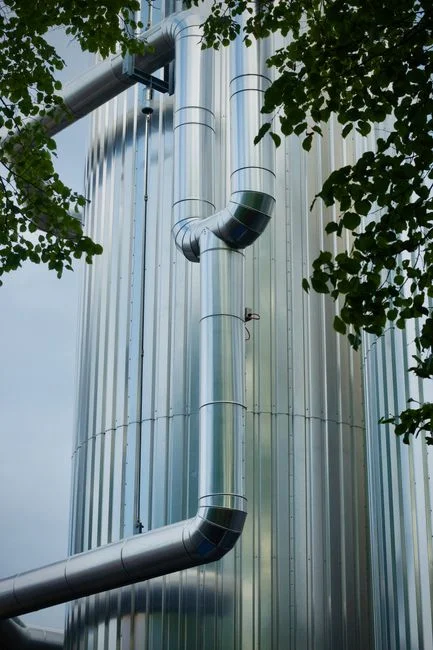
Segregation determines whether each stream can be combined, treated separately or lawfully diverted. Create distinct sample points and flow meters for cathode production, electrode coating, electrolyte handling, cleaning and rinsing, laboratory and HVAC drains, sanitary sewage, contaminated stormwater and firewater where applicable. Do not equalize incompatible flows merely because they share a downstream plant; incompatible chemistry and intermittent high-strength discharges can impair biological treatment and weaken compliance evidence.
For cathode production and coating, determine NMP presence, concentration, variability and a compatible treatment route using samples from the actual production configuration. The battery manufacturing sludge dewatering guide can support later solids-handling review, but it cannot substitute for stream characterization.
For electrolyte handling and cleaning, use dedicated containment and chemical-inventory control. Assess recovery, source reduction and dedicated treatment before accepting discharge to a shared system. Closure of rinsing loops, recovery of process chemicals and reduction of discarded cleaning solution may lower load before any biological or physical treatment is considered.
Transport & Environment reported, according to the supplied research, that external experts found the reported CATL factory exceeded NMP limits under the EU Industrial Emissions Directive and raised concerns about insufficient water-management plants. Those findings are not evidence about SK On’s site. Request the underlying expert report, monitoring records and regulator response, then compare them with actual samples and permits for the acquired plant.
| Stream | Control objective | Unresolved diligence item |
|---|---|---|
| Cathode production and coating | Closed handling, source capture and NMP-compatible routing | Actual NMP range, production variability and treatment route |
| Electrolyte handling and cleaning | Dedicated containment, inventory control, recovery or source reduction | Recovery feasibility and chemical compatibility with shared drains |
| Contaminated stormwater | Segregated drainage, controlled drainage and monitoring | Impermeable areas, containment, sampling points and lawful contingency route |
| Sanitary, laboratory and HVAC | Identify separately managed and non-hazardous contributions | Whether each drain is permitted to enter the industrial treatment train |
| Firewater | Maintain containment and emergency availability | Storage, transfer and disposal arrangements |
Match the treatment train to measured contaminants
The appropriate treatment sequence is source segregation, equalization of compatible streams, oil and solids removal, pH and flow balancing, biological treatment where suitable, polishing for the authorized reuse or discharge route, and residual-solids dewatering. Each stage needs a defined mass balance, operating envelope, sampling point and control response.
Use an industrial DAF pretreatment system when representative samples identify oil, grease, floatable solids or colloid-heavy material that can be physically removed and would impair downstream biology. DAF is pretreatment, not evidence of biological performance or final compliance.
Use biological treatment for biodegradable fractions. Select an MBR membrane bioreactor where biological solids separation, low suspended solids and reuse potential justify membrane treatment. The assessment must address biodegradability, loading, footprint, energy, membrane fouling, cleaning demand and lifecycle cost.
Use a PLC-controlled chemical dosing system with interlocks, high-level alarms, high-high diversion and batch-release checks. Feed should follow measured flow, and abnormal batches should be stopped or diverted to the permitted contingency route before pretreatment is overloaded.
Apply an industrial sludge dewatering filter press after physical or biological solids capture. Define residual-moisture requirements, cake handling and authorized disposal in the purchase specification.
| Candidate equipment | Use only when | Required acceptance evidence |
|---|---|---|
| DAF | Sampling identifies removable oil, FOG, floatable solids or suitable colloids | Agreed influent envelope and removal performance under site-representative loads |
| Biological treatment | Representative analysis shows a treatable biodegradable fraction | Loading, sludge production, process control and effluent results |
| MBR | Separation, suspended-solids or reuse objectives justify membranes | Fouling behavior, cleaning demand, energy consumption and reuse performance |
| Automatic dosing | Controlled chemistry is required within a defined flow envelope | Interlock, alarm, diversion and batch-release tests |
| Filter press | Physical or biological treatment produces dewaterable residual solids | Cake moisture, handling, batch cycle and authorized-disposal route |
HydropureWater’s stated catalog boundaries are 4–300 m³/h across 13 DAF models, 10–2,000 m³/day for MBR systems with filtration below 1 µm, and 1–500 m² of plate-and-frame filtration area. These are catalog boundaries only. No model can be selected before flow, contaminant load and treatment objectives are agreed.
Control discharge, stormwater and abnormal operating events
A permit condition becomes controllable only when it has an owner, measurement point, analytical method, reporting date and auditable corrective action. Create a compliance register covering water-consumption limits, pre-treatment authorization, discharge limits, stormwater provisions and treated-wastewater requirements, with every limit verified against the operative Hungarian authorization.
Use automatic flow-totalizing, conductivity, pH and turbidity instruments at suitable control points, supported by calibrated manual samples. Define calibration intervals, data-validation rules, chain of custody and alarm rationalization. Continuous instruments can identify trends and events, but they do not replace the required laboratory evidence.
Set escalation thresholds for exceedance, bypass, chemical spill, rising inlet loading and loss of treatment capacity. Name the role authorized to stop production, isolate flows and transfer water, identify the permitted contingency storage route, and specify notification and sampling responsibilities. Tabletop exercises should include contractors and municipal-response interfaces.
The supplied June 2026 CATL enforcement scenario describes an alleged sewer-line discharge, withdrawal of industrial-wastewater pre-treatment authorization, required cleanup of the municipal wastewater network and rainwater drainage, and a continuing investigation. It also stated that pollution ended within the permitted deadline while fines remained to be imposed. This is an incident model, not a finding about SK On’s plant.
| Control | Minimum auditable record | Required response |
|---|---|---|
| Permit conditions | Operative limit, monitoring point, method and reporting date | Corrective-action owner and closure evidence |
| Continuous instrumentation | Calibration, validation and alarm history | Investigate deviation and confirm with manual analysis |
| Abnormal loading | Trend, alarm and batch-production record | Stop or divert affected flow to the permitted contingency route |
| Authorization loss or bypass | Notification, isolation and sampling records | Execute approved containment and cleanup procedure |
Turn the treatment package into an investment decision
The installed system should count as an acquired asset only if it is permitted, matched to current production and supported by operating evidence. Procurement and finance should compare verified compliance exposure, rehabilitation cost and replacement cost—not equipment price alone. A treatment concept that cannot satisfy the operative permit or safely handle abnormal loads is not investment-ready.
Require each supplier to guarantee process parameters against an agreed influent envelope, not an undefined battery-industry average. Request comparable reference performance, factory and site acceptance-test protocols, spare-parts availability, local service support and a total-cost model covering chemicals, sludge, energy and maintenance. The filter-press selection guide illustrates why process conditions and residual-sludge objectives should be defined before comparing dewatering options.
No defensible package price can be given without measured flows, representative analyses, permit limits, reuse targets and sludge-disposal assumptions. Request a mass-and-load-based quotation stating treatment objectives, design envelopes, power and chemical consumption, sludge quantities, performance guarantees, acceptance tests and exclusions.
| Decision criterion | Evidence required | Decision output |
|---|---|---|
| Compliance status | Operative permit and demonstrated performance | Retain, upgrade, replace or condition the transaction |
| Capacity adequacy | Measured flows, loads, peaks and operating envelope | Approved design basis |
| Commercial certainty | Test protocol, guarantees, exclusions and lifecycle costs | Risk-adjusted comparison |
| Residual liabilities | Corrective actions, sludge route and regulatory history | Priced retention or seller remediation requirement |
The final investment register should assign an owner, financial estimate and closure evidence to every unresolved permit, capacity, performance and disposal issue.
Frequently Asked Questions
Which environmental documents should the buyer obtain before accepting the Hungarian site’s wastewater liabilities?
Obtain the current integrated environmental permit and all amendments, industrial-wastewater pre-treatment authorization, discharge and water-consumption conditions, stormwater provisions, regulator correspondence, monitoring records, incident notices, fines, corrective-action plans, chemical inventories, process-flow diagrams and sludge and hazardous-waste contracts. Confirm which obligations attach to the operator, land, infrastructure or industrial park. A permit summary from a reported project is not a substitute for the site’s operative authorization.
Why must a water-balance audit and representative analysis precede DAF or MBR sizing?
Equipment size depends on measured hydraulic and contaminant loads, including cleaning and abnormal batch conditions. The public-debate estimate of 1,000 m³ per hour for the reported CATL factory is only an audit trigger, not a design flow. Without representative concentrations and operating profiles, neither hydraulic capacity nor biological loading, fouling risk or sludge generation can be established reliably.
What should a defensible wastewater investment budget include?
Request a mass-and-load-based quotation based on measured flows, representative analyses, operative permit limits, reuse targets, sludge quantities, power consumption, chemical consumption, performance guarantees and exclusions. Also price rehabilitation, removal of corrective actions, monitoring, contingency capacity, maintenance and the destination of dewatered sludge. Capital price alone does not measure the acquisition’s compliance exposure.
How should the buyer distinguish DAF from MBR and select a supplier?
DAF is physical pretreatment for suitable oil, FOG and floatable material; MBR combines biological treatment with membrane solids separation and may be justified where low suspended solids or reuse is required. Select a supplier by asking for comparable performance, an agreed influent envelope, FAT and SAT protocols, guaranteed process parameters, local service support, spare-parts availability and lifecycle-cost data. The EV plant pretreatment compliance guide provides a useful comparison framework for operating controls.
Can any equipment package be presented as guaranteeing Hungarian compliance before installation?
No. Compliance must be demonstrated against the operative Hungarian permit and applicable authority requirements, using representative influent, the agreed design envelope and an approved acceptance protocol. The DAF versus clarifier comparison reinforces that equipment selection depends on contaminant behavior and operating conditions. Supplier guarantees can allocate performance risk, but they cannot replace permit verification and site acceptance testing.
Related Equipment
- industrial DAF pretreatment system — specifications, capacity range, and technical data