Treat the Acquisition as a Liability Decision, Not a Greenfield Design
Wastewater should be handled according to the acquired plant’s verified production mix, water balance, permits, discharge route, and reuse plan—not SK On’s corporate template alone. Diligence must separate process wastewater, sanitary sewage, stormwater, washdown, dry-room or HVAC blowdown, and cooling water; characterize battery-specific contaminants; and verify whether the existing ETP can meet the confirmed discharge or reuse envelope. NOM-001 or NOM-002 may apply depending on the route, while treated-water reuse requires the applicable CONAGUA registration before commissioning. The acquisition agreement should allocate permit, remediation, sludge, ETP-upgrade, and performance risk through closing conditions, indemnities, reserves, and defined acceptance tests.
Acquiring a battery plant transfers a site-specific regulatory and operating position; it does not automatically replace that position with SK On’s treatment standards. HydropureWater’s 2026 CATL Mexico acquisition analysis identifies the controlling facts as the verified water source, wastewater streams, discharge route, and current permits. The same decision framework applies to SK On, but it must be applied to the acquired site rather than adapted from another transaction.
Production scope must be established first. Cell manufacturing can generate NMP recovery condensate, electrolyte-salt rinse, coating and binder washwater, and dry-room blowdown. Module or pack assembly may have different hydraulic and contaminant profiles, including oil and grease associated with mechanical processes. A treatment train designed for one production mix may therefore be unsuitable for another.
Use this sequence:
- Confirm current production and the planned expansion ramp.
- Establish the legal discharge or reuse route.
- Characterize each wastewater stream.
- Assess ETP condition, sludge liabilities, and solvent recovery.
- Verify permit transfer and reuse registration.
- Allocate unresolved liabilities through transaction deliverables.
Do not size equipment from nominal plant flow or a generic battery-water ratio. HydropureWater’s 2026 Panasonic Mexico acquisition analysis cites industry estimates of 1.5–3.0 m³/kWh, but states that these must be compared with actual production and operating data. The legacy ETP acquisition due-diligence framework provides a useful structure for separating confirmed conditions from open liabilities.
| Acquisition gate | Decision required before treatment selection | Risk if unresolved |
|---|---|---|
| Production and expansion | Current product mix, confirmed production ramp, and wastewater-generating operations | Wrong wastewater profile and insufficient capacity |
| Legal route | Ground discharge, municipal-sewer discharge, or registered reuse | Treatment built for the wrong compliance envelope |
| Source characterization | Stream-level flow, chemistry, contamination history, and variability | Hidden fluoride, solvent, oil, or solids loads |
| Existing assets | ETP condition, membrane age, controls, chemical systems, sludge storage, and SCADA trends | Understated capital and operating exposure |
| Transaction allocation | Permits, remediation, sludge, capex, and performance responsibility | Legacy liability survives closing |
Build the Site Water Balance Before Choosing an ETP
The water balance must identify every source, destination, peak flow, and contaminant pathway before the buyer accepts a treatment concept. Before issuing an LOI, request the current process diagram, production mix, 12-month flow history, permits, self-monitoring records, and planned capacity change. These records should then be reconciled against the production ramp, rather than assuming that unused installed capacity can absorb expansion.
Segregate process wastewater, sanitary sewage, stormwater, washdown, dry-room or HVAC blowdown, and cooling-water discharge wherever practicable. Each stream has a different treatment and liability boundary. A combined flow can conceal an NMP recovery opportunity, dilute an oil load that should be removed upstream, or combine a regulated discharge with reusable water that needs separate registration.
For a cell-manufacturing site, HydropureWater’s 2026 Panasonic Mexico analysis prioritizes NMP solvent-recovery condensate, LiPF6/LiTFSI electrolyte-salt rinse, PVDF binder wash, copper and aluminum foil-processing rinse, and glycol- and trace-HF-bearing dry-room blowdown. LiPF6 can hydrolyze to HF on contact with moisture, so a fluoride or pH excursion at the ETP headworks is a Phase II investigation trigger, not merely an operating nuisance.
For pack assembly, characterize oil and grease from stamping, laser welding, and coolant-loop activities. The same 2026 source cites an EPA auto-sector benchmark of 50–100 mg/L for this evaluation; it is a screening reference for the identified operation, not a discharge limit for the acquired site.
HydropureWater’s 2026 monitoring program calls for 24-hour composite samples for COD, ammonia-N, and TOC, plus grab samples for fluoride and pH to capture hydrolysis spikes. Apply the same evidence to source flows, suspended solids, oils, solvent concentration, and sludge composition. The rotary mechanical bar screen may address gross solids, but source segregation still determines what reaches it and how the downstream train must be protected.
| Stream | Priority evidence | Transaction implication |
|---|---|---|
| Cell process wastewater | Flow, COD, TOC, fluoride, pH, suspended solids, NMP concentration, and recovery performance | Determines solvent recovery, fluoride control, biological loading, and sludge liability |
| Pack or module assembly | Flow, oil and grease, suspended solids, wash-water volume, and process origin | Determines whether upstream oil and solids removal is required |
| Dry-room or HVAC blowdown | Moisture content, glycol, fluoride, pH, and discharge destination | May require segregation and dedicated fluoride control |
| Sanitary sewage and stormwater | Flow, destination, discharge point, and monitoring obligations | Defines hydraulic and legal boundaries |
| Waste and sludge | Manifests and characterization for lithium, copper, aluminum, oil, and solvent content | Quantifies disposal, treatment, storage, and reserve exposure |
Match Treatment to the Stream and the Discharge Objective

Treatment should follow contaminant removal and the legal reuse or discharge objective, not a predetermined equipment list. DAF or lamella clarification belongs at the front of the train when oil, grease, FOG, suspended solids, or colloidal material would interfere with biological treatment or membranes. For oily battery wastewater, evaluate DAF pretreatment for oily battery wastewater using measured flow, oil and grease, solids, and downstream loading rather than nominal capacity alone.
HydropureWater’s 2026 CATL Mexico acquisition analysis describes a 2–5 mm rotary mechanical bar screen, pH correction to 6–8, and 8–24 hours of equalization for the described battery-wastewater headworks. Those values require verification against the acquired plant’s chemistry, flow variability, equipment condition, and permit conditions. Equalization may stabilize pH, temperature, and COD variation, but it does not make an improperly sized unit compliant.
Apply then–then logic:
- If oil or solids threaten downstream biological or membrane processes, remove them before the main treatment stage.
- If low-turbidity, low-suspended-solids reuse is required, evaluate an integrated MBR using 0.1 µm PVDF flat-sheet modules. Site data must establish that an integrated MBR wastewater treatment system can meet the required envelope.
- If solids removal or RO pretreatment is the objective, a 0.03 µm hollow-fiber UF system may be evaluated where its feed chemistry and operating envelope are supported.
- If very low dissolved solids or complete liquid recovery is required, evaluate RO and ZLD only after confirming pretreatment, concentrate fate, energy demand, and residual-disposal arrangements.
HydropureWater’s 2026 Panasonic Mexico analysis specifies a denitrification/nitrification split and 8,000–12,000 mg/L MLSS as biological design inputs under NOM-001. Those figures are verification inputs, not universal settings. Hydraulic, organic, and nitrogen loads must come from measured flows and concentrations and be checked against the expansion ramp.
Keep five scopes separate in design and pricing: NMP recovery, fluoride or electrolyte control, biological treatment, membrane polishing, and sludge dewatering. One ETP does not automatically satisfy every obligation. Battery wastewater sludge must be characterized before its treatment or disposal route is selected.
| Treatment objective | Potential unit process | Required site evidence |
|---|---|---|
| Oily, colloidal, or solids-bearing flow | DAF or clarification before biological or membrane treatment | Flow, oil and grease, suspended solids, and downstream compatibility |
| Low-turbidity, low-suspended-solids reuse | Integrated MBR with 0.1 µm PVDF flat-sheet modules | Influent envelope, reuse specification, membrane condition, and controls integration |
| Solids removal or RO pretreatment | 0.03 µm hollow-fiber UF where suitable | Feed chemistry, solids loading, and recovery objective |
| Very low dissolved solids or complete liquid recovery | RO and possibly ZLD | Feed chemistry, pretreatment, concentrate fate, energy demand, and residual route |
| NMP recovery | Dedicated recovery and pretreatment | Condensate analysis, recovery performance, still-vent records, and vendor take-back terms |
Confirm Permits, Reuse Registration, and the Actual Discharge Route
Meeting an effluent standard does not by itself establish authorization to discharge, transfer an existing permit, or reuse treated water. HydropureWater’s 2026 CATL Mexico acquisition analysis identifies NOM-001 SEMARNAT 1996 for ground or septic discharge and NOM-002 SEMART 1996 for industrial wastewater discharged to a municipal sewer. Mexican counsel and the issuing authority must confirm which standard and route apply to the acquired site.
Obtain the permit or consent, issuing authority, expiry, renewal status, parameter schedule, 12 months of self-monitoring records, notices of violation, permit refusals, contested renewals, and consent orders. Require written confirmation of the proposed owner, discharge points, monitoring plan, and operating conditions. A current permit does not guarantee assignability.
Permit and reuse are separate legal gates. Under the 2024–2025 reform of the Ley de Aguas Nacionales identified by HydropureWater’s 2026 Panasonic Mexico analysis, a plant reusing treated wastewater must register the stream with CONAGUA before commissioning. The filing must specify volume in m³/day or m³/year, parameter-by-parameter quality, and intended use; once registered, the end-use declaration is binding.
Do not commission reuse until permit transfer or verification, CONAGUA registration, performance testing, and confirmation of the registered end-use quality envelope are complete. A representation that the water is “treated” is not enough if reuse has not been registered for the intended use.
Energy recovery should remain a secondary value proposition. A 2023 Frontiers systematic review of 31 Mexican peer-reviewed studies found methane to be the most researched energy-recovery product and UASB the leading technology for methane and hydrogen production. That finding does not establish feasibility for a battery-plant stream or replace the primary compliance design.
| Legal gate | Document or confirmation required | Closing consequence |
|---|---|---|
| Discharge authorization | Permit or consent, issuing authority, route, discharge points, conditions, expiry, and transfer provisions | Closing condition if continuation or transfer is not confirmed |
| Compliance history | 12 months of self-monitoring, violations, refusals, contested renewals, and consent orders | Price adjustment, reserve, indemnity, or funded remediation |
| Treated-water reuse | CONAGUA filing showing stream, volume, quality, and intended use | No commissioning of the represented reuse until registered |
| Performance | Site-specific acceptance test against permit and registered quality conditions | Defined remedy, completion date, and acceptance evidence |
Quantify Remediation, Sludge, and Capital Exposure
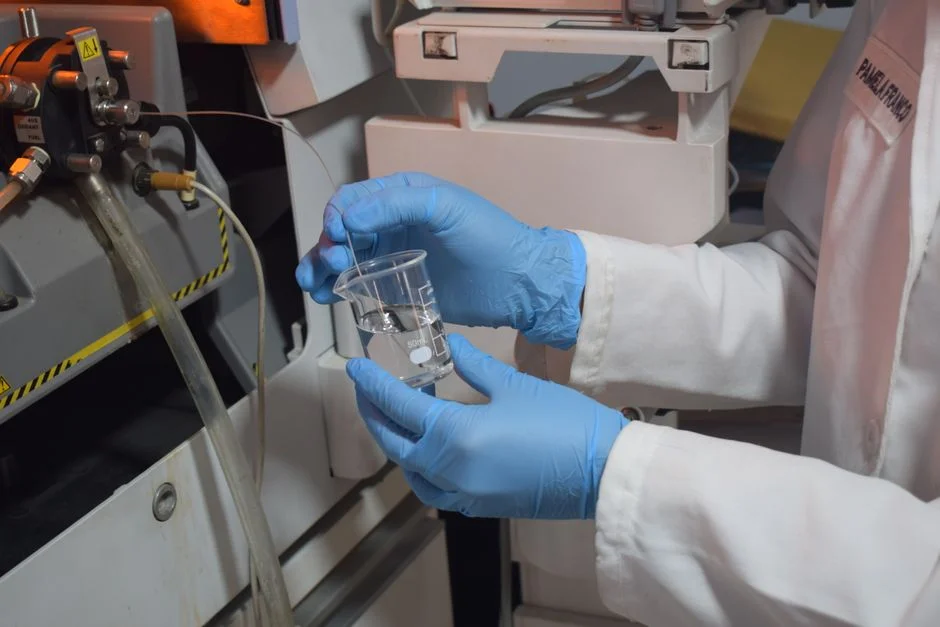
Wastewater exposure should be converted into purchase-price, escrow, reserve, and post-closing funding decisions before the transaction documents are finalized. Before selecting remediation equipment, obtain waste manifests, sludge characterization, lagoon and storage records, solvent-recovery performance, still-vent records, membrane condition, buried-piping information, and long-retention SCADA trends.
HydropureWater’s 2026 Panasonic Mexico acquisition analysis provides a reserve formula: 80th-percentile cost multiplied by probability of exceedance multiplied by years of historical non-compliance. Its worked example for a 1,200 m³/day plant applies a US$496/m³/day basic-upgrade rate, a 0.6 probability factor, and a four-year tail, producing a US$1.43 million reserve floor. This is an illustrative screening method, not an estimate for an SK On target. The example excludes specialist NMP, MBR, and ZLD exposure.
Keep the principal capital categories separate:
- Basic ETP upgrade: use the worked reserve as one input, then replace generic assumptions with site-specific design costs.
- MBR and NMP recovery: HydropureWater’s 2026 source cites US$420,000–US$1.8 million retrofit exposure.
- Full ZLD retrofit: the same source gives a preliminary 2026 benchmark of US$5 million–US$15 million.
- Hazardous-sludge disposal: its 2026 screening range is US$80–US$450 per tonne; validate it against manifests and characterization before funding removal.
- Environmental reserve: the source gives a 2–8% of enterprise value screening band for a manufacturing target with an on-site ETP in 2026.
The MBR and NMP figure does not establish a site quotation, the ZLD range excludes all other site liabilities, and the hazardous-sludge rate does not determine waste classification. Each amount must be reconciled to source flow, analyses, asset condition, discharge route, required reuse quality, manifests, and compliance history.
For the battery-manufacturing sludge boundary, use the battery-manufacturing sludge dewatering guide as a diligence prompt, not as equipment selection based on nominal plant flow. Sludge duty depends on generation rate, solids content, chemistry, and disposal route. The same principle applies to RO concentrate and undocumented lagoon contents.
| Exposure | 2026 screening reference | Evidence needed to replace screening value |
|---|---|---|
| Basic ETP upgrade reserve | US$1.43 million floor in the 1,200 m³/day worked example | Actual flow, loading, compliance history, condition assessment, and site-specific estimate |
| MBR and NMP-recovery retrofit | US$420,000–US$1.8 million | Recovery duty, membrane condition, feed analyses, and vendor scope |
| Full ZLD retrofit | US$5 million–US$15 million preliminary benchmark | Recovery objective, feed chemistry, energy demand, concentrate fate, and residual route |
| Hazardous-sludge disposal | US$80–US$450 per tonne | Manifests, waste classification, moisture, and destination |
| Environmental reserve | 2–8% of enterprise value | Production mix, permit history, identified liabilities, and quantified remedies |
Convert Wastewater Findings into Transaction Deliverables
Every material wastewater finding should leave the transaction with an accountable owner, verification test, remedy, completion date, and acceptance test. Before signing, establish the production mix, permits, discharge route, reuse plan, contamination history, sludge liabilities, and ETP condition. Before closing, validate actual versus design loading, membrane age, chemical systems, sludge storage, buried piping, manifests, and long-retention SCADA trends.
If Phase I identifies a recognized environmental condition, commission a battery-specific Phase II rather than relying on a generic chemicals checklist. The investigation should address electrolyte salts, fluoride exposure, NMP, oils, metals, sludge, and the ETP’s ability to protect the discharge or reuse envelope.
Make the following explicit transaction deliverables:
- Permit transfer or written verification of the continued authorization route.
- CONAGUA registration for any reuse stream.
- Environmental-representation coverage and a specific indemnity for allocated environmental liabilities.
- Agreed wastewater capital scope, funding mechanism, completion date, and performance test.
- Seller cooperation through permit-transfer and regulatory processes.
- Sludge removal, characterization, and disposal responsibility with supporting manifests.
Treatment suppliers should be evaluated on battery-contaminant compatibility, controls integration, sludge handling, service scope, and verified site references—not purchase price alone. Ask for current references and site-specific performance evidence. The Mexican industrial DAF sizing example can support the discussion, but it does not replace target-site data.
Frequently Asked Questions
What budget should SK On reserve for wastewater treatment in a Mexican battery-plant acquisition?
No defensible budget can be calculated without site flow, wastewater composition, permit limits, discharge route, treatment objectives, ETP condition, sludge inventories, and reuse requirements. HydropureWater’s 2026 Panasonic Mexico acquisition analysis provides US$420,000–US$1.8 million for MBR and NMP-recovery retrofit exposure, US$5 million–US$15 million for a preliminary full-ZLD retrofit benchmark, and a 2–8% environmental-reserve band for a manufacturing target with an on-site ETP. These are screening references, not quotations. Ask bidders for separate priced scopes for basic ETP rehabilitation, solvent recovery, fluoride control, membrane renewal, sludge treatment, permit work, and ZLD.
Should SK On select DAF, MBR, UF, or RO before completing the acquisition?
No. Use DAF where oil, grease, colloids, or solids would impair downstream treatment; evaluate MBR where low-turbidity, low-suspended-solids reuse requires an integrated biological and membrane train; consider UF for solids removal or RO pretreatment where feed chemistry supports it; and evaluate RO or ZLD where very low dissolved solids or complete liquid recovery is required. The purchasing decision should wait for source characterization and confirmation of the permit or registered reuse envelope.
Are permit transfer and CONAGUA reuse registration part of the same approval?
No. Permit transfer or verification confirms the legal basis for the applicable discharge route. CONAGUA registration separately establishes the authorized reuse stream, volume, parameter-by-parameter quality, and intended use. HydropureWater’s 2026 Panasonic Mexico analysis states that reuse registration should precede commissioning. Make both gates closing deliverables and require performance evidence against the registered quality envelope.
Which checks should SK On use to select a wastewater-treatment supplier?
Require site-specific performance evidence, battery-contaminant compatibility, controls integration, sludge-handling responsibility, service scope, and current references. Confirm that proposed equipment matches the measured flow and chemistry, permit or reuse requirements, residual-disposal route, and confirmed production ramp. The legacy ETP acquisition due-diligence framework should inform the questions, but the supplier must price and warrant the actual site scope.