What Changes—and What Does Not—After CATL Acquires a Mexican Plant
Wastewater after a CATL acquisition in Mexico should be handled according to the acquired site’s verified water source, wastewater streams, discharge route, and current permits—not simply CATL’s corporate standards. Ground or septic discharge is evaluated under NOM 001 SEMARNAT 1996, while industrial discharge to a municipal sewer is governed by NOM 002 SEMART 1996 and any stricter sewer conditions. Before closing, CATL should map each stream, confirm permit continuity or transfer with the issuing authority, sample average and peak flows, assess contamination and treatment performance, and specify a final disposal or reuse route for sludge, brine, and concentrate.
Ownership alone does not create a new wastewater regime. It may, however, change who must hold or obtain authorization. Tecma’s CATL Mexico acquisition wastewater compliance requirements identifies continuity, transfer, modification, or reissuance as possible outcomes but does not establish a universal change-of-control procedure. The buyer therefore needs written direction from the issuing authority rather than an assumption based on corporate identity.
Four questions should anchor diligence: where water comes from, which operations generate wastewater, where each stream goes, and what authorization governs each discharge point. Each answer must connect to physical evidence and an enforceable outlet.
CATL’s manufacturing scale does not define the Mexican plant. For context only, the American Chemical Society reported in 2026 that its planned Debrecen, Hungary, plant would have 100 GWh of annual battery capacity and cost $7.5 billion. Neither figure is a specification for the acquired Mexican facility. Transaction teams should use the Mexican gigafactory wastewater treatment and compliance guide to build the site-specific decision framework.
Verify the Mexican Legal Route Before Selecting Equipment
Each discharge route needs a separate regulatory file because a municipal-sewer permit does not authorize ground discharge, and authorization for one receiving body does not cover another. Tecma identifies NOM 001 SEMARNAT 1996 for ground or septic discharge and NOM 002 SEMART 1996 for industrial wastewater discharged to a municipal sewer. The current site authorization, receiving-body conditions, and renewal correspondence remain controlling alongside those standards.
| Verified route | Primary file required before closing | Closing evidence |
|---|---|---|
| Ground or septic discharge | Authorization under the route identified by Tecma, monitoring plan, analytical results, renewal evidence, and discharge-point records | Valid authorization naming the correct legal entity, approved discharge point, monitoring duty, and operating conditions |
| Municipal sewer | Discharge permit, sewer-use or pretreatment conditions, sewer correspondence, and confirmation that no process stream is prohibited | Written confirmation from the sewer authority covering the proposed owner, industrial stream, sampling, and any narrower conditions |
| River or federally regulated receiving body | Site-specific permit, receiving-body conditions, monitoring locations, annual test records, reporting history, and enforcement correspondence | Valid authorization, complete compliance history, and written authority direction on continuity, transfer, modification, or reissuance |
Tecma’s guidance places well-water supply under federal jurisdiction and municipal supply under state jurisdiction. That classification must still be tested against water rights, concession records, utility invoices, measured withdrawals, and supply contracts. A discharge permit does not establish that the site has an enforceable water supply.
Confirm the exact legal entity named as permittee. A renewal application is not proof that operating authority remains valid. Tecma reports annual testing by an accredited and authorized Mexican laboratory and annual renewal of almost all relevant permits and authorizations; CATL should obtain complete reports, chain-of-custody records, renewal receipts, violations, bypass logs, and corrective actions.
The legal gate closes only when the issuing authority confirms in writing the proposed owner, discharge points, monitoring plan, and operating conditions. Equipment specifications can then be tested against actual duties rather than a headline standard. The Querétaro industrial effluent treatment planning guide provides a useful route-by-route diligence structure.
Map the Battery Wastewater Streams Instead of Averaging the Plant
A facility-wide average can conceal the concentrated stream that controls treatment performance. The acquired site should therefore use separate collection and characterization for cathode coating wash water, anode coating wash water, electrolyte salt flush, and general plant effluent wherever practicable. Every point where those streams combine—and every route that can bypass treatment—must appear on the drainage and process map.
| Stream | Characteristic contaminant | Evidence needed before sizing |
|---|---|---|
| Cathode coating wash water | NMP and PVDF binder residues | Average and peak flow, COD, fluoride, suspended solids, pH, NMP concentration, and batch variability |
| Anode coating wash water | CMC/SBR binder in aqueous slurry | Flow, COD, suspended solids, pH, temperature, and binder profile |
| Electrolyte salt flush | Fluoride and phosphate associated with LiPF₆ hydrolysis | Flow, fluoride, phosphate, conductivity, pH, metals, and flush frequency |
| General plant effluent | Boiler blowdown, HVAC condensate, domestic sewage, and other variable flows | Continuous and intermittent flow records, composition, discharge destination, and seasonal variation |
HydropureWater’s 2026 cathode-stream benchmark gives COD of 5,000–25,000 mg/L, fluoride of 50–500 mg/L, suspended solids of 500–3,000 mg/L, and pH of 2–4. These figures are a screening benchmark, not an assertion about the acquired plant. Confirm them through site sampling, including metals, organics, conductivity, temperature, and flow variability.
The complete water balance must also include domestic sewage, stormwater, boiler blowdown, HVAC condensate, cooling water, and process water. PFAS screening should address PFAS-bearing chemicals, spent baths, sludges, and concentrates where relevant. Virginia monitoring figures reported in the supplied 2026 analysis—1,419 ng/L average total PFAS, 57 ng/L average PFOA, 32 ng/L average PFNA, and approximately 68% short-chain PFAS—are risk-context examples, not Mexican limits.
Sample production-linked variation rather than relying on one compliant laboratory result. The acquisition file should connect each stream to its treatment unit, permit duty, reuse destination, residual route, and evidence required at closing.
Build the Treatment Train From Recovery to Final Discharge
The appropriate train starts with segregation because combining NMP-bearing cathode wash water with general effluent can destroy recovery value and increase downstream fluoride loading. HydropureWater’s 2026 battery treatment guide uses a 2–5 mm rotary mechanical bar screen, pH correction to 6–8, and 8–24 hours of equalization to homogenize pH, temperature, and COD variation. Those values are design references that must be checked against the acquired plant.
| Process stage | Duty and cited reference | Decision condition |
|---|---|---|
| Segregation, screening, equalization | 2–5 mm bar screen; pH 6–8; 8–24 hours equalization | Use measured batch peaks and actual drainage routing |
| NMP recovery | Cathode wash water at roughly 1–5 wt% NMP; vacuum distillation at 50–100 mbar and 80–120 °C can produce above 99.5% reusable NMP | Verify NMP concentration, fouling constituents, energy demand, and return-to-production quality |
| Metal and fluoride precipitation | Nickel and cobalt at pH 9.5–10.5; manganese at pH 10 or higher plus oxidation; calcium chloride for fluoride | Confirm metals, oxidation demand, sludge characteristics, and Mexican permit limits |
| Biological treatment and MBR | MLSS 8,000–12,000 mg/L, HRT 12–24 hours, SRT 20–40 days, and PVDF pores of 0.1–0.4 μm | Validate organic loading, toxicity, solids production, and reuse quality |
| RO and MVR | RO feed conditions: SDI below 3, free chlorine below 0.1 mg/L, iron below 0.05 mg/L; 70–80% recovery in the cited scenario | Confirm reuse economics and a lawful concentrate and salt route |
Treat cathode coating wastewater as a chemical-recovery stream first. After NMP recovery, staged hydroxide precipitation removes nickel and cobalt at pH 9.5–10.5; manganese requires pH 10 or higher plus oxidation; calcium chloride precipitates fluoride. The cited fluoride target below 10 mg/L belongs to the guide’s China GB 30485-2013 and EU IED 2010/75/EU BAT-AEL context, not to a Mexican authorization. The Mexican permit must establish the controlling limit.
Use biological treatment with MBR where lower-strength residual organics and solids separation require it. The cited design basis includes MLSS of 8,000–12,000 mg/L, HRT of 12–24 hours, and SRT of 20–40 days. An integrated MBR wastewater treatment system becomes relevant only after those duties and the influent envelope are established.
RO can support reuse when feed chemistry and pretreatment meet the stated conditions. HydropureWater’s 2026 scenario sends the 20–30% concentrate to MVR, where electrical demand is 20–35 kWh per m³ of distillate and brine reaches 200,000–250,000 mg/L TDS. The scenario’s 70–90% reuse and 10–30% solid salt-cake outcome is not a guaranteed result for the Mexican plant.
Close the water and residual balance before approving zero-liquid-discharge equipment. The CATL battery-gigafactory wastewater treatment guide describes recovery, treatment, RO, and MVR in sequence, but every site claim still requires Mexican permit, stream, and residual-route verification.
Match Each Treatment Step to the Verified Engineering Duty
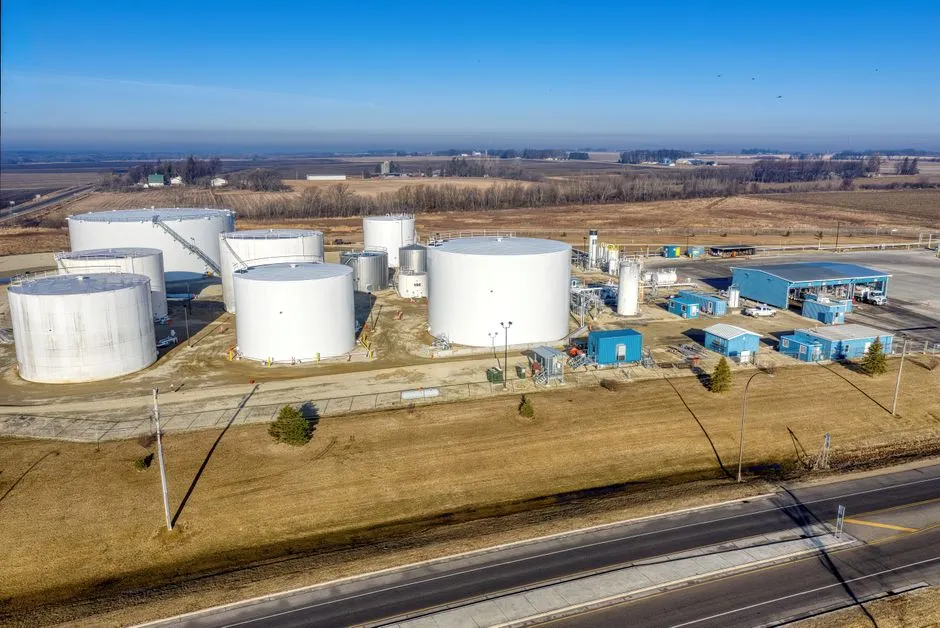
Treatment equipment should be selected by its engineering function, not by catalog capacity. Automatic dosing is appropriate where pH correction, coagulants, flocculants, or specialty chemicals must respond to online pH, conductivity, fluoride, or TOC. DAF or lamella clarification becomes relevant when oil and grease, colloids, suspended solids, or precipitated solids must be removed before biological, membrane, or reuse treatment.
| Equipment option | Catalog reference | Buyer’s mandatory suitability evidence |
|---|---|---|
| PVDF ultrafiltration system for RO pretreatment | 2,000–40,000 L/h; 0.03 μm PVDF membranes; automatic backwash and air scour | Influent envelope, recovery, fouling control, cleaning chemicals, redundancy, and retentate disposal |
| Integrated MBR | 10–2,000 m³/day; filtration below 1 μm | Organic loading, biological stability, solids production, cleaning requirements, and excess-sludge route |
| Industrial RO | Recovery rates stated up to 95% | Feed chemistry, recovery objective, concentrate route, bypass conditions, and performance guarantee |
| Plate-and-frame filter press | Selection depends on verified sludge quantity and condition | Filter area, feed solids, cake target, chemical conditioning, and authorized sludge destination |
A PVDF ultrafiltration system for RO pretreatment is a candidate only where bacteria, colloids, and suspended solids must be removed before RO. An integrated MBR is appropriate where biological treatment and membrane solids separation are required together; the MBR versus conventional activated-sludge comparison can inform that decision.
Require each supplier to provide a treatment mass balance, permit- or reuse-linked performance criteria, average and peak sizing inputs, commissioning criteria, and a defined route for sludge, concentrate, cleaning chemicals, and bypass flows. Separate pricing for equipment, installation, utilities, chemicals, energy, monitoring, residual handling, maintenance, and compliance work. Catalog capacities are screening references only; they do not establish suitability or compliance.
Use a Closing Gate to Convert Findings Into Contractual Actions
Every material wastewater finding needs an accountable owner, a verification test, a remedy, and an explicit transaction disposition. Commission an assessment of soil, groundwater, residual sludge, chemical storage, and historical discharge evidence around current and former outlets. Tecma reports that acquiring property can make the owner immediately responsible for prior contamination identified during later inspections, so historical exposure belongs in the purchase agreement and closing decision.
| Finding | Required verification | Contractual or closing disposition |
|---|---|---|
| Permit transfer, modification, or reissuance unresolved | Written authority direction and valid authorization | Condition closing on receipt of authorization or an enforceable, funded alternative |
| Historical contamination identified | Assessment, remedial scope, and cost basis | Pre-closing work, escrow, indemnity, purchase-price adjustment, or narrowly scoped funded obligation |
| Existing treatment cannot demonstrate performance | Mass balance, commissioning evidence, and permit- or reuse-linked performance test | Pre-closing repair or funded post-closing capital project with owner and completion test |
| Residual route undefined | Authorized destination, volume basis, handling responsibility, and cost | Withhold final treatment award until the route is documented |
| Compliance records cannot be produced | Record-retrieval test covering permits, renewals, monitoring, violations, and operating logs | Remediate before closing or assign enforceable responsibility and retention obligations |
Do not approve final treatment selection until the sludge, concentrate, or salt residual destination, volume basis, handling responsibility, and cost are documented. A single compliant sample is not sufficient performance evidence; test the installed system against production-linked flow variation, equipment condition, bypass provisions, and the applicable permit or reuse objective.
Prepare an inspection-ready compliance system before ownership transfers. Tecma states that SEMARNAT can examine records and inspect the physical site without advance notice. The record system should therefore be independent of the seller and support permit, renewal, monitoring, laboratory, violation, corrective-action, treatment-log, bypass, and residual-destination retrieval.
The CATL Mexico acquisition wastewater compliance requirements provide the transaction-specific framework: treat unresolved authorization as a closing gate, verified contamination as an allocated liability, and treatment uncertainty as a funded remedy with a defined completion test.
Frequently Asked Questions
How much should CATL budget for wastewater treatment after acquiring a Mexican battery plant?
No defensible acquisition budget or equipment quotation can be calculated from the supplied research because site flow, wastewater composition, permit limits, residual route, and treatment objectives are not provided. CATL should request site-specific quotations with separate prices for equipment, installation, utilities, chemicals, energy, monitoring, sludge or concentrate disposal, maintenance, bypasses, residual transfer, and compliance work.
How should CATL select and size a wastewater-treatment supplier for the acquired plant?
Require site-specific average and peak flows, stream-by-stream composition, permit limits, reuse targets, and residual routes as mandatory sizing inputs. The supplier should provide a treatment mass balance, performance guarantees tied to permit or reuse criteria, commissioning evidence, and separated scope pricing. Catalog capacities should screen candidates; they cannot establish suitability.
Which wastewater work should happen before closing, and which can follow it?
Permit continuity, transfer, modification, or reissuance should be resolved before closing through written authority direction and valid authorization. Existing treatment that cannot demonstrate required performance may be handled through a pre-closing repair or a funded post-closing capital project with an accountable owner, completion date, and performance test.
Can Virginia PFAS monitoring values or non-Mexican fluoride limits be used in the Mexican permit file?
No. The supplied Virginia PFAS values and the cited China and EU fluoride target provide context only. They are not Mexican discharge limits. CATL should base permit compliance on the site-specific Mexican authorization and measured stream characteristics, while using outside data only to shape risk questions and testing.