What can—and cannot—be confirmed for BMW Arizona
The supplied research does not establish BMW Arizona’s production rate, measured wastewater flow, permit limits, internal reuse criteria, or DAF capacity, so no defensible equipment nameplate can yet be identified. A transparent planning case can support preliminary design and an RFQ, but it cannot substitute for an official BMW Arizona plant specification or a discharge-compliance determination.
The research’s Debrecen reference concerns a different BMW automotive site in Hungary: Rotoeco’s December 2022 update identifies rainwater tanks delivered for the factory, but it does not identify an EkoFloat DAF installation or state a wastewater design flow. It confirms the relevance of flotation at an automotive site, not the capacity required in Arizona. The comparable BMW German-plant DAF capacity analysis likewise provides conditional planning assumptions rather than transferable plant data.
Four evidence layers are needed before final sizing:
- Production and operating schedule: vehicles per production day, shifts, tank-dump windows, rinse cycles, and planned production changes.
- Area-by-area water balance: paint shop, body shop, assembly, utilities, domestic wastewater, cooling blowdown, and stormwater contributors.
- Measured peak flows: preferably a 15-minute flow record that includes tank dumps, rinse discharges, continuous process flow, and stormwater events.
- Stream-specific wastewater characterization: TSS, FOG, phosphate, COD, pH, temperature, and oil-and-gras emulsion data for each relevant stream.
Until those layers are available, the defensible use of an estimate is to establish RFQ data requirements, comparison criteria, and a provisional design basis—not to place a guessed DAF flow into a purchase order.
A conditional DAF sizing case for the Arizona plant
The transparent planning case produces a 162.5 m³/h average flow and a 244 m³/h peak-design reference, but both values depend on assumptions drawn from the comparable German-plant analysis rather than BMW Arizona operating data. The BMW Mexico auto-plant DAF sizing guide uses the same conditional method: preserve the calculation chain, then replace each assumption with plant-specific evidence.
| Calculation step | Planning input | Result | Evidence status |
|---|---|---|---|
| Average wastewater flow | 1,200 vehicles/day × 3.25 m³/vehicle | 162.5 m³/h | Conditional midpoint from the comparable German-plant research |
| Peak design reference | 162.5 m³/h × 1.5 paint-shop peak factor | 244 m³/h | Conditional; the peak factor is the principal challenge |
| Average-flow sensitivity | 1,200 vehicles/day × 2.5–4.0 m³/vehicle | 150–240 m³/h | Benchmark range before peak allocation, not a selection |
The arithmetic is simple; the evidence boundary is not. The 1,200 vehicles per production day and 2.5–4.0 m³ of wastewater per vehicle are planning assumptions identified in the comparable BMW German-plant research. The 3.25 m³/vehicle midpoint gives 1,200 × 3.25 = 3,900 m³/day, equivalent to 162.5 m³/h over 24 hours. Applying the research’s 1.5 paint-shop wastewater peak factor then gives 244 m³/h.
That 1.5 factor is the main assumption requiring challenge. It should not be treated as a general automotive factor. The operating schedule should place every tank dump, rinse discharge, continuous process flow contribution, and stormwater event on an hourly timeline. That timeline may show that production wastewater, cleaning dumps, and rainfall overlap differently in Arizona than the German reference case.
Equalization may reduce the flow presented to flotation only after its working volume, turnover, level control, pumping head, bypass arrangement, and operational response have been checked. Raw peak flow must remain visible in the design record; storage does not erase the event that the treatment system must contain.
Use the 244 m³/h value as the principal RFQ reference only if Arizona production and measured-flow data do not displace it. The 150–240 m³/h average-flow sensitivity shows the range before peak allocation, while the 244 m³/h result shows what the midpoint case produces after applying the 1.5 factor.
Check retention, hydraulic loading, and solids loading
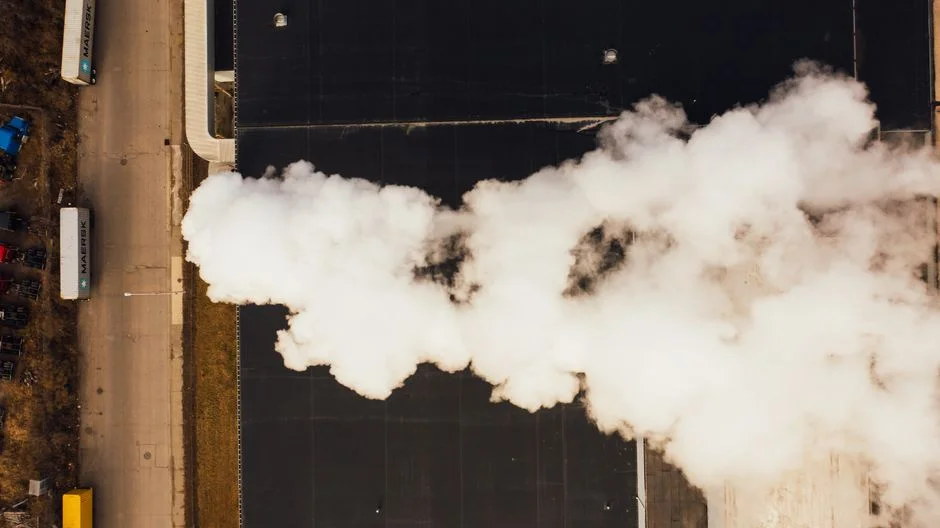
A 244 m³/h flow held for 20 minutes requires approximately 81.3 m³ of retention volume, but the required flotation area cannot be inferred from flow and volume alone. The supplier must connect retention, hydraulic loading, wastewater solids, and cross-flow behavior to the selected tank geometry. The 2026 DAF engineering specifications provide the relevant selection framework.
| Check | Calculation or reference | What the RFQ must establish |
|---|---|---|
| Retention volume | 244 m³/h × 20/60 = approximately 81.3 m³ | Active tank volume, usable working volume, and selected retention |
| Flotation geometry | Krofta describes circular Supracell units at approximately 3-minute retention and rectangular Multifloat units at 20–30-minute retention | Geometry appropriate to the separation objective and wastewater characteristics |
| Hydraulic loading | Selected loading rate applied to design flow | Active flotation area and hydraulic distribution |
| TSS mass load | Q in m³/h × C in mg/L × 1,000 = kg/h | Measured TSS concentration and hourly solids loading |
| Cross-flow check | Ecologix cites a 2 ft/s minimum cross-flow velocity | Hydraulic profile that limits solids settling without replacing the flotation-area calculation |
Hydraulic loading establishes the required flotation area, while retention establishes the available separation period. A nominal flow can pass through a tank without producing adequate clarification if the selected area is too small, the wastewater has poor floc attachment, or solids settle before entering the flotation zone.
The mass-load calculation must use a verified design-flow TSS concentration. Once TSS load is known in kg/h, the selected air-to-solids ratio can be used to determine required air mass rate. That result then links to recycle flow, saturation conditions, and equipment duty. The A/S ratio cannot be selected credibly from flow alone.
Request the supplier’s complete calculation, including the design flow used, source concentration, selected hydraulic loading rate, active area, retention, A/S ratio, recycle rate, and air system duty. The 20-minute volume check is therefore a sizing gate, not a final equipment specification.
Select the tank, recycle system, and air duty as one system
DAF capacity is a system result: hydraulic loading rate, air-to-solids ratio, retention time, and recycle ratio must be selected together. Selecting the tank first and adding pumps or compressors afterward can produce clean-water throughput without reliable solids separation.
The A/S ratio links measured TSS mass loading to air demand. Recycle flow, air saturation, and saturation pressure then determine recycle-pump and compressor capacity. Krofta’s comparison states that its Air Dissolving Tube achieves the same or better air saturation at 2–3 bar and an 8–12% recycle rate than conventional systems using 4–6 bar and 20–50% recycle. Those figures describe the cited technology comparison; they do not establish the recycle duty for BMW Arizona without stream data and pilot confirmation.
Floc chemistry is a direct equipment-design input. Poor conditioning can increase coagulant demand, reduce the A/S target, and lower recycle pressure, causing removal to collapse at the contact zone. A supplier should therefore base the air and recycle selection on conditioned wastewater rather than clean-water pump curves.
For an industrial dissolved air flotation system RFQ, require one coordinated proposal stating:
- selected flotation geometry and active area;
- design flow, retention, and hydraulic loading rate;
- air saturation, saturation pressure, and selected A/S ratio;
- recycle rate, recycle-pump duty, and compressor duty;
- bubble-generation method;
- chemical-conditioning interface; and
- control sequence and performance assumptions.
If these items are quoted separately without a common design basis, the bids are not technically comparable.
Choose one train, parallel trains, or a custom DAF arrangement
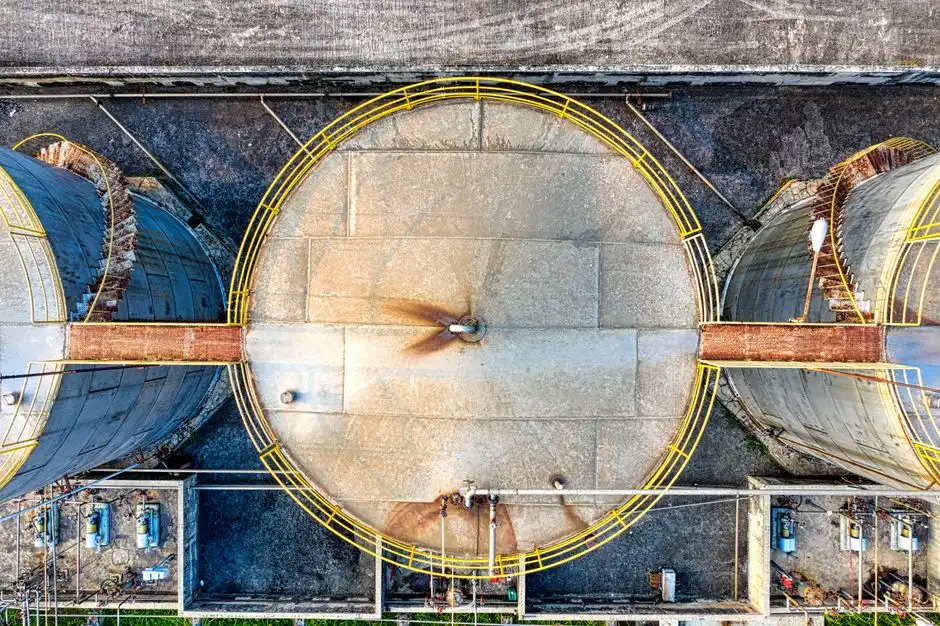
The 244 m³/h worked reference falls near the upper end of the catalogue range, but it remains a planning envelope rather than a justified one-train selection. HydropureWater’s complete DAF range covers 4–300 m³/h across 13 standard models, and systems above 150 m³/h are typically skid-packaged for site assembly, according to the research. The relevant catalogue bracket for the worked reference is therefore models 11–13, subject to area, retention, recycle, air duty, and operating-mode confirmation.
| Configuration | When it deserves consideration | Required RFQ evidence |
|---|---|---|
| One standard model | The worked reference is near 244 m³/h and verified data supports the selected model envelope | Guaranteed design flow, active area, retention, recycle and air duties, maintenance access, and performance guarantee |
| Parallel standard trains | Flow or redundancy requirements favor independent operation, especially above the research’s 300 m³/h decision threshold | Per-train design flow and area, independent metering, manifold losses, flow-balancing controls, and duty/standby philosophy |
| Custom rectangular arrangement | A larger hydraulic arrangement may reduce distribution risk when wastewater characterization supports balancing | Comparative hydraulic model, footprint, active area, distribution strategy, controls, and lifecycle basis |
The research states that parallel trains of standard catalogue units are preferred above 300 m³/h when characterization permits hydraulic balancing. It also identifies a custom rectangular arrangement as an alternative that may reduce distribution risk. That rule is useful for scenario testing, but BMW Arizona has not yet been shown to exceed the threshold.
Parallel operation introduces a specific failure mode: an unbalanced inlet manifold can overload one train while leaving another underloaded. Each proposal must state train flow, active area, recycle rate, manifold losses, controls, and operating philosophy. Do not accept a total-capacity claim without the balance method.
The research also notes that 200 gpm converts to approximately 45 m³/h. That conversion is a capacity-context fact, not proof of complete DAF suitability; pump capacity does not establish flotation area, retention, air supply, or redundancy.
Validate the wastewater before choosing the treatment package
DAF is generally suited to light oils, FOG, and colloidal solids that settle slowly, but stream characterization must determine whether that process fits the Arizona waste. Metal-bearing or high-density solids may require different pretreatment and sludge handling. Request measured TSS, FOG, phosphate, COD, pH, temperature, and oil-and-gras emulsion data for each relevant stream as inputs to jar testing; generic automotive assumptions are not a substitute.
Krofta identifies ferric chloride, aluminium sulfate, and polyacrylamide-related conditioning approaches in its technical literature, including aluminium sulfate and polyaluminium chloride as coagulant examples and polyacrylamide as a flocculant example. These are examples, not a fixed recipe. The chemical program should follow stream-specific testing.
As process context, Krofta reports DAF removal ranges of 80–95% for industrial wastewater TSS, 80–99% for FOG, and clarified-water TSS commonly below 20 mg/L with proper conditioning and depending on feed concentration. Those results do not prove compliance with an Arizona permit or BMW’s internal standards. The applicable permit, indirect-discharge conditions, BMW reuse criteria, and sampling plan must be obtained before performance requirements are fixed.
Float-sludge volume and solids must be measured during pilot or design sampling. The supplied research does not support a universal sludge concentration or a fixed percentage of influent flow. The measured sludge characteristics determine downstream dewatering requirements; the research identifies plate-and-frame filter-press areas spanning 1–500 m², but that range cannot be selected without actual sludge data.
If clarified water is intended for cooling-tower makeup or another reuse stream, confirm the BMW residual-water specification before selecting polishing. Ultrafiltration may be relevant, but its necessity depends on the reuse quality target. A plate-frame filter press can be considered after float-soludge solids and volume are established. Capacity alone does not define a complete treatment package.
Turn the estimate into a defensible supplier RFQ
A comparable RFQ should require the same design basis, boundaries, and evidence from every bidder. No defensible 2026 price can be calculated from the supplied research, so the commercial comparison must come from budgetary quotations with clearly separated scopes.
| RFQ package | Minimum required content | Supplier response |
|---|---|---|
| Design basis | Production schedules, area water balances, runoff coefficients, dump frequencies, and a 15-minute flow record | Confirmed design flow and list of assumptions |
| DAF performance | Guaranteed flow, hydraulic loading rate, retention, A/S calculation, recycle duty, air duty, and performance guarantee | Calculated design and operating envelope |
| Train arrangement | Per-train flow, active area, independent metering, manifold losses, balancing method, and duty/standby philosophy | Hydraulic and control narrative |
| Commercial scope | DAF, recycle, air, controls, chemical skid, float handling, installation, civil works, commissioning, and sludge dewatering | Separate equipment, civil, installation, and commissioning costs |
| Compliance | Applicable Arizona permit, indirect-discharge conditions, BMW reuse criteria, and sampling plan | Documented compliance basis and test protocol |
| Delivery | Confirmed delivery schedule and site-access assumptions | Dated schedule with dependencies identified |
Specify the 162.5 m³/h average and 244 m³/h peak reference as conditional inputs, not guarantees. The bidder should identify every assumption that changes if measured Arizona data differ. Require a guaranteed design flow, selected hydraulic loading rate, retention, A/S calculation, recycle duty, air duty, performance guarantee, and flow-balancing method where parallel trains are proposed.
Budgetary pricing should separate DAF equipment, recycle system, air system, controls, chemical skid, float handling, installation, civil works, commissioning, and sludge dewatering. A PLC-controlled coagulant and flocculant dosing skid should be sized from measured flow and the tested dose envelope, not tank volume alone.
Krofta’s technical literature describes containerized or skid-mounted rental DAFs for pilots, temporary bypasses, and commissioning. A pilot can collect site flow data, optimize conditioning, and verify effluent performance before final selection. Confirm the rental period, monitoring plan, analytical scope, and how results will be transferred into the final guarantee. Include the delivery schedule and chemical-conditioning and sludge-transfer interfaces in the same RFQ.
Frequently Asked Questions
What DAF capacity is required for BMW’s new auto plant in Arizona?
No confirmed Arizona capacity is established by the supplied research. The defensible starting point is a conditional 162.5 m³/h average flow and 244 m³/h peak design reference, derived from the comparable German-plant assumptions of 1,200 vehicles per day, 2.5–4.0 m³ of wastewater per vehicle, and a 1.5 paint-shop peak factor. Retain those values only until BMW Arizona production and measured-flow data replace the assumptions.
How should suppliers be compared for DAF equipment?
Compare bids using one common design basis: guaranteed design flow, active flotation area, hydraulic loading rate, retention, A/S calculation, recycle and air duties, performance guarantee, and train-balancing method. Do not compare total flow alone. If the 244 m³/h reference is used, require each bidder to state how its selected geometry and utilities satisfy that duty and identify every excluded civil, chemical, controls, float-handling, or sludge-dewatering item.
Is pilot testing warranted before the final DAF purchase?
Pilot testing is warranted because the 1.5 peak factor and wastewater-conditioning assumptions remain unverified. Krofta’s technical literature describes containerized or skid-mounted rental DAFs for pilots, temporary bypasses, and commissioning. Require a measurement and sampling plan that captures flow, TSS, FOG, COD, phosphate, pH, temperature, oil-and-gras emulsion, float-sludge volume, and achieved effluent quality during the rental period.
What determines the cost of BMW Arizona DAF treatment?
No defensible 2026 price can be calculated from the supplied research. Request budgetary prices with separate DAF equipment, recycle and air systems, controls, chemical skid, float handling, installation, civil works, commissioning, and sludge-dewatering costs. The comparison should also include the confirmed delivery schedule and any pilot rental charges. Supplying production schedules, the area-by-area water balance, a 15-minute flow record, and stream-specific wastewater data will let bidders price the same defined scope.