Where Filter Presses Fit in Cable Manufacturing Wastewater Treatment
A filter press for cable manufacturing wastewater is a batch solid-liquid separation unit suited to dewatering coating residues, precipitated solids, suspended residues and metal-bearing sludge after those solids have been characterized and conditioned. During a cycle, plates close around filter cloths, conditioned feed enters the sealed chambers, solids are retained and filtrate exits through collection ports. Selection should therefore follow wastewater testing, cake-dryness requirements, chemical compatibility, production schedule and disposal route—not an assumed universal capacity. The supplied research does not quantify cable-manufacturing wastewater, so site-specific data is essential.
Cable plants can generate streams containing coating material, suspended solids and metallic particles, but the extent of each fraction depends on the coating chemistry, cleaning practices, production changes and whether metals enter through pigments, wire surfaces or process losses. The filter press belongs after operations that remove or condition the target solids, including equalization, thickening and automatic chemical dosing for sludge conditioning.
It does not remove dissolved contaminants merely because those contaminants remain in the filtrate. If the objective includes recovering reusable water or controlling dissolved metals, organic coating residues, salts or other soluble constituents, define the required water quality and provide treatment upstream or downstream of the press.
Where floating residues are part of the separation problem, DAF pretreatment for suspended solids and floating residues may precede conditioning. The treatment objective should be stated explicitly: reduce sludge-water content, recover reusable water, meet internal cake-handling requirements or prepare cake for an authorized disposal route. That objective determines the relevant solids loading, filtrate criterion and cake condition.
Characterize the Wastewater Before Choosing a Press
Wastewater characterization establishes the actual filtration duty and prevents a supplier from selecting equipment from total suspended solids alone. The relevant design basis is a combined record of stream composition, physical filtration behavior, production variability and acceptable cake and filtrate outcomes.
Request representative samples covering normal production, cleaning operations, start-up and shutdown, and batches associated with different coating products. Testing should establish total suspended solids, settleable solids, pH, temperature, conductivity, oil and grease, and the coating or polymer residues present. Where the coating formulation is known, include its identity, concentration and known incompatibilities. Do not infer these parameters from chemical oxygen demand alone: COD does not specify how much material will be retained, how readily the cake will release or whether the cloth will blind.
The solids-loading record should cover average and peak flow, daily production schedule, batch duration and maximum expected solids concentration. These inputs affect feed-pump selection, filter-area requirements and cycle frequency. Include settling, compressibility, cake cracking, blinding tendency and cake release in the test plan because each changes the required conditioning and operating cycle.
| Design input | What the buyer must establish | Why it changes the press decision |
|---|---|---|
| Representative wastewater | Production, cleaning and variable coating batches | Defines the range of solids, residues and operating conditions |
| Solids properties | Settling, compressibility, blinding tendency, cracking and release | Determines conditioning needs and cake-handling requirements |
| Production duty | Flow, batch duration, maximum solids concentration and available cycles | Sets feed, cycle-time and filtration-area requirements |
| Outcomes | Target cake condition, filtrate quality and disposal route | Establishes the measurable acceptance criteria |
| Chemical compatibility | Conditioning chemicals, residuals and coating or polymer compatibility | Controls cloth, plate and material selection |
For a risk-based trial, compare candidate cloths with the actual waste. The National Research and Innovation Agency study found that cotton cloth outperformed drill cloth for its tested material; the reported 56.00% CaCO3 removal occurred at 4% w/w in simulated activated-sludge conditions. That result cannot be generalized to coating sludge or metallic residues.
Include chemical conditioning in the same test plan because polymer dosage can alter cake formation, filtration resistance and cake release. An automatic chemical dosing system for sludge conditioning should therefore be evaluated as part of the process duty, not as an accessory selected independently of the press.
Build the Cable Wastewater Treatment and Dewatering Process
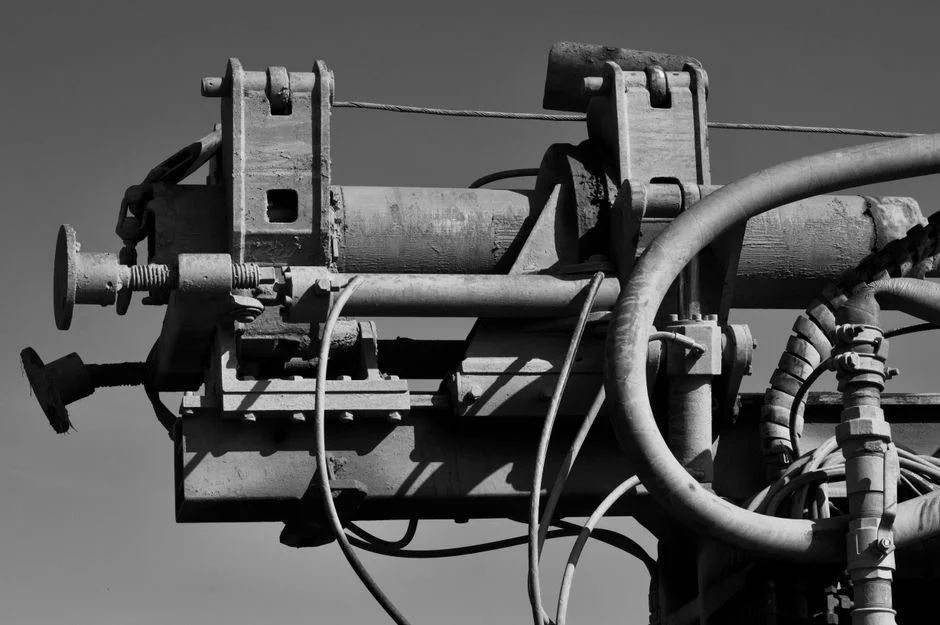
A filter-press system should be designed as a sequence from wastewater generation to cake discharge, with each step given a measurable operating purpose.
- Characterize and define the duty. Establish the representative waste, target cake condition, filtrate requirement and authorized route for the separated solids.
- Equalize and condition the selected stream. Equalization limits production variability. Pacific Press identifies sludge thickening and chemical feed systems as pretreatment elements that can concentrate solids and prepare the feed before filtration.
- Fill the filter chambers. Pump the conditioned feed through the sealed chambers. Filter cloth retains the solids while filtrate passes through the plates to the collection system.
- Blow down the cake. Use compressed-air blowdown to remove residual filtrate. Where applicable, core blowdown purges residual unfiltered center liquid, while air blowdown can assist slight cake drying according to the Pacific Press brochure.
- Open and discharge. Retract the closure, separate the plates and route the cake to the plant’s authorized handling or disposal method.
- Restore cloth performance. Inspect and clean cloths as necessary. Pacific Press states that precoat can protect the cloth in sticky applications, while bodyfeed can increase flow and cake dryness.
The equipment sequence must prevent upstream conditions from undermining the cycle. Equalization protects against short-duration solids peaks; conditioning should target the filtration behavior observed in testing; the feed pump must suit the conditioned stream rather than the raw wastewater; and cake discharge must match the selected container, conveyor or other handling system.
Monitor more than filtrate volume. Record feed pressure, cycle duration, conditioning dose, cake appearance, release behavior and filtrate quality at defined points in the production cycle. Those trends reveal blinding, poor conditioning, excessive compressibility or an incompatible cloth before the operator has to compensate with longer cycles or greater pressure.
A plate and frame filter press for cable wastewater dewatering should therefore be purchased as a process system with defined interfaces. The press, conditioning equipment, pumps, piping, controls, cloth maintenance and cake-discharge arrangement must be evaluated together.
Select the Filter Cloth, Plate Type and Press Configuration
Cloth, plate and closure selection should be tied to actual cake formation and release behavior. Equipment literature can narrow the options, but actual wastewater trials must confirm that the retained solids do not blind the cloth, crack the cake, adhere excessively to the cloth or defeat the selected blowdown sequence.
Pacific Press identifies polypropylene multifilament as suitable for metal hydroxides and other easily dewatered solids, polypropylene mono-multifilament as combining tighter retention with release characteristics, and polypropylene single monofilament for high-oil applications. These are selection references, not substitutes for testing cable-plant residues. Compare material, weave, surface finish, particle retention, blinding resistance and cake release using representative conditioned feed.
Evaluate membrane plates when drier cake is important. The membrane can be inflated up to twice the processing pressure to squeeze the cake, according to the Pacific Press brochure. Confirm that the resulting dryness, release behavior and cycle duration justify the added control complexity. A standard plate should not be assumed to deliver the same cake condition simply because it handles the same solids load.
Plate sealing is a maintenance trade-off. Pacific Press describes the gasketed design as using an O-ring seal, while the non-gasketed recessed plate permits quicker cloth replacement but can permit cloth wicking. If cloth changes are frequent, include the time, consumables and operator exposure associated with each arrangement in the lifecycle assessment.
| Selection item | Evidence-based option | Decision test for cable wastewater |
|---|---|---|
| Filter cloth | Multifilament, mono-multifilament or single monofilament constructions | Compare retention, blinding, cake cracking and release with conditioned actual waste |
| Plate type | Standard or membrane | Compare achievable cake dryness, cycle duration, release and control requirements |
| Sealing | Gasketed or non-gasketed recessed plates | Balance sealing performance against cloth replacement time and wicking risk |
| Operation | Manual, semi-automatic or automatic | Match labor availability, cycle frequency, batch variability and safety requirements |
| Precoat and bodyfeed | Optional aids for sticky feeds and cake formation | Verify benefit, chemical demand and added operating steps during the trial |
Choose manual, semi-automatic or automatic operation according to cycle frequency and staffing. Pacific Press describes automatic PLC sequencing, plate shifting, automated valves, light curtains and operator-controlled cake discharge in larger installations. For frequent or variable cable-plant batches, the evaluation should explicitly address changing feed solids, cycle timing, plate alignment and downstream handling.
Size the Filter Press from Operating and Production Data
Correct filter-press sizing requires a duty calculation based on the selected solids stream, not a generic square-metre-per-ton rule. The supplied evidence provides equipment families and plate-count references, but it does not establish cable-industry capacity performance.
Define the design basis using wastewater flow, solids concentration, required cycle time, batch duration, target cake dryness and the number of production cycles available each day. Include peak conditions and expected batch variability. Then ask the supplier to show how the proposed plate count, frame, feed pump and cycle satisfy that duty.
Pacific Press lists frame sizes of 470 mm, 630 mm, 800 mm, 1000 mm, 1200 mm and 1500 mm, together with 1500 mm x 2000 mm and 2000 mm x 2000 mm options. Its chart lists 7 to 19 plates for the 470 mm frame and 18 to 43 plates for the 630 mm frame, with higher plate counts shown for larger frames.
| Sizing basis | Information required from the plant | Supplier deliverable |
|---|---|---|
| Hydraulic loading | Representative flow and solids concentration | Duty calculation and selected feed-pump duty |
| Time constraint | Batch duration and cycles available per day | Demonstrated filtration, blowdown and discharge timing |
| Separation target | Target cake dryness and required filtrate quality | Proposed cloth and plate configuration with test basis |
| Equipment envelope | Available footprint, utilities and discharge method | Frame, plate count, pumping and handling arrangement |
| Verification | Actual waste or representative test results | Documented sizing calculation and proposed cycle demonstration |
HydropureWater’s verified product catalog spans 1 m² to 500 m² of filtration area, with manual, hydraulic and fully automatic PLC-controlled operation. That range establishes a selection envelope; it does not determine the required area for a particular cable plant.
Size the feed and discharge systems around the selected cycle. Pacific Press identifies progressive cavity pumps for controlled flow and pressure and diaphragm pumps for heavy sludge, while elevated platforms can feed roll-off bins, conveyors or sludge dryers. The supplier should complete a duty-based sizing calculation and proposed cycle demonstration using the actual wastewater or representative test results.
Evaluate Automation, Reliability and Lifecycle Requirements
Automation scope determines operating labor, cycle consistency and maintainability. Procurement should distinguish sequencing functions from the mechanical, utility and safety equipment needed to operate them reliably.
Confirm whether the supply includes plate shifting, cake discharge, feed-pump control, blowdown valves, lighting protection, a safety enclosure, drip management and PLC integration with plant controls. The contract boundary matters: an automatic press still requires accessible guards, utilities, wash access and a defined route for cake and filtrate.
Pacific Press describes an automatic pump-control sequence that raises feed pressure in 5 psi increments and uses feedback to determine the cycle. Ask how that sequence responds to low-strength feed, rapid blinding, excessive pressure and changing batch solids. The cycle should terminate on an operating condition rather than depend solely on a fixed timer.
Automatic plate shifting is most relevant to presses with many plates. Pacific Press describes it as a method for separating plates without operator intervention, while light curtains can interrupt plate movement. Verify guarding, access, jam handling and recovery procedures rather than treating automatic shifting as independent of maintenance discipline.
For viscous or variable sludge, progressive cavity pumps may provide controlled flow and pressure, but the supplier must confirm compatibility with the actual feed. A pump that handles water may not handle fibrous, abrasive or sticky residues.
Include cloth washing, auxiliary access, cake-discharge height and container or conveyor interfaces in the lifecycle review. Reliability is a system property: a press with appropriate filtration area can still perform poorly if wash steps, drip control, pumps or discharge handling are underspecified.
What the Evidence Does and Does Not Prove
The available evidence supports equipment selection questions, but it does not demonstrate a universal cable-manufacturing filter-press performance. The distinction between simulated sludge research and vendor operating literature is essential when developing a purchase specification.
| Evidence source | What it supports | What it does not prove |
|---|---|---|
| National Research and Innovation Agency study | Cotton cloth outperformed drill cloth in the tested system; 56.00% CaCO3 removal at 4% w/w | Performance with coating sludge, metallic residues or a documented cable-plant stream |
| Pacific Press brochure, 2015 | Operating principles and available plate, cloth, pump, control and auxiliary options | Cable-industry capacity, reliability or cake-dryness guarantees |
| HydropureWater verified product catalog | Availability from 1 m² to 500 m² with manual, hydraulic and automatic PLC options | Site-specific capacity or performance without engineering verification |
The National Research and Innovation Agency study tested simulated activated sludge represented by CaCO3 at 1–4% w/w, not cable-manufacturing wastewater. Its 56.00% CaCO3 removal result at 4% w/w is therefore a limited research reference, not a design-efficiency guarantee.
The Pacific Press brochure is vendor literature. It supports equipment-feature evaluation, but its applications and operating descriptions do not substitute for a waste-specific trial or duty calculation. Likewise, the HydropureWater catalog establishes product availability, not site performance. A plate and frame filter press for cable wastewater dewatering should be selected against the plant’s documented waste, production schedule and acceptance criteria.
Frequently Asked Questions
How should a filter press be sized for cable manufacturing wastewater?
Size it from flow, solids concentration, batch duration, target cake dryness, required cycle time and the number of cycles available per day. Require a supplier calculation that states its assumptions and demonstrates a proposed cycle using the actual wastewater or representative test results; the supplied evidence does not support a universal m²-per-ton rule.
What should a buyer request when selecting a filter-press supplier?
Request comparable coating-waste evidence, cloth-development results on the actual feed, utility requirements, controls scope, spare-parts support and a factory acceptance test or trial basis. Also ask for the complete cycle definition, including feed, filtration, blowdown, discharge, cloth cleaning and recovery from upset conditions. These checks distinguish a documented application basis from a catalog selection.
Does filter-press performance determine regulatory compliance?
No. A filter press separates solids; it does not guarantee that dissolved contaminants in the filtrate meet the plant’s applicable discharge or reuse requirements. Require an effluent-quality basis for the complete treatment train and distinguish equipment acceptance criteria from the plant’s legal discharge obligation.
How should the budget for a cable-plant filter press be compared?
Compare the complete installed scope: press, conditioning, feed and discharge pumping, piping, controls, cloth handling, wash equipment, discharge platform, safety devices, commissioning and maintenance support. Request itemized quotations because a frame or filtration-area price does not show the complete treatment cost or operating burden.
When is automatic operation justified for a filter press?
Automatic operation is most defensible when cycle frequency and labor requirements justify the added control scope, while the system can safely handle variable batches, plate shifting and unattended sequencing functions. Obtain a functional description of automatic steps, operator interventions, fault responses and safety interlocks, then match that scope to the plant’s production schedule.