Which Rules Control Semiconductor Discharge Near Lehi?
Semiconductor plants near Lehi generally meet pretreatment limits through the U.S. EPA industrial pretreatment program at 40 CFR Part 403, semiconductor categorical effluent standards at 40 CFR Part 413, and the receiving POTW’s sewer use ordinance. The plant segregates acidic, alkaline, fluoride-bearing, metal-bearing, and organic streams, then applies precipitation, DAF or lamella clarification, and ion exchange or RO polishing as required. Continuous pH and flow monitoring, together with fluoride and metals monitoring, supports final discharge decisions. Equipment sizing should follow confirmed permit limits, wastewater characterization, flow variability, and the receiving POTW’s written requirements.
The applicable ceiling is the strictest requirement among those three layers, not the federal standard alone. Part 403 governs the POTW’s industrial pretreatment program and the control of pass-through, interference, and sludge contamination. Part 413 supplies semiconductor-specific categorical limits. The receiving POTW can impose tighter discharge conditions through its sewer use ordinance and individual industrial user permit.
Those local pretreatment requirements differ from an NPDES discharge permit. The pretreatment permit controls what an industrial user may send into the POTW; the NPDES permit applies to the POTW’s discharge to the receiving stream. A Lehi-area project therefore starts by identifying the exact receiving sewer authority and obtaining its current sewer use ordinance, industrial user permit, monitoring conditions, and approved analytical methods. Do not size equipment or set chemical doses from a generic summary of “semiconductor limits.”
Facility-specific coordination is necessary because sewer acceptance is not uniform. A 2023 openRxiv assessment reported uneven U.S. sewer connectivity and POTW capacity, meaning that treatment demonstrated acceptable elsewhere does not establish acceptance by the specific receiving POTW. The proposed discharge characteristics and treatment basis should therefore be submitted through the POTW’s stated review process before procurement.
| Requirement layer | What it controls | Project evidence required |
|---|---|---|
| 40 CFR Part 403 | Industrial pretreatment program duties | Industrial user permit, local program requirements, and POTW correspondence |
| 40 CFR Part 413 | Semiconductor categorical effluent requirements | Applicable category, production basis, and permit limits |
| Sewer use ordinance and individual permit | Site-specific discharge conditions | Current ordinance, permit, monitoring methods, slug-control provisions, and review correspondence |
| Effective design target | Compliance with the most restrictive applicable ceiling | Written compliance matrix linking each limit to a treatment and monitoring function |
The industrial effluent testing guide provides a useful starting point for building the analytical basis, while the mining-metals pretreatment reference illustrates the same permit-driven hierarchy in another regulated process.
Characterize the Waste Before Designing Pretreatment
Semiconductor wastewater cannot be treated safely as one undifferentiated stream because its chemistry changes with wafer processes, drains, cleaning recipes, and production campaigns. Silicon Semiconductor identifies acids, alkalis, copper, lead, arsenic, antimony, ammonium, fine oxide particles, salts, solvents, and other organic and inorganic compounds among typical contaminants. Each identified family needs a source owner, sampling method, expected flow pattern, proposed treatment duty, and monitoring point before equipment sizing begins.
Segregate by chemistry and priority rather than relying on a large combined equalization basin. Keep acid, alkaline, fluoride-bearing, metal-bearing, solvent-bearing, and high-particle streams identifiable until testing establishes whether they can be combined without upsetting pH control, chemical demand, precipitation, or solids separation. A source-segregation schematic should show where each stream enters, what happens during an off-line event, and which tank or line provides containment.
Flow characterization must include average, peak, batch, and slug-release conditions. The design flow and operating strategy should reflect production variation, clean-in-place events, rejected batches, and emergency releases. Request source-level flow records and establish whether each proposed treatment stage must pass a continuous flow, a variable flow, or a batch sequence. A system selected only from average flow may not control a short slug that reaches the POTW.
The analytical program should address pH, fluoride, total metals, suspended solids, oil and grease, and constituents specific to each stream. Exact analytes, sample points, frequencies, and approved methods must come from the current permit and POTW requirements. This 2026 industrial effluent testing guide can help structure the sampling plan, but permit language—not a general parameter list—sets the compliance boundary.
Operational reliability belongs in the first evaluation because traditional semiconductor treatment can require multiple process steps, chemicals, labor, and in-person oversight, according to Silicon Semiconductor. Verify automatic controls, chemical availability, maintenance access, and operator workload before accepting a treatment concept.
| Characterization input | Why it affects design | Acceptance check |
|---|---|---|
| Source-specific pH and chemical constituents | Determines segregation boundaries, corrosion exposure, and precipitation conditions | Representative results tied to production conditions |
| Average, peak, batch, and slug flows | Sets hydraulic capacity, equalization, and turndown requirements | Mass and hydraulic balances verified for each flow case |
| Fluoride and metals | Defines precipitation and polishing duties | Removal target matched to the effective permit limit |
| Suspended solids, oil and grease, and particle characteristics | Determines clarification and solids-handling needs | Stage removal duty and residual sampling point defined |
| Stream identities and production schedule | Connects each load to equipment and operators | Every stream has an owner, route, and abnormal-load response |
Build a Treatment Train Around the Actual Waste Chemistry
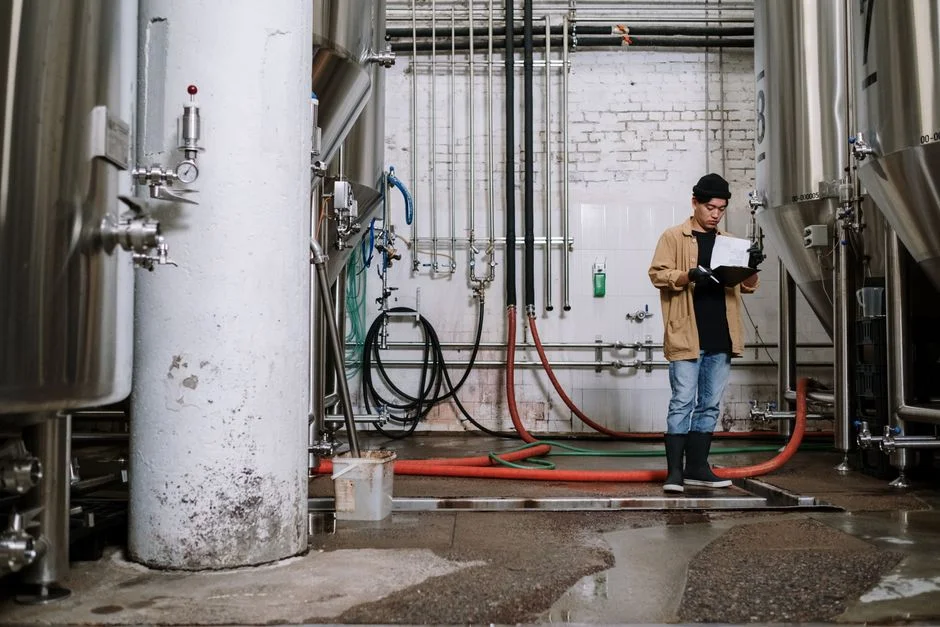
A defensible semiconductor treatment train assigns one removal duty to each stage and verifies the combined result against the effective discharge limit. Source segregation is Stage 1 because mixing streams before characterization makes precipitation chemistry, chemical consumption, and monitoring less predictable. The treatment schematic should therefore show separate collection, equalization where needed, treatment, and discharge-control functions rather than a single undifferentiated treatment line.
Precipitation is Stage 2 where testing supports it. A source-described approach uses calcium-driven fluoride precipitation and metal hydroxide precipitation within a reported pH range of 6–10.5. That range describes the cited precipitation step; it is not a universal operating setpoint for every Lehi-area stream. Chemical selection, dose, pH setpoint, reaction time, and solids handling must come from source-specific jar testing and the permit. Review the semiconductor wastewater technology comparison when evaluating biological alternatives or polishing requirements.
DAF or lamella clarification is Stage 3 when the waste contains suitable suspended solids, oil, FOG, or colloidal loads. The cited DAF catalog covers 4–300 m³/h across 13 models, while the lamella equipment source lists surface loading rates of 20–40 m/h and up to 30% lower chemical consumption. These are catalog figures, not a Lehi sizing recommendation. Hydraulic and contaminant loading must be checked against representative wastewater, and the selected industrial DAF system for semiconductor pretreatment must show credible turndown and batch handling.
Ion exchange or RO becomes Stage 4 when residual dissolved contaminants or industrial wastewater reuse objectives justify polishing. The cited industrial RO catalog reports recovery rates up to 95% and identifies semiconductor applications. An industrial RO polishing system requires an explicit comparison of permeate quality, recovery, concentrate or reject management, pretreatment needs, and operator attention. For reuse, acceptance criteria must address the intended process-water quality and reject stream; for sewer disposal, acceptance must address the applicable discharge limits directly.
Chromium-bearing streams require a separate scope review. The Trinity source describes dedicated Cr(VI) reduction and precipitation upstream of the main train for such streams. This is not a universal requirement for every fab: first establish whether Cr(VI) is present, its permitted discharge condition, and the treatment and analytical basis.
| Stage | Defined removal duty | Acceptance evidence |
|---|---|---|
| Source segregation | Preserve stream identity and isolate high-risk loads | Complete stream map, chemical characterization, and abnormal-operation plan |
| Precipitation | Remove target fluoride or metals as insoluble solids | Jar-test basis, defined chemical and pH operating window, and residual results |
| DAF or lamella clarification | Separate precipitated solids and suitable floating loads | Hydraulic loading, contaminant loading, sludge withdrawal, and turndown review |
| Ion exchange or RO | Polish residual dissolved contaminants or meet reuse criteria | Pilot or vendor performance data, recovery basis, and reject-management plan |
| Final control | Verify discharge compliance and contain excursions | Monitoring, alarm, diversion, sampling, and corrective-action procedure |
Control the Variables That Cause Discharge Violations
The final discharge limit must be controlled at the point where the wastewater leaves the plant, not inferred from upstream treatment performance. The Trinity approach places continuous pH and flow monitoring on the combined effluent header and adds continuous or near-continuous fluoride measurement with total-metals analysis for Cu, Ni, and Cr. Which signals are legally required must be confirmed against the Lehi-area permit; additional control points may be needed upstream for dose and load management.
Use automatic chemical dosing for pH adjustment, coagulants, flocculants, and specialty chemicals only after the control system has been tested against the documented flow envelope. A credible control narrative links each chemical tank to its duty, identifies level and leak detection, and states how the system responds to high flow, low flow, sensor disagreement, and exhausted chemical inventory.
Define the excursion sequence before commissioning. An excessive pH, elevated flow, fluoride excursion, or metals excursion should trigger a defined alarm, sampling result, and either automatic diversion or another permit-authorized response. Containment must have enough hydraulic capability for the design case, and the selected receiving stream must be authorized. If the permit does not allow dilution as a control strategy, dilution cannot be used to recover compliance.
Operating records should connect the monitor history, laboratory results, chemical adjustments, alarms, spills, maintenance, and corrective actions. The Trinity source describes monthly Discharge Monitoring Reports and a five-year industrial pretreatment permit cycle. Those obligations must be verified against the plant’s actual POTW permit rather than assumed to be identical at every location.
Automation reduces repetitive manual intervention but does not replace sampling, calibration, maintenance, or permit reporting. The automated wastewater control reference illustrates why controls, monitoring, and operating decisions should be treated as one system. The industrial effluent testing guide can support the sampling and laboratory controls required to validate continuous measurements.
| Excursion | Immediate control | Evidence and recovery |
|---|---|---|
| High or low pH | Automatic dose adjustment, alarm, and permit-authorized diversion where required | Calibration check, retained sample, operating record, and corrective-action closeout |
| Elevated flow | Alarm, equalization assessment, and slug-load response | Flow record, source-event investigation, and capacity verification |
| Fluoride excursion | Increase precipitation or polishing control within validated limits and divert if necessary | Confirmatory laboratory result and dose or chemistry review |
| Metals excursion | Alarm, verify analyzer, and divert or increase polishing as authorized | Total-metals result, corrective action, and POTW notification if required |
Treat the Resulting Sludge as a Design Output
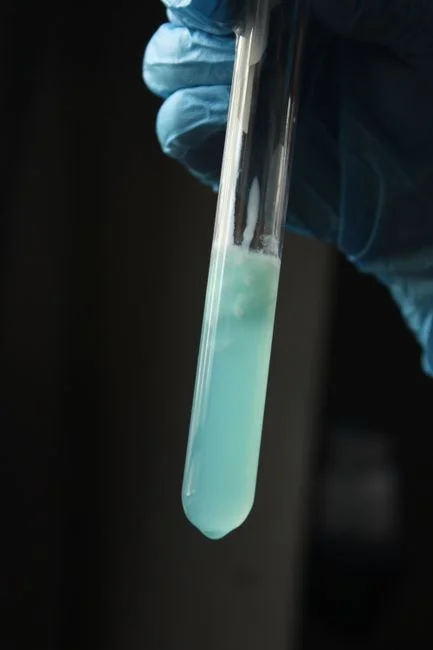
Sludge stability, dewaterability, disposal route, and TCLP acceptance must be evaluated before a treatment system is purchased. A clear final effluent does not establish that the process is complete. Precipitation and chemical separation concentrate the removed contaminants into solids that require conditioning, dewatering, storage, transport, and a legally supportable waste determination.
Silicon Semiconductor reports that fragile polymer or inorganic flocs can release pollutants during pressure dewatering and may perform poorly in TCLP testing. It identifies dewatering tables or bag filters, filter presses, and rotary drum vacuum systems as separation options. This concern is particularly important when a bid promises low chemical consumption but omits data showing how the resulting solids retain contaminants under the required leaching test.
Require each bidder to identify the sludge-conditioning chemistry, expected solids characteristics, selected dewatering method, resulting moisture condition, storage method, and intended disposal route. If non-hazardous landfill disposal is proposed, support that conclusion with the actual required analytical results. Do not assign the waste code before testing and the applicable regulatory determination are complete.
A filter press is appropriate when the project needs a defined solids-liquid separation step for industrial sludge. The cited HydropureWater plate-and-frame range covers filtration areas from 1 m² to 500 m². That catalog range is not a Lehi sizing recommendation: select the filtration area and configuration from feed-solids characteristics, batch cycle, filtrate rate, cake handling, and the plant’s hydraulic envelope. The mining-plant pretreatment reference provides a parallel example of evaluating solids handling as part of the discharge solution.
The acceptance package should include a representative solids-generation estimate, conditioning basis, dewatering performance data, filtrate characteristics, TCLP sampling plan, and contingency for rejected or off-specification cake. If the sludge does not meet its intended acceptance criteria, the design must specify where treatment ends and how disposal is authorized.
Use a Permit-Driven Equipment Selection Checklist
A compliant equipment bid is a process demonstration, not a price sheet. Require bidders to submit a proposed process flow, equipment sizing basis, design flow range, turndown assumptions, source-stream inputs, and required pretreatment conditions. If the bidder cannot connect its design flow or chemical assumptions to source data, the proposal is not ready for comparison.
Request a written compliance matrix that links every unit operation to the pollutant or discharge parameter it addresses. For example, the matrix should show where fluoride removal occurs, how copper, nickel, and chromium are controlled, where suspended solids are separated, and what measurement verifies each function. It should also identify any unit whose performance is conditional on jar testing, pilot work, or a POTW requirement.
Confirm monitoring points, alarm logic, diversion capability, control philosophy, historian or data-export requirements, and the interface to the POTW reporting process. Ask how the system responds to a failed analyzer, chemical interruption, high-flow event, and power loss. These acceptance checks determine whether the proposed train can protect the discharge limit under abnormal conditions.
Evaluate lifecycle burdens rather than equipment purchase price alone: chemical use, sludge production, dewatering, maintenance, operator attention, energy, replacement media or cartridge access, and off-site disposal. A lower bid does not establish the lowest compliant cost if the system cannot maintain limits, handle peak or slug flows, or produce acceptable sludge.
Use the data-led DAF sizing method as a procurement reference for separating catalog capacity from project capacity. Where the permit or sewer authority provides a preapproval path, request written review of the proposed discharge characteristics and treatment basis. Do not treat vendor calculations as POTW acceptance.
| Bid item | Required response | PASS/FAIL evidence |
|---|---|---|
| Process basis | Source chemistry, flow cases, and selected references | PASS when assumptions reconcile with site data |
| Compliance matrix | Unit operation, pollutant, treatment duty, and verification point | PASS when every effective limit has an assigned function |
| Controls and diversion | Monitoring, alarms, interlocks, and abnormal-load response | PASS when failure modes and responses are documented |
| Sludge and disposal | Solids generation, dewatering, TCLP plan, and disposal route | PASS when the acceptance path is explicit and permitted |
| Lifecycle cost | Chemical, labor, energy, maintenance, media, sludge, and disposal costs | PASS when assumptions and exclusions are transparent |
| POTW coordination | Application, discharge-characteristics submission, and review record | PASS when written authorization is obtained before commissioning |
Frequently Asked Questions
How should pretreatment equipment be sized for a semiconductor plant near Lehi?
Final sizing requires the confirmed permit limits, source-specific wastewater characterization, average and peak flows, batch or slug conditions, and required redundancy. The cited DAF range of 4–300 m³/h is a catalog range, not a recommendation for a Lehi plant. A bidder should show hydraulic and contaminant loading for each documented flow case and identify its operating turndown.
What should a buyer request when comparing pretreatment costs?
Request a transparent lifecycle cost covering chemical consumption, sludge handling and disposal, monitoring and laboratory testing, labor, energy, maintenance, replacement media, and contingency. No supported local price estimate was provided, so a responsible bid should state its design assumptions and exclusions rather than present a single unsupported cost. Compare offers only after normalizing those assumptions.
What qualifications should a pretreatment supplier demonstrate?
Require a demonstrated process basis for the relevant chemistry, a complete compliance matrix, control-system capability, commissioning and performance-testing plans, operating documentation, and support for permit-related sampling. The supplier should also demonstrate how its equipment manages chemical feed, monitoring failure, high flow, sludge withdrawal, and maintenance access. Equipment range alone does not establish project suitability.
Which controls reduce the risk of exceeding a discharge limit?
The strongest practical sequence is source segregation, representative characterization, automatic chemical dosing, monitoring at required control points, high-flow and excursion diversion, and documented corrective action. Each measure must be tied to a specific permit parameter and tested under abnormal conditions. Automation reduces manual intervention but does not remove sampling, calibration, maintenance, or reporting obligations.
When is RO justified instead of treating only for sewer disposal?
RO becomes more compelling when residual dissolved contaminants remain after the required treatment steps or when the plant has a documented industrial wastewater reuse target. The cited industrial RO catalog reports recovery rates up to 95%, but actual recovery depends on feed chemistry, pretreatment, operating conditions, and reject management. A reuse project requires water-quality acceptance criteria; a sewer-disposal project requires direct proof against the effective discharge limits.
The industrial high-COD wastewater treatment reference provides a useful comparison of process objectives while reinforcing that the Lehi project must be resolved against its receiving POTW and current permit.