
Why Yangon Requires a Decentralized Treatment Strategy
Domestic sewage treatment in Yangon is a site-specific design problem, not simply a product selection. A 2023 case study reported a population of 6.73 million and found that about 80% of households use onsite septic tanks, while the YCDC centralized system handles only 7% of city wastewater. Decentralized wastewater treatment systems, including membrane bioreactors serving individual estates, ranked first across the study’s environmental, economic, social and technical assessments. For developers and facilities, this supports comparing package A/O plants, MBR systems and community-scale alternatives against verified site conditions rather than assuming a central sewer connection will be available.
The Yangon case study describes rapid urban growth, aging wastewater infrastructure and pressure on waterways. YCDC modernized its centralized wastewater treatment system in 2003; it serves seven townships but handles only 7% of the city’s wastewater, according to Investigation of Decentralized Wastewater Treatment System in Urban Wastewater Management: Case Study in Yangon, Myanmar, Sustainability, 2023-12-12. The same study reports that 80% of households use septic tanks, 3% use unimproved pit latrines and 10% of households in cities use DEWATS.
DEWATS means wastewater treatment at community or estate scale rather than through the central network. It is not synonymous with one private septic tank: the Yangon examples include treatment intended for a housing community, and the study identifies membrane bioreactors serving individual estates. This distinction matters because a community system requires a defined collection arrangement, operating responsibility, maintenance access and a residual-solids route.
The 2023 study states that septic tanks and other onsite systems are relatively inefficient and that their effluent may not meet the required standard. Decentralized treatment therefore merits engineering evaluation, but it does not remove the need to establish the applicable effluent or reuse criteria. The domestic sewage treatment equipment guide provides a useful comparison framework for evaluating packaged and decentralized routes.
Define the Treatment Objective Before Choosing Equipment
The treatment objective must be defined by measurable flow, effluent, site and responsibility requirements before comparing equipment. The 2023 Yangon study notes that a centralized sewer network may cost five times as much as the sewage treatment plant, which explains why a decentralized solution may be relevant where a sewer connection is impractical. That comparison does not remove the need for a project-specific cost estimate.
Obtain the following inputs:
- Current and peak domestic flow, including the wastewater fraction that requires treatment;
- Wastewater characteristics, particularly organic load and solids;
- The intended effluent use or discharge route;
- Available footprint, access, soil, groundwater and flood exposure;
- Power quality, backup-power arrangements and utility requirements;
- The party responsible for operation, maintenance and sludge handling; and
- The receiving authority’s effluent criteria or the user-specified reuse standard.
No compliant discharge limit can be selected from the supplied research. The applicable receiving-authority requirement or reuse specification must therefore be obtained as a project input. For reuse, the supplied MBR catalog configuration provides filtration below 1 μm, while the package WSZ configuration uses biological contact oxidation, sedimentation and disinfection. The former offers a different separation basis, but neither catalog statement substitutes for project acceptance criteria.
Tankering, sludge storage, odour control, maintenance access and safe effluent routing should be treated as separate acceptance items. They affect site planning and operating risk even when they are outside the treatment vessel’s nominal capacity. Use the package sewage treatment plant selection guide to structure the scope before requesting alternatives.
| Design input | Information required before selection | Buyer check |
|---|---|---|
| Flow | Current flow, peak conditions and treatable fraction | Does the quoted duty use the same design basis? |
| Effluent | Discharge route, receiving-authority criteria or reuse specification | Are performance tests measurable and site-specific? |
| Site | Footprint, access, soil, groundwater and flood exposure | Is the proposed installation physically deliverable? |
| Operation | Power, trained personnel, maintenance access and backup arrangements | Who performs each task after handover? |
| Residuals | Sludge storage, removal and disposal route | Is the residual route included in the supply boundary? |
Package A/O, MBR and Decentralized Alternatives Compared
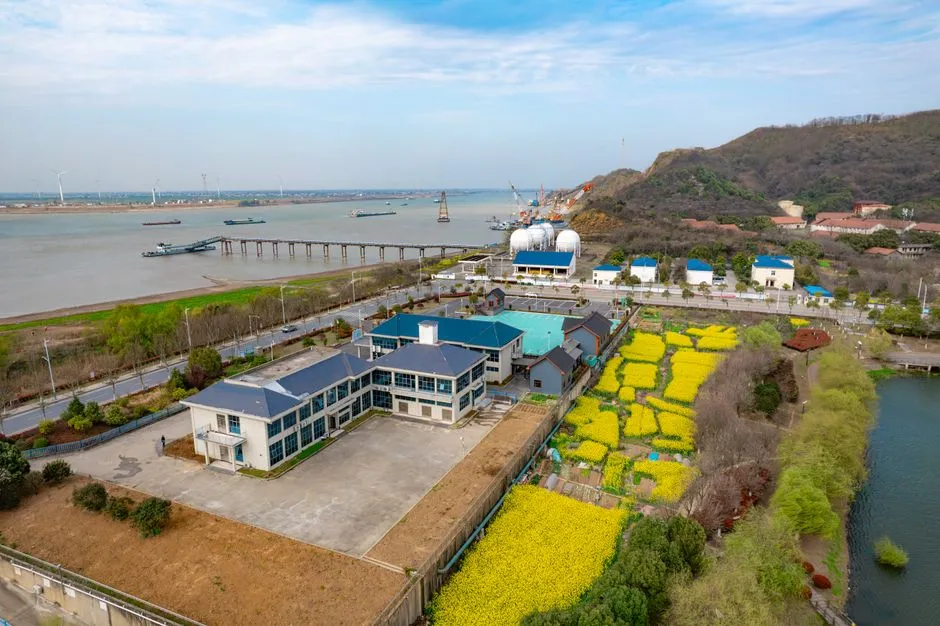
Package A/O is appropriate when verified flow, land and operating conditions support a buried biological treatment package; MBR becomes more relevant when tighter solids separation, reuse potential or land constraints justify membrane-specific operation and maintenance. Neither route is universally preferable.
The HydropureWater WSZ Series is the package A/O option. It combines anoxic/aerobic biological contact oxidation, sedimentation and disinfection in one buried package, is fully automated and requires no operator. Its catalog capacity is 1–80 m³/h, with applications including residential communities, hotels, hospitals, factories and rural areas. Final duty must be selected from verified project flow rather than the end of the nominal range.
The alternative is an MBR system using submerged PVDF membrane filtration. The supplied catalog specifies near-reuse-quality effluent below 1 μm, a footprint 60% smaller than conventional systems and a range of 10–2,000 m³/day. Review the WSZ underground package sewage treatment plant and the MBR membrane bioreactor for Yangon sewage projects against the same verified project inputs.
Yangon provides a local MBR reference. At the YCDC Officer Housing Estate, operators selected MBR because of lower O&M cost, higher treatment efficiency, stability, limited land requirement and possible integration with existing plants, as reported by Sustainability, 2023-12-12. This supports evaluating MBR, but it does not prove that every estate will obtain the same result: wastewater characteristics, operator capability and service arrangements still govern performance.
Vermifiltration is another decentralized alternative. Application of Vermifiltration for Domestic Sewage Treatment, published by IntechOpen, reports that it can be decentralized and was applied to domestic septic-tank sewage. It requires a separate local feasibility review covering effluent compliance, site conditions and performance before selection.
| Decision point | Package A/O | MBR | Alternative route |
|---|---|---|---|
| Treatment basis | Anoxic/aerobic contact oxidation, sedimentation and disinfection | Submerged PVDF membrane filtration | Vermifiltration requires separate feasibility review |
| Catalog basis | 1–80 m³/h | 10–2,000 m³/day | No supplied duty basis for Yangon |
| Key attraction | Integrated package and automated operation | Filtration below 1 μm and compact footprint | Potential decentralization and lower operator-skill requirement |
| Principal scrutiny | Verified duty, soil, groundwater and access | Membrane fouling, controls, cleaning, spares and sludge route | Effluent compliance and site performance |
| Yangon evidence | No specific local WSZ case in the supplied research | Selected at YCDC Officer Housing Estate | Septic-tank sewage application reported outside Yangon |
Build a Capacity and Site-Fit Basis for Yangon
Capacity selection must begin with measured or credibly estimated project flow because the supplied research provides no universal sizing multiplier for Yangon. Establish the current and peak domestic flow, the portion requiring treatment and the operating basis for the quoted duty. For every proposal, check that the supplier’s selected unit matches the same flow definition rather than comparing incompatible average and peak ratings.
Confirm wastewater characteristics before selecting biological or membrane equipment. The relevant project inputs include organic load and solids at the chosen treatment basis. Where sewage arrives from septic tanks, include pretreatment to control solids and protect downstream biological or membrane processes. The vermifiltration research confirms the relevance of treating septic-tank sewage, but it does not establish a universal pretreatment design.
For underground installation, verify soil conditions, groundwater, flood exposure, excavation stability, lifting access and maintenance access. The WSZ catalog states that the unit can be buried below grade with landscaping above or mounted on a trailer for mobile deployment. Neither option removes the need for a site-specific installation design.
For MBR, review membrane area against verified flow, aeration, controls, footprint, sludge removal, membrane cleaning and spare-parts access. The process-design guide for wastewater buyers can help structure the design-basis questions, but it does not replace project-specific sizing.
| Sizing stage | Required evidence | Output |
|---|---|---|
| Flow definition | Measured data or credibly estimated current and peak flow | Documented design flow and peak conditions |
| Wastewater characterization | Organic load, solids and relevant domestic characteristics | Confirmed treatment basis |
| Unit selection | Supplier duty envelope and process-flow proposal | Selected unit and documented reserve/operating basis |
| Site fit | Survey, geotechnical information, groundwater and flood data | Installation and access design |
| Residual protection | Source wastewater and solids condition | Defined pretreatment or screening requirement |
Plan Operations, Sludge and Community Acceptance
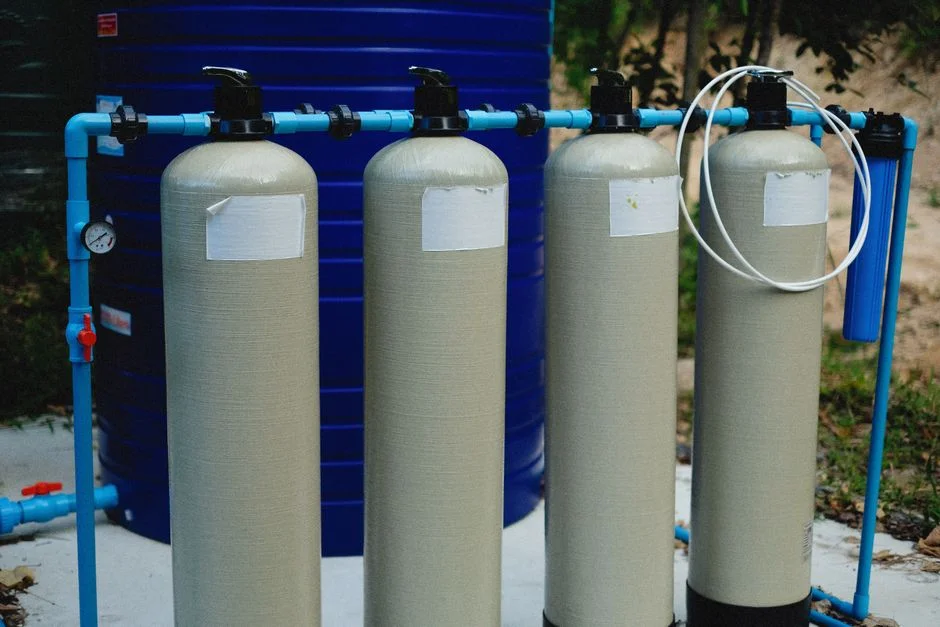
Operational capability and residual-solids management determine whether a treatment system remains effective after commissioning. The comparative Yangon-to-Mandalay paper identifies membrane fouling, sludge disposal, monthly fees, operator training, transparency, stakeholder involvement and shared responsibility as essential implementation issues. These are design and contracting requirements, not optional additions.
The same paper reports that 17.5% of surveyed Yangon DEWATS users were highly satisfied and 45% were somewhat satisfied. Those findings show why service quality and community participation should be evaluated alongside treatment performance. A technically functioning plant can still create disputes if fees, access, complaints and responsibilities are unclear.
Assign named responsibility for sampling, laboratory review, membrane cleaning, aeration, pumps, disinfection, backup power, spare parts, routine inspection and emergency response. Where membrane equipment is proposed, document who performs cleaning, how replacement exposure is handled and what spare-parts lead time is assumed. These requirements should be assigned within the sludge and residual-solids handling scope.
Evaluate sludge or residual solids handling as part of the equipment purchase. The supplied research flags sludge disposal but establishes no universal disposal method or cost. Require the proposal to identify storage, removal, destination, transport responsibility and applicable documentation. Do not accept a phrase such as “sludge included” without defining the boundary.
For residential estates, establish a transparent service model covering user fees, maintenance access, complaint handling and shared responsibility among owner, operator and residents. Include Yangon wastewater operator training in the handover plan, with practical demonstrations and defined competency requirements rather than a certificate alone.
| Operational element | Responsible party to be named | Evidence required |
|---|---|---|
| Monitoring | Owner, operator or laboratory | Sampling points, frequency and reporting method |
| Maintenance | Trained local operator or service contractor | Tasks, access arrangements and response procedure |
| Sludge and residuals | Owner and authorized waste handler | Storage, transport and disposal route |
| Community service | Estate owner and operator | Fee, complaint and communication procedures |
| Training | Supplier and receiving operator | Agenda, practical assessment and handover records |
Procurement and Implementation Checklist for Yangon Projects
A defensible equipment request starts with the design basis and process route, not a product name. Require bidders to define the verified design flow, peak conditions, wastewater characteristics, treatment objectives, process flow, equipment layout, utilities, controls, duty point and treatment-performance commitments. Do not accept a capacity claim without identifying the flow basis and operating conditions behind it.
Define the supply boundary clearly. It should state which items are included for inlet works, treatment, disinfection, pumping, effluent storage or reuse, sludge handling, controls, commissioning, training and maintenance spares. The skid-mounted wastewater treatment plant process guide can help separate treatment equipment from supporting infrastructure, even where the final installation is not skid-mounted.
Compare package A/O and MBR bids using the same verified inputs: capital scope, land requirement, energy demand, operator attendance, consumables, membrane replacement exposure, sludge route, commissioning support and lifecycle support. Where a bidder cannot substantiate a claim, mark it as an assumption requiring clarification.
Make local acceptance criteria, testing responsibilities, operator training and technical documentation contractual deliverables. Specify who samples, who witnesses tests, what corrective action applies and when operational acceptance occurs.
The 2023 Yangon study assessed environmental, economic, social and technical performance, so those dimensions should influence final selection. A proposal should also explain community acceptance and the operating model where residents are users.
| Bid stage | Mandatory submission | Acceptance check |
|---|---|---|
| Concept | Verified design basis and treatment objective | All bids use the same inputs |
| Technical | Process flow, layout, controls, utilities and performance commitment | Duty and boundaries are explicit |
| Commercial | Supply scope, installation, commissioning, spares and O&M pricing structure | Exclusions and lifecycle exposure are visible |
| Local execution | Site logistics, operator training and technical documentation | Delivery and handover responsibilities are assigned |
| Acceptance | Test method, witnessing, training completion and corrective process | Acceptance conditions are contractually enforceable |
Frequently Asked Questions
Is a package plant or an MBR better for a Yangon housing estate?
Choose package A/O when the verified flow, available land, effluent criteria and operating arrangements support the selected integrated package. Consider MBR when tighter solids separation, reuse potential or land constraints justify its membrane-cleaning, controls and spare-parts obligations. The 2023 Sustainability study supports MBR as a feasible local route because it was selected at the YCDC Officer Housing Estate, but it does not make MBR universally preferable. Verify sludge handling and operator capability before deciding.
How should buyers size domestic sewage treatment equipment without a flow multiplier?
Require measured or credibly estimated current and peak flow, the treatable fraction, wastewater characteristics and the operating basis. Then ask each supplier to select a duty from its approved envelope and show the process calculations. The supplied research provides no universal Yangon sizing multiplier, so any per-capita, unit-loading or peak-factor assumption must be identified and justified for the project.
How can buyers compare quotations fairly?
Normalize every quotation to the same design basis, treatment scope, civil works, installation, utilities, commissioning, training, consumables, spares and O&M responsibilities. For a cost or budget comparison, request a written price breakdown against that normalized scope, including exclusions, energy assumptions, membrane replacement exposure, sludge handling and warranty responsibilities. No supported quotation or universal price was supplied, so buyers should request project-specific pricing rather than rely on a generic budget figure.
Which compliance risks deserve priority in Yangon?
First obtain the applicable receiving-authority effluent criteria or user-specified reuse standard. Then align the collection system, pretreatment, monitoring, operating procedures and documentation with those requirements. Treat safe effluent routing, residual-solids handling and local authority engagement as separate risks; the supplied research identifies sludge disposal and environmental performance as material issues but does not supply a Yangon-specific compliant discharge limit.
Is decentralized treatment appropriate for Yangon?
Yes, but only as a site-specific option. The 2023 Sustainability case study ranked DEWATS first in its weighted sustainability assessment across environmental, economic, social and technical aspects. It also states that technology selection must reflect local environmental, technical and economic feasibility. A Yangon buyer should therefore document the site review, receiving route, community expectations and lifecycle responsibilities before adopting a decentralized wastewater treatment system.