
Start with Costa Rica's domestic sewage treatment threshold
Domestic sewage treatment in Costa Rica depends first on project flow and site conditions. Under Executive Decree 42075-S-MINAE, septic tanks with drain fields are used for flows up to 190 m³ per month. Above that threshold, the project requires a system approved under Executive Decree 39887-S-MINAE, including Ministerio de Salud plan review and specified operating controls. A septic route also depends on soil infiltration of 2–24 minutes per centimetre and sufficient groundwater separation. For larger communities, hotels and residential clusters, a WSZ underground package sewage treatment plant can combine anoxic/aerobic treatment, sedimentation and disinfection, while an MBR is appropriate where tighter solids separation, reuse potential or a smaller footprint is required.
Here, domestic sewage treatment means treatment of wastewater generated by homes, hotels, residential communities and similar domestic occupancies. The first decision is regulatory classification, not product selection. Article 7 of Executive Decree 42075-S-MINAE places septic tanks with drain fields within the scope of projects with wastewater flows up to 190 m³ per month. Above that flow, the project must use a treatment system approved under Executive Decree 39887-S-MINAE.
That distinction matters because a septic system and a permitted treatment plant create different design, approval and operating obligations. The 2026 Costa Rica septic-system guide cites AyA data reported by Banco de Costa Rica in July 2025: approximately 70% of the population uses septic tanks, while 22% is connected to a sanitary sewer. Those figures describe national infrastructure context, not the treatment route for a particular development.
Calculate wastewater generation from occupancy, water-supply assumptions and the applicable design criteria, then have the responsible licensed professional confirm the project classification. A flow estimate is an engineering input, not authorization to buy a package plant. The local authority and reviewing professionals must determine whether the site may use a drain field and which approval route applies.
| Project condition | Initial regulatory route | Buyer’s next step |
|---|---|---|
| Design flow up to 190 m³ per month | Septic tank with drain field may be considered under Executive Decree 42075-S-MINAE, subject to site and construction requirements | Complete site characterization before fixing the civil layout |
| Design flow above 190 m³ per month | System approved under Executive Decree 39887-S-MINAE | Define discharge or infiltration route and obtain professional design input |
| Flow classification not yet established | Route unresolved | Obtain a wastewater-generation calculation from the responsible engineer |
Choose the disposal route before choosing equipment
The disposal route determines the regulatory basis, receiving constraints and treatment objectives. A nearby sanitary sewer is not permission to omit treatment: the connection, authorization and required pretreatment remain separate project questions. For a decentralized domestic treatment system, the receiving route can instead be a sewer, a surface-water body, infiltration into the subsuelo or a defined reuse application.
Executive Decree 42075-S-MINAE governs disposal into the subsuelo of treated ordinary wastewater. The 2026 Costa Rica septic-system guide states that it was published in La Gaceta on April 14, 2020 and took effect six months later. It therefore needs to be applied as part of the current site and design review, not as an optional practice for projects that cannot connect to a sewer.
Projects above 190 m³ per month that infiltrate also require a SENARA opinion on a contaminant-transport study under Article 40. This makes the infiltration route a formal design and approval question. The engineer must define how contaminants could move through the subsurface and establish whether the proposed discharge concept is acceptable.
For direct discharge or reuse, request the applicable limits from the relevant Costa Rican authority for the specific receiving body, sewer and reuse purpose. The 50 mg/L BOD and suspended-solid values cited for systems above 190 m³ per month in the 2026 Costa Rica source are not universal discharge or reuse limits.
This distinction is material because an MDPI review of Costa Rican operating-report data found important reuse-compliance deficiencies in every planning region except Chorotega. The review used samples collected for 2016–2020. Reuse therefore requires a defined purpose and an identified regulatory route; advanced treatment should not be selected on the assumption that it automatically resolves compliance.
| Disposal route | Issue to establish | Equipment implication |
|---|---|---|
| Sanitary sewer | Connection authorization, sewer capacity and any pretreatment requirement | Do not infer the required process from proximity to the sewer |
| Subsuelo infiltration | Compliance with Executive Decree 42075-S-MINAE; for projects above 190 m³ per month, Article 40 contaminant-transport review and SENARA opinion | Choose treatment and subsurface dispersal as one design |
| Surface-water discharge | Authority-confirmed receiving body and applicable effluent limits | Set treatment objectives from the confirmed limits |
| Reuse | Intended use and applicable regulation | Define required quality before selecting membrane or polishing stages |
Test the site before a septic system is accepted
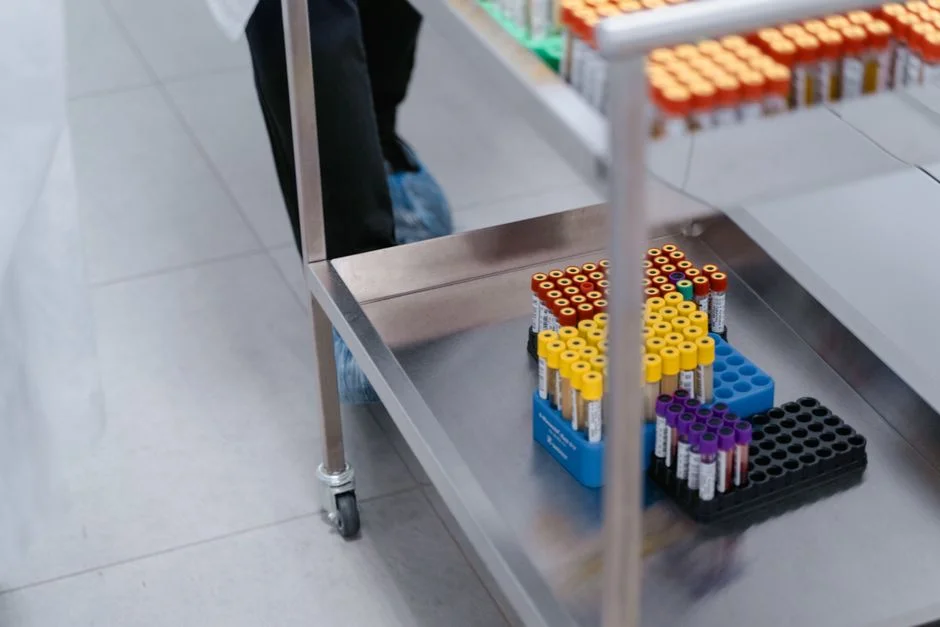
The infiltration test can eliminate a septic drain field before the project incurs civil-design and permitting costs. Articles 18 and 19 and Annex 3 of Executive Decree 42075-S-MINAE establish an accepted infiltration range of 2–24 minutes per centimetre. Soil draining faster than 2 minutes per centimetre is rejected because effluent could reach groundwater with insufficient treatment; soil that drops less than 1.2 cm in 30 minutes fails the absorption test.
Test where the drain field will actually be located. The 2026 Costa Rica guide warns that rainy-season testing is preferable because a dry-season result can flatter clay soils. The seasonal high water table must be at least 1.5 m below the bottom of the trenches under Article 6, and the infiltration-test report must record its depth.
The guide also reports that at least two infiltration tests are required for each drain-field site, with a report signed by a licensed professional. That report should be paired with a topographic survey and the available land area before the tank, trenches, access routes, parking and other site elements are positioned.
Ask the responsible professional for four coordinated documents: the percolation report, the seasonal groundwater reading, the topographic survey and a plan showing the land available for the complete drain field. A drain field that passes an infiltration test may still fail because of groundwater separation, slope, setbacks or lack of area.
| Site test or condition | Published requirement or interpretation | Decision consequence |
|---|---|---|
| Infiltration rate | Accepted range: 2–24 minutes per centimetre | Reassess the drain-field route if the result is outside the range |
| Absorption test | A drop of less than 1.2 cm in 30 minutes fails | Investigate another location or treatment route |
| Seasonal high water table | At least 1.5 m below the trench bottoms | Verify trench elevation and groundwater separation |
| Test documentation | At least two infiltration tests per drain-field site, with a report signed by a licensed professional | Include the report in the design and approval file |
Compare septic, WSZ package and MBR treatment
Septic, WSZ package and MBR systems solve different design problems. A septic tank with drain field remains appropriate only when the project is within the up-to-190 m³-per-month scope and the site satisfies the applicable infiltration, groundwater, slope and separation requirements. It is not a substitute for site suitability.
The WSZ underground package sewage treatment plant combines anoxic/aerobic biological contact oxidation, sedimentation and disinfection in one buried package unit. Its published capacity is 1–80 m³/h, and the manufacturer lists residential communities, hotels, hospitals, factories and rural applications among its intended uses. Its principal engineering attraction is integration within a compact buried installation, with automated operation.
The MBR membrane bioreactor wastewater treatment system uses activated sludge with submerged PVDF membrane filtration and specifies filtration below 1 μm. Its published capacity is 10–2,000 m³/day, and the manufacturer states that its footprint is 60% smaller than conventional systems. Membrane separation can support tighter solids removal and reuse objectives, but it also introduces membrane maintenance and replacement requirements.
Neither published system specification establishes blanket Costa Rican approval. Equipment must be matched to the approved design, receiving route and applicable effluent limits. For context, the MDPI review states that primary treatment removes approximately 30% of BOD, 50–70% of TSS and 65% of oil and grease, while secondary treatment can remove up to 90% of the remaining organic matter and suspended solids.
| Selection factor | Septic tank with drain field | WSZ package plant | MBR system |
|---|---|---|---|
| Legal fit | Generally considered for flows up to 190 m³ per month, subject to Decree 42075-S-MINAE | Can be considered where the project requires a system approved under Decree 39887-S-MINAE | Can be considered where the project requires a system approved under Decree 39887-S-MINAE |
| Published capacity | Not stated in the supplied research | 1–80 m³/h | 10–2,000 m³/day |
| Process | Tank and subsurface drain-field disposal | Anoxic/aerobic biological contact oxidation, sedimentation and disinfection | Activated sludge with submerged PVDF membrane filtration |
| Site advantage | Simple route where infiltration and groundwater conditions pass | Compact, automated buried package | Sub-1 μm filtration and a stated 60% smaller footprint than conventional systems |
| Main caution | Site-test failure removes this route | Confirm approval, utilities, sludge handling and servicing | Confirm membrane maintenance, replacement parts and operating support |
Follow Costa Rica's approval and operating path
Projects requiring approval under Executive Decree 39887-S-MINAE move through location approval, construction-plan review, installation, commissioning and operating compliance. The sequence starts with a location permit from the Ministerio de Salud before construction plans proceed to review and approval. A design drawing purchased from an equipment supplier does not replace that process.
The 2026 Costa Rica source states that the Ministerio de Salud must resolve the location permit within 22 natural days and that the permit is valid for two years. Construction plans are then reviewed under the decree. If the project exceeds 190 m³ per month and will infiltrate, Article 40 also requires a SENARA opinion on a contaminant-transport study.
For systems approved under Decree 39887-S-MINAE, the supplied source identifies an inspection box, operating reports twice a year and system-specific operating requirements. These obligations must be allocated to a named operator or property-management entity rather than left in the equipment supply contract.
Maintain a permit matrix covering the responsible licensed professional, permit holder, equipment serial number, inspection date, operating reports, sludge handling and maintenance schedule. The matrix should also track whether any design or equipment change occurs after approval, because equipment selection must remain consistent with the approved project.
Costa Rican guidance and local references can help teams identify the applicable review route, but they do not replace confirmation from the responsible engineer and authorities. Site-specific conditions, ownership and operating responsibility remain project inputs.
Build a supplier brief that prevents equipment mismatch
A comparable supplier proposal starts with verified design inputs, not a tank or membrane quotation. Issue the same brief to every bidder and require an average-flow calculation, peak-flow basis, occupancy or population basis, wastewater sampling results and the intended discharge or infiltration route.
Ask each supplier to identify the proposed process, treatment capacity, footprint, utility connections, automation, disinfection stage, sludge handling, spare parts and local service support. Require confirmation that the proposal is intended for review under the applicable Costa Rican approval route, while leaving the final compliance determination to the responsible engineer and authorities.
Compare lifecycle obligations as well as purchase price. Relevant items include aeration and pumping duty, inspection access, operator time, membrane or media maintenance, sludge removal, replacement parts and access for service personnel. A compact unit is not necessarily the lowest-lifecycle option if operating attention or specialist maintenance is underestimated.
Require a commissioning and training plan with measurable acceptance criteria agreed by the engineer. The supplied research does not provide comparable domestic-project quotations, so no defensible price can be inserted into the comparison. Request a priced scope that identifies exclusions and recurring operating responsibilities.
| Information request | Minimum response required | Reason for comparison |
|---|---|---|
| Design basis | Average and peak flow, occupancy basis and wastewater characteristics | Prevents sizing from incomplete project data |
| Process and capacity | Proposed treatment train, published capacity and operating basis | Allows process and duty comparison |
| Site and utilities | Footprint, access, utilities, control system and commissioning requirements | Tests whether the equipment fits the site |
| Operations | Sludge handling, inspection access, maintenance, spares and local support | Exposes lifecycle and service requirements |
| Approval | Proposed Costa Rican review route and supporting documentation | Separates supplier claims from authority approval |
Frequently Asked Questions
What flow determines whether a Costa Rican project can use a septic system?
Executive Decree 42075-S-MINAE permits septic tanks with drain fields for flows up to 190 m³ per month. Above that threshold, the project requires a system approved under Executive Decree 39887-S-MINAE. The responsible engineer must establish design flow from the project’s occupancy and wastewater-generation basis before equipment is selected.
How much does domestic sewage treatment cost in Costa Rica?
A defensible project price cannot be stated from the search topic alone because the supplied research provides no comparable quotation for a domestic project of this type. Request a priced scope based on design flow, treatment objectives, site constraints, disposal route, civil works, installation, commissioning and long-term operating requirements. Ask bidders to identify exclusions rather than compare headline purchase prices.
How should a developer size a septic, WSZ or MBR system?
Calculate design flow, establish the legal disposal route, test the site, define treatment objectives, size the treatment process and then include equalization, disinfection and sludge management. Use the 190 m³-per-month statutory fork to establish the approval pathway, not as the sole equipment-sizing criterion. For WSZ and MBR proposals, reconcile the selected duty with the supplier’s published capacity.
Which supplier-selection requirements matter for a compliant installation?
Require local documentation, proposed approval-route support, commissioning procedures, operating documentation, training, spare-parts availability and defined service access. Also require the supplier to state the process, capacity, footprint, utilities, sludge route, maintenance tasks and local support. These checks expose service and compliance gaps before award; they do not replace approval by the responsible engineer and Costa Rican authorities.
What happens if infiltration or reuse approval is assumed rather than obtained?
The treatment design may not be approvable, and the project can face unnecessary redesign or operational non-compliance. Projects above 190 m³ per month that infiltrate need a SENARA opinion on a contaminant-transport study under Article 40, while reuse requires an identified purpose and applicable regulation. The MDPI review’s finding of reuse-compliance deficiencies in every region except Chorotega reinforces why disposal and reuse permissions must be resolved rather than presumed.