Define the Colón Effluent Treatment Objective
An effluent treatment plant in Colón, Panama, must be designed around the factory’s wastewater characteristics, final discharge or reuse route, and operating constraints rather than a generic package capacity. A treatment train may combine pretreatment, equalization, biological treatment, solids separation, filtration, and disinfection, with advanced membranes or constructed wetlands reserved for specific reuse or micropollutant objectives. Slaughterhouse research reports approximately 45% soluble and 55% abrasive suspended organics, while a dairy study recorded reductions of 59.26% in electrical conductivity, 70.19% in COD, and 74% in BOD. Final limits and equipment selection require Colón-specific sampling and permit review.
Begin by identifying where the treated water will go. Direct discharge, municipal sewer acceptance, controlled tanker removal, and on-site reuse impose different analytical, reliability, and regulatory requirements. The receiving authority and applicable Panama requirements must be identified before comparing equipment.
The process design must separate industrial source contaminants from receiving-system concerns. Suspended solids, oil and grease, COD, and BOD determine the biological and solids-removal duty; pH and conductivity affect chemical use, biological treatment, and membrane operation; nutrients and toxicity may require additional controls. Microbial load becomes material where reuse, public contact, or uncontrolled discharge is proposed.
The US EPA describes Effluent Guidelines as national standards organized by industrial category and treatment technology. These are useful regulatory references, but they are not substitutes for the environmental, sewer, or reuse criteria applicable to a Colón installation. The broader Panama industrial effluent treatment guide provides additional project context.
Reuse objectives must be expressed as an end-use specification rather than a general request for “clean water.” University of Twente research assessed direct nanofiltration for polishing wastewater treatment plant effluent against EU Water Framework Directive standards, with agricultural or direct/indirect potable use as research objectives. That work illustrates a possible reuse pathway; it does not demonstrate compliance or suitability for every industrial effluent in Colón.
Build the Wastewater Characterization Basis
Equipment sizing must be based on representative flow and pollutant data, as no universal wastewater flow or quality profile exists for industrial plants in Colón. A short sampling campaign may miss batch dumps, cleaning peaks, or intermittent high-strength discharges. Request current site data across production cycles, tank emptying, vehicle or tanker discharge, cleaning operations, and peak production periods before locking down equipment.
The slaughterhouse case illustrates why physical character matters alongside conventional load measurements: the Journal of King Saud University–Science study describes the wastewater as approximately 45% soluble and 55% abrasive suspended organics. Abrasive solids increase wear and maintenance, while the soluble fraction determines biological or advanced-treatment requirements. This is sector-specific evidence, not a profile to transfer directly to another Colón factory.
The International Journal of Ecology and Environmental Sciences dairy study (2023) measured electrical conductivity, COD, and BOD because dairy effluent contains casein, lactose, fat, salts, detergents, and sanitizers. Its best-performing isolate, S3, reduced conductivity by 59.26%, COD by 70.19%, and BOD by 74% in that experimental system. Those results support testing both organic loading and dissolved or conductive constituents; they are not guaranteed plant performance.
| Design input | What the sampling must establish | Decision supported |
|---|---|---|
| Flow | Representative average flow and documented peak periods, including batch and tanker discharges | Equalization, pumping and unit hydraulic sizing |
| COD and BOD | Organic strength across production and discharge cycles | Biological load, DAF duty and process balance |
| Suspended solids | Concentration, particle character and abrasive potential | Pretreatment, wear protection and clarification |
| Oil and grease | Free and emulsified fractions across the sampling period | DAF selection and feed conditioning |
| pH and conductivity | Variation, including cleaning and product-change effects | Chemical control, biological suitability and membrane assessment |
| Process-specific contaminants | Substances identified from products, cleaners and production chemistry | Compatibility, toxicity and pretreatment requirements |
Document every sampling point, flow-measurement method, laboratory method, calibration record, and averaging period. This record is the common basis for vendor calculations, permit compliance, and future troubleshooting. If a vendor quotes capacity without identifying the wastewater assumptions behind it, the proposal is not comparable.
Route the Wastewater Through a Complete Treatment Train
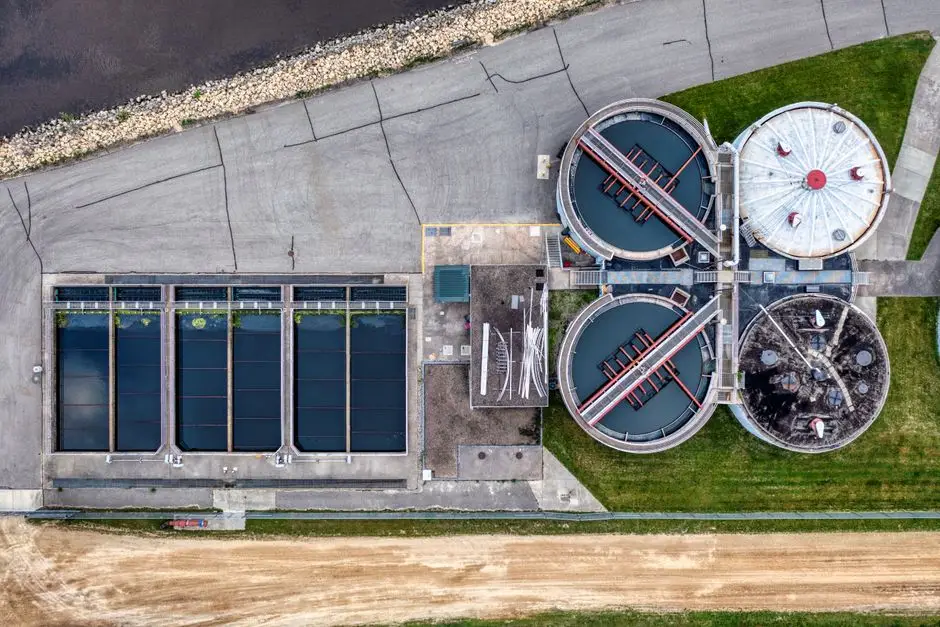
A complete industrial treatment train controls distinct failure risks at each stage; no single technology performs every required function. The process should begin with robust pretreatment. A mechanical bar screen protects pumps and downstream equipment from larger debris. An industrial DAF system for Colón effluent pretreatment can remove suspended solids, free oil, grease, and colloidal material when the wastewater characterization supports that duty.
Equalization follows or overlaps pretreatment to manage batching and flow variation. It reduces hydraulic shock, allows controlled dosing, and provides operators a stable feed for biological treatment. Where the wastewater is biodegradable, controlled biological treatment can remove dissolved and colloidal organics. The slaughterhouse study combined DAF, UASB reactors, aeration tanks, and clarifiers; that sequence demonstrates how physical and biological barriers can be integrated, but it is not a universal blueprint.
Clarification removes biologically generated solids. Filtration may be required where the reuse objective or permit needs additional particulate control, and disinfection should be applied where microbial risk analysis, reuse requirements, or receiving-system conditions justify it. For advanced separation or micropollutant removal, nanofiltration, reverse osmosis, or constructed wetlands may be considered. Wageningen University and Research (2022) investigated constructed wetlands for removing micropollutants from wastewater treatment plant effluent; its research scope does not establish performance for every industrial wastewater or Colón site.
The liquid-treatment process is only one part of operability. The design must also address sludge capture, dewatering or disposal, odor control, chemical storage, power backup, instrumentation, access for maintenance, and bypass management. A bypass should have a defined operating purpose, safe isolation, and clear logging; it must not become an uncontrolled discharge route.
For a biological or membrane-based route, a compact MBR wastewater treatment system combines biological treatment with membrane solids separation, but the selected configuration must demonstrate compatibility with the actual fat, solids, conductivity, and cleaning-chemical profile.
Select Equipment by Wastewater and Land Constraints
The correct technology meets the confirmed treatment duty and site constraints. Flow capacity alone is not a selection criterion because hydraulic flow and contaminant mass load impose different requirements. Compare each proposal against the same sampling basis, discharge route, reuse target, and operating envelope.
| Option | Best-fit condition | Key evidence or limitation |
|---|---|---|
| DAF | Oil, FOG, colloids or high suspended-solids loads must be removed before biological treatment or membranes | HydropureWater’s catalog range covers 4–300 m³/h across 13 models |
| MBR | Compact installation, automated operation and fine solids separation are priorities | Catalog coverage is 10–2,000 m³/day, with filtration below 1 μm; suitability still depends on feed chemistry and maintenance capability |
| Underground integrated sewage plant | Decentralized sewage treatment where compatible biological treatment and compact siting are required | WSZ catalog capacity is 1–80 m³/h and the duty includes A/O contact oxidation, sedimentation and disinfection; it is primarily intended for sewage, not every high-strength trade stream |
| UF | Polishing or pretreatment for bacteria, colloids and suspended solids without chemical cleaning | Catalog feed specification accepts up to 300 ppm turbidity and includes automatic backwash and air scour; this is a feed condition, not a treatment guarantee |
DAF is the starting gate where oil, FOG, colloids, or high suspended-solids loads threaten downstream biological or membrane equipment. The DAF product range provides a basis for comparing hydraulic capacity, but the selected model requires a solids and contaminant mass balance.
MBR is attractive where footprint, automation, and fine solids separation drive the decision. The integrated MBR range covers 10–2,000 m³/day and describes filtration below 1 μm. Ask bidders to explain membrane cleaning, chemical compatibility, solids handling, and performance during peak load.
The WSZ underground integrated sewage treatment system handles 1–80 m³/h and combines A/O biological contact oxidation, sedimentation, and disinfection. It is most defensible for compatible sewage duties; industrial oils, detergents, toxics, or abrupt load changes may require pretreatment or different biological architecture.
UF can serve as polishing or pretreatment where the objective is removal of bacteria, colloids, and suspended solids without chemical cleaning. Its catalog specification accepts up to 300 ppm turbidity and includes automatic backwash and air scour. Confirm that actual feed turbidity, solids, particle distribution, and required recovery are within that basis.
Before selection, verify footprint, soil and groundwater conditions, operator availability, sludge route, chemical consumption, energy demand, maintainability, and consequences of bypass or power failure. A quoted equipment price does not cover these operating obligations.
Plan Permitting, Procurement and Commissioning in 2026
Permit conditions, final acceptance values, and the authorized discharge route must be contractual inputs before award. Do not assume the slaughterhouse study’s cited discharge values—COD 250 mg/L, BOD 30 mg/L, and suspended solids 50 mg/L—apply automatically to a Colón installation. They belong to the reference context in that paper and require confirmation against the applicable authority, facility category, sewer rules, and negotiated reuse conditions.
Require bidders to submit process calculations, equipment sizing, hydraulic and contaminant mass balances, utility consumption, chemical use, control philosophy, electrical requirements, installation boundaries, spare parts, commissioning tests, operator training, and clear warranty exclusions. The request should also cover odor control, sludge handling, chemical storage, power backup, bypass arrangements, and long-term consumables.
Comparable full-scale evidence is useful when the feed and duties are genuinely comparable. The slaughterhouse study evaluated a system with equalization, DAF, UASB reactors, aeration tanks, and clarifiers. It reported hydraulic retention time varying from 10 to 15 hours daily during operation and sampled process units over 17 weeks. These details show what a defensible monitoring program involves, but they do not establish a Colón design value.
The slaughterhouse research identifies staff wages, pumping electricity, chemicals, and analytical monitoring as operating-cost categories. Request current local quotations for each category, including sludge disposal and membrane or DAF maintenance, and require a transparent life-cycle estimate with assumptions stated.
Define acceptance through a mutually agreed sampling plan covering influent, each major unit, and final effluent. Identify methods, sampling frequency, operating conditions, hold points, instrument calibration, and deviation handling. Include operator training, as-built documents, control narratives, spare-parts lists, and performance guarantees. For a regulated industrial application, the pharmaceutical wastewater treatment in Panama guide illustrates the need to connect treatment selection with local implementation.
Frequently Asked Questions
What is the cheapest practical treatment system for a small industrial facility in Colón?
There is no defensible price without the wastewater flow, pollutant load, final discharge or reuse route, land constraints, and required reliability. A DAF system, package biological treatment, and MBR perform different functions. Obtain at least one complete bid for the treatment train, with utilities, chemicals, sludge handling, installation, and commissioning included; do not compare equipment quotations that exclude these items.
Should an industrial ETP in Colón use DAF, MBR or a packaged sewage plant?
Use DAF when oil, FOG, colloids, or suspended solids require removal before biological treatment. Consider MBR when compact siting, automation, and fine solids separation justify the added process and maintenance complexity. Select a packaged sewage plant only when its biological duty, capacity, and feed chemistry match the actual sewage or waste stream.
How much wastewater can a Colón ETP handle before capacity must be increased?
Check both peak hydraulic flow and pollutant mass load; either can become the controlling constraint. The supplied research provides no universal hydraulic loading or flow threshold for Colón industrial facilities. Require the designer to state the design peak, batch-discharge allowance, equalization duty, and contaminant-loading basis, then test that basis against the proposed equipment envelope.