Why No Single Number Exists — And How to Calculate Yours
Volkswagen’s Malaysia EV plant DAF capacity cannot be stated precisely because plant-level production, operating hours, flow split, and wastewater characterization are not public. A defensible 2026 estimate starts with Volkswagen AG’s 2021 target of 3 m³ of water per vehicle, then separates paint-shop wastewater from the wider plant stream and applies Malaysia’s applicable effluent and sewerage requirements. The calculation should end with a peak design flow and hydraulic reserve, not a catalog selection. For comparison, the Hungary EV plant DAF methodology illustrates how the same group-level water target must be adapted to local operating data.
Volkswagen AG’s Water Security 2021 report includes Malaysia in its CDP reporting boundary and describes the reporting boundary as all Group production plants under Volkswagen standard 98000. It does not disclose Malaysia plant-level flow. The report states a medium-term goal of 3 m³ per vehicle company-wide, making that value the available scalar input rather than a confirmed Malaysia design flow.
The receiving route determines the relevant discharge basis. Malaysia DOE’s Environmental Quality (Sewage and Industrial Effluent) Regulations 2009 establishes the regulatory framework, but the supplied research does not substantiate the proposed Standard A or Standard B numerical limits, paint-shop COD and oil-and-grease concentrations, wastewater-generation percentages, paint-shop flow shares, peak factors, DAF hydraulic retention times, ambient-temperature range, or EIA thresholds. Those items require verification against the current Malaysian regulations, IWK pretreatment agreement, VW procurement data, and site wastewater analysis rather than being inserted as unsupported assumptions.
For a reviewer-ready calculation, obtain the confirmed annual production, operating schedule, stream-by-stream water balance, oil-and-grease and COD characterization, discharge destination, applicable consent limits, and sludge-disposal route. The DAF design parameters and selection guide then provides the mechanical framework for translating that hydraulic duty into equipment.
7-Step DAF Sizing Worksheet for an EV Assembly Plant
The sizing sequence starts with production and ends with a peak hydraulic duty checked against actual wastewater characterization. Each intermediate assumption must be replaced by plant-confirmed data before procurement.
- Set annual production. Request the planned vehicle volume from VW procurement and the plant environmental lead. Do not infer it from regional announcements.
- Apply the group water target. Volkswagen AG’s Water Security 2021 states a medium-term goal of 3 m³ per vehicle company-wide. Multiply confirmed annual production by 3 m³/vehicle, then document that this is a group target rather than a Malaysia plant guarantee.
- Separate water demand from wastewater flow. Obtain the plant water balance and route each stream separately. Do not convert total water use directly into DAF feed without accounting for cooling, domestic use, evaporation, recovery, recycling, and stormwater segregation.
- Identify the paint-shop stream. Separate automotive e-coat rinse, phosphate rinse, clear-coat wash, body-shop wash, and contaminated floor drainage. Request oil-and-grease, COD, suspended-solids, temperature, pH, emulsification, and phosphorus data for each stream.
- Convert annual flow to operating flow. Use confirmed operating hours and confirmed batch-rinse discharge timing. Calendar time alone may understate the duty when tank dumps or floor drainage arrive in short peaks.
- Develop the hydraulic and contaminant peaks. Obtain the maximum batch dump, maximum simultaneous discharge, maximum hourly flow, and minimum flow. Use manufacturer hydraulic and contaminant-loading checks rather than an unsupported peak multiplier.
- Select and verify the DAF. Size the treatment train for the confirmed peak flow with the design margin specified by VW and the equipment supplier. Confirm performance against a pilot or jar test using automotive e-coat rinse treatment conditions.
| Step | Calculation or decision | Evidence needed before procurement |
|---|---|---|
| 1 | Annual production | VW-approved vehicle volume and product mix |
| 2 | Water demand = production × 3 m³/vehicle | Group target only; verify plant water balance |
| 3 | DAF influent | Measured stream flows, recovery and recycle routes |
| 4 | Paint-shop split | Segmented flow and wastewater characterization |
| 5 | Average flow | Operating hours and batch-discharge schedule |
| 6 | Peak flow and load | Maximum simultaneous flow, COD, oil and grease, and TSS |
| 7 | Equipment duty | Verified hydraulic capacity, loading checks, pilot results, and margin |
Worked Example: 80,000 Vehicles/Year, Two-Shift Operation
A numerical DAF selection cannot be completed from the supplied evidence because the assumed production schedule is not a confirmed plant input and several wastewater-design values remain unverified. The following calculation stops at the hydraulic screening stage and identifies the measurements needed to close it.
| Parameter | Screening value | Basis |
|---|---|---|
| Annual vehicle production | 80,000 vehicles/year | Illustrative project assumption; request confirmation from VW |
| Group water target | 3 m³/vehicle | Volkswagen AG, Water Security 2021 |
| Indicative annual water demand | 240,000 m³/year | Arithmetic from the two inputs above |
| Two-shift annual operating basis | 4,800 hours/year | 2 shifts × 10 hours/day × 240 days/year |
| Plant-wide screening flow | 20 m³/h | Arithmetic from annual water demand and operating basis |
| Final DAF duty | Not yet established | Requires confirmed paint-shop flow split, batch peaks, and contaminant loading |
The arithmetic illustrates why plant-specific inputs matter, as the 20 m³/h figure may include cooling, domestic, and process-recovery streams that should not enter the oil-removal unit. To ensure accuracy, the next calculation must allocate the actual wastewater streams.
If confirmed paint-shop flow is Q m³/h and the governing simultaneous batch condition produces a peak Qp, the DAF hydraulic requirement is Qp plus the design margin agreed by VW and the supplier. A second check must establish whether hydraulic capacity is adequate at the required contaminant loading; an oversized flow rating alone does not demonstrate treatment performance.
Fluence’s 2026 DAF product information describes wastewater-treatment units extending to 130 m³/h and pressurized recycle streams of 4–6 bar. Hydromaster’s supplier information, accessed in 2026, presents Hydromaster DAF systems (4–300 m³/h). These published capacity ranges can support supplier screening, but they do not establish the correct model until the confirmed Malaysia peak flow and wastewater tests are available.
Malaysia-Specific Compliance & Pretreatment Requirements
Malaysia compliance must be tied to the actual discharge route and the current regulatory text. The supplied research does not substantiate the stated Standard A, Standard B, environmental-impact-assessment, or ambient-temperature figures, so those values should be quoted only after verification by the Malaysian environmental consultant and IWK.
For a direct discharge to a watercourse, request the applicable consent and supporting DOE schedule in force at the design freeze. For an indirect discharge through the IWK sewer, obtain the site-specific IWK sewerage pretreatment agreement, including the accepted oil-and-grease, COD, suspended-solids, pH, temperature, flow, monitoring, and surcharge conditions. A DAF vendor should not be asked to guarantee a generic “Malaysia limit”; the guarantee should reference the approved permit or sewerage agreement.
Tropical conditions also require site data. Obtain the maximum influent temperature and test the selected coagulant and flocculant against the actual emulsified oil. Treat cooling and polymer optimization as design options to evaluate through pilot testing, not automatic additions to the budget.
DAF float sludge must be classified by analysis before selecting its disposal route. The supplied research does not substantiate scheduled waste code SW 404 for this application. Confirm the applicable Malaysian scheduled-waste classification with the licensed contractor and DOE. Where dewatering is required, compare a filter press for DAF float sludge (SW 404) against the confirmed sludge characteristics.
For instrumentation, specify continuous flow measurement where required by the permit and VW standard 98000. Volkswagen AG’s 2021 report states that flow rate is measured continuously across production sites using analog or digital methods, depending on the medium. Align the final DAF instrumentation schedule with the plant environmental lead and the receiving authority.
Supplier Shortlist Mapped to Calculated Duty Range
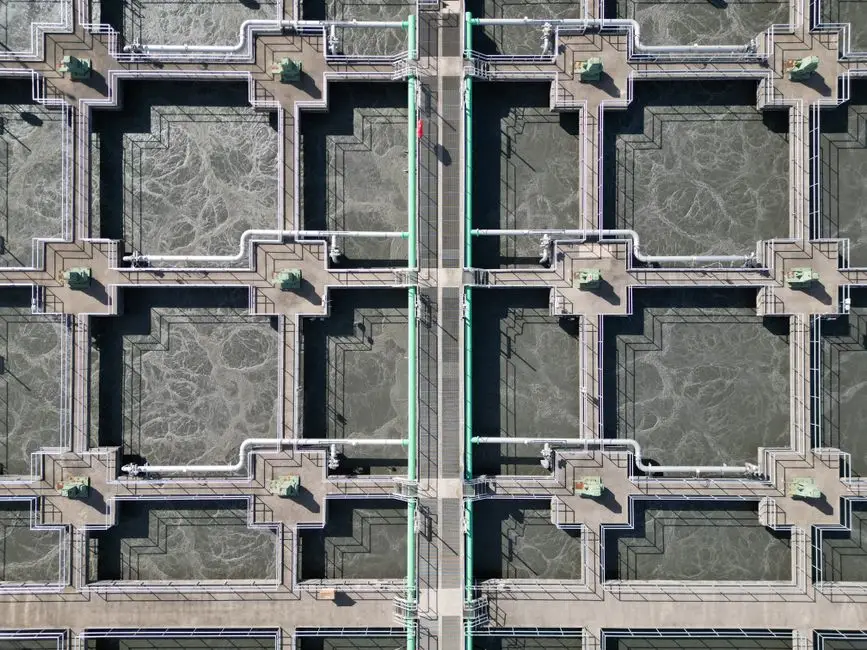
Supplier selection should begin only after the worksheet produces a verified peak flow and contaminant duty. The published equipment ranges below support a market screen; model selection remains subject to site data and an agreed hydraulic reserve.
| Supplier or channel | Published evidence available in 2026 | Procurement action |
|---|---|---|
| Hydromaster | Supplier literature states a 4–300 m³/h DAF range. | Request a model selection against confirmed Qp, contaminant loading, utilities, and local service scope. |
| Fluence | Supplier literature states wastewater-treatment DAF units from 30 m³/h to 130 m³/h. | Request a project-specific proposal and Malaysia installation, commissioning, and service plan. |
| Malaysia-based integrator | Ultraspan publishes Malaysia-market DAF treatment information. | Require evidence of local civil works, electrical work, regulatory liaison, commissioning, and after-sales support. |
Ask every bidder for a pilot or representative-sample study using the actual automotive e-coat rinse treatment wastewater; a hydraulic quotation alone is insufficient. Also request the proposed guarantee tied to the applicable DOE or IWK requirement, an oil-and-grease and COD performance basis, float-sludge generation and handling estimates, utility consumption, PLC and alarm scope, spare parts, and a price in MYR.
Use the German EV plant DAF methodology and Mexico EV plant DAF methodology to check that the worksheet remains consistent, while replacing local production and wastewater inputs for Malaysia. Any chemical-treatment package should be reviewed with the PLC-controlled coagulant and flocculant dosing skid so that dosing control follows measured flow and pilot-confirmed loading.
Frequently Asked Questions
What changes if the Malaysia plant operates three shifts instead of two?
Re-run the worksheet using confirmed production, operating hours, and simultaneous discharge data. A longer operating period can lower the time-weighted flow, but batch dumps can still control the DAF peak. The governing check remains the maximum simultaneous flow and contaminant load, not the shift count alone.
How much does a 30 m³/h DAF system cost for a Malaysia project?
The supplied research provides no supported quotation or installed-cost figure, so a defensible budget cannot be stated. Request itemized quotations in MYR for the DAF skid, saturation equipment, chemical dosing, controls, local ancillaries, freight, import duties, civil works, piping, electrical works, commissioning, performance testing, training, and warranty.
Can an MBR replace DAF for automotive paint-shop wastewater?
Do not make that substitution without a process trial. DAF is intended to remove floating oils, grease, and solids before clarification or biological treatment; an MBR design must demonstrate acceptable behavior for the actual emulsified oil, phosphate, temperature, and contaminant concentrations.
How should suppliers be screened for capacity and compliance risk?
Require a model-specific selection against the confirmed peak duty, a test using actual wastewater, a guarantee tied to the approved DOE or IWK requirement, and a Malaysia-specific installation and service plan. Verify whether local certification is actually required. Use the