
Determine Whether the Expansion Requires a Permit Modification
Vehicle manufacturing falls within Annex I of the Industrial Emissions Directive 2010/75/EU, so the factory operates under one integrated Hungarian industrial permit rather than separate permits for each discharge medium. A change of operator and a production expansion require separate determinations. The first concerns transfer of the existing permit and notification of the county Government Office; the second concerns whether higher wastewater flow, pollutant load, reuse demand, new treatment units, or revised BAT conclusions alter permit conditions. The project team should obtain a written authority position before commissioning an expansion line.
The Hungary wastewater permit requirements for Rivian’s plant describe the existing permit as legally transferable, but require notification of the Megyei Kormányhivatal, an updated baseline report, and reconfirmation of BAT-AEL compliance under the new operator’s name. The local water directorate handles discharge-consent matters, while OKIR receives self-monitoring information. Do not treat these files as interchangeable.
| Decision | Evidence to obtain | Owner | Release condition |
|---|---|---|---|
| Operator change | Permit transfer record, authority notification, updated baseline report and BAT-AEL confirmation | EHS and legal lead | Authority confirmation that permit cover continues |
| Production expansion | Design flow, pollutant loads, treatment capacity, reuse demand and BAT assessment | Process and environmental engineers | Written decision on amendment, notification or existing permit coverage |
| Expansion commissioning | Valid discharge consent, monitoring plan, OKIR setup and accepted performance tests | Project manager | Authority and receiving-WWTP acceptance |
Ask the authority whether increased wastewater flow, added treatment units or changed reuse demand constitutes a material change requiring permit amendment. Keep the permit decision separate from equipment selection: treatment equipment should be specified against approved design flows and receiving-WWTP constraints, not provisional assumptions made before that decision.
Map the Hungarian Compliance Stack
The integrated permit does not replace the Water Framework Directive, the Urban Wastewater Treatment Directive or Hungarian water legislation. Each instrument governs a different question: BAT-AEL compliance applies to the industrial installation, environmental-quality standards apply to the receiving water, and national decrees or consents fix site-specific discharge and sewer conditions.
IED 2010/75/EU provides the integrated permitting framework and BAT-AEL ranges that shape the factory permit. The Water Framework Directive 2000/60/EC and its daughter directives establish environmental-quality standards for receiving waters. Hungary had 579 freshwater surface-water bodies classified as at risk, according to the HydropureWater article published in 2026, which cites the Water Action Hub Hungary country profile dated 2025-11. Receiving-water sensitivity therefore belongs in early process selection.
The recast Urban Wastewater Treatment Directive 91/271/EEC has a formal transposition deadline in 2027 and extends nutrient and micropollutant requirements for WWTPs with constructed capacity above 10,000 p.e., according to the 2024 recast study cited by HydropureWater in 2026. Hungarian Ministerial Decrees set site-specific effluent values, while the Water Management Act provides the national framework for water-use consents and discharge permits.
| Layer | Decision it controls | Project evidence | Verification owner |
|---|---|---|---|
| IED 2010/75/EU | Integrated industrial permit and BAT-AEL conditions | Permit, baseline report, BAT assessment | EHS lead |
| Water Framework Directive 2000/60/EC | Receiving-water quality and watershed sensitivity | Waterbody status and discharge-route assessment | Environmental engineer |
| Recast UWWTD 91/271/EEC | Receiving-WWTP nutrient and micropollutant envelope | WWTP permit and future-compliance statement | Utilities liaison |
| Hungarian decrees and Water Management Act | Exact discharge values and consent conditions | Decree, consent and sewer agreement | Legal and EHS leads |
| REACH and emerging PFAS policy | Substance tracking and future discharge risk | Chemical inventory and regulatory watch record | Procurement and EHS |
REACH requires substance tracking for process chemicals, including substances of concern associated with coatings and pre-treatment baths. The HydropureWater article, published in 2026, states that numeric industrial PFAS discharge limits were not final for 2026; do not use an unconfirmed number as a design basis. Assign each requirement an owner, permit reference, compliance evidence and verification date.
Identify the Receiving-WWTP and Waterbody Constraints
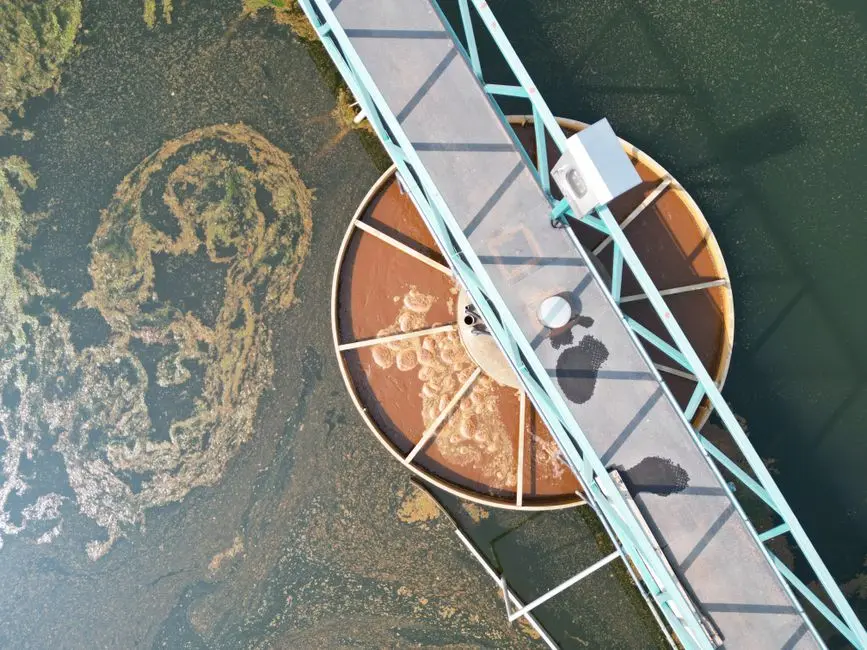
Receiving-WWTP capacity determines the permitted discharge route and the treatment objectives that the factory must meet before discharge. Obtain the WWTP’s current permit, constructed capacity, accepted industrial pollutant list, surcharge rules, flow-allocation commitment and watershed designation before fixing the ETP design flow.
For a receiving WWTP above 100,000 p.e., the 2024 Hungarian standards cited by HydropureWater’s 2026 permit article specify total phosphorus below 1 mg/L and total nitrogen below 10 mg/L in summer and 20 mg/L in winter. For a receiving WWTP in the 10,000–100,000 p.e. band, the cited values are total phosphorus below 2 mg/L and total nitrogen below 15 mg/L in summer and 25 mg/L in winter. These values depend on the receiving plant’s band and cannot be transferred from the factory’s own size.
| Constraint | Condition | Value cited in the 2024 Hungarian standards | Design implication |
|---|---|---|---|
| Total phosphorus | Receiving WWTP above 100,000 p.e. | Below 1 mg/L | Confirm phosphorus removal performance |
| Total nitrogen | Receiving WWTP above 100,000 p.e. | Below 10 mg/L summer; 20 mg/L winter | Assess seasonal biological capacity |
| Total phosphorus | Receiving WWTP 10,000–100,000 p.e. | Below 2 mg/L | Use the correct receiving-WWTP band |
| Total nitrogen | Receiving WWTP 10,000–100,000 p.e. | Below 15 mg/L summer; 25 mg/L winter | Assess seasonal biological capacity |
| Total phosphorus | Lake Balaton watershed | Below 0.7 mg/L | Verify watershed before applying |
The same 2024 source cites a total phosphorus limit below 0.7 mg/L for WWTPs discharging to the Lake Balaton watershed, subject to confirming the site’s watershed. For indirect discharge, the HydropureWater article identifies typical automotive pretreatment targets of oil and grease below 20 mg/L, TSS below 200 mg/L and pH 6.5–9.5. Zinc, nickel and phosphate caps are set by the local sewer operator.
Do not assume that fit-for-reuse treatment satisfies a discharge permit. Compare each process objective with the permit, sewer acceptance criteria and receiving-water standard. The compact answer to onsite versus municipal treatment is therefore conditional: use the municipal WWTP where its permit, allocation and pollutant acceptance support the route; retain onsite treatment for excluded or inhibitory streams and for quality needed for reuse.
Segregate Wastewater Before Treatment
Four process branches should remain separate: stamping and machining wastewater, pre-treatment rinse water, paint-shop overspray wash water and workforce domestic sewage. Keep stormwater outside the process collection system. Combining these streams before characterization can expose a biological system to oil, metals, paint solids or solvents outside its design envelope.
The EV plant wastewater characterization and sewer compliance guide reports stamping and machining streams containing 1–5% oil and recommends DAF as the first treatment step to remove free and emulsified oil to below 20 mg/L. Pre-treatment rinse water is described as acidic at inlet pH 4–6 and containing phosphate, nickel and zinc. Controlled lime or caustic dosing followed by lamella clarification is the proposed route, with a cited phosphate target below 2 mg/L.
Paint-shop wash water carries paint solids and solvents. The same 2026 guide specifies coagulation plus DAF followed by biological polishing sized for the COD load. This is a treatment sequence, not permission to mix paint water with untreated oily or metallic streams. Domestic sewage may be handled separately with MBR; the guide uses roughly 200 L per capita per day for three-shift operations.
| Stream | Characterization in the 2026 guide | Indicative treatment train | Design focus |
|---|---|---|---|
| Stamping and machining | 1–5% oil | DAF, then sludge dewatering | Oil removal below 20 mg/L before polishing |
| Pre-treatment rinse water | pH 4–6; phosphate, nickel and zinc | Controlled dosing, precipitation and lamella clarification | Phosphate target below 2 mg/L |
| Paint-shop wash water | Paint solids, solvents and COD load | Coagulation, DAF and biological polishing | Remove solids and protect biology from residual toxicity |
| Domestic sewage | Workforce wastewater | MBR where separately treated | Approximately 200 L per capita per day for three shifts |
| Stormwater | Runoff rather than process wastewater | Keep out of process treatment | Segregate drainage routes |
Complete campaign-based characterization before final sizing. Sample peak flows, pH, oil and grease, COD, TSS, phosphate, nickel, zinc, solvent content and toxicity across production and washdown cycles. The 2026 EV plant guide identifies batch variability as the reason to avoid sizing from average daily production alone.
Match Each Stream to the Treatment Train

Select equipment from stream chemistry, mass load and variability rather than from peak flow alone. Stamping and machining oil emulsions need an industrial DAF system for oily automotive wastewater at the front end, followed by collection and dewatering of float and sludge. The Hungarian source cited in HydropureWater’s 2026 permit article describes a plate-and-frame press producing a 20–25% dry-solids cake.
Phosphate and metals streams require an automatic chemical dosing system for phosphate and metals precipitation, followed by lamella clarification. Confirm residual phosphate, nickel and zinc against the discharge route rather than relying on removal percentages alone. Keep metal-bearing precipitation sludge segregated from other sludge where waste classification requires it.
For paint-shop water, place coagulation and DAF before biological polishing. Select the biological stage only after demonstrating that the separated stream is sufficiently free of solvents and toxic paint constituents. For domestic sewage and qualifying low-strength reuse flows, the 2026 treatment-technology guide covers MBR packages from 10–2,000 m³/day and describes MBR as biological treatment combined with submerged membrane separation.
| Train | Core equipment | Sizing basis | Procurement evidence required |
|---|---|---|---|
| Oily machining water | DAF and sludge dewatering | Peak flow plus campaign oil load | Emulsion characterization, float handling and cake disposal route |
| Pre-treatment rinse water | Automatic dosing, precipitation and lamella clarification | Peak flow plus phosphate and metals mass load | Residual limits, sludge chemistry and automatic-control scope |
| Paint-shop water | Coagulation, DAF and biological polishing | COD, toxicity and batch washdown schedule | Solvent screening and toxicity-tolerance evidence |
| Domestic sewage or reuse flow | MBR | Per-capita demand for three shifts or peak reuse demand | Feed characterization, membrane configuration and reuse targets |
| RO or zero-liquid-discharge option | RO and, where required, thermal treatment | Peak flow and constituent mass balance | Feed pH, TDS, sulfate, silica, hardness and membrane-compatibility data |
The HydropureWater EV gigafactory guide recommends sizing against peak hourly wastewater flows and line-by-line batch schedules, with a minimum 20% process contingency for future line expansion. It reports 16–24 weeks for MBR and tertiary packages, and 28–36 weeks for thermal zero-liquid-discharge equipment, following the relevant design milestones. Confirm the applicable milestone before placing an order.
Build the Commissioning and Procurement Plan
The expansion should follow a staged release sequence: establish legal continuity; obtain the permit decision; characterize each stream; validate the treatment concept; approve the P&ID and treated-water targets; place long-lead orders; construct; test; and commission. The baseline report, BAT-AEL demonstration, permit-transfer or amendment decision and OKIR reporting setup should be complete before a new line operates under the new operator’s name, according to HydropureWater’s 2026 Hungarian permit analysis.
For variable or inhibitory streams, run a continuous pilot across multiple production campaigns. The HydropureWater EV gigafactory guide gives 8–12 weeks for continuous pilot testing of complex EV battery wastewater. Use that evidence to verify COD loading, biological toxicity tolerance, chemical consumption, dewatering performance and reuse-water quality rather than extrapolating from a clean-water test.
| Phase | Principal deliverable | Accountable owner | Hold point |
|---|---|---|---|
| Regulatory close-out | Permit decision, consent check and OKIR plan | EHS and legal leads | Authority confirmation |
| Characterization | Campaign-based flow and pollutant dataset | Process engineer | Approved design basis |
| Pilot validation | Performance, toxicity and consumption report | Process and commissioning engineers | Treatment concept accepted |
| Procurement | Approved P&ID, technical schedules and delivery commitments | Procurement lead | Long-lead release |
| Construction and tie-in | Installed works, controls and sludge route | Construction manager | Pre-acceptance inspection |
| Acceptance | Permit-condition performance tests and verified data transfer | Commissioning manager | Authority and WWTP acceptance |
Issue long-lead requests only after the P&ID and treated-water targets are approved, while retaining the reported 16–24 week MBR and tertiary-package and 28–36 week thermal-ZLD windows in the master schedule. Define acceptance tests around actual permit and sewer conditions: flow, pH, COD, TSS, nutrients, metals, oil and grease, automatic-control response, data transfer and sludge handling.
Coordinate construction to preserve valid permit cover and maintain operations during tie-ins. WaterWorld’s account of Organica’s South-Pest retrofit reports a 1.5-fold capacity increase with no footprint increase and almost no interruption during construction, illustrating the value of phased integration. The source does not provide a transferable Rivian schedule, so use it as an execution lesson rather than a design assumption.
Frequently Asked Questions
What will the wastewater treatment system cost for the expanded Hungarian EV factory?
The research supports an operating-cost method based on cost per kilolitre, but it does not provide a defensible project price for this plant. Request a separated equipment CAPEX quotation and a total-project-cost model covering civil works, installation, chemicals, energy, membrane replacement, sludge disposal and monitoring. Give suppliers the campaign characterization, peak hourly flows, discharge or reuse targets and pilot results; a quotation based only on average flow will not be comparable.
How long will MBR, tertiary and zero-liquid-discharge equipment take to deliver?
HydropureWater’s 2026 EV gigafactory guide reports 16–24 weeks for skid-mounted MBR units and tertiary filtration packages following finalized P&ID approval. It reports 28–36 weeks for thermal zero-liquid-discharge equipment, covering fabrication, factory testing and delivery after the relevant design milestones. Require the supplier to state its milestone, scope and manufacturing slot in the purchase order.
How should we assess supplier compliance risk for an indirect municipal discharge?
Request the receiving WWTP’s current permit, industrial pollutant list, flow allocation, sewer agreement and applicable Hungarian consent. Check whether indirect-discharge limits require oil and grease below 20 mg/L, TSS below 200 mg/L and pH 6.5–9.5, while obtaining the local zinc, nickel and phosphate caps. Then assess the 2027 UWWTD envelope, including nutrient and micropollutant requirements for WWTPs above 10,000 p.e., without inventing a final PFAS limit.
What technical evidence should a wastewater equipment supplier provide before selection?
Require the wastewater characterization, agreed treatment targets, design P&ID, peak-flow basis, pilot evidence, FAT or SAT scope, control-system integration, sludge-handling route and long-lead manufacturing confirmation. For a MBR versus activated sludge for industrial wastewater decision, compare process suitability against the actual feed, reuse objective and permit conditions rather than accepting a generic flow-only quotation.
Related Equipment
- industrial DAF system for oily automotive wastewater — specifications, capacity range, and technical data