What German Rivian expansion actually means for wastewater planning
A potential Rivian EV manufacturing expansion in Germany should treat wastewater as a factory-design requirement: segregate streams at source, characterize them under production conditions, and size treatment and reuse before equipment is ordered. Body, paint, battery and assembly wastewater differ in COD, solvents, metals, salts and variability, so one universal pretreatment train is unsuitable. German planning must assess WHG, AbwV, AwSV and applicable EU and coating requirements against the selected discharge route. BASENOR’s November 2026 account of Giga Berlin reports 465 million liters recycled over two years, but that closed-loop result is a benchmark, not a performance guarantee for another plant.
Rivian’s German presence must not be mistaken for manufacturing capacity. HydropureWater’s 2026 article states that Rivian had no German manufacturing footprint and identifies more than 300 Amazon Electric Delivery Vans associated with Munich, Berlin and Düsseldorf. Rivian’s service-network account confirms a Düsseldorf service center and says locations in Munich and Berlin were planned. Those fleet and service activities are not industrial production sources. The applicable requirements depend on whether the project is a greenfield factory, an acquired industrial site or a brownfield expansion. The German Rivian plant acquisition wastewater requirements provide the starting point for that distinction.
| Project scenario | Wastewater planning position | First diligence action |
|---|---|---|
| Greenfield manufacturing plant | New operating approvals and an engineered plant-wide water balance are required; treatment infrastructure must support the production ramp. | Confirm production scope, process sources, discharge route and expected capacity before designing a common treatment train. |
| Acquisition of an operating plant | Existing approvals require review for validity following a change of operator; the German guidance states that permits do not automatically transfer. | Obtain the existing permit stack, sewer agreement, process-flow diagrams and historical wastewater data. |
| Brownfield manufacturing expansion | New process loads may exceed or change the character of existing flows, requiring capacity and permit reviews rather than automatic reliance on current treatment. | Model the incremental streams and compare them with installed and permitted hydraulic and pollutant capacity. |
| Service or fleet operation | Not an industrial manufacturing source; it should not be assigned a factory wastewater treatment concept. | Confirm whether any vehicle washing, maintenance drainage or hazardous-material storage creates a regulated discharge. |
Rivian’s Georgia facility provides scale context, not a German design basis. Georgia’s official 2021 announcement records a $5 billion investment, nearly 2,000 acres, approximately 7,500 jobs and planned capacity of up to 400,000 vehicles per year. German wastewater design must instead derive capacity from the selected site’s production lines, batch schedules, water balance and verified influent data. If manufacturing expands, wastewater should be designed with the factory expansion rather than retrofitted after production increases.
Map every wastewater stream before selecting equipment
Source segregation is the first control because incompatible flows can compromise biological treatment, membrane performance and reuse quality. For a Rivian-style plant, the inventory should distinguish body-in-white pretreatment, cathodic e-coat, paint-shop, battery or pack-assembly, final-assembly, roof and yard runoff, and sanitary wastewater. These streams should remain separate through characterization; combining them first would obscure the source of COD, metals, solvents, salts and flow peaks.
HydropureWater’s battery guidance identifies four wastewater challenge families: biological toxicity and extreme COD; lithium, nickel, cobalt and fluoride; high TDS; and suspended solids with moderate COD. It states that NMP-bearing and high-TDS streams can upset biological floc formation when combined. The EV battery wastewater treatment process design therefore recommends isolating streams before hydraulic or chemical mixing. The battery-plant wastewater engineering reference provides a second source for evaluating those treatment interactions.
| Stream family | Potential design concern | Required source-level data | Equipment selection before testing |
|---|---|---|---|
| Body-in-white pretreatment | Suspended solids, oils, cleaners and pH variation. | Peak hourly flow, pH, COD/BOD, oils, metals and batch discharge pattern. | Screening, grit removal, oil-water separation and equalization. |
| Cathodic e-coat | Paint solids, emulsions and metal-bearing loads. | Flow, COD, suspended solids, oil and grease, and Ni, Zn and Pb. | DAF followed by the biological and polishing train selected for the discharge route. |
| Paint shop | Variable overspray, rinse-water chemistry and possible NMP or other solvents. | Solvent identity, COD, peak flows, pH, metals and production-campaign variability. | DAF, controlled equalization, chemical dosing and compatible downstream membranes. |
| Battery or pack assembly | Extreme COD, fluoride, Li, Ni, Co, high TDS and intermittent campaign loads. | COD/BOD, fluoride, metal species, TDS, pH, flow and campaign profile. | Targeted precipitation or other unit operations based on characterization and pilot results. |
| Final assembly | Glycol-bearing waters and lubricant emulsions. | Peak flow, glycol, oil and grease, COD/BOD and pH. | Oil-water separation followed by biological polishing where warranted. |
| Roof and yard runoff | Metals and solids whose composition can vary with rainfall and site activity. | Metals, suspended solids, oil, flow regime and first-flush characteristics. | Keep segregated pending assessment; evaluate dedicated clarification and filtration. |
| Sanitary wastewater | Organic load distinct from production chemistry. | Flow, COD/BOD and peak demand. | Route according to the approved site concept rather than mixing with process streams. |
Source sampling must cover peak hourly flow, pH, COD/BOD, metals, fluoride, TDS, solvents and batch variability before equipment sizing or quotation. BASENOR’s November 2026 definition of process wastewater includes water used in cooling, paint shops, battery-component washing and other manufacturing processes, and distinguishes it from general facility wastewater. Its reported Giga Berlin closed loop concerns process wastewater; it does not establish that every roof, yard or sanitary flow can be recycled without treatment.
Follow the German permit path for the selected discharge route
German approvals form a vertical stack that must be mapped against the proposed discharge route, not treated as one wastewater permit. The supplied framework identifies EU Industrial Emissions Directive requirements where applicable; WHG §8 for direct discharge, §9 for indirect discharge and §10 for rainwater; AbwV requirements for indirect discharge; and AwSV controls for water-hazardous substances including oils, glycols, solvents and electrolyte-related materials.
The state or local Wasserbehörde is the principal permitting authority. Where a municipal sewer route is pursued, the Kanalnetzbetreiber is a separate stakeholder whose discharge conditions must be obtained. Under WHG §9, the associated Indirekteinleitererlaubnis must be resolved before process wastewater reaches the municipal sewer. The permit stack and change-of-control questions are addressed in the German Rivian plant acquisition wastewater requirements.
For an indirect-discharge concept, HydropureWater’s 2026 German guide reports AbwV Annex 40 benchmarks of COD below 1,000 mg/L in the daily mixed sample, Ni, Zn and Pb below 0.5 mg/L each, and AOX below 1 mg/L. These are supplied benchmarks, not substitutes for the current permit or the sewer operator’s conditions, which may be stricter. The sewer agreement should therefore be developed alongside the process design, with each requirement traceable to a sampling point and compliance test.
Coating operations add a parallel approval workstream. HydropureWater’s 2026 guidance identifies BImSchG and 42. BImSchV review for coating operations and the associated VOC-bearing wastewater controls. That review should begin with the production concept because changes to coatings, ovens, capture systems or wastewater generation can alter the air-permit interface and the wastewater treatment specification.
For a brownfield acquisition, the first legal diligence step is to obtain the existing indirect-discharge approval, AwSV notices or approvals, coating authorizations and sewer agreements. HydropureWater’s 2026 guide states that German permits do not automatically transfer following a change of operator. The project team should therefore ask the Wasserbehörde which permits require reissue and which remain valid, rather than assuming continuity.
Build a segregated treatment train and reuse loop
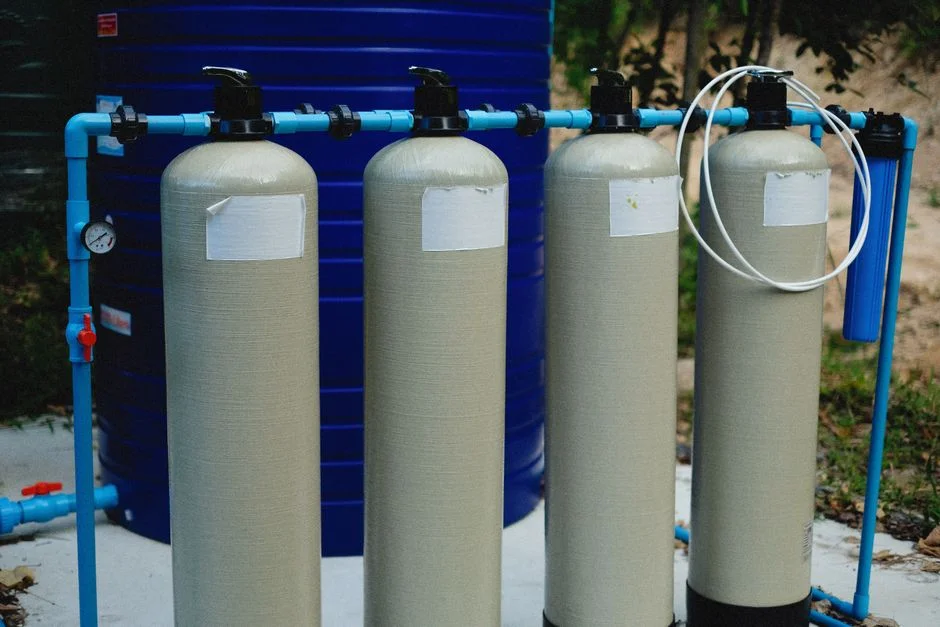
The treatment train should remove contaminants in the order that protects the next process: mechanical screening, oil-water separation, DAF for suitable solids- and oil-bearing streams, equalization with controlled dosing, biological treatment where appropriate, and targeted polishing for the agreed discharge or reuse specification.
HydropureWater’s 2026 German guide identifies rotary screening and grit removal, oil-water separation, DAF for paint and e-coat streams, equalization with automatic dosing, MBR biological polishing, targeted tertiary treatment and sludge dewatering. That sequence is a framework rather than a prescription: each stream still requires characterization and compatibility checks. In particular, paint, e-coat and battery flows should not be assumed to share one biological feed.
A DAF system for automotive pretreatment wastewater is relevant where suspended solids, free or emulsified oil, FOG and colloidal material must be removed before biological or membrane treatment. HydropureWater’s 2026 equipment catalog lists 4–300 m³/h capacity across 13 standard models. This range is a selection boundary, not proof that a particular model handles a given solvent, metal or variable feed.
Where near-reuse-quality effluent and a compact footprint are priorities, an MBR membrane bioreactor for industrial wastewater reuse can combine biological treatment and solids separation. HydropureWater’s 2026 catalog lists 10–2,000 m³/day capacity and effluent below 1 μm filtration. Suitability still depends on the actual biodegradability, toxicity, salinity, solvent profile and pretreatment performance.
| Function | Equipment class | Design input that controls selection | Procurement risk |
|---|---|---|---|
| Remove debris and grit | Rotary screening and grit removal | Flow, solids character and screenings handling. | Incorrect peak-flow assumptions can cause upstream blockage or overflow. |
| Remove free and emulsified oil | Oil-water separator with DAF | Oil, grease, FOG, emulsions, metals and batch variability. | Unqualified performance claims may not address the actual paint or coating chemistry. |
| Stabilize treatment feed | Equalization and automatic chemical dosing | Peak flow, pH, COD/BOD, metals and campaign profile. | Undersized buffering transfers campaign peaks directly to downstream units. |
| Reduce biodegradable load | MBR biological polishing | Biodegradability, toxicity, TDS, target effluent and reuse quality. | Solvent or salt excursions can invalidate biological assumptions. |
| Protect RO or reuse quality | Ultrafiltration | Suspended solids, colloids, particle risk and required flux. | Polymeric UF may be unsuitable for some solvent-bearing feeds. |
| Concentrate high-TDS reject | RO, with downstream treatment where required | TDS, scaling species, recovery target and reuse destination. | Membrane chemistry, antiscalant and cleaning strategy require test evidence. |
| Recover water | Closed-loop reuse, subject to water-balance and quality controls | Process demand, storage, quality specification and production compatibility. | Recycling cannot substitute for discharge compliance where applicable. |
| Dewater separated sludge | Plate-and-frame filter press | Sludge composition, hazardous characteristics and required cake condition. | Equipment selection must address waste classification and handling, not only filtration area. |
HydropureWater’s 2026 catalog lists UF capacities of 2,000–40,000 L/h, 0.03 μm PVDF membranes, automatic backwash and air scour. These specifications do not remove the need to verify solvent compatibility. The RO design for high-TDS industrial wastewater is relevant when the residual stream requires concentration before reuse or further treatment.
Automatic dosing should control pH, coagulation and flocculation within validated envelopes. A plate-and-frame filter press can handle separated sludge; HydropureWater’s 2026 catalog lists filtration areas from 1 m² to 500 m² and manual, hydraulic or automatic operation. The benchmark is BASENOR’s November 2026 report that Giga Berlin recycled 465 million liters over two consecutive years through November 2026. Reuse feasibility at another site still depends on the actual production streams, plant water balance, storage, quality specification and permit conditions.
Size for peak production and verify before commissioning
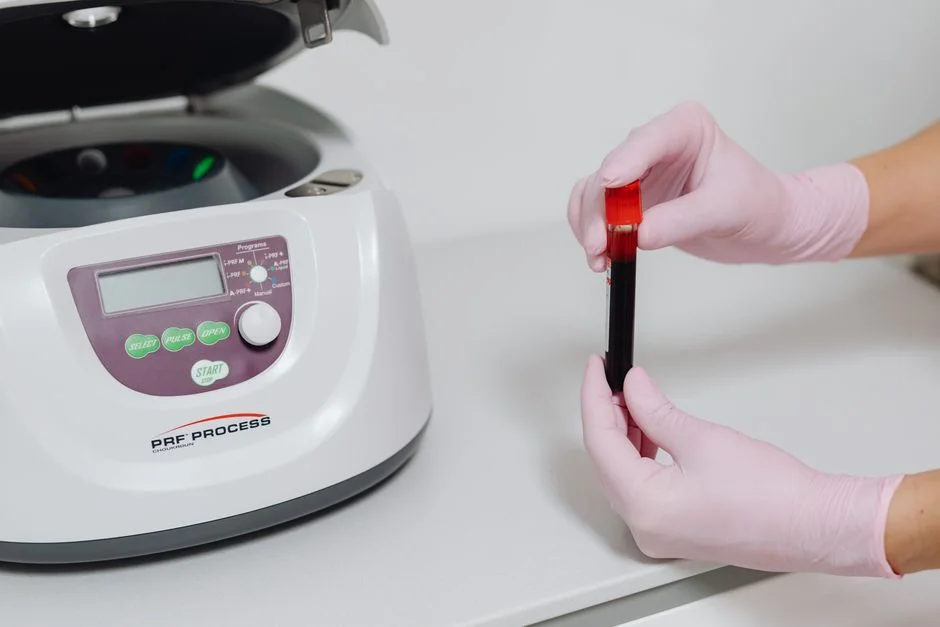
Hydraulic equipment should be sized from line-by-line batch schedules and peak hourly rates, not average daily production. HydropureWater’s 2026 EV battery guidance calls for a minimum 20% process contingency for future battery assembly line expansion. Equalization and campaign-management design must reflect electrode-coating campaigns and cell-formation loads rather than dilute them into an apparently stable daily average.
Complex battery streams also require proof before final equipment selection. HydropureWater’s 2026 guidance states that pilot testing typically requires 8–12 weeks of continuous, steady-state operation across multiple campaign cycles. During that test, biological tolerance, antiscalant performance and chemical consumption can be checked against the actual production pattern. The MBR comparison for chemical wastewater should then reflect the tested feed and target reuse or discharge quality rather than a generic treatment template.
Membrane chemistry and cleaning must follow the actual solvent, salinity and scaling profile. Residual NMP and other organic solvents can attack unsuitable polymeric UF membranes, while high-TDS streams can impose scaling and osmotic constraints on RO. These risks make solvent-resistant alternatives, pretreatment and a defined cleaning regime potential specification requirements.
Schedule should reflect the permit path and commissioning sequence. HydropureWater’s 2026 German guidance gives a permit expectation of 9–18 months for a German indirect-discharge approval and 12–18 months from permit issue to commissioning, subject to authority and project-specific review. A coating permit can run in parallel with wastewater work, while a brownfield site may add validation and reissue steps. These are planning benchmarks from the supplied guidance, not guaranteed authority commitments.
Sequence long-lead procurement around permits and pilot data
Wastewater characterization and conceptual treatment review should precede final equipment specifications and firm quotations. HydropureWater’s 2026 guidance says a reliable project quotation requires peak flows, pH, COD/BOD, metal species, fluoride, TDS and the target discharge or reuse standard. If these inputs are provisional, the bid should identify assumptions, exclusions and validation holds rather than hide uncertainty behind a flow-only price.
Lead-time planning should begin with the items that can invalidate the process design. HydropureWater’s 2026 guidance states that skid-mounted MBR and tertiary packages typically require 16–24 weeks after P&ID approval, while thermal ZLD equipment typically requires 28–36 weeks for fabrication, factory testing and delivery. The EV battery wastewater treatment process design provides the broader procurement context, but actual dates must be confirmed against the approved duty and supplier schedule.
| Procurement stage | Required information | Contract control | Main buyer check |
|---|---|---|---|
| Characterization and pilot | Production campaigns, peak flows, chemistry and reuse target. | Define test envelopes and required performance evidence. | Does the supplier accept the measured influent and campaign variability? |
| Concept selection | Separated streams, mass balance, treatment objectives and sewer route. | Price the selected duty, not a generic treatment capacity. | Which treatment units are provisional and what event fixes the price? |
| Detailed design and P&ID | Approved duty, utilities, controls, containment and German documentation. | Link payment milestones to design approval and agreed performance criteria. | Are peak-load, availability and clean-in-place obligations defined? |
| Equipment manufacture | Frozen process data, membrane chemistry and approved submittals. | Use factory and site acceptance tests. | Are FAT and SAT responsibilities, witnesses and acceptance criteria explicit? |
| Commissioning | Stable feed, trained operators and permit conditions. | Retain payment against demonstrated performance. | Does the guarantee cover the actual discharge or reuse specification? |
Commercial evaluation should include cost per kilolitre, not only capital price. HydropureWater’s 2026 guidance warns that generic flow-only pricing does not represent project cost accurately and recommends modeling chemicals, power, membrane replacement and sludge disposal. Supplier evaluations should request process guarantees, feed-data validation, FAT/SAT scope, membrane replacement assumptions and support for German documentation. A performance claim without a defined feed envelope and acceptance test is not a usable guarantee.
Recommended due-diligence plan for a German Rivian project
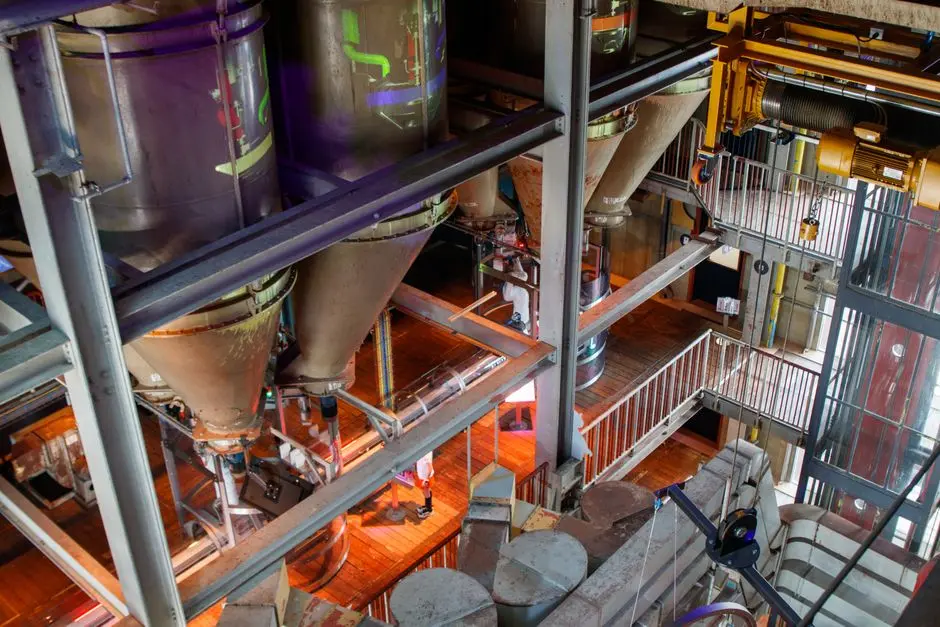
The first 90 days should turn an uncertain expansion concept into a defensible site and permitting basis.
- Classify the scenario: Confirm whether the proposal is greenfield manufacturing, an acquisition or a brownfield expansion. Record site ownership, production scope and whether service operations are involved.
- Collect the site record: Obtain environmental permits, sewer agreements, process-flow diagrams, water-balance drawings, tank inventories, secondary-containment records and historical influent data.
- Sample representative production periods: Cover metals, fluoride, TDS, COD/BOD, solvents, pH, oils, suspended solids and peak flow across normal production and campaign discharges.
- Map the authorities: Identify the applicable Wasserbehörde, sewer operator, coating authorities and fire-water or secondary-containment requirements, then hold a pre-application technical meeting.
- Compare options consistently: Assess a segregated treatment-and-reuse concept and any municipal discharge option against total cost, permit risk, water resilience, energy demand and production-continuity consequences.
- Define evidence for reuse: Use BASENOR’s November 2026 Giga Berlin figure of 465 million liters as a benchmark for what a verified closed loop can demonstrate. Establish site-specific water-balance, quality, monitoring and mass-balance metrics rather than assuming the same outcome.
The German Rivian plant acquisition wastewater requirements can serve as a diligence checklist for the brownfield case, but each scenario still requires its own site evidence and permit confirmation.
Frequently Asked Questions
Is a German Rivian manufacturing expansion confirmed?
No confirmed German manufacturing footprint was identified in HydropureWater’s 2026 review. Rivian’s service-network account confirms a Düsseldorf service center and says Munich and Berlin service locations were planned. A potential factory should therefore be evaluated as a greenfield, acquisition or brownfield scenario until the project scope is documented.
How long should the permit and commissioning pathway take?
Use 9–18 months as the supplied benchmark for a German indirect-discharge permit and 12–18 months from permit issue to commissioning, according to HydropureWater’s 2026 German guidance. A brownfield change of operator and a coating permit can add parallel work. Buyers should ask the Wasserbehörde which approvals require reissue and obtain a project-specific schedule before committing the production ramp.
What cost inputs are needed for an industrial effluent treatment plant quotation?
Request a quotation based on peak flows, pH, COD/BOD, metal species, fluoride, TDS, target discharge or reuse quality and batch variability. Ask the supplier to state which results are provisional, which pilot data are required and which costs are excluded. Compare offers using total cost per kilolitre, including chemicals, power, membrane replacement and sludge disposal; do not compare prices based on nominal flow alone.
How should equipment suppliers be selected?
Select on process guarantees and acceptance evidence, not catalog capacity alone. The technical proposal should define the influent envelope, target effluent or reuse quality, peak-load test, availability, FAT/SAT scope, membrane replacement assumptions and German documentation support. Confirm that the proposed DAF, MBR, UF or RO configuration is compatible with the measured solvents, salts and campaign variability.
Can the Giga Berlin recycling result be used as the reuse target for a Rivian plant?
No. BASENOR reported in November 2026 that Giga Berlin recycled 465 million liters over two consecutive years, but that record concerns its actual process-water system. A new site must establish its own water balance, stream inventory, treatment performance, storage and production-compatibility data. Reuse feasibility also remains subject to the applicable permit and discharge obligations.
Should paint-shop and battery wastewater be combined before treatment?
Not before characterization and compatibility review. HydropureWater’s 2026 battery guidance identifies NMP-bearing and high-TDS streams as possible causes of biological upset when combined. Keep source streams separate through sampling and pilot work, then define the mixing sequence only after their hydraulic and chemical effects are known.
Related Equipment
- DAF system for automotive pretreatment wastewater — specifications, capacity range, and technical data