
Where Rivian Stands in Germany Today — and Why the Plant-Acquisition Question Matters
Rivian has no manufacturing footprint in Germany as of 2026. The brand's only physical presence is the 300+ Amazon Electric Delivery Vans (EDVs) operating out of Munich, Berlin and Düsseldorf, confirmed by Rivian's own communications around the European rollout (source: rivian.com/stories/amazon-announces-rivian-edv-europe, 2025). Those vans are fleet assets, not industrial sites — they generate no production wastewater and they touch no AwSV-regulated storage. So when a corporate development lead asks "what wastewater requirements apply when Rivian acquires a plant in Germany?", the question is forward-looking compliance for a brownfield deal that has not yet closed, and the answer is the same one a Volkswagen, BMW or Tesla project team would prepare: a vertical permit stack, a quantitative process-load model, and a 9–18 month commissioning window that the Wasserbehörde will not compress.
Context matters. Germany's water sector is in a documented modernisation cycle: Sweco's January 2026 framing of the German market — climate resilience, ageing infrastructure, stricter EU requirements — is exactly the regulatory pressure that turns a 2026 acquisition into a multi-year engineering programme (source: swecogroup.com corporate news, 2026-01). For a deal team, this is a working document, not a thought piece. The rest of the article lays out the legal stack top-down, the engineering load model the Wasserbehörde will demand with the Genehmigungsantrag, the treatment train that closes the compliance gap, and a 90-day pre-close checklist that can be pasted into a data room on day one.
The German Permit Stack for an EV Plant Acquisition
An automotive plant acquisition in Germany triggers four overlapping regulatory regimes in sequence, and the deal team must map each one before signing. The EU Industrial Emissions Directive 2010/75/EU applies to vehicle manufacturing sites above the IED capacity thresholds; the 2024 recast (Directive 2024/1785/EU) tightened BAT-AEL enforcement and expanded the scope of the BREF review cycle, so any permit application filed in 2026 must be benchmarked against the revised BAT conclusions for Surface Treatment Using Organic Solvents (STS BREF, 2024 update). The federal Wasserhaushaltsgesetz (WHG) sits underneath, with §8 governing direct discharge, §9 governing indirect discharge (the dominant pathway for a Rivian plant tied to a municipal WWTP), and §10 covering rainwater and yard runoff.
Below the WHG sits the Abwasserverordnung (AbwV), whose Annex 40 sets indirect-discharge thresholds for production wastewater from vehicle manufacturing — cathodic dip coating, paint sludge, lubricant emulsions and phosphating rinse water. Annex 31 covers heat-treatment rinse water where applicable. Hazardous-substance storage is regulated under the AwSV (Verordnung über Anlagen zum Umgang mit wassergefährdenden Stoffen), which mandates 110% secondary containment for electrolyte precursors, glycol coolants, hydraulic oils, paint sludge and cleaning solvents — a tank-farm spec that lands directly on the engineering drawing. The state layer then applies: LAGA M20 governs characterisation of filter cake, paint sludge and oil-water separator skimmings, while the Bundes-Immissionsschutzgesetz triggers 42. BImSchV for VOC-laden wastewater from coating lines, which intersects with the air permit but dictates the wastewater-side VOC capture (condenser + activated carbon).
| Layer | Instrument | Trigger / Threshold | Owner | Typical Lead Time (2026) |
|---|---|---|---|---|
| EU | IED 2010/75/EU + 2024 recast | Vehicle plant above IED capacity thresholds | Land government / EU Commission | 12–24 months (BREF alignment) |
| Federal water | WHG §8 (direct) / §9 (indirect) / §10 (rainwater) | Any discharge to surface water, sewer or ground | Untere/obere Wasserbehörde (Land) | 9–18 months |
| Federal subordinate | AbwV Annex 40 (vehicle production), Annex 31 (heat treatment) | Indirect discharge of process wastewater | Wasserbehörde + Kanalnetzbetreiber | Embedded in WHG timeline |
| Hazardous substances | AwSV (2017, amended 2021) | Storage of water-hazardous fluids above volume thresholds | Untere Wasserbehörde | 8–12 weeks (Anzeige); 4–6 months (Genehmigung) |
| State / Länder | LAGA M20, BImSchG + 42. BImSchV | Sludge characterisation; VOC-bearing coating wastewater | LAGA / Gewerbeaufsicht | Parallel to water permit |
| Circular economy | KrWG §6 (waste hierarchy) | Pre-discharge reuse obligation | Wasserbehörde + Abfallbehörde | Embedded in Genehmigungsantrag |
The KrWG §6 waste-hierarchy bias is the most under-appreciated entry on the stack: it forces reuse-engineering before the discharge permit is issued, not after, which is why the Water Reuse section below is non-optional.
Process Streams You Will Be Asked to Characterise in Due Diligence
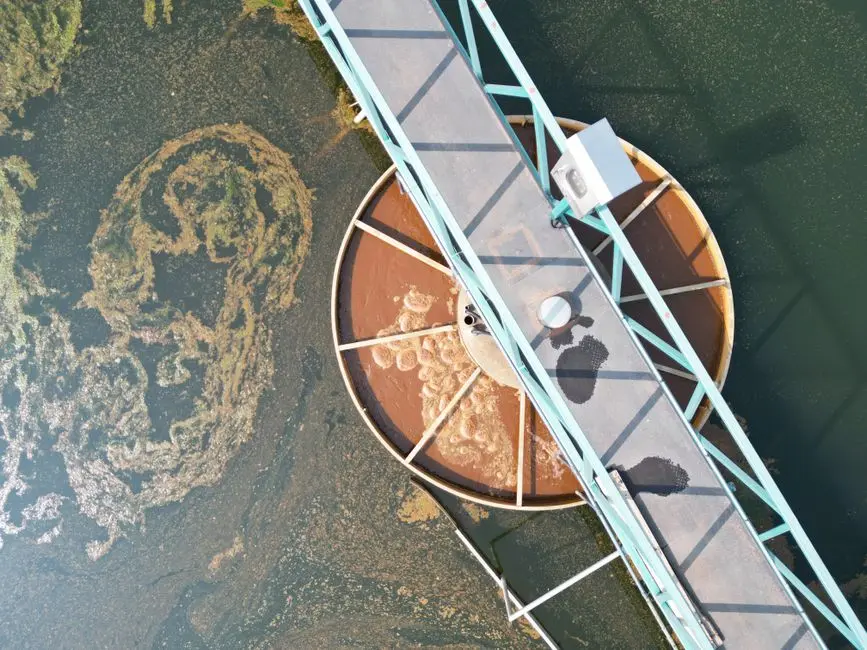
The Wasserbehörde will not start the permit clock until the applicant submits a quantitative load model covering each shop. For a Rivian-style EV plant — body-in-white, cathodic e-coat, paint, final assembly, plus battery-pack assembly for any future R2/R3 production — the streams fall into five families, each with characteristic load ranges that the engineering team must document during the 90-day diligence window. Body-in-white pre-treatment rinse water carries iron fines, oil and grease, and pH swings of 9–12 from alkaline cleaners; flow is typically 8–15 m³/h per line, and treatment is conventionally a DAF pre-treatment for paint and e-coat streams followed by a lamella clarifier. Cathodic e-coat (CED) produces ultrafiltration concentrate with paint resin and heavy metals — Ni, Zn and Pb typically 0.1–0.5 mg/L — and raw COD in the 3,000–10,000 mg/L range, which is why no biological stage downstream can be designed without equalisation.
The paint shop is the most demanding stream. Solvent-bearing rinse water plus overspray delivers a variable load that Wasserbehörden treat as a separate sub-permit under 42. BImSchV; conventional treatment pairs DAF with a biological MBR to meet AbwV 40 indirect-discharge thresholds for COD (typically <1,000 mg/L on the daily mixed sample) and heavy metals. Final assembly is the cleanest stream but not benign: glycol-bearing coolant from leak-test baths, wheel-rinse wash water and assembly lubricant emulsions route through an oil/water separator and biological polishing. Roof and yard runoff from the IED zone must be treated for zinc, copper and particulate under TRwS 779 / AwSV; a lamella clarifier for metal-bearing runoff plus active carbon is the standard closure, and the BAT-AEL for surface treatment now expects this stream to be segregated rather than co-mingled with process wastewater.
| Stream | Flow (m³/h, typical line) | COD (mg/L) | Heavy metals / organics | pH range | Pre-treatment unit |
|---|---|---|---|---|---|
| Body-in-white pre-treatment | 8–15 | 800–2,500 | Fe 5–20 mg/L; oil/grease 200–600 mg/L | 9–12 (alkaline cleaner) | DAF + lamella |
| Cathodic e-coat (CED) | 3–8 | 3,000–10,000 | Ni, Zn, Pb 0.1–0.5 mg/L; paint resin | 5.5–6.5 | UF + DAF + equalisation |
| Paint shop (overspray + rinse) | 5–12 | 2,000–8,000 | VOC; pigments; co-solvents | 6–8 | DAF + MBR biological polishing |
| Final assembly / leak test | 2–6 | 300–1,200 | Glycol 50–200 mg/L; trace oils | 6.5–8.5 | O/W separator + bio polish |
| Roof & yard runoff (IED zone) | 10–25 (storm) | 50–200 | Zn, Cu from wash-off; TSS | 6–9 | Lamella clarifier + active carbon |
These ranges are not a single-source citation; they are standard engineering baselines for European automotive pretreatment lines as documented across UBA and Länder practice, and the Wasserbehörde will expect the deal team to confirm site-specific data via the LAGA M20 sampling round described in the checklist section.
Building the Treatment Train That Satisfies the Wasserbehörde
The treatment train is a five-step sequence designed so each stage protects the next, and so the design review can clear one unit operation at a time against the relevant AbwV threshold. Step 1 is a rotary bar screen plus grit removal at headworks — rags, plastics and coarse debris are removed before they reach the biological stage, and a GX-series rotary screen is the standard. Step 2 is oil/water separation: an API or CPI separator for free oil, followed by DAF pre-treatment for paint and e-coat streams to knock down FOG, suspended solids and emulsified oil. AbwV Annex 40 effectively requires this step before any biological stage can be credited with load reduction, so the design review stalls without it.
Step 3 is equalisation and neutralisation: a buffer tank with PLC-controlled chemical dosing to stabilise pH, COD and heavy-metal load before the biological stage. Step 4 is the MBR biological polishing step, using either a DF-series flat-sheet or submerged hollow-fibre configuration to drive COD and BOD below the AbwV 40 indirect-discharge cap. Step 5 is targeted polishing: RO for water-reuse polishing, a ClO2 generator or UV steriliser depending on whether the loop discharges to a recreation pond or process-water tank, and a filter-press dewatering for paint sludge to bring the LAGA M20 cake below the disposal threshold.
| Step | Unit operation | Function | Compliance driver |
|---|---|---|---|
| 1 | Rotary bar screen + grit chamber | Solids removal, protection of downstream units | AbwV general; mechanical pre-treatment |
| 2 | API/CPI oil-water separator + DAF | Free and emulsified FOG, TSS, heavy-metal co-precipitate | AbwV Annex 40; §9 Indirekteinleitererlaubnis |
| 3 | Equalisation tank + automatic dosing | pH, COD and load smoothing | Stable feed for biological stage |
| 4 | MBR (DF flat-sheet or HF) | COD/BOD reduction to indirect-discharge cap | AbwV Annex 40 thresholds |
| 5 | RO polish + ClO2/UV + filter press | Reuse quality, disinfection, sludge dewatering | KrWG §6 reuse; LAGA M20 cake |
The dosing, MBR and RO stages are not optional. The Wasserbehörde will not accept a direct discharge design from a new EV plant in 2026, and any permit application that skips the equalisation/biological chain will be returned as incomplete.
Water Reuse, Cost, and the 2026 ROI Picture
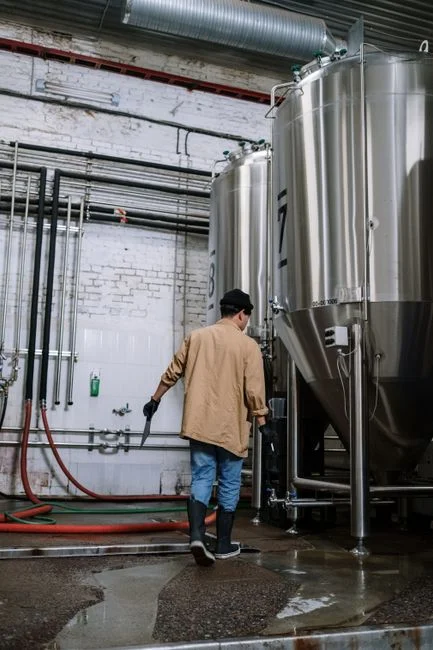
Compliance is the floor, not the ceiling, and the Kreislaufwirtschaftsgesetz (KrWG) §6 waste-hierarchy bias pushes regulators to expect 35–55% reuse in new automotive permits by 2026 (Länder practice, BAT-AEL supporting document 2024). For a 20–50 m³/h train, installed CAPEX in Germany typically lands between €1.2 million and €3.5 million depending on stream segregation, BAT-AEL margin, and the share of stainless-steel containment required for electrolyte storage under AwSV. OPEX is dominated by chemical dosing and membrane replacement, with the former running 8–14% of CAPEX annually and the latter on a 5–7 year cycle for MBR modules and 3–5 years for RO membranes.
The recurring cost that makes reuse financially rational is the Abwasserabgabe, the federal sewage tax: €35.79 per kilogram of COD load discharged above the 20 mg/L threshold set by the StandAV (Stand der Abwassertechnik). At 40 m³/h and a 90% removal baseline, the marginal COD kg above 20 mg/L is small — but at 70–80% removal it climbs fast, and at 35–55% reuse the avoided effluent charge typically recovers CAPEX in 4–7 years for a 40 m³/h train. The same cross-border compliance pattern shows up in the Roche Texas acquisition guide and the Novartis Arizona acquisition guide — water-loop closure is the line item that converts a permit condition into a board-level investment case.
90-Day Pre-Closing Due-Diligence Checklist
Week 1–2: Pull the existing Indirekteinleitererlaubnis under WHG §9 and the AwSV-Anzeige or AwSV-Genehmigung from the Länder Wasserbehörde; verify validity at change of control, because German permits do not auto-transfer to a new operator. Week 3–4: Commission a LAGA M20 sampling round on existing sludge and soil — this is the most common deal-breaker for brownfield auto sites, and a single sample above Z2 classification triggers a remediation budget that can re-price the deal. Week 5–8: Model the new Rivian process loads against the existing hydraulic capacity of the municipal WWTP and the on-site pre-treatment, using the stream ranges in Section 3 as the starting point; commission a sounding-ball flow test on the sewer connection. Week 9–12: Meet the zuständige Wasserbehörde on a no-names basis to pressure-test the timeline — German permit lead times are typically 9–18 months and the BImSchG / 42. BImSchV coordination adds another 3–6 months on coating lines, so the commissioning window in any deal model should not assume a sub-12-month path.
Cross-link the deal team's hotel-occupancy and visitor projections against the local German MBR sizing benchmarks if the site includes a workforce accommodation block, and reference the Indirekteinleitererlaubnis re-issuance pattern from the US acquisition guides to set board expectations on permit timing.
Frequently Asked Questions
Which German permit does a Rivian-owned automotive plant need first?
Under WHG §9, an Indirekteinleitererlaubnis is required before any process wastewater reaches the municipal sewer, and it must be in hand before commissioning (Wasserbehörde lead time 9–18 months). For a body-in-white and paint line, the BImSchG / 42. BImSchV coating permit is the parallel critical path, typically 12–18 months. The first engineering action is a LAGA M20 sampling round on existing sludge.
What does AbwV Annex 40 actually require for indirect discharge of paint-shop wastewater?
Under AbwV Annex 40, indirect discharge limits for vehicle-production wastewater typically cap COD <1,000 mg/L on the daily mixed sample, with heavy metals (Ni, Zn, Pb) <0.5 mg/L each and AOX <1 mg/L. To comply, route paint-shop wastewater through DAF + MBR with equalisation upstream, and confirm local Kanalnetzbetreiber thresholds (often stricter than the federal Annex 40 minima).
How does AwSV affect battery and electrolyte storage at a future EV plant?
Under AwSV, water-hazardous fluids — electrolyte precursors, glycol coolants, hydraulic oils, paint sludge — require 110% secondary containment of the largest vessel and Anzeige or Genehmigung depending on volume (typically 8–12 weeks vs 4–6 months). To comply, the tank farm must be sized with a documented Löschwasserrückhaltung, and the fire-water retention volume lands on the same engineering drawing as the process wastewater pre-treatment.
What is the realistic German commissioning window for a brownfield EV plant in 2026?
Under current Wasserbehörde practice, the Indirekteinleitererlaubnis takes 9–18 months, the BImSchG coating permit 12–18 months, and AwSV approvals 8–24 weeks in parallel. A realistic 2026 commissioning window is 12–18 months from permit issue, not from deal close — sequence the engineering design review so unit operations clear the Wasserbehörde in the same order as the AbwV treatment chain in Section 4.
Related Equipment
- PLC-controlled pH and coagulant dosing — specifications, capacity range, and technical data