What an AOP System Removes from High-Color Wastewater
An AOP system for high color wastewater is usually a polishing stage after equalization, coagulation/DAF, and biological treatment, not a substitute for them. It generates reactive oxidants that attack chromophores and refractory organics. HydropureWater’s 2026 paint-industry guide reports reduction of 200–800 Pt-Co to below 50 Pt-Co, with typical color reductions of 70–95% after upstream biological treatment. However, color response does not prove COD mineralization, and transformation products can persist. Selection depends on dissolved versus particulate color, UV transmittance, pH, alkalinity, sludge constraints, and the discharge or reuse outcome.
Advanced oxidation processes generate hydroxyl radicals (OH·) or sulfate radicals (SO4·−) in quantities intended to remove refractory organic matter, traceable organic contaminants, or certain inorganic pollutants, or to increase biodegradability before biological treatment (Current Pollution Reports, 2015).
The hydroxyl radical has an oxidation potential of approximately 2.8 V and attacks C–C, C–H, C=C, and aromatic bonds (HydropureWater, 2026). That reaction can destroy the conjugated structures responsible for visible color, but oxidizing a chromophore does not automatically convert the parent compound completely to carbon dioxide, water, and inorganic salts. Partial oxidation can instead produce lower-chain organic acids, aldehydes, and short carboxylates (HydropureWater, 2026).
That distinction matters analytically. A July 2026 non-target screening study of an industrial wastewater plant detected statistically significant increases, decreases, and persistent signals after AOP; a subset of AOP-derived features remained in the final effluent. Mixed-mode chromatography was particularly sensitive to polar transformation products (Analytical and Bioanalytical Chemistry, 2026-07-27). Routine COD and Pt-Co color measurements can therefore miss chemical features that require compound-specific or non-target follow-up.
Source-based color is not necessarily dissolved dye. Iron precipitates, pigment particles, and other suspended solids may need coagulation, DAF, or filtration before oxidation. An industrial DAF pretreatment system can remove suspended and colloidal material, while an MBR biological pretreatment unit can remove biodegradable organics before AOP polishing.
Where the AOP Stage Belongs in the Treatment Train
A defensible treatment train normally places AOP after the bulk contaminant load has been removed: equalization and pH adjustment, coagulation and DAF, biological treatment, AOP polishing, and final filtration before discharge or reuse (HydropureWater, 2026).
DAF handles suspended solids, oil and grease, and colloidal material before biological and oxidation stages. Activated sludge or an MBR then removes biodegradable organics. This sequence matters because oxidizing raw industrial wastewater exposes the AOP to a much larger oxidant demand than treating biologically stabilized effluent.
The supplied paint-industry example is application-specific, not a universal performance claim. HydropureWater states that upstream biology commonly removes 80–95% of biodegradable COD and that placing AOP before biology can multiply oxidant consumption by 5–10 compared with dosing after biology (HydropureWater, 2026). The reported paint-effluent color range of 200–800 Pt-Co to below 50 Pt-Co and COD reduction of 50–80% likewise describe that application and require confirmation on the buyer’s stream.
- Equalize batch flows and adjust pH within the selected process window.
- Remove suspended solids, oil, grease, colloids, and precipitated material by coagulation and DAF.
- Remove biodegradable organics through activated sludge or MBR treatment.
- Oxidize the remaining refractory fraction and colored chromophores.
- Apply biological polishing where intermediate products remain biodegradable.
- Filter before discharge or reuse.
Before placing the AOP, request TSS, COD, color, pH, alkalinity, UV transmittance, flow, temperature, and compound-specific data. Where alkalinity is material to radical chemistry or downstream biological protection is required, request those acceptance conditions in writing.
| Process position | Primary function | Data needed before AOP selection |
|---|---|---|
| Equalization and pH adjustment | Stabilizes flow, composition, and dose conditions | Flow envelope, pH, temperature, alkalinity |
| Coagulation and DAF | Removes suspended solids, oil, grease, colloids, and precipitates | TSS, oil and grease, turbidity, particle-size distribution |
| Activated sludge or MBR | Removes biodegradable COD | COD, BOD, toxicity, biodegradability, sludge characteristics |
| AOP polishing | Oxidizes refractory organics and colored chromophores | Pt-Co color, residual COD, UV transmittance, radical-scavenging constituents |
| Biological polishing and filtration | Removes residual biodegradable intermediates and solids | Effluent COD, toxicity, residual oxidant, filtration requirements |
Compare Ozone, UV/H₂O₂, Fenton, and Ozone-UV
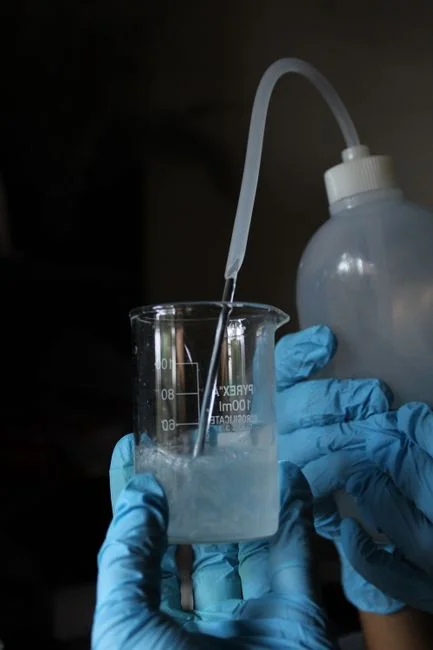
Fenton, ozone, UV/H₂O₂, and ozone-UV produce different combinations of direct oxidation, radical oxidation, coagulation, equipment demand, and residual waste, so the correct choice follows from the water chemistry and operating constraints.
Fenton uses ferrous iron and hydrogen peroxide: Fe²⁺ + H₂O₂ → Fe³⁺ + ·OH + OH⁻. HydropureWater lists strong color stripping and iron coagulation as advantages, but the acidic pH 2.5–4 operating window and iron hydroxide sludge generation as disadvantages (HydropureWater, 2026).
Ozone decomposes in water and can generate hydroxyl radicals. Direct ozone attack is particularly relevant to conjugated pigment chromophores. HydropureWater lists ozone as the lowest-sludge industrial AOP option, with power for oxygen generation and ozone production as its operating-cost driver (HydropureWater, 2026).
UV/H₂O₂ uses photolysis below 254 nm to generate two hydroxyl radicals per absorbed photon. Applicability depends on UV transmittance and the potential for radical scavenging. Ozone-UV combines ozone chemistry with photolysis; the supplied guide presents it as the option with the highest reported COD-removal performance and the widest operating envelope for variable feed, but also the greatest equipment requirement (HydropureWater, 2026).
| Technology | Supplied oxidant or energy basis | Selection advantage | Principal constraint |
|---|---|---|---|
| Fenton | H₂O₂ 1–3 g per g residual COD; H₂O₂:Fe²⁺ ratio 5–10:1 | Color stripping and iron coagulation | Acidic operation and iron hydroxide sludge |
| Ozone | O₃ 0.5–3 g per g COD | Direct chromophore oxidation and low sludge | Power demand and ozone handling |
| UV/H₂O₂ | H₂O₂ 0.5–3 g per g COD; UV 10–40 Wh/m³ | Radical oxidation without iron sludge | UV transmittance and peroxide consumption |
| Ozone-UV | O₃ 0.5–3 g per g COD; UV 5–20 Wh/m³ | Reported COD performance and wider feed envelope | Highest equipment requirement and combined operating burden |
These are HydropureWater’s 2026 paint-industry comparison values, not general guarantees for textile, dye, paper, food, or process effluents.
The UV/H₂O₂ evidence also cautions against a color-only specification. Laboratory work on municipal reverse-osmosis concentrate found that color and A254 reductions were significantly greater than DOC and COD reductions (IWA Publishing, 2013). A buyer should therefore require separate color, COD, and biodegradability criteria even if the feed matrix has a different UV transmittance and oxidant demand.
Equipment evaluation can begin with an ozone generator package for ozone trials, a UV reactor package for UV/H₂O₂ work, and an automatic chemical dosing system for controlled reagent addition.
Pilot Testing and System Sizing for Variable Color Loads
System sizing should convert the site’s influent envelope and KPI list into oxidant dose, reactor residence time, equipment capacity, and downstream treatment requirements.
Begin with a written envelope covering flow, Pt-Co color, COD, pH, alkalinity, TSS, UV transmittance, temperature, residual oxidant, and the required discharge or reuse outcome. Identify whether color comes from dissolved dyes, pigment particles, iron, or mixed chemistry. Then establish acceptance criteria for COD reduction, color reduction, outlet residual oxidant, and biodegradability.
- Characterize the raw and biologically treated streams across normal production and representative product changes.
- Run the relevant bench or pilot matrix at site pH and temperature.
- Measure COD, color, residual oxidant, and biodegradability over time.
- Select the operating point that meets all KPIs with margin, rather than selecting on color alone.
- Scale flow, oxidant storage, reactor volume, power demand, and downstream protection from the pilot response.
For Fenton, reproduce HydropureWater’s pilot matrix: H₂O₂:Fe²⁺ molar ratios of 3:1, 5:1, 10:1, and 15:1 at site pH and temperature, with COD and color measurements at 30, 60, and 120 minutes (HydropureWater, 2026). For ozone, the supplied bench-scale range is 1–5 g O₃/g COD, with inlet pH varied and off-gas ozone measured to determine transfer efficiency (HydropureWater, 2026).
For UV/H₂O₂, use a collimated-beam test to establish required fluence and peroxide dose while checking for radical scavenging. HydropureWater recommends a minimum 4–6 week pilot to cover resin and product-change variability (HydropureWater, 2026). A pretreatment screen can protect the pilot and full-scale equipment where batch debris is present; a mechanical bar screen is one option to evaluate.
| Technology | Pilot matrix | Primary measurements | Sizing output |
|---|---|---|---|
| Fenton | H₂O₂:Fe²⁺ of 3:1, 5:1, 10:1, and 15:1; measurements at 30, 60, and 120 minutes | COD, color, pH, peroxide residual, iron sludge | Reagent ratio, reactor residence time, sludge-handling rate |
| Ozone | 1–5 g O₃/g COD with variable inlet pH | COD, color, dissolved ozone, off-gas ozone | Ozone feed rate, transfer efficiency, contact volume, power demand |
| UV/H₂O₂ | Collimated-beam fluence testing with multiple peroxide doses | UV transmittance, COD, color, peroxide residual, biodegradability | UV fluence, reactor configuration, peroxide demand, lamp system |
The supplied guide expects AOP-feed TSS typically below 50 mg/L. This is an application-specific design input from the 2026 paint-industry guide, not a universal threshold; verify it for the actual stream (HydropureWater, 2026).
Control, Safety, Sludge, and Lifecycle Costs
Residual-oxidant control is the common protection point across AOP technologies because it limits chemical waste and prevents oxidation of downstream biology or filters.
HydropureWater lists Fenton ORP at 300–400 mV, dissolved ozone at 0.1–0.5 mg/L, and UV/H₂O₂ residual peroxide at 5–20 mg/L with a 254 nm UV-intensity sensor (HydropureWater, 2026). The applicable setpoint should come from the pilot rather than be accepted as a universal control value. PLC interlocks should cover low flow, high temperature, and oxidant overdose.
Fenton creates a distinct sludge stream. HydropureWater reports 0.3–0.6 kg dry solids per kg H₂O₂ dosed and identifies 25–35% dry cake as the reference condition for sizing sludge dewatering (HydropureWater, 2026). A plate-and-frame filter press can be evaluated for that application, subject to site-specific cake tests and handling requirements.
Ozone operating exposure includes 8–12 kWh per kg O₃, while UV lamp replacement is listed at 8,000–12,000 hours (HydropureWater, 2026). These are operating references, not a total lifecycle cost. A comparison should also include chemical demand, power, lamp replacement, downtime, sludge removal, sensors, maintenance, and downstream biological polishing.
| Control or lifecycle item | Supplied reference | Engineering action |
|---|---|---|
| Fenton ORP | 300–400 mV | Validate against pilot COD, color, and peroxide response |
| Dissolved ozone | 0.1–0.5 mg/L | Confirm with dissolved and off-gas measurements |
| UV/H₂O₂ peroxide residual | 5–20 mg/L | Control with residual analyzer and 254 nm intensity signal |
| Fenton dry-solids yield | 0.3–0.6 kg per kg H₂O₂ | Provide sludge storage, dewatering, transport, and disposal capacity |
| Ozone electricity | 8–12 kWh per kg O₃ | Use measured O₃ output and site power tariff |
| UV lamp life | 8,000–12,000 hours | Price lamp replacement and output monitoring |
Material selection also belongs in the RFQ. HydropureWater identifies 316L or rubber-lined carbon steel for Fenton under its stated chloride context, PVDF/PTFE-lined stainless steel for high-ozone service, and 316L UV housings with quartz sleeves (HydropureWater, 2026). Compatible valves, instrumentation, and seals should be specified for the oxidant service; available treatment valves and filter media should be reviewed against that compatibility matrix.
Build a Supplier Request and Acceptance Checklist
The RFQ should require demonstrated performance, operating control, downstream protection, and commercial transparency rather than accept generic color-removal claims.
- Provide the site influent envelope, color source, downstream process, permit, and reuse specification.
- Submit pilot data covering representative product changes and the full operating envelope.
- State target COD reduction, color reduction in Pt-Co, and outlet residual oxidant.
- Disclose oxidant or power consumption per m³ and expected Fenton sludge production where relevant.
- Provide the process flow, material specifications, control philosophy, safety interlocks, startup procedure, and downstream biological-polishing recommendation.
- Include compound-specific or non-target follow-up where the color source or transformation products are unknown.
The July 2026 study supports that last requirement: a subset of AOP-derived features persisted in final effluent even though biological treatment removed most components (Analytical and Bioanalytical Chemistry, 2026-07-27). The 2026 paint-industry ranges should be identified as application-specific and not presented as universal guarantees.
| RFQ item | Bidder response required | Acceptance basis |
|---|---|---|
| Pilot basis | Representative-feed results and tested operating envelope | Client influent envelope and current permit or reuse specification |
| Performance | COD reduction, Pt-Co color reduction, residual oxidant | Client-defined KPIs demonstrated under representative variability |
| Consumables | Oxidant, electricity, lamp, and sludge quantities per m³ | Measured pilot consumption scaled to verified flow and COD |
| Equipment and controls | Process flow, materials, sensors, PLC interlocks, and startup procedure | Reviewed against oxidant compatibility and downstream protection |
| Downstream treatment | Biological-polishing and filtration recommendation | Current discharge or reuse criteria and measured biodegradability |
Frequently Asked Questions
What does an AOP system for high color wastewater cost?
No universal price can be derived from the supplied evidence because cost depends on flow, residual COD, color, oxidant demand, water chemistry, and sludge handling. The closest operating references are ozone electricity at 8–12 kWh per kg O₃ and Fenton dry-solids yield at 0.3–0.6 kg per kg H₂O₂ dosed, both reported by HydropureWater in 2026. Request itemized capital cost, chemical and power consumption per m³, maintenance, lamp replacement, and sludge-disposal cost. Also request a binding pilot-based performance and consumables guarantee.
How should the system be sized?
Do not size from color alone. Require the supplier to use site-specific pilot results and the variant-specific dosing references: Fenton H₂O₂ at 1–3 g per g residual COD, ozone at 0.5–3 g per g COD, UV/H₂O₂ peroxide at 0.5–3 g per g COD with UV at 10–40 Wh/m³, and ozone-UV ozone at 0.5–3 g per g COD with UV at 5–20 Wh/m³ (HydropureWater, 2026). Verify that the selected reactor can handle the written flow, pH, alkalinity, UV transmittance, and residual-COD envelope.
Which supplier qualifications matter most?
Require the bidder to state a guaranteed outlet residual-oxidant value, Pt-Co color target, COD target, consumables per m³, pilot duration, and downstream-treatment requirements. Also require proposed materials, sensor types, PLC interlocks, startup procedure, and commissioning tests. These checks distinguish a deployable treatment train from an equipment quotation based only on best-case color removal.
Does meeting the color limit also satisfy the discharge requirement?
Not necessarily. A Pt-Co color target does not establish COD removal, toxicity reduction, biodegradability, or transformation-product control. The July 2026 non-target screening study detected persistent AOP-derived features in final effluent (Analytical and Bioanalytical Chemistry, 2026-07-27). Final acceptance should therefore reference the client’s current permit or reuse specification, with COD, color, residual oxidant, and appropriate chemical or non-target follow-up selected for the actual contaminants.
Related Equipment
- industrial DAF pretreatment system — specifications, capacity range, and technical data