Why factory wastewater treatment in Phnom Penh is a 2026 priority
In 2026, manufacturers in Phnom Penh generally treat high-COD trade wastewater at the factory before discharge or sewer connection. A practical sequence is characterization, equalization and screening, oil and suspended-solids removal, biological treatment for biodegradable COD, secondary clarification, filtration and disinfection where required, followed by sludge dewatering. Cambodia’s first wastewater law, adopted in December 2024, and inspections that found nearly 30 factories discharging 1.37 million cubic metres of untreated wastewater in the first half of 2025 make pretreatment and traceable compliance increasingly important. Final design depends on measured COD, flow, pH, nutrients, toxicity, discharge limits and the receiving system; city treatment infrastructure cannot be assumed to accept industrial effluent.
Mekong Eye reported on 2025-08-11 that Cambodian Ministry of Environment inspections found nearly 30 factories illegally discharging 1.37 million cubic metres of untreated wastewater during the first half of 2025. The same report said Cambodia ranked 148th globally in the 2024 Environmental Performance Index and received a zero score for wastewater treated to at least a primary standard. These facts establish an enforcement and infrastructure problem, but they do not establish a universal factory COD limit.
Municipal wastewater is predominantly domestic and does not represent the full treatment demand created by trade effluent. Factory streams may contain process chemicals, fats, oil and grease, dyes, suspended solids, nutrients or toxic compounds. Their removal mechanisms differ, so one package cannot safely be specified from flow and COD alone. Cambodia’s decentralized wastewater standards update should be checked against the factory’s actual permit and receiving authority rather than treated as a substitute for site data.
| Evidence | What it means for a factory | Decision not supported by the evidence |
|---|---|---|
| Nearly 30 factories and 1.37 million cubic metres of untreated wastewater reported in the first half of 2025 by Mekong Eye, 2025-08-11 | Treatment, monitoring and discharge records require formal review. | A universal COD, BOD or suspended-solids discharge limit. |
| Cambodia ranked 148th in the 2024 Environmental Performance Index and scored zero for wastewater treated to at least a primary standard, as reported by Mekong Eye, 2025-08-11 | Untreated or inadequately treated discharge remains a significant environmental risk. | Assumption that city infrastructure provides adequate industrial pretreatment. |
| First Law on Wastewater Systems adopted in December 2024, as reported by Mekong Eye, 2025-08-11 | Factories need a compliance owner and traceable operating records. | Automatic authorization to discharge industrial effluent into a municipal sewer. |
Separate factory pretreatment from city wastewater infrastructure
The PCSWMM study found that approximately 10% of Phnom Penh effluent flowed directly into the Mekong River without treatment, while approximately 90% entered naturally occurring wetlands. Public infrastructure therefore does not remove the factory’s obligation to control industrial contaminants before they enter a shared system.
The GIZ sector brief stated that Boeung Choeung Ek received 80% of the city’s sewage together with untreated effluent from 3,000 small and large-scale industrial enterprises. That evidence illustrates why industrial wastewater pretreatment cannot be treated as an optional concession: oils, solids, dyes, cleaning chemicals and toxic compounds may interfere with downstream biological treatment or affect receiving waters.
City-scale performance does not determine a factory process. The PCSWMM study modeled the Boeng Cheung Ek wetland system and found that infilling the largest wetland by up to 22% could negatively affect treatment, although the system would continue functioning. It also characterized activated sludge as costly and energy intensive in the modeled Phnom Penh context. Neither result identifies the correct treatment for one factory; they support site-specific evaluation of biological, wetland-based and packaged alternatives.
Mekong Eye reported on 2025-08-11 that Cambodia set a national target to treat 50% of wastewater by 2030. That target is a city-scale policy objective, not a discharge authorization for trade effluent. Factory managers should establish whether discharge is to a sewer, receiving water, holding system or reuse point, then obtain the applicable permit conditions from the responsible authority.
| Infrastructure evidence | Source and date | Factory-level implication |
|---|---|---|
| Approximately 10% of city effluent discharged directly to the Mekong; approximately 90% entered wetlands | PCSWMM study of Phnom Penh | Do not equate access to the sewer with a compliant treatment route. |
| Boeung Choeung Ek received 80% of city sewage plus untreated effluent from 3,000 industrial enterprises | GIZ, Water supply and wastewater treatment sector brief | Industrial contaminants need source control and pretreatment. |
| Wetland infilling of up to 22% could negatively affect treatment, while the system would continue functioning | PCSWMM study of Phnom Penh | Shared-system performance can change; maintain buffer and compliance capacity. |
| National target of 50% wastewater treatment by 2030 | Mekong Eye, 2025-08-11 | National progress does not determine a factory’s permit or pretreatment duty. |
The same infrastructure constraints also explain why decentralized and factory-level systems remain relevant, but they should be evaluated against wastewater chemistry rather than adopted as a default.
Characterize the effluent before selecting equipment

Reliable equipment selection begins with representative effluent data, because average COD alone does not identify the removal mechanism or required hydraulic capacity. The supplied research provides no universal sampling frequency, so the factory should agree a sampling plan that covers production cycles, cleaning operations, start-up and shutdown periods.
Request average and peak flow, hourly and seasonal variation, soluble and particulate COD, biochemical oxygen demand, total and suspended solids, pH, oil and grease, nutrients, colour, conductivity, temperature and process-relevant toxicity indicators. Sampling should identify the source of each COD fraction. Soluble biodegradable material may support biological treatment; suspended product requires solids separation; free oil and FOG require oil and grease removal; cleaning chemicals may change pH or inhibit biology; dyes and non-biodegradable compounds may require physical removal, adsorption or another specifically justified process.
Before finalizing the equipment scope, confirm the receiving route, applicable industrial effluent discharge permit, sampling frequency, discharge point, permitted flow band, pH limits, COD and BOD limits, total suspended-solids limits and prohibited-discharge list. These are buyer inputs, not values that can be inferred from the city-level studies. The MBR and activated-sludge comparison for chemical wastewater illustrates why process selection depends on the waste profile, while the fabricated-metals discharge example shows why the receiving requirement must be attached to the design basis.
| Buyer input | Why it changes the design | Information to request from bidders |
|---|---|---|
| Flow records and production-cycle variation | Defines equalization, peak treatment and standby requirements. | Hydraulic basis, design flow, equalization calculation and peak-load response. |
| Soluble and particulate COD | Separates biological load from solids that must be physically removed. | Process calculations by COD fraction and expected removal stage. |
| Oil and grease, FOG, suspended solids and colour | Determines whether DAF, clarification or other pretreatment is required. | Removal mechanism, skimming or solids handling, and residual waste route. |
| pH, nutrients, temperature and toxicity | Controls biological feasibility and chemical demand. | Design envelope, toxicity protection, nutrient balance and operating controls. |
| Permit and reuse target | Sets the required final treatment and monitoring scope. | Guaranteed effluent criteria, sampling points and compliance instruments. |
Each supplier should also explain how its proposal handles hydraulic surge, contaminant variability, toxicity, bypass prevention, odour control, sludge production and standby or emergency operation. A quotation that omits those items is not yet a complete engineering basis.
Build a treatment train from the discharge point backward
The correct treatment sequence starts at the required final effluent condition and works backward through each barrier, ending with a controlled sludge route. A high-strength wastewater plant should normally be designed as a train rather than a single machine.
- Measure flow and equalize. Flow measurement establishes the hydraulic basis. The equalization tank reduces shock loading before biological or physical treatment, but its volume must be calculated from measured flow variation—not assumed as a fixed percentage.
- Screen the inlet. Screening removes rags, plastics and fibrous debris that could block pumps, valves or downstream biological equipment.
- Remove oil, solids and colloids where needed. DAF or another solids-removal stage is appropriate when suspended solids, colloidal material, oil and grease or FOG are significant. An industrial DAF pretreatment system uses micro-bubble flotation and automatic skimming; its published range is 4–300 cubic metres per hour across 13 standard models.
- Remove biodegradable COD biologically. Controlled biological treatment addresses biodegradable COD and BOD. pH, nutrients, aeration, temperature and toxicity must remain within the process supplier’s stated design basis.
- Clarify and polish. Secondary clarification separates biological solids. If the permit or factory wastewater reuse target requires very low suspended solids, evaluate MBR or tertiary filtration rather than assuming clarification alone is sufficient.
- Disinfect and manage residuals. Add disinfection where the permit, receiving environment, workforce or reuse application requires microbial control. Dewater residual solids and use an authorized disposal route.
Reverse osmosis should not be installed merely because COD is high. Dissolved salts, scaling, pretreatment, recovery, concentrate disposal and reuse economics determine whether RO is appropriate, as discussed in this high-salinity RO engineering guide. The broader high-COD trade wastewater treatment approach in Baku also supports a barrier-based train rather than a single-process assumption.
| Stage | Primary function | Design question |
|---|---|---|
| Equalization | Reduce hydraulic and concentration shock. | What measured flow variation must the tank contain? |
| Screening | Remove fibrous and bulky material. | What debris types and peak flow must be screened? |
| DAF or solids removal | Remove floatables, oil, colloids and suspended solids where required. | Which contaminant fractions make this stage necessary? |
| Biological treatment | Remove biodegradable COD and BOD. | What load, pH, nutrient, temperature and toxicity envelope applies? |
| Clarification, MBR or filtration | Separate biomass and polish the effluent. | What suspended-solids level does the receiving route or reuse target require? |
| Disinfection and sludge handling | Provide microbial control and a controlled residual route. | Where do chemicals, screenings and dewatered solids go? |
Compare biological, MBR, and packaged treatment options
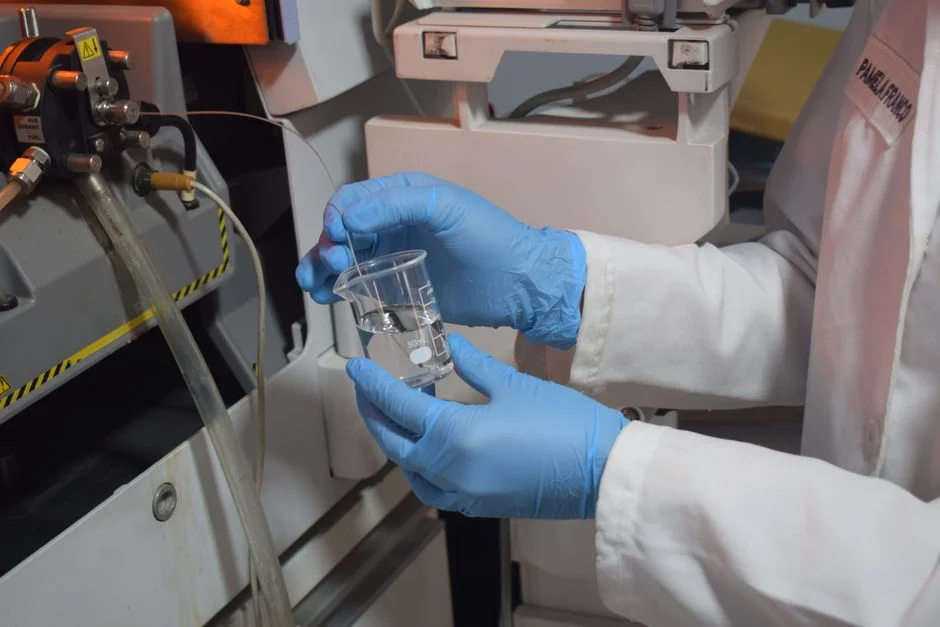
Conventional activated sludge, MBR and integrated packaged biological systems should be compared by waste character, solids-separation performance, footprint, automation, operator demand and polishing requirements—not by headline capacity alone. The appropriate choice follows the characterized effluent and receiving requirement.
Conventional activated sludge is a biological option for wastewater with suitable biodegradable organics and manageable toxicity. It separates biomass through clarification, so polishing may still be needed for low suspended solids or reuse. MBR couples activated sludge treatment with submerged PVDF membrane filtration; the published specification is less than 1-micron filtration and 10–2,000 cubic metres per day. That makes it more relevant to larger duties or higher-quality reuse applications than to every factory load.
The WSZ series combines anoxic and aerobic biological contact oxidation, sedimentation and disinfection in one buried package. Its stated capacity is 1–80 cubic metres per hour for applications including factories, hotels, hospitals and residential communities. DAF is different: it is pretreatment for solids, colloids, oil and grease and FOG, not a complete biological treatment train.
| Option | Organic-load role | Solids separation and polishing | Procurement focus |
|---|---|---|---|
| Conventional activated sludge | Biological removal of suitable biodegradable COD and BOD. | Secondary clarification; further filtration may be required. | Basin and sludge system, aeration, controls and operator requirements. |
| MBR | Activated sludge with membrane separation; published range 10–2,000 cubic metres per day. | Submerged PVDF filtration stated at less than 1 micron. | Hydraulic and organic basis, membrane maintenance, controls and high-quality reuse duty. |
| WSZ integrated biological package | Anoxic and aerobic contact oxidation; published capacity 1–80 cubic metres per hour. | Sedimentation and disinfection integrated in the package. | Wastewater fit, installation constraints, access, controls and operator training. |
| DAF | Physical pretreatment rather than biological COD removal. | Micro-bubble flotation and automatic skimming; published capacity 4–300 cubic metres per hour. | Suspended solids, oil and grease, FOG, skimming and downstream biological load. |
This is a screening framework, not a substitute for vendor design. The regional high-COD trade wastewater treatment guide and containerized MBR sizing guide provide useful engineering context, but factory data and local permit conditions must control the selection.
Turn the treatment design into a compliant procurement package
A comparable procurement package should allow bidders to quote the same engineering basis, including performance boundaries and responsibilities. Issue the same design-basis request to every bidder: wastewater characterization, required flow range, target effluent, utilities, footprint, operating schedule, odour controls, sludge handling and monitoring requirements.
Require a complete mass balance covering reaction media, sludge yield, chemical use, power demand, standby provisions, instrumentation and maintenance tasks. The supplied research does not support generic energy or chemical-consumption figures, so the bidder should calculate them from the proposed design rather than reproduce an unsupported benchmark.
The quotation should state whether it includes inlet screening, equalization, DAF, biological treatment, clarification, filtration, disinfection, sludge dewatering, controls, commissioning, operator training and performance testing. A process description that leaves out civil works, utility connections or residual-disposal interfaces may not be a like-for-like offer.
| Procurement item | Required bidder response | Buyer verification |
|---|---|---|
| Design and hydraulic basis | Measured flow and COD basis, process calculations and equipment sizing. | Check assumptions against factory records and characterized wastewater. |
| Performance boundary | Guaranteed effluent criteria, sampling locations and test method. | Confirm compatibility with the permit and reuse target. |
| Complete equipment scope | List every treatment, control, monitoring and sludge-handling item. | Identify exclusions and interfaces with existing factory systems. |
| Utilities and operating resources | Power, chemicals, water, sludge route, maintenance and operator requirements. | Test whether utilities and staffing are available at the plant. |
| Commissioning and compliance | Testing, calibration, training, documentation and support responsibilities. | Assign permit, laboratory, calibration and training duties before award. |
Factory treatment must operate as a discharge-compliance system. Maintain operating logs, verify selected instruments, inspect bypasses and retain sampling and laboratory evidence. The food and beverage sewer-limit case reinforces why treatment performance and discharge documentation belong in the same procurement decision.
Frequently Asked Questions
How much does a high-COD wastewater treatment system cost for a factory in Phnom Penh?
The supplied research provides no reliable price range. Cost must be calculated from characterized flow and COD, the selected process, civil works, utilities, sludge handling, controls and installation requirements. Ask bidders for an itemized capital quotation plus separate operating-cost assumptions for power, chemicals, media, sludge disposal, maintenance and operator labour; no generic budget figure can be defended before those inputs are available.
Should a Phnom Penh factory buy DAF or an MBR for high-COD wastewater?
DAF is generally a front-end treatment for suspended solids, colloids, oil and grease and FOG. An MBR is a biological treatment and solids-separation option for suitable biodegradable wastewater and higher-quality reuse duties. Request a process comparison showing which COD fractions each unit removes, what remains for biological treatment and how sludge is handled; this is a different check from comparing purchase price alone.
How much flow does a factory wastewater plant need to handle?
The engineering requirement is based on measured peak and seasonal flows, not a generic plant size. Provide production-cycle flow records, minimum and maximum operating conditions and any discharge restriction. The supplier should then show the hydraulic basis for equalization, treatment, bypass prevention and standby provisions.
Can manufacturers discharge high-COD trade wastewater into Phnom Penh’s municipal sewer?
The supplied research describes infrastructure gaps and illegal discharges but provides no universal authorization rule. Before designing for sewer discharge, obtain written confirmation of connection eligibility, concentration limits, pretreatment requirements, permitted flow, discharge point and monitoring conditions from the responsible authority.
What evidence should a wastewater equipment supplier provide in a quotation?
Require a process basis, hydraulic basis, guaranteed performance criteria, utility demand, sludge estimate, controls scope, maintenance requirements, commissioning plan and references for comparable wastewater. Also ask for the wastewater data used to produce the guarantee and identify who remains responsible for permits, testing, calibration, training and spare parts.
Related Equipment
- MBR biological treatment system — specifications, capacity range, and technical data