
Can DAF Remove Emulsified Oil Effectively?
A DAF system can remove emulsified oil when the droplets or conditioned flocs can attach to fine air bubbles and rise to the surface for skimming. It is generally more suitable than gravity settling for dispersed oil and other low-density contaminants that settle slowly. However, highly stable emulsions may require chemical conditioning, dedicated oil-water separation or upstream source control. DAF does not remove dissolved salts, soluble organics or very small molecules, so biological treatment, filtration, activated carbon or reverse osmosis may still be needed. Equipment selection should therefore follow feed analysis, treatment objectives, flow variation and downstream requirements.
Emulsified oil consists of fine oil droplets dispersed through water and stabilized by emulsifying agents. That is a different separation problem from free oil, which can separate more readily by gravity. DAF is particularly relevant to low-density and emulsified contaminants that do not respond well to gravity settling alone, according to the Industrial Uses of Dissolved Air Flotation guide from Seven Seas and the DAF system guidance from ClearWater Industries.
The treatment boundary matters. A DAF unit is primarily a clarification process for suspended oil, FOG, solids and conditioned colloids. It can reduce the load entering biological treatment, filters or reverse osmosis, but it does not by itself establish discharge compliance. The clarified-water objective must be defined against the applicable permit, sewer limit or reuse specification.
Before selecting a dissolved air flotation unit, establish whether the feed is mainly emulsified oil, contains a substantial free-oil fraction, or has an emulsion that resists bubble attachment. The best DAF unit selection framework for industrial wastewater helps convert those unknowns into supplier questions, but representative wastewater analysis remains the basis for treatment selection.
How the DAF Process Separates Emulsified Oil
DAF separates oil by attaching fine bubbles to droplets or conditioned flocs, increasing their effective buoyancy so they rise and can be skimmed from the tank surface. The separated material leaves as float, while clarified water is withdrawn below that layer; the performance variables are wastewater composition, droplet and particle size, pH, chemical dosage, hydraulic loading, recycle flow, air saturation and float-removal performance.
- Equalization and screening: Equalize flow and composition, and screen the feed before it enters the treatment train.
- Optional chemical conditioning: Destabilize the emulsion and prepare larger flocs when jar testing shows that untreated droplets attach poorly.
- Flocculation: Promote aggregation before the conditioned feed enters the flotation tank.
- Pressurized recycle: Recycle part of the clarified stream through the saturation and pressure system.
- Micro-bubble release: Release dissolved air as fine bubbles when the pressurized recycle enters the flotation tank.
- Flotation and skimming: Attach bubbles to oil droplets and flocs, then remove the resulting float automatically.
- Clarified-water collection: Collect clarified water below the float layer for discharge, reuse or further treatment.
The HydropureWater dissolved air flotation system uses microbubble technology and automatic skimming for suspended solids, FOG, oil and grease, and colloidal matter. These are process features rather than proof of site-specific performance; the quoted objective must still be tied to the actual feed and operating conditions.
Recirculation and air saturation determine bubble availability and attachment conditions. Float depth and skimming capacity determine whether the separated material leaves consistently rather than entering the clarified outlet. Dense, readily settleable solids are not the principal DAF target and may require gravity clarification or another solids-removal stage.
Chemical demand also affects separation indirectly. Underdosing can leave oil or solids carryover. Overdosing can increase sludge production and operating cost without guaranteeing better removal. The automatic chemical dosing system for DAF conditioning should therefore be specified around controlled dosing, not simply treated as a chemical pump.
Downstream treatment follows the clarified-water objective. Biological treatment may be appropriate where soluble organics remain. Filtration, activated carbon or reverse osmosis may be required for reuse or for contaminants outside the DAF treatment boundary.
Chemical Conditioning for Stable Emulsions
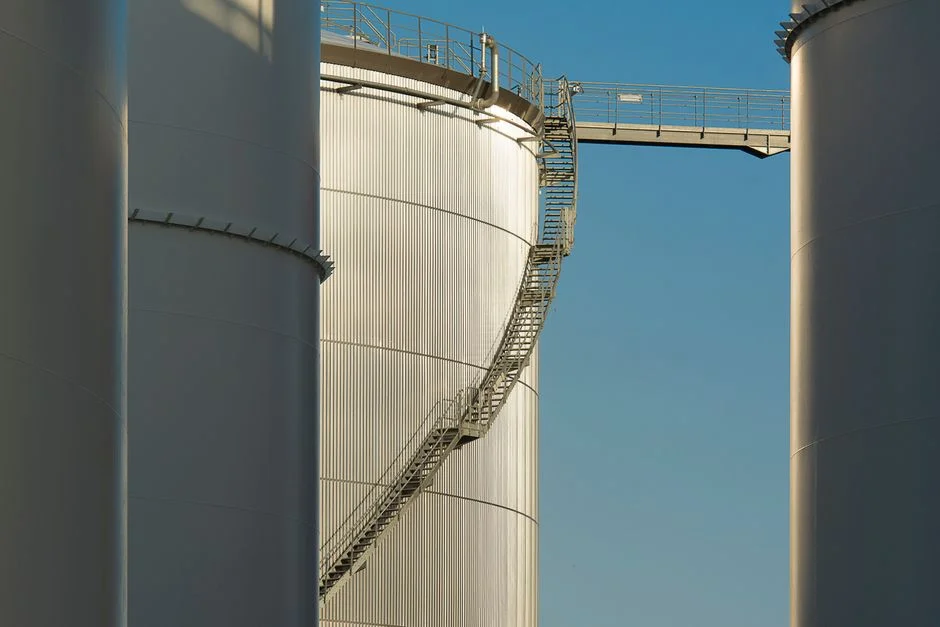
Chemical conditioning is selected from jar-test evidence because it destabilizes emulsions and colloidal material, allowing droplets to form larger flocs that attach more effectively to air bubbles. Ferric chloride, aluminum polychloride, aluminum sulfate and ferrous sulfate can all be candidates, but the best choice depends on the wastewater and the downstream process rather than the chemical label alone.
The 2026 Polymers study, Evaluation of Coagulants and Polymers for Optimizing Wastewater Treatment and Acid Oil Extraction in a Poultry Processing Plant, tested the following products:
| Conditioner tested | Concentration reported in the study | Evidence from the poultry-processing application |
|---|---|---|
| Ferric chloride | 38% m/m | Produced the study’s best technical result. |
| Aluminum polychloride | 18% m/m | PAC tests showed high variability, with coefficient of variation above 50%. |
| Aluminum sulfate | 8% m/m | Included in the study’s comparative coagulant evaluation. |
| Ferrous sulfate | 6% m/m | Included in the study’s comparative coagulant evaluation. |
Ferric chloride at 38% m/m produced the best technical result in that study. After validation in a 100 m³/h DAF, treated effluent turbidity was below 30 NTU. This is evidence from poultry-processing wastewater, not a universal performance claim for every industrial feed or a basis for prescribing a dosage without site-specific testing.
The study used a two-stage evaluation: bench-scale jar testing at G values of 300 s⁻¹ and 30 s⁻¹, followed by full-scale validation. The sequence matters because a chemical that performs adequately in a beaker may behave differently after mixing, recycle, flocculation and hydraulic loading change. No statistically significant effect of polymer type on oil recovery was observed in the study.
For a new industrial stream, representative testing should record the oil type, emulsion stability, pH, droplet-size distribution, COD, TSS, temperature, chemical demand and downstream sensitivity. These inputs should be carried into the best DAF unit selection framework for industrial wastewater and used to define dosing control, chemical storage and skid utilities.
Design Parameters for an Emulsified-Oil DAF System
A DAF system should be sized from the complete wastewater and operating envelope, not from average flow alone. Performance depends on the composition of the industrial wastewater, particle size, pH, chemical dosage and hydraulic loading, as stated by ClearWater Industries; therefore, a model or capacity figure is only meaningful when the supplier identifies the flow basis and wastewater assumptions behind it.
| Design input | Information the buyer should establish | Why it affects equipment or operation |
|---|---|---|
| Average flow | Representative average flow and operating profile | Sets the baseline hydraulic treatment duty. |
| Peak flow | Peak flow, duration and equalization behavior | Determines whether the selected model and tank can handle transient loading. |
| Oil and grease | Concentration range and analytical method | Establishes the removal objective and conditioning requirement. |
| Emulsified-oil fraction | Share of total oil present as stable droplets | Indicates whether DAF alone is appropriate. |
| Emulsion stability | Droplet-size distribution and response to candidate chemicals | Controls the need for conditioning or upstream separation. |
| COD | Concentration range and soluble fraction | Shows whether load reduction is sufficient for downstream treatment. |
| TSS | Concentration range and settleable fraction | Identifies floatable solids and solids requiring another route. |
| pH | Operating range and permitted chemical adjustment | Affects emulsion destabilization and chemical selection. |
| Temperature | Normal range and relevant operating extremes | Can affect chemistry, flotation behavior and equipment requirements. |
| Clarified-water objective | Permit, sewer limit or reuse specification | Defines the required performance and downstream stages. |
| Downstream process | Biological, filtration, activated carbon or reverse osmosis requirements | Sets residual solids and contaminant limits for DAF output. |
| Float-handling route | Recovery, transfer, storage, dewatering and disposal route | Determines the complete material-handling scope. |
The HydropureWater verified product catalog specifies 4–300 m³/h across 13 standard DAF models, using microbubble technology and automatic skimming. Require the supplier to confirm whether each proposed model covers the required peak flow and whether its treatment objective is based on representative wastewater analysis. Do not accept a guaranteed oil-removal percentage without site-specific evidence or an explicit supplier guarantee.
Float recovery, sludge transfer, storage, dewatering and oil recovery must be included in the equipment and operating concept. A dissolved air flotation unit is incomplete if separated oil-bearing material has no defined route from the tank.
Choose Between DAF, Oil-Water Separation and Combined Treatment
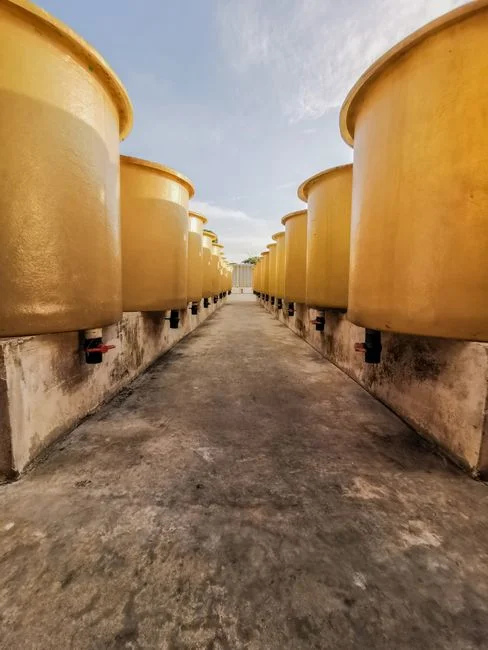
The correct treatment train depends on the oil phase, contamination load and required downstream water quality. DAF is suited to dispersed or emulsified oil, FOG and floatable solids; a dedicated oil-water separator may be needed ahead of DAF when free oil or a persistent emulsion would otherwise overload the flotation stage.
| Feed condition or treatment objective | Preferred role | Decision basis |
|---|---|---|
| Dispersed or emulsified oil with floatable solids | DAF | Conditioned droplets and flocs can attach to bubbles and be skimmed. |
| High free-oil fraction or very large oil accumulations | Oil-water separation before DAF | Removing the readily separated phase first protects DAF hydraulic and skimming duties. |
| Emulsion that does not respond to selected conditioning chemistry | Source control or dedicated demulsification and separation | DAF performance cannot be assumed if droplet attachment remains ineffective. |
| DAF ahead of biological treatment | Combined treatment | DAF removes suspended oil and solids that would otherwise burden the biological process. |
| DAF ahead of filtration or reverse osmosis | Combined treatment | Suspended contaminants are removed before the downstream barrier. |
| Dense, readily settleable solids | Clarification before or instead of flotation | These solids are better directed toward a settling route. |
DAF does not guarantee regulatory compliance by itself. Final performance must be evaluated against applicable discharge permits, sewer limits and reuse requirements. Dissolved contaminants may require biological treatment, filtration, activated carbon or reverse osmosis even when DAF produces a visually clear effluent.
Produced water treatment is a relevant application because produced water can contain emulsified oil, suspended solids and dissolved organic matter, according to Ecologix’s oil and gas DAF guidance. However, the correct sequence still depends on the specific stream. If the float contains a recoverable oil fraction, a downstream plate-frame filter press may form part of the solids-dewatering train, subject to the oil-recovery route selected.
Control Costs Without Losing Oil Recovery
The operating-cost case for DAF includes chemical use, energy, labor, maintenance, float handling and sludge disposal. Recovered-oil value can improve the result, but it must be separated from equipment purchase price and tested against realistic contamination and market conditions.
The 2026 Polymers poultry-processing study reported a simple payback of 60.7 months for the ferric chloride treatment case, a discounted payback of 64.1 months at a 12% annual discount rate, and a median NPV of USD 7,925. These values apply to that project and should not be transferred to another feed without its own chemical demand, capital, operating and recovered-oil assumptions.
The study also found that a 20% drop in oil price changed NPV to negative USD 21,727. The relevant procurement check is therefore not whether recovered oil has a nominal value, but whether that value survives price, yield, moisture and contamination sensitivity.
Oil quality depends on the handling system. In the same 2026 study, moisture was below 2% at the tridecanter outlet but increased above 30% during storage because condensate entered from an inefficient exhaust system. The business case must therefore include oil quality, exhaust design, storage contamination and the actual route by which recovered material is realized. The 2026 DAF system operating-cost breakdown is useful for building the operating budget, while the DAF machine maintenance checklist helps identify inspection commitments that should not be omitted from that budget.
Commissioning and Operating Checklist
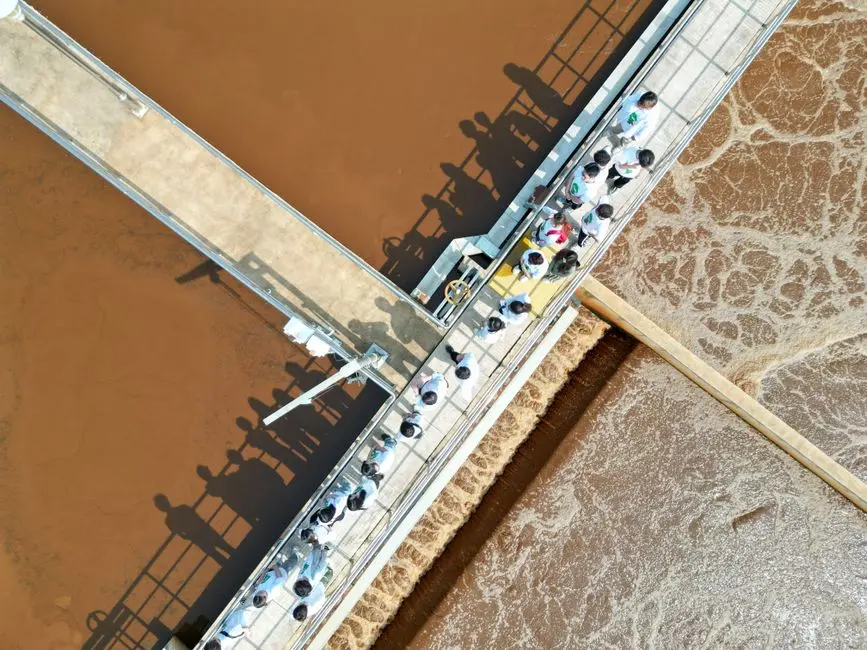
Commissioning should demonstrate stable separation under representative normal and peak conditions, not a single satisfactory sample. Confirm chemical dosing and pH control with representative wastewater before full-scale acceptance testing, then verify recycle flow, pressure, air supply, bubble release, float depth and automatic skimming.
- Establish the feed basis: Document average and peak flow, wastewater composition and selected conditioning chemistry.
- Verify hydraulic performance: Check recycle flow, saturation pressure, air supply, bubble release and float behavior.
- Confirm removal performance: Monitor inlet and clarified effluent for oil and grease, TSS, turbidity, COD and pH.
- Set sampling frequency: Base it on operating variability and permit requirements rather than a generic schedule.
- Verify solids handling: Inspect float removal, sludge transfer, storage and oil-bearing residue handling.
- Document adjustments: Record chemical consumption, float volume, operating changes and downstream impact during the first operating period.
The 2026 Polymers study recommended standardized test durations of at least 72 hours and automated monitoring to reduce variability. That recommendation supports extended evaluation instead of relying on a brief spot test. Poor float or sludge management can undermine otherwise effective flotation, so the oil-recovery route belongs inside commissioning rather than being deferred until after start-up.
Frequently Asked Questions
How do I size a DAF system for emulsified oil wastewater?
Size the unit from representative wastewater testing, average and peak flow, hydraulic loading, chemical demand and the required clarified-water objective. Ask the supplier to identify the flow basis and whether the proposed model handles the peak condition. Do not select from the nominal treatment range alone; the dissolved air flotation system must be matched to the actual wastewater and operating envelope.
What does a DAF system for emulsified oil wastewater cost?
Request a cost breakdown that separates equipment scope from chemicals, energy, labor, maintenance, float handling and sludge disposal. The 2026 Polymers study’s 60.7-month simple payback is only a poultry-processing case example. For a quotation, provide the wastewater analysis, flow profile, treatment objective, chemical trial results, utilities and float-handling scope, and request both capital and operating-cost estimates.
How do I select a reliable DAF supplier?
Ask for the proposed flow basis, performance basis, conditioned wastewater data, recycle and air-system design, skid utilities, controls, float handling and acceptance criteria. The best DAF unit selection framework for industrial wastewater provides the structure for comparing technical scope and commercial assumptions.
Can DAF alone meet the discharge or reuse requirement?
Not necessarily. DAF performance must be verified against the applicable permit, sewer limit or reuse specification, and dissolved contaminants may require biological treatment, filtration, activated carbon or reverse osmosis. Include the downstream objective in the supplier’s guarantee or acceptance criteria rather than treating a visually clear DAF effluent as proof of compliance.