
How Brasília manufacturers build a high-COD treatment train
Manufacturers in Brasília generally treat high-COD trade waste with an auditable process train: equalization and pH correction, solids screening or removal, DAF or precipitation, chemical oxidation or biological treatment, and MBR or membrane polishing when reuse is required. The 2026 chemical wastewater process and cost guide reports chemical-industry influent COD of 1,500–8,000 mg/L, making biological-only treatment an unlikely default for concentrated streams. Design must use measured effluent variability, CONAMA Resolution 430/2011, and the current Federal District permit and receiving-water classification rather than treating federal values as a complete Brasília specification.
The sequence separates functions that one unit cannot reliably perform together:
- Equalization and pH correction: buffers production-cycle peaks, suspended solids and pH swings before downstream biological or membrane equipment.
- Screening and solids removal: protects pumps and controls the solids entering DAF, precipitation or oxidation.
- DAF or chemical precipitation: DAF targets suspended solids, oil, grease and flocculated colloidal material; precipitation is selected when metals or pH-dependent chemistry require dissolved contaminants to become removable solids.
- Oxidation or biological treatment: oxidation addresses selected compounds resistant to conventional biology, while biological treatment handles biodegradable organics.
- MBR or membrane polishing: separates biological solids and, where justified, adds another quality barrier for reuse.
An industrial DAF pretreatment system is therefore a front-end component, not a substitute for downstream dissolved-COD treatment. An integrated MBR wastewater treatment system is likewise a downstream biological-separation step, not a substitute for removal of oil, metals, toxicity or excessive COD. The final train should be fixed only after the current Federal District environmental licence and discharge destination are established.
Characterize the effluent before selecting equipment
Reliable characterization determines the treatment train; averages from a single sample can conceal the shock loads that disable biological and membrane systems. The Brasília industrial wastewater technologies and compliance guide recommends sampling across at least 7–14 days to capture production-cycle variability.
The investigation should establish mass and load variation, not just concentrations. Obtain COD, BOD, TSS, oils and grease, pH, phenols, metals, conductivity, toxicity and biodegradability. Where a reliable result is unavailable, record it as an unresolved design input; assigning an assumed concentration can distort reactor loading, reagent demand and membrane sizing.
| Design input | Why it affects selection | Decision required |
|---|---|---|
| COD and BOD | Establish organic loading and biodegradability | Define biological, oxidation or membrane pretreatment needs |
| TSS and oils and grease | Determine solids loading and flotation or separation duty | Select screening, DAF, precipitation and sludge handling |
| pH and alkalinity | Control biological activity and chemical reactions | Specify equalization and pH-correction capacity |
| Phenols and toxicity | Identify inhibition or poorly biodegradable compounds | Assess source control, oxidation and biological acclimation |
| Metals and conductivity | Identify precipitation demand and membrane osmotic effects | Define chemical dosing and polishing requirements |
The chemical-sector values in the 2026 guide—COD 1,500–8,000 mg/L, phenols 20–120 mg/L and heavy metals 5–50 mg/L—are screening benchmarks, not automatic Brasília design values. They show why source segregation, batch control and equalization deserve review before adding treatment capacity. Equalization protects downstream equipment from hydraulic and chemical shocks; source control can reduce flow, reagent consumption and the contaminant burden entering the plant.
Request the characterization package alongside the automatic chemical dosing system specification. Dosing capacity should follow validated chemistry and target residual, not simply the highest expected COD.
Match each contaminant to the removal mechanism
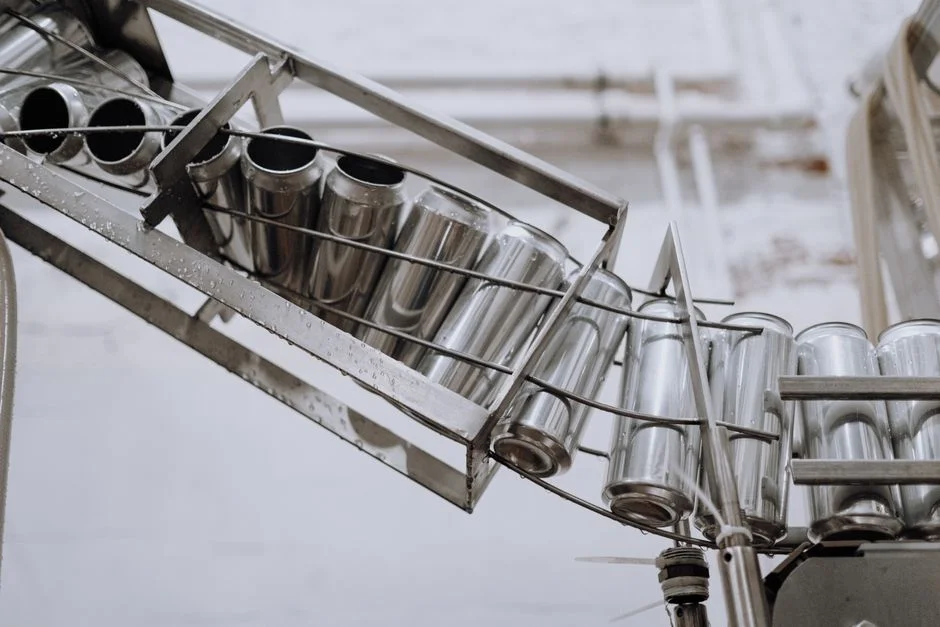
DAF should be selected for recoverable floatable solids, oil, grease and flocculated colloids—not as the sole treatment for high dissolved COD. The Brasília industrial wastewater guide reports that DAF can remove up to 99% of TSS and oils and grease from industrial process water; this is the source’s reported application performance, not a universal guarantee. The same source describes 20–50 μm microbubbles and automatic skimming as part of the flotation mechanism.
| Primary objective | Preferred mechanism | Selection caution |
|---|---|---|
| Suspended solids, oil and grease, colloidal material | DAF with coagulation or flocculation | Verify loading, pH, chemical demand and flotation results |
| Metals | Chemical precipitation followed by solids separation | Define target metal, reagent and residual-solubility requirement |
| Dissolved refractory organics | Advanced oxidation or suitable biological treatment | Validate reaction chemistry, toxicity and reagent residuals |
| Biodegradable dissolved organics | Biological treatment, potentially followed by MBR | Verify temperature, pH, nutrients and shock-load tolerance |
| Reuse-grade solids separation | MBR and, where justified, RO | Assess fouling, pretreatment, recovery and concentrate management |
The chemical-process reference distinguishes influent COD of 1,500–8,000 mg/L from an MBR inlet range of COD 300–1,600 mg/L and BOD 100–600 mg/L. That gap is the engineering reason to add pretreatment that materially lowers the load before biological and membrane stages. Precipitation is appropriate where metals or pH-driven solids removal matter; advanced oxidation is appropriate for selected contaminants that resist conventional biological treatment. Neither should proceed without bench or pilot validation of reagent dose, reaction time and residual chemistry.
Electrocoagulation remains a project-specific alternative. MDPI’s 2023 study, “Electrocoagulation: A Promising Method to Treat and Reuse Mineral Processing Wastewater with High COD,” investigated wastewater from a Pb/Zn sulfide flotation plant with initial COD of 424.29 mg/L and assessed treatment and reuse. That scope does not establish performance for concentrated Brasília trade effluent, but it identifies electrocoagulation as a route requiring site-specific testing where mineral-processing chemistry is present.
Choose biological treatment, MBR or advanced polishing
MBR is justified when biological conversion plus membrane solids separation can meet the required effluent quality, footprint constraint or reuse objective without making pretreatment or fouling control unworkable. The 2026 chemical wastewater guide reports MBR outlet COD at or below 50 mg/L, BOD at or below 5 mg/L and TSS below 5 mg/L, with 90–96% COD removal and 95–99% BOD removal under its stated operating basis.
| Route | Relative strength | Main engineering issue |
|---|---|---|
| Conventional biological treatment | Broad organic-matter removal with established operating logic | Clarifier footprint, sludge separation and variable effluent quality |
| MBR | Combined biological treatment and membrane separation; compact installed arrangement | Fouling, membrane aeration, pretreatment and replacement |
| RO after biological treatment or MBR | Additional dissolved-solids barrier for demanding reuse applications | Energy, recovery, concentrate disposal and pretreatment |
Ultrafiltration in the Brasília guide is described as having typical pore sizes below 0.1 μm. Veolia has also reported compact membrane bioreactor technology being used in Brazil for capacity expansion and chemical removal, illustrating the route’s relevance without establishing a Brasília performance guarantee.
The Brasília guide reports a 60% MBR footprint reduction versus conventional clarifier-based systems. Treat that as a claimed comparative advantage for a space-constrained industrial site, not a universal layout result; civil works, equalization, sludge handling and maintenance access still determine the installed footprint. RO is not necessary for every stream and should be evaluated against the final application and concentrate-management route.
Seasonal temperature belongs in the design basis. The chemical-process guide warns that Fenton and MBR stages lose 10–20% of rated COD removal below 15 °C. This does not establish Brasília year-round effluent temperature; it means the engineer should obtain site temperature data and test the selected process at the relevant low-temperature condition.
Design for Brasília’s altitude, water reuse and sludge handling
Brasília’s altitude changes aeration design because the Brasília wastewater guide identifies an approximate site elevation of 1,100 m and links it to reduced aeration-transfer efficiency. Specify aeration from measured or verified oxygen-transfer performance at site conditions, rather than relying only on a generic blower or diffuser rating.
The same guide states that receiving-water dilution capacity falls during the prolonged dry season. Reuse should therefore be evaluated as part of the process design, not added after discharge capacity becomes constrained. Candidate uses identified by the guide include cooling towers, industrial cleaning and irrigation, but the current permit and the receiving process—not the reuse label alone—determine whether a given effluent quality is suitable.
Sludge handling must be included in the equipment scope. The Brasília guide reports that plate-and-frame presses can produce cakes with 30–40% solids; this is a cited application claim, not a project guarantee. Verify cake consistency and residual moisture with site sludge through an industrial plate-and-frame filter press. Chemical dosing, solids conditioning, cake discharge, storage and authorized disposal all affect operability.
Disinfection should follow the intended use. The guide identifies chlorine dioxide as an option for microbial control and notes its use where avoiding chlorination by-products matters. An chlorine dioxide generator still requires a defined dose, contact arrangement, residual monitoring and confirmation that the treatment is appropriate for the reuse application.
Size equipment and evaluate supplier proposals
Equipment sizing must reconcile average daily flow, peak flow, hydraulic loading, process performance and variability. For the research’s 200 m³/day chemical-wastewater example, the 2026 guide gives a DAF range of 10–20 m³/h, selected using peak hourly flow with a 20–30% safety factor. This is a sourced example for that project, not a universal Brasília rule; the buyer must provide the project’s flow series, operating profile and DAF loading criteria.
| Proposal item | Information required from the supplier | Buyer check |
|---|---|---|
| Design basis | Design flow, equalization volume, influent assumptions and process steps | Reconciles with measured flow and characterization |
| Performance | Measured inlet and outlet data and guarantee parameters | Defines sampling method, test conditions and remedy |
| Controls and utilities | PLC/SCADA interface, power, air, water, chemicals and drain demand | Matches civil, electrical and site utilities |
| Residuals | Sludge yield, quality, storage and disposal responsibility | Assigns an auditable scope boundary |
| Delivery | Manufacturing, freight, customs, installation and commissioning schedule | Identifies the critical path and local responsibilities |
The same research reports lead times of 10–14 weeks for MBR or RO from a Chinese OEM and 18–26 weeks from a European OEM. Those equipment periods must be added to ocean freight, customs, civil works, electrical installation, commissioning and local-spares planning; they are not complete project durations. Require Portuguese operating documentation, a Brazilian integration plan, PLC/SCADA compatibility and a defined factory-testing scope.
For a DAF pretreatment package, ask for the hydraulic and flotation basis rather than unit dimensions alone. For an integrated MBR system, request membrane area or flux basis, cleaning strategy, controls and performance history. Dosing-system suppliers should define sensor accuracy, reagent compatibility, control logic and calibration method.
Any post-award change in COD, pH, metals or flow is a formal design-basis change. Review the affected mass balance, loading and guarantee before accepting it. Silent compensation through extra reagent is not a design control.
Verify compliance before commissioning
Compliance depends on the current Federal District environmental licence, discharge destination, receiving-water classification, monitoring frequency and local conditions—not on equipment purchase alone. CONAMA Resolution 430/2011 is the federal framework identified in the research, while the current Federal District permit governs the project-specific conditions. Limits shown for São Paulo, Minas Gerais or other jurisdictions must not be presented as Brasília rules.
The Brasília guide states that CONAMA Resolution 430/2011 requires industrial effluent BOD at or below 60 mg/L or at least 80% removal before discharge. The operative requirement must still be confirmed against the facility’s current permit, applicable receiving-water classification and any local condition.
Commissioning should therefore include baseline sampling, explicit startup criteria, stability testing, operator training, alarm setpoints, chemical and sludge handling procedures, critical spares and a final performance test against the agreed guarantee. Results should be measured at defined sampling points using methods accepted by the permit and laboratory. The Brasília industrial wastewater technologies and compliance guide should support that workflow, but it does not replace licence review or site-specific testing.
Frequently Asked Questions
Can DAF alone treat high-COD trade effluent?
DAF is principally a solids, oil, grease and colloidal-removal step. The research reports up to 99% TSS and oils-and-grease removal in a cited DAF application, but dissolved COD still needs an appropriate biological, oxidation or membrane route unless the project data demonstrate otherwise.
How should a buyer size DAF for a 200 m³/day plant?
Start with peak hourly flow, hydraulic loading, flotation performance and the project safety factor. The sourced 200 m³/day example uses 10–20 m³/h with a 20–30% safety factor, but the supplier must show how the selected unit handles this site’s measured flow profile rather than apply that range automatically.
When is MBR preferable to conventional activated sludge?
Choose MBR when the required effluent quality, footprint constraint or reuse objective justifies membrane separation and the associated aeration, fouling controls and maintenance. It should follow adequate pretreatment and be assessed against the MBR versus conventional activated sludge comparison using site-specific quality and operating requirements.
How should suppliers be compared on cost, delivery and compliance risk?
Request itemized capital and operating-cost inputs, total installed cost, critical lead time, Brazilian integration scope, commissioning support and local-spares availability. For budget approval, require a quotation tied to the measured design basis, with exclusions identified; do not infer a plant price from equipment pricing alone. The research reports Chinese-OEM MBR or RO lead times of 10–14 weeks and European-OEM lead times of 18–26 weeks, which must be reconciled with freight, customs, civil works and commissioning.
Which discharge standard governs a Brasília facility?
CONAMA Resolution 430/2011 is the federal baseline identified by the research. The project must then apply the current Federal District environmental licence, discharge destination and receiving-water classification. Request the operative permit conditions from the facility’s licensing file before fixing equipment guarantees or reuse claims.