
What treatment configuration fits the Mendoza project?
Domestic sewage treatment in Mendoza should be selected around four project inputs: average and peak flow, available footprint, required effluent quality, and operating capability on site. An underground WSZ package sewage treatment plant combines biological treatment, sedimentation and disinfection, while an MBR membrane bioreactor wastewater treatment system suits projects requiring finer solids separation or reuse-oriented treatment. Decentralized ecological processes remain site-dependent alternatives. Industrial inflows require separate characterization and pretreatment design.
Start by separating the wastewater source. Domestic sewage treatment assumes a wastewater profile dominated by sanitary flows. A hotel, housing development or community may fit a package-plant or decentralized route, but a factory discharge can change the biological loading, contaminant profile, pretreatment needs and discharge obligations. The PLoS ONE study, published in 2021, found that highly industrialized regions can combine municipal, industrial and hospital wastewater; industrial flows represented 8% of the wastewater processed by one studied Polish plant and up to 25% at another.
Next, define the receiving point and intended effluent use. A discharge to a receiving environment, irrigation, toilet flushing, cooling or another reuse route should not be treated as interchangeable objectives. Package plants, MBR systems and ecological processes differ in footprint, automation, separation performance and operating requirements. Peak flow alone cannot determine the configuration.
Request a project-specific treatment concept and performance guarantee after reviewing incoming flows and wastewater characteristics. For comparison, the package, MBR and decentralized treatment comparison provides a useful framework, but Mendoza’s site conditions, receiving requirements and operating resources must control the final selection.
Package plant treatment process
The WSZ package treatment train integrates anoxic/aerobic biological contact oxidation, sedimentation and disinfection in a single buried unit. The verified HydropureWater product catalog states a capacity range of 1–80 m³/h and identifies residential communities, hotels, hospitals, factories and rural areas as applications. That range is an equipment-selection parameter, not a project-specific performance guarantee; the selected unit still has to be checked against the expected hydraulic and organic loading.
The treatment stages perform distinct functions. The A/O biological contact-oxidation stage provides anoxic and aerobic conditions for biological treatment. Sedimentation follows the biological stage, and disinfection is included within the package. This arrangement reduces the number of separately installed treatment units and supports installation below grade, with landscaping above.
The catalog describes the WSZ unit as fully automated and not requiring an operator. That statement should be interpreted carefully: automation does not eliminate influent characterization, routine inspection, maintenance, discharge monitoring or corrective action. The project operator still needs an ownership schedule for each function, including inspection access, spare parts, sludge removal and response to abnormal flows.
Installation is not restricted to a permanent buried arrangement. The verified catalog also records trailer mounting for mobile deployment, which may be relevant to temporary facilities or projects where a permanent installation is not yet justified. A mobile configuration should still be evaluated for effluent collection, power, access, security and the applicable receiving requirements.
| Verified WSZ parameter | Product-record value or description |
|---|---|
| Process | Anoxic/aerobic biological contact oxidation, sedimentation and disinfection |
| Capacity range | 1–80 m³/h |
| Automation | Fully automated; no operator required |
| Installation | Below grade with landscaping above, or trailer-mounted for mobile deployment |
| Listed applications | Residential communities, hotels, hospitals, factories and rural areas |
When an MBR system warrants the additional complexity
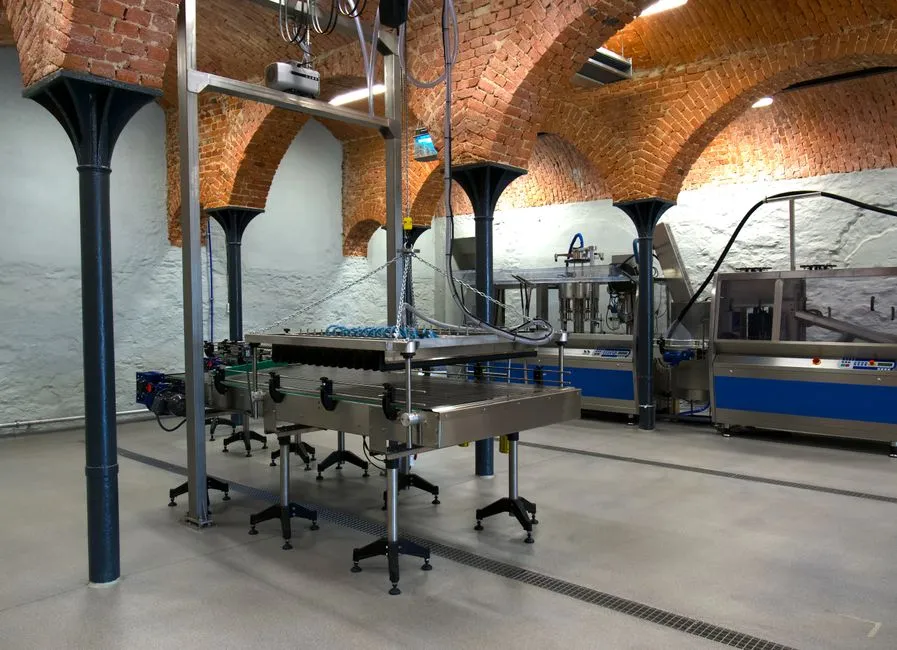
An MBR system warrants evaluation when fine effluent separation or reuse-oriented treatment is required and the project can support membrane operation and maintenance. The verified MBR product record states a capacity range of 10–2,000 m³/day and filtration below 1 μm. These are equipment capabilities, not proof that every module will meet the project’s reuse objective without a defined hydraulic profile, pretreatment and operating plan.
The product-specific comparison also claims 60% less footprint than conventional systems. This claim should be used to screen a potential configuration, not as a universal project guarantee. Site verification is still required because tankage, equalization, pumping, sludge handling, access and ancillary equipment affect the installed footprint.
The DF flat-sheet option provides a defined membrane-module configuration. The verified product record gives a 0.1 μm membrane pore size, integrated aeration for membrane scouring, 80–225 m² configurations and 32–135 m³/day output per module. A bidder should explain how many modules are required, how redundancy is provided, and how membrane cleaning, replacement and fouling control are included in the offer.
The manufacturer’s comparison of 10–20× lower energy consumption is specifically relative to external cross-flow systems. A buyer should require the operating-energy assumptions behind that claim: design flow, average and peak loading, aeration duty, membrane scouring, pumping, climate, control strategy and power cost. Without those inputs, the comparison is not a project-specific energy forecast.
| Verified MBR parameter | Product-record value or description |
|---|---|
| System capacity | 10–2,000 m³/day |
| Effluent separation | Filtration below 1 μm |
| Footprint comparison | Product-specific claim of 60% reduction versus conventional systems |
| DF flat-sheet module | 0.1 μm membrane pore size with integrated aeration for scouring |
| DF configuration range | 80–225 m² |
| DF module output | 32–135 m³/day per module |
| Energy comparison | Manufacturer claim of 10–20× lower consumption than external cross-flow systems |
Where decentralized and low-impact treatment can fit
Decentralized sewage treatment can fit a Mendoza site where land availability, climate, infiltration and the required effluent standard support its process concept. Waste-stabilization ponds, for example, require a site-specific land and hydraulic assessment rather than selection from treatment capacity alone. The proposed footprint must accommodate the project flow, the required retention and the control of discharge or reuse.
Vermifiltration is another decentralized route. The 2023 IntechOpen study describes the process as combining filtration with earthworms and reports that it is efficient, viable, requires less expertise and can be decentralized. The research treated domestic septic-tank sewage and compared the resulting water parameters against Zimbabwean Environmental Management Agency requirements. It therefore provides process evidence, but not direct validation of a Mendoza installation.
An ecological process still requires a defined engineering concept. The brief should address collection, pretreatment, hydraulic retention, biological treatment, solids separation where applicable, disinfection, effluent storage, and discharge or reuse control. Climate, infiltration, evapotranspiration, groundwater, vector control and seasonal flow variation must be addressed in the design basis.
For facilities requiring consistent separation for reuse or a tightly controlled discharge, an engineered package system may offer more predictable interfaces. A decentralized ecological process is therefore a site-dependent option, not a universal substitute for biological package treatment or MBR technology.
Industrial inflows require a separate design track
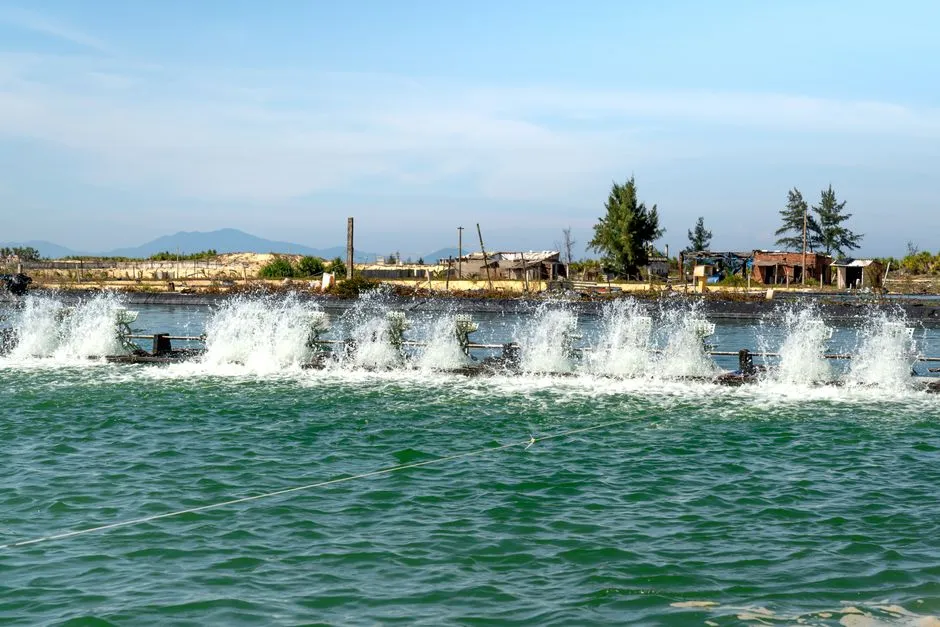
Industrial inflows require separate characterization because their contaminants and treatment requirements can exceed the design basis of a domestic sewage package. The 2021 PLoS ONE study found that wastewater from highly industrialized regions had higher concentrations of heavy metals and antibiotics than sewage from less industrialized areas. In highly industrialized regions, wastewater may combine municipal, industrial and hospital flows.
Conventional plants may lack specialized heavy-metal removal. The study explains that metals become strongly associated with solid particles and accumulate in sewage sludge during treatment, making removal through sludge accumulation a by-product rather than a designed treatment outcome. That creates an additional management and disposal question, particularly where sludge reuse is considered.
Before requesting a domestic treatment quotation, ask whether industrial wastewater enters the same sewer. If it does, characterize the source stream, identify relevant contaminants, determine whether a separate sewer is feasible, and obtain the discharge or sewer-acceptance limits applicable to the receiving authority. This track may require industrial wastewater pretreatment before the flows enter the domestic treatment process. A trade-waste and high-COD treatment reference provides a useful framing for that separate evaluation.
Sludge handling must also be planned rather than omitted from the commercial scope. The PLoS ONE study reported that sludge volume generated by municipal wastewater treatment plants in Poland increased by 38% between 2000 and 2018. That historical municipal finding demonstrates the operational significance of sludge generation, although it does not predict the quantity for a Mendoza project.
Compare systems before calculating the project cost
A valid system comparison must use a common project basis. WSZ capacity is stated in m³/h, while MBR capacity is stated in m³/day; neither figure can be transferred directly into a design calculation without the project’s flow profile, peak factors and operating basis. The comparison should therefore begin with verified process capabilities and then test each configuration against the same wastewater and site inputs.
| Decision item | WSZ package plant | MBR system | Decentralized ecological process |
|---|---|---|---|
| Treatment configuration | A/O biological contact oxidation, sedimentation and disinfection | Biological treatment with membrane separation | Site-specific ecological or pond-based treatment |
| Stated capacity | 1–80 m³/h | 10–2,000 m³/day | Requires project-specific hydraulic assessment |
| Separation objective | Package sedimentation and disinfection | Filtration below 1 μm stated for the product | Must be defined for the selected process and receiving point |
| Footprint and installation | Buried package or trailer-mounted configuration | Product claims 60% footprint reduction versus conventional systems | Land, climate and infiltration govern feasibility |
| Automation | Fully automated; no operator required according to the product record | Requires membrane operation, cleaning and fouling management | Requires site-specific biological and hydraulic management |
| Key procurement question | Does the selected module handle the project’s load and discharge route? | Does the module arrangement meet the reuse objective and membrane-maintenance plan? | Does the site support retention, infiltration control and discharge compliance? |
The cost comparison must separate equipment from the installed works. Ask each bidder to price equipment, civil works, installation, power connections, controls, consumables, sludge removal, commissioning, training, maintenance, local compliance support and each commercial exclusion. The package wastewater plant cost and supplier checklist provides a procurement structure, but the supplied research contains no Mendoza project price; quotations therefore require project-specific inputs.
Build a quotation-ready engineering brief
A quotation-ready brief separates known project inputs from assumptions that suppliers must verify. The sequence below reduces design uncertainty and prevents catalog capacity from being mistaken for a project guarantee.
- Define the flow basis. Provide average daily flow, peak-hour flow, operating hours, current and planned domestic occupancy, expansion plans, and the proportion of industrial wastewater. Identify whether the flow is continuously generated, intermittent or seasonal.
- Document wastewater characteristics. Supply COD, BOD, suspended solids, nutrients, fats and oils, pH and any industrial contaminants. Where historical data is absent, authorize representative sampling rather than allowing each bidder to assume a different influent.
- Define the receiving point and reuse objective. State the applicable discharge or reuse criteria, authorized reuse quantity, receiving location, seasonal constraints and climate conditions that affect biological or storage performance.
- Describe site constraints. Provide the available footprint, soil and groundwater conditions, access for maintenance, power supply, construction method and constraints imposed by buildings, roads or landscaped areas.
- Require a complete technical offer. Request the process flow, mass-balance basis, equipment schedule, performance-guarantee criteria, commissioning plan, operating requirements, maintenance scope and itemized commercial exclusions.
Require bidders to distinguish catalogue ratings from project-specific calculations. A 1–80 m³/h WSZ range or a 10–2,000 m³/day MBR range identifies available equipment; it does not establish the selected size, process loading, effluent compliance or installed cost. The supplier should show how its proposed configuration follows from the documented flow, wastewater characteristics, receiving requirements and site constraints.
Before accepting a bid, compare the treatment concept, guarantees, exclusions, commissioning responsibilities and maintenance support side by side. Clarify how laboratory sampling, sludge disposal, electrical works, civil interfaces, controls, training and local regulatory support are treated. Any unresolved assumption should remain visible as a commercial exclusion or condition rather than disappearing into the final price.
Frequently Asked Questions
What inputs are needed to obtain a reliable price for domestic sewage treatment in Mendoza?
No project price can be derived from the supplied research. Request a quotation that separates equipment, civil works, installation, electrical supply, controls, commissioning, training, consumables, maintenance, sludge removal and compliance support. The bidder should also list exclusions and identify which inputs remain subject to confirmation after wastewater sampling or site investigation.
Should I select a 1–80 m³/h WSZ package or a 10–2,000 m³/day MBR system?
Do not compare the two capacity ranges directly because one is expressed per hour and the other per day. Provide average daily flow, peak-hour flow, operating pattern, wastewater characteristics and effluent objective first. Then ask each bidder to reconcile those inputs with its proposed equipment, hydraulic loading and treatment train.
How should a buyer select a sewage treatment supplier?
Evaluate process suitability, project-specific performance criteria, scope boundaries, commissioning evidence and maintenance support. Require the supplier to identify the design flow behind the offered unit, explain the guarantee conditions, provide an operating schedule and state what is excluded. A catalogue capacity or general automation claim should not substitute for an executable project offer.
When is industrial wastewater pretreatment required?
Mixed or industrial flows require a separate design track whenever their contaminants, concentrations or flow characteristics differ materially from domestic sewage. Determine whether a separate sewer exists, characterize the industrial stream, identify applicable discharge or sewer-acceptance limits, and establish whether pretreatment must precede domestic biological treatment. Confirm the final treatment concept against the receiving authority’s applicable requirements.