Which Treatment Unit Fits the Wastewater?
For High Point mining and metals facilities in 2026, there is no universal winner: choose a clarifier for dense, settleable solids and dissolved air flotation for buoyant oils, flotation reagents, fine precipitates and conditioned colloids. DAF is not a practical substitute when raw tailings, silt or clay dominate because heavy particles do not float readily. For mixed streams, the defensible train is usually a high-rate clarifier or thickener followed by a DAF polisher, with chemical conditioning and filtration or membranes evaluated when process-water reuse is required. Confirm the selection with stream-specific TSS, particle-size, pH, dissolved-metal, flow and jar-test data.
Start selection by separating the facility’s waste streams rather than averaging them into one plant-wide wastewater. Tailings or mill discharge, acid drainage, metal-finishing rinse water, equipment wash water and stormwater can carry different combinations of dense solids, colloidal material, oil, process reagents and dissolved metals. Each source needs its own flow profile, contaminant inventory and treatment objective.
World Water Works identifies primary metal-production wastewater and mixed process or stormwater containing oil, grease, suspended solids and dissolved metals as relevant DAF applications. Its DAF process removes suspended solids, fats, oils, greases and non-soluble organics by attaching micro-bubbles to particles and skimming the resulting float (World Water Works, undated technical source). That application breadth does not make DAF suitable for every mining fraction; it makes stream characterization the dividing line.
The 2026 Minerals study on treated coal-mining wastewater used coagulation and flocculation before DAF to harvest algae. Its conclusion was practical: destabilization and aggregation were required because the cells remained suspended across a wide pH range, so DAF performance depended on prepared floc rather than bubbles alone (Minerals, 2026). A mining or metals supplier should therefore show how its proposed chemistry handles the actual wastewater.
| Wastewater fraction | Primary selection question | Equipment direction |
|---|---|---|
| Dense mineral fines, tailings, mill discharge | Do the particles settle, and what underflow consistency is required? | Clarifier or thickener; test before sizing |
| Colloidal clay, conditioned precipitates | Can flocculation create material suitable for flotation or settling? | Clarifier or conditioned DAF, depending on test results |
| Oil, grease and flotation reagents | Is the load free oil, emulsified oil or reagent-associated solids? | DAF with appropriate conditioning |
| Dissolved metals | Will pH adjustment precipitate the target metals, and what downstream polishing is required? | Chemical treatment plus separation; no clarifier-only assumption |
For facilities around the Holmes Mill area, review mining and metals wastewater pretreatment requirements before finalizing the process basis.
Clarifier or DAF: How the Separation Mechanisms Differ
A clarifier separates solids by gravity, while DAF separates selected particles by flotation. Lamella plates increase the effective settling area within a given footprint, but they do not turn gravity separation into flotation. This difference determines which contaminant fraction each unit can realistically capture.
In a clarifier, particles settle into a bottom sludge blanket, sludge is withdrawn from the underflow and clarified water overflows a collection launder. A conventional unit depends on tank area, particle settling behavior and solids withdrawal. A lamella plate clarifier adds inclined settling surfaces, allowing more effective area to be installed in a smaller footprint while retaining the same gravity-separation principle.
DAF uses pressurized saturated water to form micro-bubbles. When released into the flotation zone, the bubbles attach to floc or droplets, lower the aggregate’s effective density and carry it to the surface for skimming. Clearwater Industries describes the bubbles as 30–50 microns in diameter; the HydropureWater application note identifies oil droplets, fine precipitates and conditioned floc as appropriate attachment targets (Clearwater Industries, undated technical source; HydropureWater, 2026).
The boundary is equally important. The Flence-derived discussion cited in the HydropureWater article states that DAF is not well suited to high levels of heavier, non-floating particles such as silt and clay (Fluence, undated source; HydropureWater, 2026). Lamella plates can improve allowable surface loading for settleable material, but they do not remove colloidal load, emulsified oil or dissolved metals that ordinary settling does not capture.
| Design factor | Clarifier or lamella clarifier | DAF |
|---|---|---|
| Separation mechanism | Gravity settling | Micro-bubble flotation |
| Preferred particle | Dense, readily settleable mineral fines and metallurgical solids | Conditioned colloids, fine precipitates, oil droplets and buoyant floc |
| Critical conditioning | Settleability, solids loading and sludge withdrawal | Coagulant, pH adjustment, flocculant and bubble attachment |
| Typical position in a train | Primary bulk-solids removal | Primary treatment for buoyant loads or polishing after clarification |
| Main limitation | Colloidal, emulsified and dissolved loads can carry over | High silt and clay loads are poorly suited to flotation |
The DAF versus sedimentation comparison provides the broader mechanism context for equipment evaluation.
Match Each Plant Stream to the Right Equipment
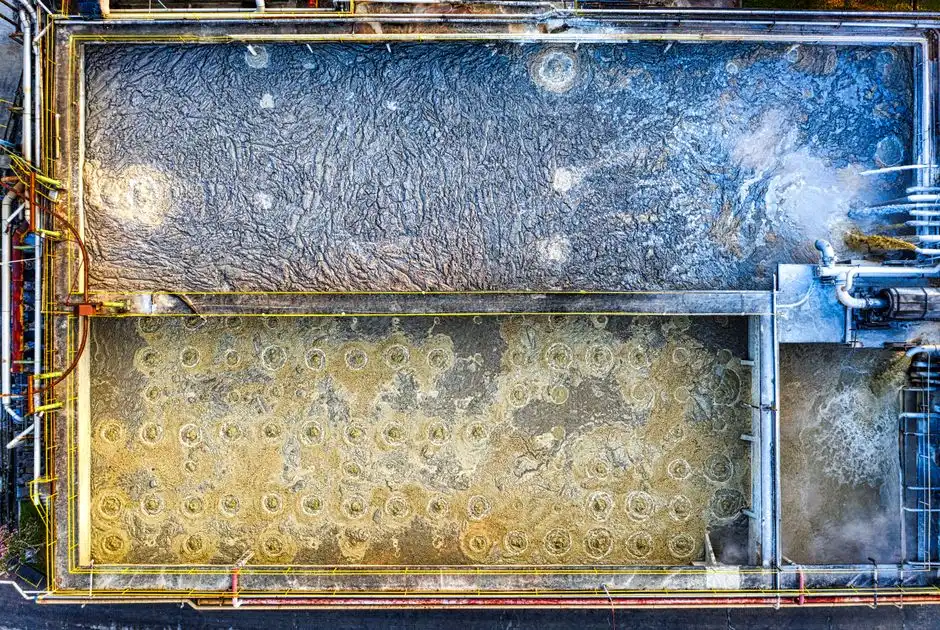
The most defensible equipment choice follows the dominant contaminant fraction in each separated stream. Bulk-solids streams generally belong first to a clarifier; buoyant and conditioned-colloidal streams generally belong to DAF; mixed streams often need both in sequence.
- Tailings thickener overflow, mill discharge or dense mineral fines: Specify a conventional or high-rate lamella clarifier as the first unit, subject to settleability testing and an underflow-consistency target. The high-efficiency lamella clarifier should be evaluated for this duty rather than assumed from nominal flow.
- Oil-contaminated wash water, equipment runoff or flotation-reagent streams: Evaluate DAF with appropriate coagulation and flocculation. World Water Works explicitly identifies oil, grease and non-soluble organics among materials removed by its DAF process (World Water Works, undated technical source).
- Acid mine drainage containing fine precipitates or colloids: Evaluate conditioned DAF as a polisher after appropriate bulk-solids removal. The Minerals study supports this sequence through coagulation, flocculation and DAF, although its application was algae recovery from treated coal-mining wastewater rather than a universal AMD design (Minerals, 2026).
- Mixed metals wastewater with dense solids plus buoyant or colloidal contaminants: Evaluate a clarifier followed by DAF. The HydropureWater application note describes this arrangement as capturing the colloidal, precipitated and buoyant fraction after high-rate clarification (HydropureWater, 2026).
- Process-water reuse: Include downstream filtration or membrane treatment in the same evaluation. Clarification or DAF alone does not establish reuse readiness; the final barrier and its fouling risk must follow the proposed water chemistry.
| Stream condition | Preferred concept | Purchasing check |
|---|---|---|
| Dense fines dominate | Clarifier or thickener | Settleability, solids loading and underflow target |
| Oil and reagent dominate | Conditioned DAF | Oil form, reagent concentration and floated-sludge handling |
| Colloidal or precipitated fraction dominates | Conditioned DAF, potentially after clarification | Jar-test dose, contact time and residual solids |
| Both fractions are material | Clarifier to DAF | Intermediate solids carryover and final effluent basis |
| Reuse is required | Clarifier and/or DAF plus downstream polishing | Filtration or membrane criteria and whole-loop mass balance |
For fabricated-metals applications, use the DAF versus clarifier comparison for fabricated-metals wastewater alongside the industrial heavy-metals removal methods review rather than treating the units as interchangeable.
Design and Procurement Inputs for a 2026 Purchase
Flow alone cannot size either unit. The RFQ needs a source-separated wastewater characterization, representative testing and explicit effluent and sludge objectives so competing suppliers can engineer against the same basis.
- Request normal, peak, storm and shutdown flow data for each separated stream, together with TSS, particle-size distribution, pH, temperature, dissolved metals, oils and grease, and process-reagent concentrations.
- Require jar testing to establish coagulant, pH-adjustment and flocculant doses. Clearwater Industries gives 15–45 seconds of coagulation or flocculation contact time as a design reference, while the final dose and contact time must come from the actual wastewater (Clearwater Industries, undated technical source).
- Do not transfer chemical doses between unrelated applications. The cited 2011 Utah State University work recorded 30 mg/L aluminum sulfate as optimal for algae and phosphorus removal from lagoon effluent; it was not a mining or metals dose (Utah State University, 2011).
- For a clarifier, request solids-loading criteria, settling-velocity or settleability evidence, surface-overflow-rate criteria, underflow solids target and sludge-withdrawal details. HydropureWater’s lamella catalog states 20–40 m/h surface loading, but that catalog value must be checked against the actual stream and design (HydropureWater catalog, 2026).
- For DAF, request the applicable hydraulic loading, recycle ratio, air-saturation basis, rise-rate or solids-loading criteria, expected floated-sludge consistency, skimming capacity and materials of construction.
HydropureWater’s DAF catalog covers 4–300 m³/h across 13 standard models (HydropureWater catalog, 2026). A buyer should ask whether a standard configuration covers the High Point flow and effluent objectives or whether project-specific engineering is required. Include an automatic chemical dosing system where jar testing establishes the required dose, rather than leaving chemical delivery as an uncontrolled installation assumption.
| RFQ package | Clarifier information required | DAF information required |
|---|---|---|
| Influent basis | Flow, TSS, particle distribution, settleability and underflow target | Flow, TSS, contaminant type, chemistry and required flotation performance |
| Process basis | Surface loading, solids loading, retention and withdrawal design | Hydraulic loading, recycle, saturation basis, rise or solids criteria |
| Conditioning | State whether chemical conditioning is required and why | Jar-test coagulant, pH adjustment and flocculant doses with contact time |
| Residuals | Underflow volume and consistency | Float volume, consistency and skimming capacity |
| Commercial basis | Equipment, controls, installation, sludge handling and support | Equipment, controls, chemicals, power, sludge handling and support |
Budget, Compliance and Vendor Selection Risks
The supplied research does not verify a current 2026 High Point unit price for either a DAF or a clarifier, so generic industry capital ranges are not a defensible local budget. Request a budgetary quotation tied to measured flow, TSS, contaminant fractions, duty cycle, materials of construction, controls, chemical conditioning, sludge removal and installation requirements.
Compare the whole train rather than tank purchase price. Include chemical consumption, aeration or recycle power, sludge volume, dewatering and disposal in the operating comparison. A well-conditioned DAF can produce a thick float that may need little further dewatering, but that outcome must be confirmed for the actual wastewater because it affects, rather than replaces, sludge-handling costs (Clearwater Industries, undated technical source).
Supplier qualification should include evidence from comparable metal-bearing effluents, pilot or jar-test data, a proposed control narrative and support for automatic chemical dosing. ISO 9001 certification and generic statements about regulatory compliance do not substitute for a process guarantee tied to the site’s wastewater and permit limits.
Verify the current High Point discharge authorization and applicable state, federal and local pretreatment requirements. Neither clarification nor DAF universally removes dissolved metals. Chemical precipitation, pH control or another treatment step may be needed, followed by separation and any required filtration. Use the industrial heavy-metals removal methods review to define that treatment boundary, then confirm it with the receiving authority.
Recommended Treatment Train and Next Steps
The purchase sequence should move from source characterization to comparative testing and then to a guaranteed treatment train. Avoid selecting equipment from a plant-wide average flow or a generic metals-removal claim.
- Survey each source separately across normal production, peak discharge, storm conditions, startup and shutdown.
- Test representative samples with gravity clarification, lamella clarification and conditioned DAF under the same evaluation conditions.
- Select a clarifier first when dense solids dominate; select DAF first when the conditioned stream is primarily buoyant or colloidal; select a clarifier-to-DAF train when both fractions are material.
- Define the final filtration or membrane barrier if the treated water will be reused.
- Include sludge dewatering in the same project scope.
HydropureWater’s plate-and-frame filter press catalog lists filtration areas from 1 m² to 500 m², with manual, hydraulic and fully automatic PLC-controlled options (HydropureWater catalog, 2026). The plate-and-frame filter press can therefore be evaluated against the solids inventory from both the clarifier underflow and DAF float. For a clarification-first train, request a project-specific proposal for the high-efficiency sedimentation tank, supported by settleability and underflow evidence.
Require a process guarantee tied to final effluent and sludge objectives, supported by site-specific pilot or jar-test evidence. If no unit can meet the stated objective, expand the train rather than accepting an unproven removal claim.
Frequently Asked Questions
Is a clarifier or DAF cheaper for a High Point metals facility?
There is no supported 2026 local price that determines this comparison. Request a whole-train budget covering equipment, chemical conditioning, recycle or aeration power, sludge dewatering, disposal, controls and installation. Compare each option against the same effluent and sludge objectives, including the cost of carrying colloids, oil or dissolved metals into a downstream process.
How should a supplier be selected for mining or metals wastewater?
Require representative wastewater testing, relevant metal-bearing reference installations, a proposed control narrative and a process guarantee. Check automatic dosing capability, operator training, service support and how the supplier handles upset conditions. A generic removal percentage or certification alone is not sufficient.
Can the equipment be sized from flow alone?
No. Require flow across operating conditions, TSS, particle-size distribution, pH, temperature, dissolved metals, oils and grease, process-reagent concentrations and jar-test results. For a clarifier, also request settleability, solids-loading, surface-overflow-rate and underflow criteria; for DAF, request hydraulic loading, recycle, air-saturation and flotation criteria.
Does clarification or DAF guarantee dissolved-metals compliance?
No. The current permit and receiving authority must define the compliance basis. Determine whether pH adjustment and precipitation are required, then use clarification or DAF to separate the resulting solids. Verify the final effluent against the applicable permit and pretreatment requirements rather than assuming either unit provides complete metals removal.
Related Equipment
- industrial DAF system for metals wastewater — specifications, capacity range, and technical data