What treatment should a Gaborone manufacturer use for high-COD trade waste?
Manufacturers in Gaborone generally treat high-COD trade waste with a staged train: characterize and equalize the effluent, remove suspended solids, oil, grease and incompatible contaminants, then apply biological treatment where the waste is biodegradable before clarification, disinfection and sludge management. The exact train depends on flow, COD, pH, toxicity, nutrients and discharge or reuse destination. Botswana evidence shows why this matters: a BOTEC study selected irrigation objectives of COD < 75 mg/l, TSS < 25 mg/l, ammonia < 10 mg/l and FC < 1000/10 ml, while a separate tannery assessment examined an on-site biological plant. In 2026, reuse can reduce pressure on Gaborone’s water supply, but equipment selection must follow site testing and permit requirements.
Trade waste is not one uniform stream. It is industrial wastewater sent for treatment, and its design basis must reflect the factory’s processes, discharge points, production schedule and receiving route. A high COD reading establishes an organic load, but it does not establish biodegradability, treatment capacity or the appropriate biological process. The flow audit must also distinguish normal production discharge from cleaning, dumping and other intermittent flows.
The defensible sequence is:
- Characterize and equalize the wastewater.
- Apply screening and physical or chemical pretreatment where solids, oil, grease or inhibitory substances are present.
- Reduce biodegradable COD through an appropriate biological process.
- Separate biological solids and assess sludge treatment.
- Apply polishing or disinfection according to the discharge or reuse destination.
This is consistent with the BOTEC wastewater reuse study presented by Hranova at the 2005 BIE annual conference: technology choice depends primarily on raw-water quality and the required characteristics of the final effluent. The 2026 effluent treatment plant buyer’s guide provides a useful general procurement structure, but it does not establish a Gaborone-specific process train.
Water security remains an active public issue. EPIC reported that the University of Botswana and Gaborone City Council partnership was scheduled from January 2024 to January 2025 to focus on wastewater treatment and solid-waste collection. That historical partnership is evidence of continuing municipal priorities, not a current permit or a universal treatment standard for manufacturers.
Start with a wastewater audit, not a treatment-plant catalogue
Representative sampling must cover production, cleaning, dumping and low-flow periods because hydraulic and concentration peaks determine both equalization and biological loading. The BOTEC study recorded consistent high flows from 10h–12h and 12h–14h during March–September 2004, according to Hranova’s 2005 conference paper; that historical pattern is evidence that time-based peaks need analysis, not a flow profile that should be copied into a Gaborone factory design.
Before selecting equipment, request a sampling plan covering COD, BOD, TSS, oil and grease, pH, temperature, nutrients, salinity and contaminants specific to the factory’s processes. Samples should also distinguish soluble organic load from material likely to be removed by physical pretreatment. Compatible organic matter may be suitable for biological treatment; incompatible substances can inhibit microbes, foul membranes or contaminate sludge.
| Design input | Why the buyer needs it | Information to request from the bidder |
|---|---|---|
| Flow and discharge schedule | Defines equalization, treatment and storage duties | Measured operating, peak and dump flows; method and period of measurement |
| COD and BOD | Indicates organic load and biodegradability screening | Load calculation, test method, assumed removals and any pilot-test dependency |
| TSS, oil and grease | Identifies material requiring headworks or DAF pretreatment | Separation duty, waste stream from pretreatment and downstream carryover assumptions |
| pH, temperature and nutrients | Tests whether biological treatment can be controlled | Control range, nutrient assumptions and alarm strategy |
| Industrial contaminants | Protects biology, membranes and downstream sludge handling | Compatibility statement, exclusion list and monitoring method |
| Final destination | Sets discharge or reuse treatment objectives | Permit assumptions, receiving-water or reuse requirement and applicable analytical methods |
The destination changes the commercial and technical answer. Municipal sewer acceptance, direct discharge, controlled irrigation and water recovery impose different obligations; none can be inferred from COD alone. For a factory near a controlled discharge route, the food and beverage wastewater sewer-limit guide illustrates why receiving requirements must be established before procurement. For pharmaceutical or specialist waste, the PAC dosing guide for pharmaceutical wastewater shows why chemical dosing must follow characterization rather than substitute for it.
Each bidder should separate guaranteed performance from design assumptions. Ask which parameters are guaranteed, which are assumed, which require pilot testing and what sampling frequency supports the guarantee. If the answer depends on untested biodegradability, inhibitor levels or membrane flux, the quotation is not yet a fixed design.
Equalize and pretreat the effluent before biological treatment
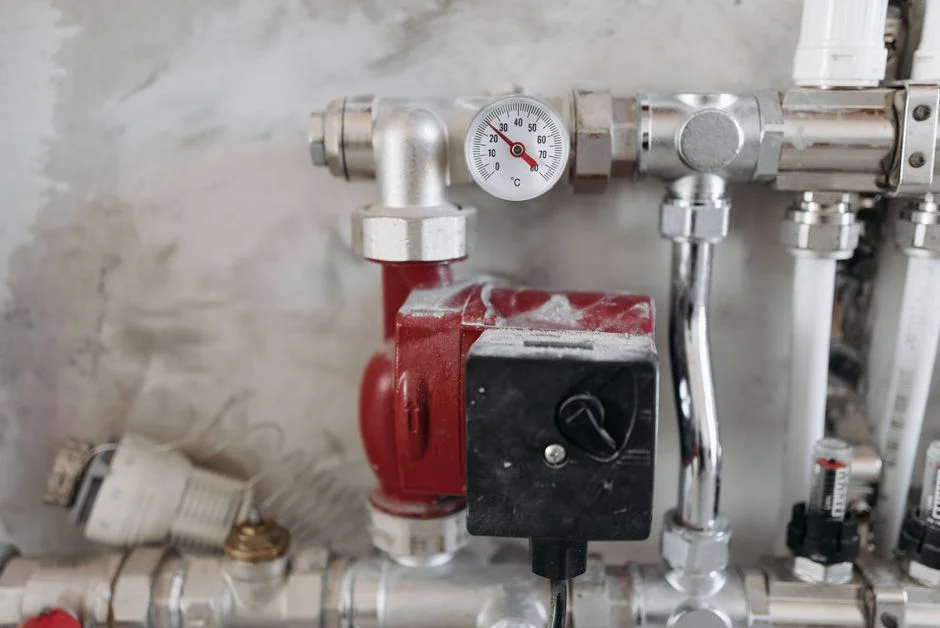
Equalization controls hydraulic and concentration shocks before the biological process, but its volume cannot be selected from a generic rule. The BOTEC case demonstrated clear time-based flow peaks; a Gaborone factory must measure its own production, wash-down and dumping patterns and then test whether equalization alone can keep biological loading within the selected system’s control range.
Mechanical screening protects pumps and downstream equipment from rags, plastics and fibrous debris where those materials are present. An rotary mechanical bar screen is a pretreatment component, not a COD-removal stage. The designer must define the screen aperture, extracted-material handling and the waste fraction that will proceed to sludge processing.
For suspended solids, FOG, oil and colloidal material, an industrial DAF pretreatment system may reduce the load entering biological treatment or improve later solids handling. DAF is not automatically the right unit: its performance depends on wastewater characteristics, coagulant or pH chemistry, recycle operation and the quantity and nature of recovered sludge.
| Unit or control function | Primary role | Selection question |
|---|---|---|
| Equalization | Buffers flow and concentration variation | What measured flow events must the buffer absorb? |
| Mechanical screening | Removes gross solids and fibrous material | What debris types and screen opening are present? |
| DAF | Separates recoverable float or settled solids | Do oil, FOG and colloidal solids justify the recovered-sludge stream? |
| Chemical dosing | Controls pH, coagulation or nutrient balance | What does jar testing establish about chemical and dose point? |
| Monitoring and control | Detects process deviations and protects downstream equipment | Which measurements trigger alarms, diversion or dose adjustment? |
Chemical addition should follow jar testing. A PLC-controlled chemical dosing system may automate pH adjustment or coagulant feed, but the control range, chemical, dose and injection point must come from the actual wastewater. It will not reliably remove soluble high COD unless the process objective and chemistry establish otherwise. The 2012 African Journal of Environmental Science and Technology study on Jambo tannery wastewater likewise emphasized assessment and optimization of the actual industrial treatment plant rather than reliance on a generic process.
For biological pretreatment, the designer must also define what happens to screenings, DAF float and chemical sludge. Failure to specify these waste streams can leave the factory with an apparent pretreatment solution but no complete plant.
Select biological treatment and solids separation for the COD load
Biological treatment is appropriate only after the effluent has been shown to be biodegradable and non-inhibitory under the expected operating range. Anaerobic and aerobic processes may merit investigation, but the supplied research does not establish a universal biological process for Gaborone manufacturers. The comparison must instead consider organic load, temperature, nutrients, mixing, retention requirements, sludge production and the quality of the separated solids.
The WSZ A/O package treatment plant combines anoxic and aerobic biological contact oxidation, sedimentation and disinfection in a below-grade installation. It is a candidate where wastewater compatibility is demonstrated and the compact civil footprint has operational value. The supplier still needs to state the applicable organic loading, hydraulic performance, effluent guarantees and commissioning tests.
The MBR wastewater treatment system combines biological treatment with membrane solids separation. The supplied product information describes filtration below 1 μm and a capacity range of 10–2,000 m³/day; this is equipment information, not a verified Gaborone duty or performance guarantee. MBR may be relevant where land area is constrained or reuse requires a compact train with membrane clarification, but the bidder must demonstrate membrane compatibility, cleaning strategy, expected flux behavior and reject handling.
| Option | Principal strengths | Key design question | Industrial role to investigate |
|---|---|---|---|
| Packaged biological treatment | Integrated biological contact, sedimentation and disinfection in a compact installation | Can the waste sustain the biological process without inhibition? | Compatible industrial wastewater with confirmed organic loading and civil or installation constraints |
| MBR | Integrated biological treatment and membrane solids separation | Will the wastewater foul the membrane, and what recovery and cleaning plan is offered? | Factories needing a compact biological and solids-separation train with a higher reuse objective |
| DAF followed by biological treatment | Removes physical contaminants before biological loading | What portion of COD and solids can DAF recover, and how will float be handled? | Wastewater containing material that should not enter the biological process or sludge line |
| Clarifier or solids filter | Separates settled solids and enables further sludge concentration | What solids loading and sludge-disposal route apply? | Plants requiring a defined solids-separation and sludge-dewatering sequence |
MBR does not remove every contaminant. Tsholo’s 2023 dissertation from North-West University found antibiotic residues and resistance determinants in wastewater and detected selected genetic markers or compounds in treated water. Although that South African study is not a Gaborone trade-effluent specification, it demonstrates why residual contaminants must remain in the monitoring and reuse assessment.
Sludge selection belongs in the main process decision. A plate-frame filter press can dewater selected sludge streams, while a high-efficiency sedimentation tank addresses solids separation. Buyers should require expected sludge volume and solids content, chemical use, filtrate quality, cake disposal route and operating sequence before assigning either unit.
Polish and disinfect before discharge or reuse
Final treatment is determined by the receiving environment or reuse activity, not by COD removal alone. Disinfection addresses microbial control; it does not remove dissolved salts, refractory organics, metals or other industrial contaminants. Reuse may require additional treatment, controls and monitoring beyond those needed for direct discharge.
Hranova’s BOTEC study, presented at the 2005 BIE annual conference, selected irrigation objectives of COD < 75 mg/l, TSS < 25 mg/l, ammonia < 10 mg/l and FC < 1000/10 ml. These were objectives chosen for irrigation in that BOTEC case, not current universal Botswana limits. Buyers should obtain the applicable permit, municipal acceptance conditions and authority confirmation for the proposed discharge or reuse route.
| Monitoring point | Parameters | Purpose |
|---|---|---|
| Raw wastewater | Flow, COD, BOD, TSS, oil and grease, pH and relevant industrial contaminants | Confirm the design basis and detect changes in incoming waste |
| Biological process | pH, temperature, nutrients, dissolved oxygen where relevant and process indicators | Maintain treatment conditions and detect inhibition |
| Final effluent | Flow, COD, TSS, ammonia and permit- or reuse-specific parameters | Demonstrate compliance and suitability for the intended destination |
| Microbiological and reuse control | FC or another method specified by the receiving requirement, plus relevant microbiological monitoring | Verify the control appropriate to the reuse activity |
The BOTEC wetland operated as a polishing and disposal step. The same study reported that treated-flow quantity was insufficient for normal wetland operation, requiring potable-water addition. That finding shows why reliable effluent quantity and quality must be matched to demand; a reuse system unable to absorb seasonal or process fluctuations can become an operational liability.
A UV sterilizer or chlorine dioxide generator may provide final microbial control, but selection must follow the required dose, hydraulics, maintenance conditions and receiving or reuse criteria. The monitoring frequency should be set by the permit and reuse plan, with automatic alarms and sampling defined for excursions.
Choose a treatment train that fits Botswana’s water-reuse priorities
Gaborone’s reuse opportunity is constrained by water scarcity and long-distance supply infrastructure. EPIC reported that the city’s supply deficit was met through two connected pipelines forming the North-South Water Carrier, spanning more than 400 km. It also documented treated wastewater use for landscaping, gardens, golf courses and horticultural irrigation. These applications reduce demand on potable water, but they do not establish that every industrial effluent is suitable for those uses.
Hranova’s 2005 BOTEC study concluded that reliable effluent quantity and quality, regular monitoring and a reuse system able to absorb fluctuations were central design considerations. That conclusion remains useful because it identifies interfaces often omitted from equipment quotations: the treatment plant, storage, distribution and receiving use must operate as one system.
| Treatment option | Principal strength | Design question | Possible industrial role |
|---|---|---|---|
| DAF | Physical removal of suitable suspended and floatable contaminants | Are recoverable fractions present, and what chemical and sludge inputs are required? | Pretreatment before biological treatment or solids handling |
| WSZ A/O package plant | Compact integrated biological, clarification and disinfection arrangement | Is the wastewater biodegradable and compatible with the package loading? | Factories seeking a compact installation for compatible effluent |
| MBR | Integrated biological treatment and membrane solids separation | Can membrane fouling, recovery, cleaning and reject handling be controlled? | Factories pursuing a compact train with a higher reuse objective |
| Sludge filter press | Concentrates sludge for handling or disposal | What are the expected solids, chemical demand, filtrate and cake-disposal routes? | Industrial sludge dewatering where the recovered cake has a defined route |
No option is universally superior. DAF primarily addresses physical contaminants; a package biological plant addresses compatible biodegradable wastewater; MBR adds membrane solids separation but introduces membrane-management requirements. Selection should follow measured wastewater characteristics and the required effluent use. The DAF versus clarifier buyer’s guide provides a useful separation-method framework, while the filter press retrofit and upgrade guide is relevant when assessing an existing sludge-dewatering bottleneck.
Procurement should require bidders to define redundancy, sludge handling, chemical consumption, operator skill, monitoring, commissioning criteria and local support for a Gaborone deployment. Quotations should also state what remains outside the equipment scope, particularly civil works, electrical supply, drainage, odor control, laboratory services and waste-disposal obligations.
Frequently Asked Questions
How much does an industrial high-COD treatment plant cost in Gaborone?
A defensible 2026 price cannot be stated without confirmed flow, wastewater analysis, treatment target, civil-work assumptions and sludge-handling scope. No supplied research source establishes a Gaborone price. Request an itemized quotation separating equipment, tanks, controls, installation, commissioning, chemicals, sludge disposal, monitoring and ongoing operation, and state which performance items are conditional on pilot testing.
Should a Gaborone factory choose DAF, an A/O package plant or MBR?
Map DAF to removal of suitable suspended solids, oil, grease and floatable material; map the WSZ A/O package plant to compatible biological treatment with clarification and disinfection; and map MBR to a compact biological process with membrane solids separation. Then test the waste before selecting. A practical check is to ask each bidder to identify the contaminant load their unit will remove and the residual load carried into the next process.
What flow rate should a high-COD wastewater system be sized for?
Use measured operating, peak and dump flows, not a generic hydraulic figure or the BOTEC historical time profile. Hranova’s 2005 BOTEC study found consistent high flows during 10h–12h and 12h–14h from March–September 2004, demonstrating why time-based flow analysis matters. A bidder should show how each proposed unit responds to the factory’s measured flow sequence and how equalization changes downstream loading.
Can industrial effluent from Gaborone be reused for irrigation?
Reuse can reduce potable-water demand, but suitability is conditional on the industrial contaminants, treatment train, monitoring reliability, storage and intended end use. The BOTEC irrigation objectives—COD < 75 mg/l, TSS < 25 mg/l, ammonia < 10 mg/l and FC < 1000/10 ml—belong to that historical case and are not universal current limits. Obtain regulator or authority confirmation and require a reuse-specific water-quality plan.
Which documents should I request from an equipment supplier?
Request guaranteed process parameters, analytical test methods, pretreatment assumptions, influent limits, utilities, controls, alarm response, sludge output, chemical consumption, commissioning criteria, maintenance schedules, spare parts and local support. Also require a list of exclusions and the conditions under which performance guarantees cease to apply. The 2026 effluent treatment plant buyer’s guide can structure that document review, but the final acceptance test must reflect the Gaborone factory’s permit and reuse requirements.