What Coyoacan's Data Center Must Treat
A Coyoacan data center needs two separate treatment trains: sanitary wastewater for staff, cafeteria and restroom flows, and cooling-tower blowdown for the concentrated residual from evaporative cooling. The 2026 design basis should be reuse-first where reclaimed supply is available, with blowdown equalization, solids removal, softening where required, side-stream reverse osmosis where recovery is justified, dechlorination and a legally permitted overflow route. Final scope depends on cooling topology, source-water chemistry, cycles of concentration, sewer capacity, site-specific permit boundaries and whether reuse applies to cooling makeup.
Cooling-tower blowdown is what remains when evaporation removes relatively pure water while dissolved solids and treatment chemicals remain in the circuit. Water Utility Report, updated 2026-04-14, notes that the residual can contain elevated salts, heavy metals, biocides, corrosion inhibitors and altered pH. It therefore requires a different treatment envelope from sanitary wastewater, even where both streams eventually reach the same sewer.
The Mexico City engineering guide provides useful regional context, but not a substitute for Coyoacan testing. For a cooling loop operating at 4–6 cycles of concentration, it identifies potential blowdown characteristics of 1,500–2,500 mg/L TDS, 400–800 mg/L CaCO3 total hardness, 5–50 mg/L free chlorine and 5–20 mg/L TSS. Those are planning values, not assumed Coyoacan influent. A regional data-center wastewater treatment guide also illustrates why process flows and permit routes should be separated rather than assumed.
| Design input | Sanitary wastewater | Cooling-tower blowdown |
|---|---|---|
| Primary sources | Restrooms, staff facilities and cafeteria | Cooling-loop bleed |
| Main quality concerns | BOD, TSS, ammonia and pathogens | TDS, hardness, scale, corrosion, biocides, chlorine and pH |
| Preferred route | Treatment followed by reuse or sewer discharge | Treatment, recovery for reclaimed cooling makeup and permitted overflow |
| Verification needed | Peak sanitary flow, reuse demand and sewer limits | Source chemistry, chemical program, cycles of concentration and sewer acceptance |
Before selecting equipment, the project team should establish measured source-water chemistry, cooling-system configuration, make-up flow, expected cycles of concentration, chemical additions, sewer route, reuse objectives and the applicable permit boundary. A DAF system for cooling-blowdown pretreatment should not be selected from the campus power rating alone.
Why a Reuse-First Water Balance Matters in 2026
Mexico's data-center water demand makes freshwater reduction a business constraint, not merely an environmental objective: Mordor Intelligence estimates 18.76 billion liters of consumption in 2026, up from 16.84 billion liters in 2025, with 32.21 billion liters projected for 2031 at an 11.41% CAGR. Central Mexico generated 52.30% of national consumption in 2025, and Mordor Intelligence projected an 8–10-billion-liter regional withdrawal for that year. These market figures describe national and regional conditions; they are not a Coyoacan water-allocation entitlement.
The nearest scarcity evidence comes from the HydropureWater Mexico City guide: the Cutzamala system supplied roughly 16% of the metropolitan area's potable water and fell below 39% of operating capacity during the February–May 2024–2025 dry season. The guide reports that SACMEX industrial allocation tightening carried into the 2026 allocation cycle. That supports a reuse-first planning posture for the wider Valley of Mexico, but the project still needs confirmation of the Coyoacan site's supply basin, allocation and opportunity to contract reclaimed water.
The process relationship is simple:
Blowdown = Makeup ÷ (cycles of concentration − 1)
Increasing cycles of concentration reduces blowdown and freshwater demand, but concentrates dissolved solids and increases scale risk, chemical demand and pretreatment requirements. It is therefore a coupled decision, not a cooling-only setting. The regional guide's adjacent planning scenario assumes 60–240 m³/day of blowdown and 50–80 m³/day of sanitary flow for a 40 MW campus using an adiabatic/economizer hybrid at PUE 1.4. Those values belong to that scenario and must not be transferred to Coyoacan without a site water balance.
Reuse also carries a lifecycle trade-off. Open Engineering's 2026 comparative life-cycle study found that the wastewater scenario had about twice the global warming potential of the freshwater case, with treatment energy accounting for roughly 80% of the difference. In its UF+RO scenario, wastewater energy use exceeded five times the freshwater case, although improved cycles of concentration reduced blowdown and chemical consumption. The buyer should therefore compare avoided potable water and discharge capacity against membrane energy, concentrate disposal, chemicals, sludge and the legal overflow system.
Treat the Sanitary and Blowdown Streams Separately
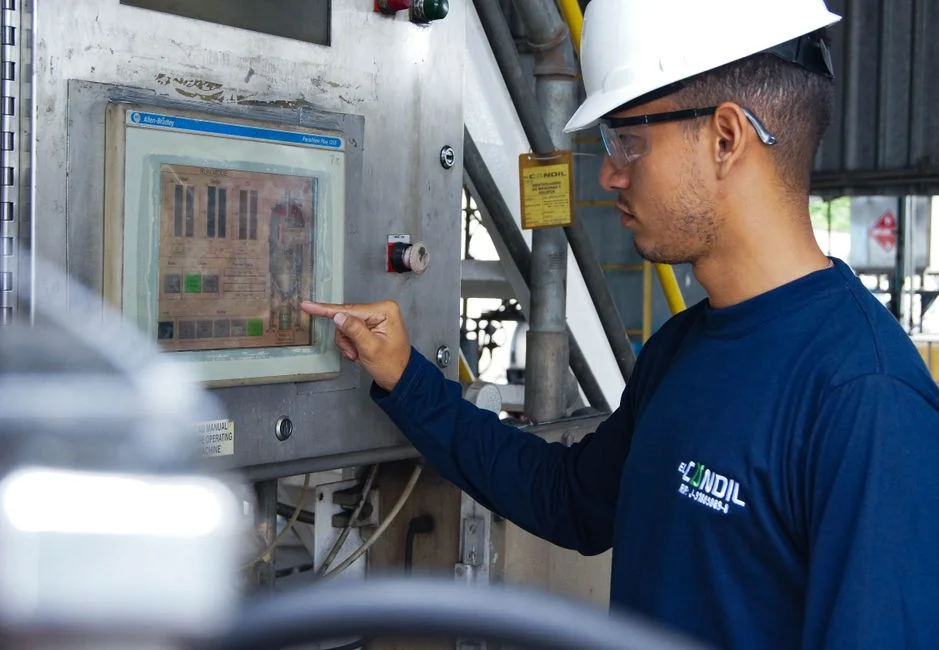
The sanitary stream requires biological treatment, solids separation and disinfection before reuse or discharge; the blowdown stream requires removal of concentrated solids and salts, chemical residual control and a managed destination. Combining them before characterization can mask the toxicity and scaling characteristics of cooling blowdown and prevent meaningful treatment guarantees.
The recommended sanitary process is equalization, biological treatment, clarification or membrane separation, and disinfection. The Mexico City guide identifies an MBR membrane bioreactor for sanitary wastewater reuse when sanitary flow is approximately 80 m³/day or higher and cooling, toilet-flush or irrigation reuse is required. At lower flows without reuse intent, the same guide identifies an underground integrated sewage treatment option as a potential sewer-connection solution, subject to site and permit review.
The blowdown train begins with equalization and solids removal. A DAF system for cooling-blowdown pretreatment can remove suspended material before filtration. Where recovery and higher cycles of concentration are justified, the guide's sequence adds softening, side-stream reverse osmosis, residual control and storage for reclaimed cooling makeup. A side-stream reverse osmosis unit for blowdown recovery must be selected against measured feed chemistry, recovery, concentrate handling and cooling-loop limits.
| Stream | Indicative process route | Key acceptance issue |
|---|---|---|
| Sanitary wastewater | Equalization → biological treatment → clarification or MBR → disinfection | Reuse quality, pathogen control and sanitary sewer limits |
| Cooling-tower blowdown | Equalization → solids removal → softening where required → side-stream RO → residual control and storage | Cooling-loop chemistry, biocide residual, concentrate route and overflow acceptance |
Blowdown cannot be assessed only by BOD and TSS. Isothiazolinone and other biocide residuals can trigger toxicity controls that a conventional sanitary treatment envelope does not address. The Mexico City guide gives pH 5–9, BOD no higher than 120 mg/L to sewer or 60 mg/L to receiving waters, oils and greases no higher than 50 mg/L, and free chlorine no higher than 0.5 mg/L under its cited NOM-001-SEMARNAT-1996 framework. These are guide references, not a substitute for the current Coyoacan permit.
The guide describes a 24–48-hour hold-and-decay tank with sodium bisulfite dosing for single-stage dechlorination. The project must still confirm holding time, residual decay, toxicity limits and sewer acceptance at the exact site. If the discharge route remains available, a chlorine dioxide generator for controlled residual treatment may be considered for the reuse train, subject to process validation and permit requirements.
Match the Treatment Train to Campus Scale
Campus scale is a useful screening framework, but the measured water balance and reuse target must control final equipment sizing. The Mexico City guide divides treatment into three tiers; its capacities and performance targets are planning criteria, not automatic approvals for a Coyoacan project.
| Guide tier | Reference scale | Screening treatment scope | Coyoacan decision point |
|---|---|---|---|
| Tier 1: discharge-oriented | No more than 20 MW | 4–6 cycles of concentration; DAF only if TSS exceeds 20 mg/L; no RO or softener | Validate the Coyoacan permit, sewer conditions and whether discharge-only operation is legal |
| Tier 2: partial reuse | 20–60 MW | DAF, twin-tank softener, side-stream RO and ClO2; 7–8 cycles of concentration; more than 75% blowdown recovery target | Confirm cooling chemistry, source-water quality and concentrate route before fixing recovery |
| Tier 3: hyperscale reuse-first | 60–100 MW or larger | Full pretreatment and RO, activated-carbon polish for isothiazolinone destruction, optional mechanical vapor compression and crystallizer | Establish basin-specific limits, reuse credit and discharge contingency |
A small colocation retrofit may justify a compact sanitary treatment package and a DAF-based blowdown section, but only if measured flows, sewer terms and permit conditions support that scope. A hyperscale campus may justify a full reuse train because the absolute flow, permit exposure and freshwater savings are larger. The comparison must nevertheless use the same hydraulic and water-quality basis for both.
Zero-liquid discharge should remain conditional. The guide places it at 7–10 cycles of concentration for Tier 3 and says it becomes defensible when basin TDS exceeds 1,500 mg/L or discharge is effectively prohibited. Its stated budget is $3–8 million CAPEX and $5–15/kgal OPEX. Those figures are for the guide's Mexico City context, not a Coyoacan quotation.
For sanitary flows below approximately 80 m³/day without reuse intent, the guide identifies the underground integrated sewage treatment package as an option that can connect to sewer without a full-time on-site operator. A blowdown route may also require an industrial water softener before RO. If pretreatment produces sludge, a plate-and-frame filter press can reduce hauling volume, but disposal arrangements remain site-specific.
Compare bids on total installed cost and operating responsibility, including pretreatment, membrane cleaning, chemicals, sludge handling, redundancy, monitoring, operator coverage and maintenance of the legal overflow route. The least-capital treatment is not necessarily the lowest lifecycle cost.
Build the Coyoacan Permit and Procurement Checklist
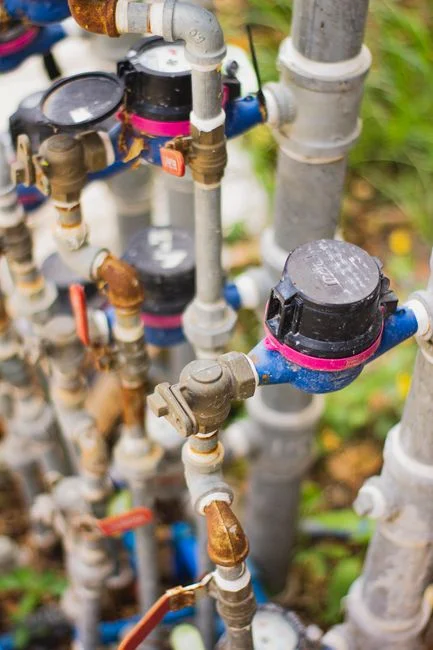
A Coyoacan project must establish its legal and utility boundary before fixing equipment. Confirm whether the parcel is wholly within Coyoacán or interfaces with CDMX systems, identify the receiving sewer and discharge destination, and obtain written confirmation of applicable CONAGUA, SEDEMA and local requirements. The supplied research supports reuse-first planning, but it does not establish a Coyoacan-specific permit inventory.
Procurement should then follow this sequence:
- Establish legal pathways. Determine whether a CONAGUA Title concession, treated-wastewater supply arrangement and discharge concession are available for the exact location.
- Build a 12-month water balance. Cover make-up, evaporation, drift, blowdown, sanitary generation, reuse, discharge, peak day, dry season and emergency overflow.
- Characterize both streams. Test source water and blowdown for TDS, hardness, alkalinity, chloride, sulfate, TSS, free chlorine, biocide, corrosion-inhibitor residuals, pH and metals relevant to the cooling program.
- Define acceptance criteria. Set cooling-loop chemistry, scale and corrosion limits, microbial control, reuse quality, sewer limits and monitoring frequency.
- Require performance disclosure from bidders. Bidders should state membrane recovery, permeate quality, energy consumption, cleaning frequency, chemical demand, redundancy, controls, local service capability, operator training and exclusions.
- Price the full operating model. Compare pretreatment, membrane replacement, chemical supply, sludge removal, concentrate disposal, monitoring, operator coverage and overflow-route costs.
The Mexico City guide gives a $250,000–500,000 installed benchmark for a 50,000 GPD RO polishing train and $1.50–3.00/kgal OPEX. These are early budget-screen values from the guide, not a Coyoacan quote or performance guarantee. A Coyoacan tender should request a site-specific total-cost schedule with utility tariffs, water chemistry, recovery targets and concentrate destinations stated as assumptions.
Control and replacement systems should be specified with the treatment package. An automatic chemical dosing system for residual and pH control requires compatible wetted materials and verified dose limits. If the design retains ultrafiltration, request an ultrafiltration system with defined pretreatment requirements. Any treatment valves, filter media and replacement parts package should list materials, service life and local availability.
Frequently Asked Questions
How should treatment capacity be sized for a Coyoacan data center?
Base treatment capacity on measured peak flows and the site water balance, not campus MW alone. The guide's 60–240 m³/day blowdown range applies only to its specified 40 MW adiabatic/economizer hybrid scenario. Include peak-day makeup, blowdown, sanitary generation, recovery, downtime and the emergency overflow route.
What budget should a buyer expect for wastewater and blowdown treatment?
Use the guide's $250,000–500,000 installed figure for a 50,000 GPD RO polishing train and $1.50–3.00/kgal OPEX only as early screening; neither is a Coyoacan quotation. Request installed price, energy, chemicals, membrane replacement, sludge, concentrate disposal, operator coverage and overflow-route costs. Optional ZLD is listed at $3–8 million CAPEX and $5–15/kgal OPEX in the guide's stated context.
Which supplier qualifications should be checked before selecting equipment?
Require evidence of process guarantees, membrane recovery and energy data, automatic controls, chemical compatibility, redundancy, commissioning, operator training and local service. Ask how each guarantee is measured, what exclusions apply and who remains responsible for pretreatment, chemicals, sludge, monitoring and corrective action.
Does NOM-001-SEMARNAT-1996 establish the complete Coyoacan permit?
No. NOM-001-SEMARNAT-1996 is a federal framework, but the operator must verify the current Title, sewer rules, reuse conditions and any basin-specific restrictions before selecting equipment. Written confirmation from the applicable authorities and receiving utility is required for the exact parcel and discharge route.
How should reclaimed cooling makeup be evaluated?
Model potable-water savings against membrane energy, chemical consumption, RO concentrate, sludge and biosolids handling, and the cost of maintaining an overflow route. Open Engineering's 2026 study found that treatment energy accounted for roughly 80% of the GWP difference between the wastewater and freshwater cases, so reuse needs a lifecycle case rather than a water-saving claim alone.