What Decision Should an EV Factory Make for Odyssey and Ridgeline Wastewater?
For Honda Odyssey and Honda Ridgeline production, factories should choose DAF when wastewater contains floatable oil, grease, FOG or flocculated light solids; choose a clarifier when settleable solids dominate and lower operating cost is the priority. A hybrid train is often better when both contaminant types are significant. Ecologix reports 95% oil-and-grease removal by DAF versus 70% by a clarifier in one food-processing stream, while a mining clarifier reduced solids by 90% at lower cost. Because EV assembly streams differ by process, factories should sample each stream, characterize oil, solids and flow variation, and then pilot-test the selected equipment before final sizing.
Neither DAF nor a clarifier can be selected reliably from the vehicle models alone. The decision depends on wastewater origin, flow variation, oil and grease content, suspended-solids characteristics and the treatment objective. A plant serving Odyssey and Ridgeline production may generate several streams with different contaminant profiles, including body-shop and painting wastewater, vehicle-wash water, machine-tool and metalworking wastewater, stormwater, and sanitary wastewater.
The preliminary rule is straightforward. Investigate DAF where floatable oil, grease, FOG or conditioned light solids are important. Investigate a clarifier where settleable solids dominate. Investigate a hybrid arrangement when both floatable contaminants and settleable solids materially affect the required outcome. This approach is also developed in the EV and auto wastewater DAF-versus-clarifier guide.
Ecologix’s examples are useful as directional evidence, not as design guarantees. In one food-processing stream, DAF achieved 95% removal of oils and greases compared with 70% for a clarifier; in a mining application, a clarifier reduced solids by 90% at lower cost, according to Ecologix’s selection guide. These results came from different industries and streams. The supplied research does not establish a flow, pollutant concentration or required removal efficiency for an Odyssey or Ridgeline factory. For permit and pretreatment planning, the factory should also review applicable transportation equipment wastewater pretreatment limits for its own jurisdiction.
How Automotive Wastewater Streams Change the Equipment Choice
Stream segregation determines whether flotation or gravity sedimentation deserves priority, because combining wash water, coating rinses and metalworking effluent can dilute oily loads and alter solids settleability. Each stream should be characterized before it is combined.
| Wastewater source | Characteristics to investigate | Relevant separator behavior | Required sampling and combination caution |
|---|---|---|---|
| Vehicle-wash wastewater | Oil and grease, suspended solids, detergents, surfactants and flow variation | Floatable oil favors DAF; settleable wash solids may also require clarification | Sample across operating and wash cycles; do not assume detergents make all oil floatable |
| Machining or metalworking wastewater | Suspended solids, oil and grease, metals and relevant process chemistry | DAF may capture floatable oil; clarifiers may address settleable solids, but neither resolves dissolved metals | Test each machine or process group and identify applicable discharge or reuse parameters |
| Coating and body-shop streams | Oil and grease, paint-derived suspended solids, emulsions, pH and process chemistry | DAF is relevant to floatable contamination; conditioning may improve capture; settled solids still require management | Keep coating-containing streams segregated during sampling and trial work where practical |
| Stormwater | Suspended solids, oil, metals, sediment and variable rainfall conditions | Selection depends on whether contamination is predominantly floatable or settleable | Characterize representative clean-weather and first-flush conditions; avoid designing from nominal flow alone |
| Sanitary wastewater | Organic load, suspended solids, pH and flow pattern | Neither DAF nor clarification replaces biological treatment | Assess separately; do not use it to compensate for poor performance on industrial streams |
Clearwater Industries explains that DAF micro-bubbles attach to impurities and flocculated particles, rise to form a floating sludge blanket, and are removed by skimming. It also notes that most DAF systems include a bottom collection zone and sludge-extraction mechanism because settled material can remain. This matters in automotive plants: flotation is not the absence of sedimentation.
Neither technology alone resolves dissolved metals, soluble organics or every form of emulsified contamination. Clarification may improve conditions before biological treatment, while DAF may remove oil that would otherwise interfere downstream, but the required treatment train depends on the plant’s objective.
For each candidate stream, obtain flow and flow variation, TSS, oil and grease, pH, settleable-solids characteristics and chemistry relevant to the permit, reuse target or pretreatment obligation. Production schedules and nominal factory flow do not establish design flow. Where a plant needs preliminary solids screening, a rotary mechanical bar screen may protect downstream equipment, but it does not replace wastewater characterization or clarification selection.
What DAF Changes About Oil, Grease and Light Solids Removal
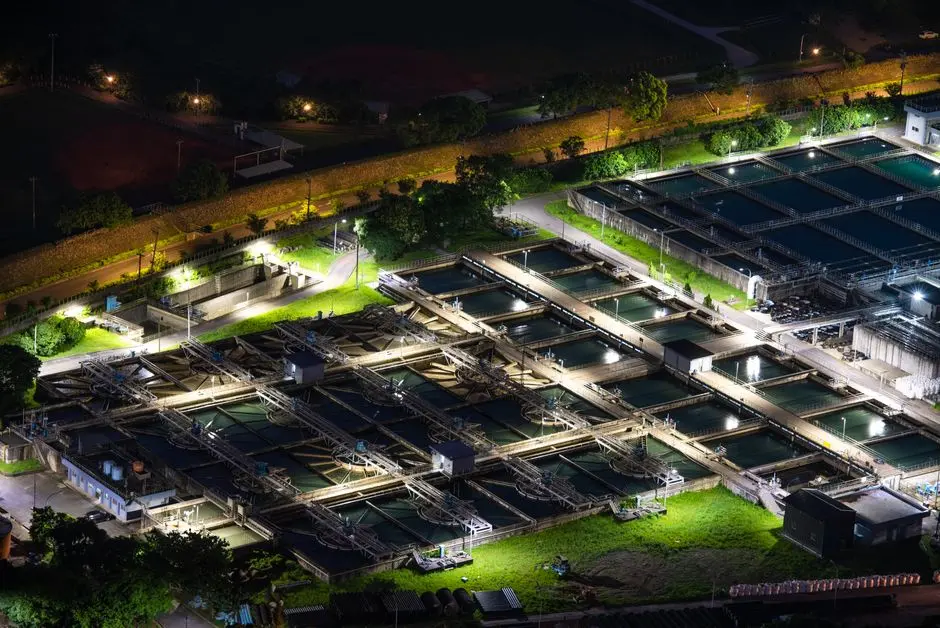
DAF buys active flotation of floatable and conditioned contaminants, but that performance depends on the recycle, air-saturation, chemical-conditioning and solids-handling systems operating as an integrated train.
The process sequence begins with clarified-water recirculation. A pump pressurizes the water and mixes it with pressurized air; pressure release in the treatment tank forms micro-bubbles that attach to oil, grease and flocculated particles. The resulting floating blanket is removed by a skimmer, and clarified water is recovered. Clean water is required for startup because the recirculation pump and air-saturation system are intended to operate with clean water, according to Clearwater Industries’ industrial DAF guidance.
Chemical conditioning commonly uses coagulants, pH adjusters and polymer flocculants. Clearwater states that conditioning increases solids-removal efficiency and creates a thicker, more dewatered sludge that may require little or no further dewatering. Its serpentine flocculation tubes provide 15–45 seconds of flash mixing, while mix tanks provide longer contact where required. Clearwater specifically recommends jar testing to establish mixing time rather than assuming a fixed value.
The oil-removal example remains useful only within its original scope. Ecologix reports 95% oil-and-grease removal with DAF and 70% with a clarifier for the same food-processing wastewater stream. That comparison does not establish equivalent performance for vehicle washing, machining or coating wastewater, because emulsions, detergents, temperature, solids and chemical conditioning can change flotation behavior.
For procurement, specify the complete operating dependency set: clean-water startup, recirculation, air saturation, chemical storage and dosing, pH monitoring, skimming, bottom sludge withdrawal, controls and operator training. An industrial DAF system should not be evaluated as a tank alone, and chemical feed reliability should be covered by an appropriately scoped automatic chemical dosing system.
Where Gravity Clarifiers Have the Economic and Operational Advantage
A clarifier is usually the stronger economic candidate when the treatment objective is dominated by genuinely settleable solids and the wastewater does not require active flotation of oily material.
Clarifiers use gravity sedimentation: heavier solids settle to the bottom of a tank and are withdrawn as sludge. Ecologix characterizes clarifiers as generally having lower operating costs than DAF. In its mining example, a clarifier reduced solids by 90% at lower cost; this supports the technology direction for heavy sediment loads, but it is not a performance guarantee for automotive wastewater.
The economic comparison should include more than separator purchase price. A buyer needs comparable information on civil works, structural complexity, mechanical systems, chemical consumption, sludge removal, operator attention, maintenance access, available footprint and utility requirements. The supplied research does not provide comparable installed costs or footprints for Odyssey or Ridgeline projects, so a defensible budget request must be based on the actual wastewater data and the plant’s construction constraints.
Performance depends on the nature and settleability of solids, hydraulic loading, sludge withdrawal and flocculation. Without wastewater analysis, no universal removal rate can be assigned. Light floc, buoyant solids and emulsified oil can remain poorly separated even where heavier mineral or metallic particles settle readily.
A lamella clarifier for settleable solids uses inclined plates to increase effective separation area, with sludge recirculation and flocculation as configuration elements. It remains a settling solution rather than a substitute for biological treatment of dissolved load. A hybrid clarifier-DAF train should be considered when the same stream contains both a floatable fraction and a substantial settleable fraction.
DAF Versus Clarifier: Decisions, Trade-Offs and Hybrid Treatment
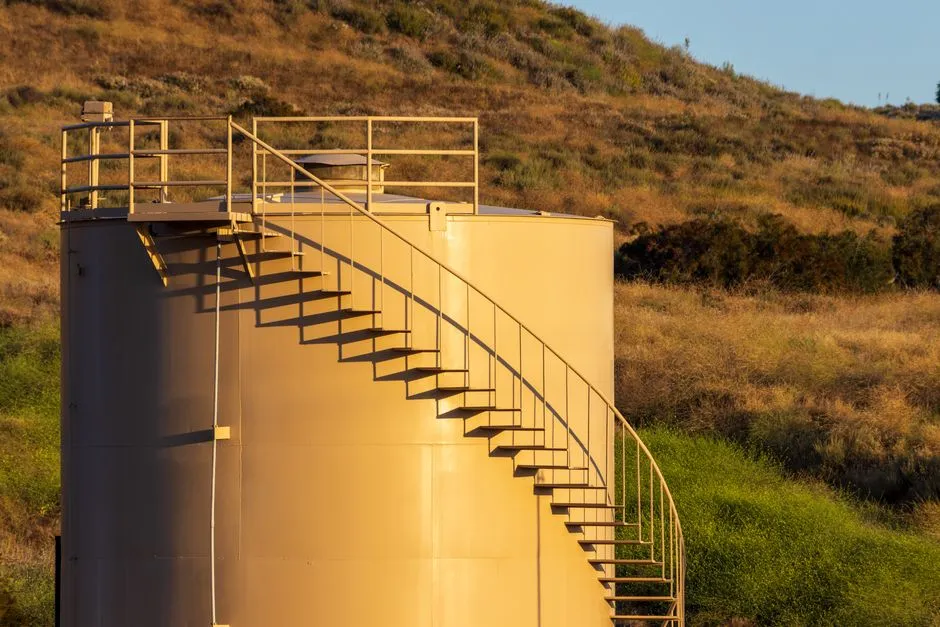
The defensible choice follows the controlling contaminant and treatment objective, not a generic claim that one technology is better for automotive manufacturing.
| Decision factor | DAF | Clarifier |
|---|---|---|
| Primary mechanism | Micro-bubble flotation with skimming | Gravity sedimentation with sludge withdrawal |
| Best-fit contaminants | Floatable oil, grease, FOG and conditioned light solids | Predominantly settleable solids |
| Chemical conditioning | Commonly required to improve particle capture | May be required when the target solids do not settle readily |
| Operating-cost direction | Generally higher than a clarifier; may be cost-effective for specific oil applications | Generally lower operating cost, according to Ecologix |
| Mechanical scope | Recirculation, pressurization, air saturation, skimmer and sludge removal | Basin, settling zone, sludge collection and withdrawal; lamella units add plate assemblies |
| Sludge behavior | Floating blanket plus settled material; conditioned sludge may be relatively dewatered | Concentrated settled sludge whose handling depends on withdrawal and conditioning |
| Footprint constraint | Compact configurations may be attractive where floor area is limited | Requires adequate settling area and access; site-specific layout must be compared |
| Maintenance focus | Pumps, air system, nozzles, skimmer, controls and chemical dosing | Sludge withdrawal, settling performance, mechanisms and corrosion control |
| Pilot-test priority | Oil capture, foam behavior, chemical dose, skimming and sludge handling | Solids settleability, hydraulic loading, sludge concentration and withdrawal |
Ecologix’s conclusion is conditional: clarifiers generally have lower operating costs, while DAF may be more cost-effective for specific oil and grease applications. Clearwater likewise states that most DAF systems account for settled sludge, supporting a hybrid arrangement where both mechanisms are needed. If DAF is used downstream, sludge logistics may require additional plate-and-frame filtration; that requirement must be established from pilot sludge characteristics.
Use this sequence for procurement:
- Verify the permit, reuse objective or pretreatment obligation for each stream.
- Characterize flow, flow variation, oil and grease, TSS, pH and settleable solids.
- Identify the contaminant that controls equipment selection.
- Assess chemical supply, safety, sludge handling and downstream disposal routes.
- Compare life-cycle operating burden, utilities, maintenance and footprint.
- Pilot-test DAF, a clarifier or the hybrid train before final sizing.
Clearwater’s configurations illustrate that DAF design must follow load and flow: FPAC is described for small-to-medium flows with very high contaminant loads; FPBC for low-to-medium loads and low-buoyancy particles; and FPHF for large flows with low-to-large loads. These are configuration examples, not recommendations for an Odyssey or Ridgeline plant.
How to Pilot-Test and Size the Chosen System
Final sizing should follow measured flows, contaminant loads and pilot performance; a vehicle model or production name is not a sizing basis.
Require an influent characterization by wastewater source. It should cover flow and flow variation, TSS, oil and grease, pH, settleable solids and contaminants relevant to the plant’s permit, reuse target or pretreatment obligation. Include representative operating conditions and separate the industrial streams before evaluating combined-system performance.
Jar testing should establish chemical dose, pH adjustment, mixing time and expected floc behavior. This follows Clearwater’s recommendation to test rather than assume a fixed flocculation contact time. The full-scale pilot should then use the same conditioning chemistry and representative flow basis proposed for the final system. Measure the selected target contaminants, verify clarified-water quality and characterize the resulting float or settled sludge.
Supplier proposals should define startup, clean-water availability, recirculation, air saturation, skimming, sludge withdrawal, controls, maintenance access, operator training and spare-parts support. For DAF, include chemical delivery, pump and air-system maintenance, skimmer adjustment and bottom-solids removal. For a clarifier, include sludge withdrawal, mechanism inspection, corrosion protection and access to the settling zone.
Size from measured hydraulic and contaminant loading, then apply the pilot results with an appropriate engineering margin. As a manufacturer configuration example, Clearwater’s COMPACT DAF handles 66 GPM or less on one skid and uses a modular two-skid arrangement for larger flows. That figure is not a recommended capacity for an Odyssey or Ridgeline plant; it only shows how one supplier has structured a modular package. Any industrial DAF system proposal should explicitly state its design flow, loading basis and treatment objective, while chemical scope should be documented for the automatic chemical dosing system.
Frequently Asked Questions
Which option is cheaper for automotive assembly wastewater?
Clarifiers generally have lower operating costs, according to Ecologix, while DAF may be more cost-effective for streams where oil and grease removal is the controlling duty. There is no supported price range for either system in the supplied research. Buyers should request a stream-specific installed-cost comparison covering equipment, civil works, chemical use, power, sludge handling, maintenance, operator labor and replacement parts; the fabricated-metals DAF-versus-clarifier comparison provides relevant context for industrial applications.
How should a factory size DAF or a clarifier?
Size from measured flow, flow variation, contaminant loading and treatment objectives, then use pilot results to verify performance and operating conditions. Vehicle model and nominal production rate are insufficient. The sizing basis should state whether the calculation addresses hydraulic rate, contaminant load, or both, and identify the assumed water-quality envelope and chemical-conditioning regime.
What should a supplier provide before equipment is selected?
Request performance data for comparable industrial streams, the proposed flow and load basis, chemical requirements, utility demand, sludge characteristics and disposal assumptions, controls, maintenance scope, startup support and operator training. Also ask for a DAF-versus-clarifier comparison for industrial wastewater that addresses the actual stream rather than a generic industry average.
When is a hybrid DAF-clarifier system appropriate?
Use a hybrid train when the same stream has both floatable contaminants requiring DAF and settleable solids requiring clarification. Pilot-test the sequence because DAF can create a floating sludge blanket while also leaving settled material that requires withdrawal. The hybrid is justified by the combined contaminant profile, not merely by the presence of oil in the plant.
Does producing the Honda Odyssey and Honda Ridgeline change the technology choice?
The vehicle models do not establish wastewater composition. Process-stream origin and production-driven variation in flow and contaminant loading govern the decision. If a change alters wash frequency, coating use, machining output or stormwater inputs, reassess the measured loading and repeat pilot confirmation rather than assuming the original selection remains valid.