What Cape Town Hotels Must Decide in 2026
In 2026, a Cape Town hotel usually needs either a connection to the municipal sewer with adequate pretreatment, or an on-site treatment train sized for both daily flow and peak surges. Supplied hotel design guidance uses 200–250 L/bed-day for full-service hotels and a 2.5–3.0 peak factor, while treating kitchen FOG and laundry BOD as separate sizing risks. An MBR suits compact urban sites and reuse; a buried WSZ A/O unit suits smaller properties needing a low-profile solution. Final Cape Town permits, discharge limits and reuse approvals must be confirmed with the relevant authorities.
The first decision is not which treatment brand to buy. It is which regulatory and reuse route the property can sustain. A sewered hotel can discharge to the municipal network subject to the applicable connection, pretreatment and discharge requirements. A constrained site without a viable sewer connection may need on-site treatment before discharge. A property intending to reuse treated water for irrigation or another defined application must design to a confirmed reuse specification rather than treat reuse as an incidental benefit.
Cape Town’s water-security context strengthens the case for early engineering work, but it does not establish a wastewater permit by itself. The academic study Climate change adaptation and local government: Institutional complexities surrounding Cape Town’s Day Zero, published by Jamba on 26 June 2019, describes Day Zero as a landmark learning point surrounded by political, administrative and institutional complexity. A 2026 University of the Western Cape dissertation also identifies local groundwater as part of Cape Town’s wider water-security response. Neither source supplies a current hotel sewer-discharge envelope.
Property scale reinforces the need for a site-specific brief. Cape Town accommodation ranges from small lodges to waterfront hotels and high-rise apartment developments. The AIP Water Investment Summit accommodation listing, dated 13–15 August 2025, reports 537 rooms and suites at Southern Sun Waterfront and 395 apartments at The Rockefeller. The output should therefore be a wastewater balance, an agreed regulatory pathway and a process duty schedule, not a generic “hotel sewage plant” selection.
The broader hotel wastewater selection framework for Wellington shows how the same engineering sequence can be transferred to another city without transferring local permit assumptions.
Build the Cape Town Hotel Wastewater Design Basis
The design basis must separate average flow, peak flow and contaminant strength because occupancy alone cannot size an equalisation tank or biological reactor. The supplied commercial hotel and resort guide, published in 2026, provides planning envelopes for screening—not Cape Town permit limits. Final values require occupancy records, fixture data and wastewater characterisation.
| Design input | Supplied screening basis | Procurement action |
|---|---|---|
| Full-service hotel flow | 200–250 L/bed-day | Confirm against water fixtures, occupancy and measured consumption |
| Eco-lodge flow | 120–180 L/bed-day where low-flow fixtures are installed | Verify fixture efficiencies and seasonal occupancy |
| Peak factor | 2.5–3.0 applied to daily mean flow | Check morning, meal-service and laundry overlap |
| Approximate flow split | 60% guest rooms, 20% kitchen, 10% laundry, 10% staff and other | Replace with metered stream data where possible |
| Worked lodge case | 100 keys at 225 L/bed-day and 1.8 guests per room | Approximately 40–45 m³/day mean; 100–135 m³/day peak |
The worked example illustrates the calculation sequence. A 100-key lodge at 225 L/bed-day and 1.8 guests per room generates approximately 40–45 m³/day mean flow. Applying the supplied 2.5–3.0 peak factor produces approximately 100–135 m³/day peak flow. Both figures come from the supplied 2026 commercial guide and must not be presented as Cape Town approval thresholds.
The contributor list should include occupied rooms, guests, restaurant covers, laundry cycles, water fixtures, irrigation demand and operating hours. Kitchen wastewater cannot be inferred reliably from total flow: grease interception, floor washing and food-preparation practices materially affect its FOG concentration. Laundry needs separate assessment for detergent chemistry, lint, pH and BOD because it can load the biological stage even when its hydraulic share is smaller.
Use these inputs to prepare four separate duties: average daily flow, peak flow, peak FOG concentration and peak organic or hydraulic loading. A quotation based only on rooms, occupancy or daily volume is therefore incomplete. Where metering is available, use it to validate the calculation before final equipment selection.
The commercial guide also indicates that acid or caustic dosing may be needed for alkaline laundry discharge. Any automatic chemical dosing system should consequently be specified against measured pH, chemical demand and control response—not simply included because the hotel has a laundry.
Protect the Biological Stage from Kitchen and Laundry Loads
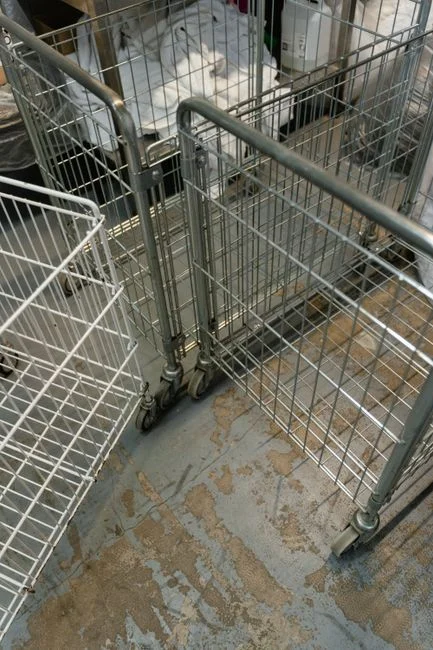
Kitchen and laundry streams should be characterised separately before biological or membrane equipment is sized because they can impose disproportionate organic and fouling loads. The supplied 2026 commercial guide gives the following screening values.
| Stream or parameter | Supplied screening value | Design implication |
|---|---|---|
| Kitchen FOG | 30–80 mg/L | Size grease control and the FOG load accepted by downstream equipment |
| Laundry BOD | 600–900 mg/L | Assess separately from diluted blended wastewater |
| Blended influent BOD | About 350 mg/L | Use only as a preliminary biological loading basis |
| Laundry pH | 9.5–10 | Allow for pH correction where measured discharge requires it |
| Equalisation | 8–12 hours of average daily flow | Buffer loading and reduce the peak presented downstream |
The treatment sequence should be assessed in this order: coarse screening, FOG control, flow and load equalisation, pH correction where necessary, biological treatment, final filtration or polishing as required, and disinfection appropriate to the receiving-water or reuse route. A rotary mechanical bar screen protects downstream equipment from rags, hair, lint and other solids associated with housekeeping and laundry streams.
Equalisation is not simply a storage tank. By holding part of the daily flow for 8–12 hours, it spreads concentrated meal-service and laundry periods over a longer biological treatment period. The supplied guide states that this approach can reduce required reactor volume by 20–30% compared with designing directly to peak. That figure is a commercial-guide design claim, not an independently verified Cape Town outcome.
DAF becomes relevant when the kitchen is a material design driver. The supplied guide recommends considering dissolved air flotation before biological treatment for a resort restaurant with more than 200 seats and a high-volume or à la carte kitchen. DAF can remove oil and grease before it fouls biological media or membranes, but the decision should follow kitchen flow, FOG sampling and discharge or reuse requirements. Where chemical dosing is required, confirm the control strategy and chemical consumption with the supplier.
Do not copy the peak flow directly into every vessel. The supplied guide says the biological reactor should be sized to peak rather than mean flow, while equalisation reduces the portion of the peak that reaches the reactor. The final hydraulic model must show how much peak flow is equalised, how much continues through treatment and what transient load remains during pumping, dosing and tank turnover.
Choose A/O, MBR or a Package Treatment Plant
The treatment process should follow the site constraint, reuse objective and operating capability. The supplied 2026 guide positions a buried WSZ A/O package as suitable for smaller properties where a low-profile installation and minimal operator presence are priorities, an integrated MBR as the default for compact urban hotels, and SBR between MBR and constructed wetlands where more land is available.
| Technology | Position in the supplied 2026 guide | Best-fit site question | Key qualification |
|---|---|---|---|
| Buried WSZ A/O | For smaller lodges requiring a buried unit with no operator presence | Is a landscaped, low-profile installation available? | Confirm final effluent quality and reuse treatment requirements |
| Integrated MBR | Default for compact urban hotels and reuse-oriented installations | Is footprint critical and can technical oversight be provided? | Require flux, MLSS, HRT and renewal costs in the final design |
| SBR | Intermediate option where space is available | Can the property accommodate a batch system and its cycle controls? | Confirm cycle duration, equalisation and downstream polishing |
| Constructed wetland | Low-OPEX option for sites with substantial land | Does the site provide approximately 0.5–1.0 ha? | Generally unsuitable for urban Cape Town sites, according to the supplied guide |
For a buried WSZ A/O package plant, the supplied guide gives an approximately two-hour anoxic zone, six-hour aerobic zone and integrated settler and disinfection chamber. These are design-guide values, not a substitute for a site-specific hydraulic and biological calculation. The advantage is a compact, landscapable installation with less routine attendance, but reuse quality may still require additional treatment.
The supplied guide claims an integrated MBR membrane bioreactor can occupy approximately 60% less space than conventional activated sludge and produce effluent filtered to less than 1 µm. It gives an MBR operating envelope of 6–8 hours HRT, 8,000–12,000 mg/L MLSS, 12–18 L/m²·h operating flux and 0.1 µm nominal PVDF pore size. Require bidders to confirm the final values against the approved design, wastewater characterisation and operating duty—not against the marketing envelope alone.
SBR should be considered where the footprint is less restrictive and the operator can manage cyclic biological loading, settling and discharge. Its suitability depends on the hydraulic profile, equalisation, sludge handling and treatment reliability, not merely the number of keys.
Do not select MBR simply because it is the most advanced option available. If the confirmed application is restricted irrigation, the final process may require less treatment than unrestricted irrigation. If the specified endpoint is unrestricted reuse, polishing and disinfection must satisfy the confirmed current quality envelope. The reuse specification should determine the treatment train; technology preference should determine which compliant train is evaluated.
Handle Disinfection, Reuse and Residual Sludge
Disinfection, reuse storage and sludge handling must be included in the capital scope because omissions can make a technically adequate process unusable in operation. The supplied 2026 guide identifies chlorine dioxide as its preferred terminal disinfection skid for Class A reuse, citing residual retention over long pipelines and avoidance of chloramine formation in high-ammonia effluent.
| Issue | Supplied guide position | Buyer action |
|---|---|---|
| Class A unrestricted irrigation | E. coli below 1,000 CFU/100 mL | Confirm current authority requirements and the intended reuse endpoint |
| Class B restricted drip irrigation | E. coli below 100,000 CFU/100 mL | Confirm whether the application and irrigation method qualify |
| Reuse reservoir | At least 24–48 hours of average daily flow | Add actual irrigation demand and fire-suppression top-up |
| MBR sludge yield | 0.3–0.5 kg DS/m³ treated | Confirm the final yield and route the residual solids |
| Dewatering | Plate-and-frame dewatering recommended for sites above 100 keys where lower cake volume is valuable | Compare hauling frequency, polymer use and labour |
The E. coli figures above are attributed to the supplied commercial source’s 2024 IRWQ&O interpretation. They must not be represented as a complete Cape Town permit specification. Confirm the current national and local requirements in writing for the specific reuse application, including the relevant microbiological, physical and chemical criteria.
Size the reuse reservoir around the real demand curve. The supplied guide recommends at least 24–48 hours of average daily flow, but that screening allowance does not replace an hourly irrigation and fire-demand calculation. A reservoir that cannot cover peak irrigation periods will not deliver the expected potable-water saving.
Residual sludge also needs a destination. The supplied guide gives MBR sludge yield as 0.3–0.5 kg dry solids per cubic metre treated. Where reduced wet cake volume and less frequent removal are operationally valuable, a plate-and-frame filter press can be evaluated for larger properties. A chlorine dioxide generator should be specified only after confirming the disinfection basis, residual requirements, safety controls and downstream application.
Include membrane replacement or media renewal in the five-year operating forecast. The supplied guide identifies membrane life as a major operating-cost item and gives a 7–10-year planning cycle, so the commercial model should not treat the initial equipment price as the whole cost.
Confirm Cape Town Approvals Without Guessing the Limits
The approval pathway must be established before final equipment sizing because a treatment process cannot be guaranteed compliant without a receiving authority, discharge point and intended reuse endpoint. The supplied research does not provide a current Cape Town sewer-discharge numerical envelope, so any bidder’s limits should be treated as proposal assumptions until confirmed in writing.
| Approval or information item | Action required from the developer or supplier | Evidence to place in the approval brief |
|---|---|---|
| National water-use authorisation | Confirm whether discharge, storage or reuse triggers the applicable process | Authority correspondence and proposed authorisation pathway |
| City of Cape Town requirements | Confirm sewer connection, on-site disposal, pretreatment and discharge conditions | Named receiving authority, discharge point and written limits |
| Reuse registration or approval | Define the application and obtain current requirements for that endpoint | Reuse quality specification and required registration or approval |
| Approval programme | Identify submissions, dependencies and responsibility | Written schedule of approvals, lead times and bidder exclusions |
| Wastewater characterisation | Characterise the actual blended, kitchen and laundry streams | Flow, FOG, BOD, pH and other parameters required by the authority |
The supplied commercial guide refers to a Section 39 water-use authorisation process under the National Water Act 36 of 1998 for discharge, storage or reuse, and to the IRWQ&O framework for reuse quality. It also states that Cape Town and eThekwini have distinct sewer bylaw envelopes and that the receiving municipality must be confirmed. These references are useful starting points for the approval register, but the guide’s Gauteng submission timelines must not be presented as Cape Town lead times.
Day Zero reinforces the need for early institutional engagement. The Jamba study from 26 June 2019 found that narratives around the event were embedded in political and administrative dilemmas and red tape. The engineering consequence is straightforward: identify decision-makers, evidence requirements and approval dependencies before committing to a process with no regulatory route.
The design report should state the receiving authority, sewer or discharge point, proposed quality limits, reuse endpoint and wastewater characterisation. It should also identify assumptions that require confirmation. A bidder that cannot name these items has not yet supplied a complete compliance scope. The separate Christchurch wastewater selection framework provides another city-specific comparison, but Cape Town requirements must still be obtained locally.
Compare Installed Cost and Lifecycle Value
Installed cost cannot be compared accurately until bidders quote the same scope. The supplied 2026 cost bands are Gauteng-based, installed and ex-VAT, with Gauteng labour assumptions; they are not Cape Town budgets and should not be transferred to a Cape Town procurement model.
| Cost package | Required quotation content | Comparison method |
|---|---|---|
| Civil and structural works | Tanks, access, pipework, bunding, drainage and interfaces | Compare quantities, specifications and exclusions |
| Mechanical and electrical | Screens, pumps, aeration, membranes, dosing, controls and power | Confirm equipment duty and supplier scope |
| Commissioning and handover | Testing, training, manuals and performance demonstration | Require acceptance criteria |
| Disinfection and reuse | Disinfection, storage, pumping and application interfaces | Price only confirmed reuse requirements |
| Sludge and maintenance | Sludge handling, dewatering, chemicals and consumables | Include labour and disposal route |
| Five-year operating forecast | Energy, media or membrane renewal, chemicals, testing, standby power and operator time | Compare present operating obligations, not headline capital cost |
Reuse can create a material financial benefit, but the saving must be calculated from the property’s actual potable tariff, irrigation volume and operating days. The supplied guide states that reuse can displace potable demand, while its Gauteng examples should be treated as commercial-guide cases rather than Cape Town evidence.
Require membrane or media renewal, chemicals, energy, sludge disposal, laboratory testing, standby power and operator time in the lifecycle comparison. Also identify exclusions, consumable prices, escalation assumptions, replacement intervals and who bears performance risk.
Supplier diligence should include at least three operating South African hospitality references of comparable scale, written process guarantees and confirmed lead times. The hotel wastewater technology comparison for other African cities provides a parallel procurement reference, but cost, regulation and installation assumptions must remain location-specific.
Issue a Supplier Enquiry That Produces Comparable Bids
A comparable bid starts with one controlled design brief. It should include occupied rooms, guests, water fixtures, kitchen and laundry loads, average and peak flow, irrigation demand, fire-water requirements, operating hours, receiving-water information and the intended reuse endpoint. Clearly mark measured data, code assumptions and items still awaiting authority confirmation.
Request a process-flow diagram, hydraulic calculation, duty table, equipment data sheets, process guarantees, civil drawings, electrical loads, commissioning plan, operating manual, training scope and reference installations. Require the bidder to show how each flow and load reaches the selected equipment rather than listing nominal capacity alone.
Quality and environmental documentation should include ISO 9001 and ISO 14001 certificates, at least three operating South African hospitality references and evidence of a local spare-parts and media supply chain. A verbal assurance that parts can be imported does not establish the lead time required for membrane or media renewal.
Confirm that membrane flux, MLSS and HRT match the final design. For MBR bids, require the replacement interval and cost to appear in the five-year forecast. Include chemical demand, energy use, sludge route, laboratory testing, operator attendance and standby power assumptions.
Finally, require every bidder to identify permit assumptions, exclusions and matters requiring City or national authority confirmation. A quotation should clearly separate equipment that can be ordered immediately from approvals and site works that remain conditional. The buried wastewater treatment system guide provides further background on low-profile package-plant selection before the final technical comparison.
Frequently Asked Questions
What flow rate should a Cape Town hotel wastewater treatment system be sized for?
For preliminary screening, the supplied 2026 commercial guide uses 200–250 L/bed-day for full-service hotels and 120–180 L/bed-day for eco-lodges with low-flow fixtures. Apply its 2.5–3.0 peak factor to daily mean flow when checking equalisation and biological capacity. These are planning inputs, not Cape Town permit limits. Confirm the final duty with occupancy records, fixture schedules, measured flow and wastewater characterisation.
Should a Cape Town hotel choose A/O, MBR or SBR?
Choose A/O where a smaller site can accommodate a buried, landscapable package and minimal operator presence is important. Consider MBR where footprint is constrained, reuse is a priority and membrane operations can be supported. Consider SBR where space is available and batch operation suits the hydraulic profile. Confirm the process against the reuse specification, site footprint and operating capability rather than treating one technology as universally superior.
What must be confirmed before installing Class A water reuse in Cape Town?
Confirm the current national and City of Cape Town requirements in writing for the specific application. The supplied commercial guide states that Class A unrestricted irrigation requires E. coli below 1,000 CFU/100 mL, but that figure is not a complete Cape Town permit specification. The approval brief should identify the reuse endpoint, receiving authority, proposed quality limits, discharge or storage pathway and supporting wastewater tests.
How should installed and operating costs be compared when selecting a supplier?
Request a Cape Town-specific, like-for-like quotation covering civil works, mechanical and electrical work, commissioning, pretreatment, equalisation, biological treatment, disinfection, reuse storage, sludge handling and training. Do not use the supplied 2026 Gauteng cost bands as Cape Town prices. Compare a five-year forecast that includes energy, chemicals, testing, operator time, sludge disposal, standby power and membrane or media renewal. Also request comparable hospitality references and written lead times.
How should a buyer check supplier capability and system sizing?
Request the process-flow diagram, hydraulic calculation, duty table, equipment data sheets, guarantees and commissioning criteria from each bidder. For an integrated MBR membrane bioreactor, confirm final HRT, MLSS and flux against the approved design; for a buried WSZ A/O package plant, confirm the required pretreatment, disinfection and reuse performance. Check that proposed equipment handles the stated peak flow and contaminant loads rather than only average daily flow.