Choose the system from the wastewater profile, not the hotel category
A Christchurch hotel or resort generally needs an automated biological treatment system sized for its peak wastewater flow, with pretreatment for grease, food solids, fibres and other hotel-specific pollutants. The WSZ underground package sewage treatment plant suits conventional domestic sewage within its stated 1–80 m³/h range; an MBR membrane bioreactor is an alternative where compactness, membrane clarification and reuse-oriented effluent quality are important, with stated capacity from 10–2,000 m³/day. Final selection requires measured flows, wastewater testing, site constraints, discharge conditions and a sludge-disposal route.
Start with a stream-by-stream wastewater inventory. Separate guestroom sewage, restaurant and bar wastewater, laundry effluent, pool and spa water, kitchen grease, surface runoff, landscape irrigation, and any plant or laboratory discharge. Each stream needs a defined objective: sanitary treatment, grease and solids removal, disinfection, reuse polishing or disposal. A kitchen drain should not automatically enter the biological plant without confirming the pretreatment requirement, while pool water may need a completely different treatment and discharge pathway.
Peppers Christchurch Clearwater Resort illustrates the operational complexity. Its property information identifies king rooms and lakeside villas, Lume Restaurant, The Sprig Bar, laundry facilities, golf facilities, and landscaped grounds containing lakes and streams (Accor, Peppers Christchurch Clearwater Resort, 2026). These facilities imply several possible wastewater streams, but they do not establish their flows or pollutant loads.
The design flow must represent actual and peak operating conditions, including occupancy changes, meal periods, laundry cycles and events. Occupancy percentage alone is not a wastewater-flow measurement. The supplied research contains no verified Christchurch hotel wastewater-flow or pollutant dataset, so request current monitoring data and arrange wastewater sampling before final sizing. Where fibrous debris could overload downstream equipment, evaluate a rotary mechanical bar screen for solids removal.
Size the treatment train around peak flow and load
Final sizing requires eight site-specific inputs: occupied rooms, daily occupancy pattern, average daily wastewater flow, peak-hour factor, seasonal occupancy, kitchen and laundry discharge, retained solids, and future expansion. Occupancy records establish the operating pattern; metering establishes actual flow; wastewater analysis establishes the organic and solids load. Use any preliminary calculation only for equipment comparison, then check the selected unit against peak-hour and peak-day conditions.
Hydraulic capacity alone is not sufficient. The supplier must also demonstrate acceptable hydraulic and organic loading, equalisation requirements, standby provisions and the effects of seasonal peaks or events. For the WSZ underground package sewage treatment plant, compare the required design flow with the stated 1–80 m³/h operating range and confirm that the unit can be installed below grade with landscaping above it. For the MBR membrane bioreactor, compare daily throughput with the stated 10–2,000 m³/day range and establish whether quoted capacity is net treatment capacity after required equalisation.
| Design input | Evidence required | Use in selection |
|---|---|---|
| Occupancy and operating pattern | Room bookings, daily occupancy and event schedule | Defines changing domestic wastewater generation |
| Average and peak flow | Current meter data or site monitoring | Establishes hydraulic duty and equalisation need |
| Organic and solids load | Representative wastewater analysis | Checks biological treatment capacity |
| Kitchen and laundry discharge | Stream flows, discharge schedules and test results | Determines pretreatment and equalisation |
| Site and future demand | Survey, available footprint and expansion plan | Constrains installation and future treatment capacity |
The University of Otago’s 2017 exergy study is an energy-selection prompt, not a plant-sizing rule. It reports 38% energy efficiency and 22% exergy efficiency for New Zealand, identifies low-temperature water heating as a source of losses in commercial and residential sectors, and notes that geothermal supplies 26% of total primary energy resources (Otago University Research Archive, 2017). Require suppliers to provide actual expected electrical demand and operating hours; do not select on a nominal kW figure alone.
Match wastewater characteristics to pretreatment and biological treatment
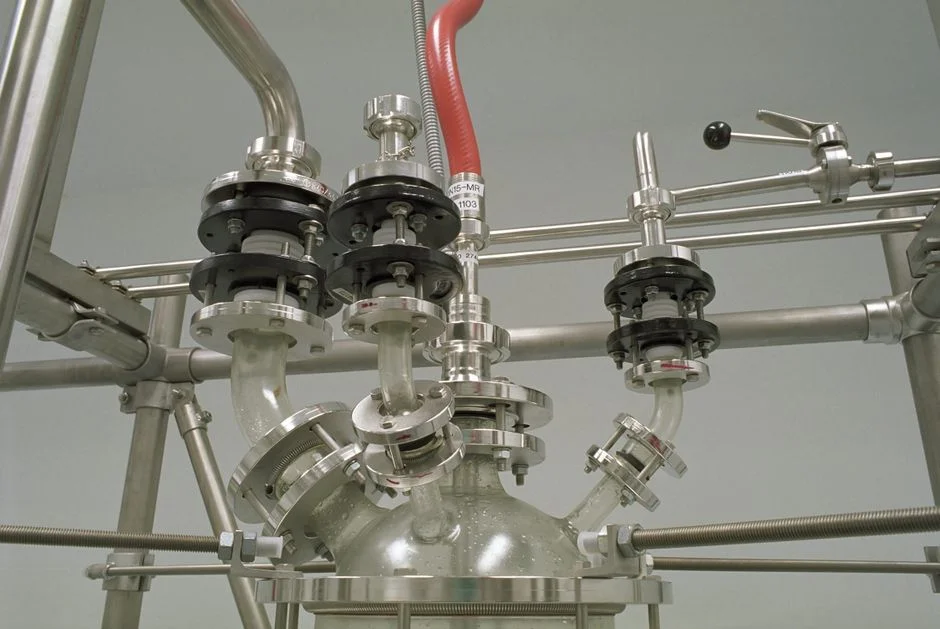
The treatment train should follow the waste hierarchy: screening and solids removal, equalisation where needed, grease and oil control for kitchen flows, biological treatment, clarification or membrane separation, disinfection, and controlled sludge handling. Each stage should protect the next process and meet the defined discharge or reuse objective.
Suspended solids, rags, plastics and fibrous debris can affect pumps, valves and downstream biological processes. A rotary mechanical bar screen is therefore relevant where continuous-duty solids removal is required. For a separate high-strength kitchen stream, evaluate grease and oil pretreatment before biological treatment. The supplied DAF machine specification covers suspended solids, FOG, oil and grease at flows from 4–300 m³/h, but application testing must establish whether it suits the actual stream and required duty.
| Treatment issue | WSZ response | MBR response |
|---|---|---|
| Primary architecture | Integrated anoxic/aerobic contact oxidation, sedimentation and disinfection in one buried package | Activated sludge with submerged PVDF membranes |
| Solids separation | Sedimentation within the integrated package | Submerged membrane filtration |
| Space and installation | Buried installation, allowing landscaping above the unit | Stated footprint is 60% smaller than conventional systems |
| Effluent description | Package includes disinfection | Near-reuse-quality effluent and filtration below 1 μm |
| Main procurement question | Does the integrated package match the measured load and site conditions? | Are required polishing, controls, membrane maintenance and sludge handling included? |
Use the WSZ underground package sewage treatment plant when the objective is an integrated biological process with sedimentation and disinfection in a buried installation, especially where above-ground space is limited. Use the MBR membrane bioreactor where a smaller footprint, membrane clarification and a route toward reuse-quality effluent are decisive. The MBR effluent description is a product characteristic, not evidence that every Christchurch discharge or reuse application is permitted without further polishing and approval.
Account for Christchurch discharge, reuse and odour risks
Early design must establish whether treated flow enters the Christchurch sewer network, requires a specific discharge consent, or will be reused on site. The supplied research does not provide current property-specific consent conditions, reuse targets or discharge limits. Those are project inputs to obtain in writing from the relevant authority, not assumptions to fill the equipment specification.
Local context confirms why the discharge route matters. The Christchurch Wastewater Treatment Plant at Bromley was built between 1958 and 1962 and operates with oxidation ponds on a site covering approximately 230 ha (Christchurch Wastewater Treatment Plant, Wikipedia, current page accessed 2026). It is the city’s main wastewater treatment plant, but its presence does not establish that every hotel effluent can enter the network or that an on-site discharge is acceptable.
Odour is also a design issue. Two trickling filters were damaged by fire on 1 November 2021; the source reports that subsequent odour came from oxidation ponds and that downstream residents experienced increased unpleasant odours (Christchurch Wastewater Treatment Plant, Wikipedia, current page accessed 2026). Require each bidder to explain source control, ventilation, containment, odour commissioning and the sequence for introducing biological loads.
For reuse, define the application and required water quality before selecting final treatment. Do not infer a universal reuse standard from the MBR specification. If advanced disinfection is required, evaluate an ozone generator and water-tank sterilisation system against the specified reuse application and treatment train.
A 2022 Virus Evolution study supports monitoring receiving waters because it investigated viral diversity and abundance along a New Zealand river affected by human land use. It does not establish a hotel-specific monitoring threshold. The supplier proposal should identify the discharge route, current consent conditions, monitoring obligations and acceptance evidence.
Plan sludge, disinfection and maintenance before selecting the supplier

Every bidder should define the complete biological-solids route: separation, thickening, storage, dewatering and removal from site. The WSZ specification includes sedimentation, while the MBR uses submerged membrane filtration and still requires a defined solids-management route. A treatment package that produces sludge but leaves handling unresolved is not a complete proposal.
Where there is an appropriate sludge stream, the plate and frame filter press offers filtration areas from 1 m² to 500 m² and manual, hydraulic or fully automatic PLC-controlled operation. The buyer must verify that the selected sludge characteristics, dewatering objective and cake-disposal route suit that equipment.
Disinfection must follow the treatment objective. The WSZ specification includes disinfection; an alternative UV steriliser should be considered only where the selected process and applicable discharge or reuse conditions require it. The final scope should state the treatment stage being controlled, not merely list the equipment.
Require maintenance information covering membrane cleaning, biological-sludge handling, screen servicing, odour control, instrumentation, alarm response, spare parts and local or remote control. Request assumptions for energy, chemicals, sludge transport, service visits, membrane replacement and downtime. Compare the resulting operating burden rather than treating the purchase price as the whole-life cost.
Compare a packaged WSZ plant with an MBR system
The WSZ and MBR should be compared against the same site design basis rather than against headline capacity. The decisive questions are whether the process architecture matches the wastewater, whether hydraulic and organic duty are demonstrated, and whether discharge, reuse, footprint, sludge and maintenance obligations can be met.
| Procurement criterion | WSZ underground package sewage treatment plant | MBR membrane bioreactor |
|---|---|---|
| Stated capacity | 1–80 m³/h | 10–2,000 m³/day |
| Treatment architecture | Anoxic/aerobic contact oxidation, sedimentation and disinfection in one buried package | Activated sludge with submerged PVDF membranes |
| Footprint | Buried installation allows landscaping above the unit | Stated footprint is 60% smaller than conventional systems |
| Effluent basis | Disinfection included in the stated package | Near-reuse-quality effluent; filtration below 1 μm |
| Sludge focus | Sedimentation solids and associated handling | Membrane-retained solids and defined downstream handling |
| Best fit to test | Conventional domestic sewage where duty matches and burial is advantageous | Compact installation or reuse-oriented treatment where polishing, controls and maintenance are included |
| Do not assume | That the range proves site-specific compliance | That “near-reuse-quality” establishes lawful reuse or removes the need for approval |
Favour the WSZ underground package sewage treatment plant for a straightforward, space-efficient domestic-sewage installation when its hydraulic and loading range matches the measured site duty. It can reduce above-ground visual and land impacts through burial, but that benefit must be reconciled with excavation, access, landscaping and groundwater conditions.
Favour the MBR membrane bioreactor when compactness, membrane solids separation and a route toward reuse-quality effluent are decisive. Require the proposal to state any additional polishing, membrane cleaning, instrumentation, standby and sludge arrangements. A hotel wastewater system comparison can support the wider review, but the final comparison must use Christchurch-specific data.
Do not score either system as compliant, reusable or best value until current consent conditions, measured effluent and whole-life requirements have been reviewed. Send every shortlisted supplier the same flow data, wastewater profile, drawings, discharge route and acceptance criteria.
Build a procurement brief that exposes lifecycle risk
A defensible brief includes measured and forecast flow data, wastewater test results, site plans, soil and groundwater information, available footprint, discharge route, reuse objective, seasonal demand and future expansion. It should also identify which items remain unresolved and what evidence the bidder must provide to close them.
Require guaranteed process duty, selected-equipment drawings, control philosophy, performance guarantees, commissioning tests, operator training, warranty exclusions and local support arrangements. Performance guarantees should correspond to the agreed effluent and acceptance tests rather than unqualified statements that the equipment produces “high-quality” effluent.
Ask bidders to identify all assumptions and exclusions, particularly civil works, pumps, power, chemicals, sludge removal, laboratory testing, permits and after-hours service. This avoids a low equipment price concealing material lifecycle costs or an incomplete installation scope.
Do not compare project costs until quotations use the same design basis, scope, currency, tax treatment, installation assumptions and lifecycle period. The supplied research contains no verified Christchurch hotel project price, so any project budget must be based on site-specific quotations rather than a generic estimate.
For energy review, request actual expected electrical demand and operating hours. The Otago study’s finding that geothermal supplies 26% of New Zealand’s primary energy resources supports evaluating real energy and work potential, but it does not establish the energy cost of a hotel treatment plant. A domestic sewage equipment guide may help frame equipment categories, not replace Christchurch-specific design data or pricing.
Frequently Asked Questions
What wastewater flow should a Christchurch hotel treatment system be sized for?
Size the system from measured average, peak-hour and peak-day flows, supported by occupancy, seasonality, kitchen and laundry schedules and wastewater testing. Compare the resulting duty with the WSZ’s stated 1–80 m³/h range or the MBR’s stated 10–2,000 m³/day range, but do not infer a hotel flow from occupancy percentage alone. Request monitoring and representative samples before selecting equipment.
How much does a hotel wastewater treatment system cost?
The supplied research provides no verified Christchurch hotel project price, so a defensible cost requires like-for-like supplier quotations. Request the same scope covering equipment, civil works, pumps, power, controls, pretreatment, disinfection, commissioning, permits, sludge removal, maintenance, energy, chemicals and service visits. Confirm currency, tax treatment, installation assumptions and lifecycle period before comparing totals.
How should a hotel choose between a WSZ package plant and an MBR?
Use the same design basis for both bids. Select the WSZ where measured domestic-sewage duty fits its 1–80 m³/h range and burial is valuable. Select the MBR where compactness, membrane clarification and reuse-oriented effluent are decisive, provided polishing, controls, membrane maintenance and sludge handling are included. Check guarantees and acceptance tests rather than relying on product descriptions alone.
Is near-reuse-quality MBR effluent automatically compliant in Christchurch?
No. A product description does not grant discharge or reuse permission. Identify whether the flow enters the sewer network, discharges under a consent, or is reused on site, then obtain the current council conditions and define the receiving environment and intended reuse application. The supplier must demonstrate the proposed treatment train against those project-specific requirements.
What maintenance should a hotel wastewater system include?
A packaged biological plant requires routine inspection, biological-sludge management, screening or solids handling, instrumentation checks, odour controls and alarm response. An MBR additionally requires a defined membrane-cleaning regime, replacement provisions and specialised service support. The exact interval and burden must come from the selected equipment, operating data and supplier-specific maintenance proposal.