Which Rules Control a Sewer Discharge Near New Castle?
Mining and metals plants near New Castle meet sewer pretreatment limits by treating wastewater before it enters the receiving publicly owned treatment works (POTW), then controlling the discharge through the applicable local permit, sewer-use ordinance, federal pretreatment program, and categorical standards. Indirect sewer discharges are regulated under Clean Water Act §307(b) and 40 CFR Part 403; ore mining and dressing is addressed under 40 CFR Part 437, while plating, pickling, anodizing, and related metal-finishing operations may fall under 40 CFR Part 433. NPDES permitting applies to direct surface-water discharges, so a facility can need both NPDES coverage and pretreatment authorization for separate outfalls. The controlling sequence is therefore: verify the receiving POTW’s current requirements, classify the operation, characterize every discharge source, select a treatment train, and prove compliance through monitoring and diversion.
Do not treat a categorical standard as the final design target. The federal limits establish the minimum regulatory framework, while the specific industrial-user permit, sewer-use ordinance, prohibited-discharge provisions, monitoring frequency, discharge-point restrictions, and approved slug-control plan can impose tighter requirements. The heavy-metal discharge-limit reference provides a useful overview, but the project engineer must obtain the current New Castle POTW documents and confirm them with the POTW before sizing equipment.
Part 433 illustrates why the operation description matters. The research cited in the HydropureWater pretreatment article reports copper limits of 3.38 mg/L daily maximum and 2.07 mg/L monthly average, and total chromium limits of 2.77 mg/L daily maximum and 1.71 mg/L monthly average under 40 CFR 433.15. Those values apply only where the metal-finishing category and associated subcategory are correctly determined; they do not automatically govern an ore-mining operation.
| Requirement or classification | What it controls | Procurement implication |
|---|---|---|
| New Castle POTW industrial-user permit and sewer-use ordinance | Site-specific numerical limits, monitoring, prohibited discharges, reporting, and authorization conditions | Use the current permit and ordinance as the primary design basis. |
| 40 CFR Part 403 | Federal pretreatment framework, including pass-through, interference, and local program requirements | Confirm local enforcement authority and federal oversight obligations. |
| 40 CFR Part 437 | Ore mining and dressing categorical standards | Determine the applicable subcategory and pollutants before selecting treatment. |
| 40 CFR Part 433 | Metal finishing categorical standards | Confirm whether plating, pickling, anodizing, or another covered operation is present. |
| Representative 2026 local POTW limits cited by HydropureWater | Zinc of 0.3–1.0 mg/L monthly average and copper of 0.3–0.5 mg/L monthly average | Treat these as research examples only; verify the current New Castle POTW ordinance before proceeding. |
The verification hierarchy should be documented: current POTW ordinance; issued industrial-user permit and permit conditions; approved slug-control plan; applicable categorical standard; then current federal pretreatment guidance where relevant. Record the version, revision date, discharge point, averaging period, and analytical method for every requirement. Equipment bids should state the controlling limit assumed by the bidder. If the bids use different limits, they are not comparable.
Characterize the Wastewater Before Choosing Equipment
Mining and metals wastewater must be characterized source by source because a stable daily average can conceal acidic dumps, mill clean-outs, shift-change discharges, and rainfall-driven solids loads. The design needs both concentration and mass-loading data: concentration describes treatment difficulty, while flow and duration determine chemical demand, reactor duty, equalization volume, and solids-handling capacity. Without that information, a train can meet laboratory removal rates and still fail when a batch dump reaches the clarifier.
Map mine drainage, ore washing, process blowdown, mill clean-out, metal-finishing rinse, floor wash, and legally routed storm or runoff water separately. For each source, document discharge frequency, operating conditions, pH, TSS, dissolved metals, sulfate, TDS, oil and grease, and whether the stream is continuous or episodic. The HydropureWater mining pretreatment research describes raw acid mine drainage and spent process solutions at pH 2–4, with suspended solids in the hundreds to several thousand mg/L. That range is a warning about source variability, not a New Castle site assumption.
Regional Indiana information supplies another screening context. The Veedersburg pretreatment research cites OSMRE data showing representative mine-drainage pH of 3.1–4.6, dissolved iron of 10–60 mg/L, and dissolved aluminum up to 10 mg/L. Those values still require site confirmation. The 2026 mining-plant sewer pretreatment guide describes the same characterization approach used for nearby Indiana facilities.
Build the sampling plan around operating events rather than a convenient monthly grab sample. Include production periods, shift changes, dump-leach cycles, clean-outs, and storm-affected periods. Each event should capture flow and chemistry so that average, peak, and maximum loadings can be distinguished. For rainfall-derived water, evaluate dilution and increased hydraulic and TSS loading separately; a lower metal concentration does not necessarily reduce total treatment duty.
| Design input | Evidence or measurement needed | Decision affected |
|---|---|---|
| Source inventory | Process description, discharge points, routing map, operating schedule, and slug history | Stream segregation, equalization, diversion, and permit scope |
| Water chemistry | pH, TSS, dissolved metals, sulfate, TDS, oil and grease, and required analytical methods | Precipitation chemistry, separation method, polishing, and sludge chemistry |
| Hydraulic profile | Continuous flow plus event-based peak flow, batch duration, and maximum daily discharge | Equalization, pumping, reactor, and separation sizing |
| Local permit package | Limits, prohibited discharges, monitoring frequency, sampling method, discharge point, and slug-plan requirements | Instrumentation, final monitoring, diversion, and reporting |
| Representative wastewater testing | Site-specific jar tests and preferably a sustained pilot or field trial | Reagent selection, optimum pH, polymer dose, loading rate, and performance guarantee |
Before equipment selection, request the POTW’s current discharge criteria, prohibited discharges, monitoring frequency, analytical methods, discharge-point restrictions, slug-plan requirements, and any mass-based limits. Verify whether the receiving POTW will accept a proposed stream at all. Do not base acceptance on an informal discussion or on the assumption that municipal dilution will correct an industrial discharge.
Build a Pretreatment Train That Controls Both Chemistry and Flow
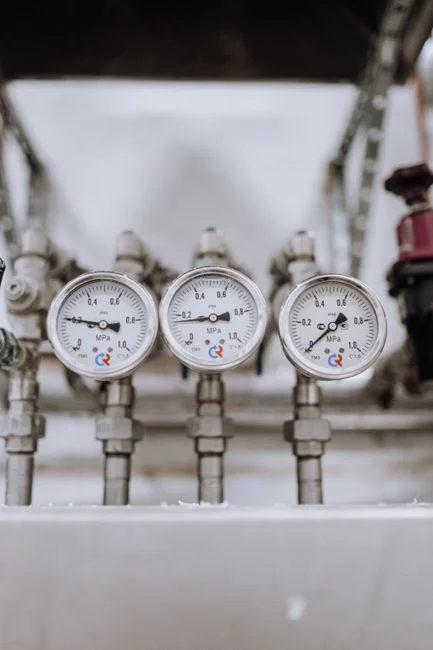
A defensible treatment train separates hydraulic control from chemical treatment and then connects both to reliable solids removal. The process flow is: characterized influent and flow metering; equalization and slug diversion; staged pH adjustment; metal hydroxide precipitation with optional sulfide polishing; coagulation and flocculation; DAF or lamella clarification; optional multimedia filtration; required disinfection; final monitoring; and sludge dewatering. Each stage needs a defined operating objective, and an out-of-spec result must stop discharge rather than pass through to the POTW.
Equalization comes first because chemical dosing cannot safely compensate for a high-volume slug without creating reagent overfeed, pH overshoot, or solids carryover. The HydropureWater pretreatment research recommends 8–24 hours of average daily flow to buffer shift changes, dump-leach cycles, and mill clean-outs. This is a preliminary design recommendation, not a substitute for event data. Final storage must reflect the maximum batch volume, maximum discharge rate permitted to the POTW, and the time needed to analyze and treat an off-spec stream.
Staged pH control with automatic dosing is preferable to a single uncontrolled feed. A PLC-controlled chemical dosing skid can use continuous pH feedback, but the optimum precipitation pH must be established for each metal through jar testing. Lime or sodium hydroxide can provide the required alkalinity; the choice should compare reagent consumption, sludge generation, storage and handling, footprint, and downstream solids disposal rather than unit price alone.
Hydroxide precipitation is normally the first-stage choice because the chemistry is established and widely used. Properly controlled systems can achieve 85–95% total-metals removal, according to Fluence data cited in the HydropureWater article dated 2024-11. Sulfide polishing can lower residual Cu, Zn, Cd, and Ni to 0.01–0.05 mg/L, but the same research reports reagent costs of 2–4 times hydroxide treatment and requires sealed reactors with controlled H₂S off-gassing. That additional complexity must be justified by the controlling limit and jar-test results.
| Stage | Primary function | Design requirement |
|---|---|---|
| Equalization and diversion | Buffer normal flow and capture batch or off-spec discharges | Base volume on 8–24 hours of average daily flow as an initial recommendation, then verify against maximum batch volume and discharge restrictions. |
| pH adjustment and hydroxide precipitation | Convert dissolved metals to insoluble hydroxides | Use staged reagent addition, PLC feedback, and parameter-specific pH targets established by jar testing. |
| Optional sulfide polishing | Reduce residual metals below hydroxide-only performance where required | Provide sealed reactors and H₂S ventilation or scrubbing controls; compare the 2–4× reagent-cost premium. |
| Coagulation and flocculation | Convert fine precipitates into separable flocs | Establish coagulant and polymer doses with site wastewater; include rapid mix and flocculation detention in the duty. |
| DAF or lamella separation | Remove floating material and metal-bearing solids | Select from oil, colloid, density, flow, and footprint criteria rather than flow alone. |
| Polishing, disinfection, and sludge handling | Protect the discharge point and manage residuals | Install filtration only where residual TSS requires it; add disinfection only when required; define sludge destination and filtrate route. |
Coagulation and polymer aid should be evaluated after pH and precipitation targets are stable. A poorly conditioned hydroxide precipitate can overload either separation device. Conversely, excessive polymer can enter the POTW or complicate sludge handling. Jar tests and pilot data should define dose, mixing energy, settling or flotation behavior, and carryover before the supplier freezes the equipment arrangement. For polishing, multimedia filtration for residual TSS polishing is a candidate when residual solids justify its capital, backwash, and media costs.
Choose DAF, Lamella, or a Hybrid Solids-Separation System
DAF is the better primary separator when oil, grease, free oil, or fine colloidal material must be removed; lamella clarification is the stronger fit for dense metal-hydroxide sludge at comparatively high flow where footprint is constrained. Both can fit a mining or metals project, but they respond to different wastewater characteristics. The choice should be made from the wastewater’s oil content, particle density, floc strength, hydraulic profile, and required solids capture—not from a generic flow rating.
The HydropureWater research reports DAF performance of 90–98% TSS removal and 85–95% oil and grease removal in mining and metal-finishing service. It also lists hydraulic loading of 5–25 m/h and a standard capacity range of 4–300 m³/h across 13 models. Those figures are equipment-selection inputs, not an effluent guarantee. When oil or colloidal metal-bearing particles are present, an industrial DAF system for mining wastewater should be evaluated against the site wastewater and the final POTW limits.
For streams dominated by metal-hydroxide solids, the same research lists lamella surface loading of 20–40 m/h. A lamella clarifier for metal hydroxide sludge is therefore appropriate when the solids are dense and settleable, flow is comparatively high, and footprint is constrained. Lamella does not remove free oil or colloidal fines as effectively as DAF, so a clarification-only selection can be wrong if the influent contains emulsified oil or light scum.
| Selection condition | Preferred approach | Evidence and buyer check |
|---|---|---|
| Oil, grease, free oil, or fine colloidal metals | DAF | Research reports 90–98% TSS removal, 85–95% oil and grease removal, 5–25 m/h hydraulic loading, and 4–300 m³/h standard capacity. |
| Dense metal-hydroxide sludge, comparatively high flow, constrained footprint | Lamella clarification | Research reports 20–40 m/h surface loading; require site sludge settleability and carryover data. |
| Oily or colloidal material combined with dense hydroxide solids | DAF followed by clarification or filtration | Use DAF for floatable material and a second stage for remaining solids; verify the hydraulic and solids duty of each stage. |
| Final limit is sensitive to residual solids | Add polishing after the selected primary separator | Confirm residual solids with representative testing; generic vendor removal ranges do not establish permit compliance. |
For a mixed stream, a hybrid train can be technically justified: DAF removes floatable oil and low-density material, while clarification or filtration captures the remaining hydroxide solids. The additional stage adds capital, controls, and sludge handling, so the decision should show that the local limit or site chemistry requires it. The DAF versus clarifier selection for mining wastewater provides a useful side-by-side framework.
Require each bidder to state its design basis, selected hydraulic or surface loading, polymer assumptions, expected sludge properties, and sludge-removal or backwash capacity. Then require a site-specific performance demonstration or a clearly conditional guarantee tied to representative influent chemistry and the agreed flow and load basis.
Protect Compliance with Monitoring, Diversion, and Sludge Management
Compliance depends on detecting an off-spec condition before the discharge reaches the municipal manhole. Install continuous pH and flow instrumentation where required by the industrial-user permit or justified by the risk of a slug, and connect high-pH, low-pH, excessive-flow, and analyzer alarms to automatic diversion into offline equalization or holding capacity. The Veedersburg pretreatment research describes this control concept, including inline pH and flow instruments linked to diversion valves.
Locate a representative permit-compliance sample point upstream of the discharge point and provide access for regulated sampling. The monitoring record should include chemical-consumption logs, instrument trends, laboratory reports, analytical methods, chain-of-custody records, calibration and maintenance records, diversion events, and notifications. A permit-compliance result can demonstrate treatment performance, but it does not replace an automatic response to an out-of-spec stream.
Clarifier and DAF solids must be managed as a waste stream, not discharged with the treated water. The HydropureWater research reports that a plate and frame press can dewater sludge to 25–35% dry-solids cake. A filter press for metal-bearing sludge should be selected around actual sludge yield, metal content, cake handling, filtrate volume, and the final disposal route. The filtrate should return to the appropriate process location after its chemistry and flow effects are understood.
| Control element | Minimum function | Compliance record |
|---|---|---|
| Continuous pH and flow monitoring | Detect chemistry or hydraulic excursions | Trend data, calibration records, alarms, and operator response |
| Automatic diversion | Prevent off-spec or slug wastewater from reaching the POTW | Event timestamp, diversion destination, volume, analysis, and release authorization |
| Compliance sample point | Confirm performance before discharge | Laboratory result, analytical method, sample date, and chain of custody |
| Final polishing | Remove residual solids when required | Filter differential pressure, backwash records, and effluent TSS results |
| Sludge dewatering and disposal | Recover manageable solids and document the destination | Cake dry-solids result, filtrate routing, waste profile, manifests, and disposal receipt |
| Disinfection, if required | Meet a POTW requirement or address collection-system conditions | Dose, residual or contact condition, and operating record |
Use multimedia filtration only where residual-solids polishing is needed. The research cites a 1–2 m/h filtration rate and residual TSS below 10 mg/L as a capability; it is not a guarantee that the plant will meet a particular permit limit. Similarly, add disinfection only when the sewer-use requirements or collection-system conditions call for it. If required, a chlorine dioxide generator should be evaluated under the POTW’s written requirement, with the dosing basis verified rather than inferred from a generic equipment range.
A Decision Framework for Equipment Sizing and Vendor Selection
Size the pretreatment system from the peak hydraulic load, maximum acid and metal load, worst-case pH, batch-dump duration, and the storage needed to control discharge—not from average flow alone. Average flow is useful for reagent consumption and operating-cost estimates, but it cannot demonstrate that a clarifier, filter, or equalization basin will survive a documented slug. The equipment basis should show both flow and mass-loading calculations and state which permit discharge restriction controls the storage strategy.
Ask every bidder to identify equalization volume, reaction-stage detention, chemical-feed range, solids-separation loading, polishing duty, sludge yield, materials of construction, instrumentation, and utility requirements. Require a written mass balance for water, each target metal, and generated solids. A price without that basis is not a comparable offer.
For high-TDS streams, compare lime with sodium hydroxide using delivered reagent cost, sludge generation, footprint, storage, operator handling, and downstream disposal. Lime’s unit price cannot be compared in isolation because the resulting hydroxide sludge inventory affects dewatering and disposal. Likewise, compare DAF and lamella using the same wastewater basis, not each supplier’s most favorable generic duty.
Request documented mining or heavy-metals references and an itemized bill of materials covering tanks, pumps, mixers, dosing skids, control panels, separation equipment, filtration, sludge handling, and site utilities. The proposal should also define factory acceptance, PLC testing, control philosophy, operator training, spare-parts availability, installation scope, commissioning support, and performance acceptance testing.
Treat any effluent guarantee as conditional on representative influent testing, the agreed flow and load basis, and the operating assumptions stated in the proposal. Clarify what happens if chemistry, flow, or slug duration exceeds those assumptions. The PLC-controlled chemical dosing skid and filter press for metal-bearing sludge are components of a complete system; neither can be evaluated without the upstream mass balance and downstream solids route.
Frequently Asked Questions
What pretreatment limits apply to a mining plant discharging to a sewer near New Castle?
Apply the hierarchy in this order: the receiving POTW’s current sewer-use ordinance and issued industrial-user permit, 40 CFR Part 403, and the applicable categorical standard—40 CFR Part 437 for ore mining and dressing or 40 CFR Part 433 where the operation falls within metal finishing. Confirm the current New Castle POTW requirements because federal categorical limits do not replace local limits or permit conditions. NPDES applies to a separate direct surface-water discharge, not to the sewer discharge itself.
What size equalization basin does a mining pretreatment system need?
Use 8–24 hours of average daily flow as the research-based preliminary range, then size from measured peak flow, maximum batch volume, batch duration, worst-case chemistry, and the POTW’s discharge-rate restrictions. A practical purchasing check is to ask the bidder for the governing event, the resulting usable storage, the retained volume after other demands, and the release rate. Final storage should demonstrate that a documented slug can be held, sampled, and treated without passing through.
Is DAF or lamella better for mining and metals wastewater?
Choose DAF when the stream contains oil, grease, free oil, or fine colloidal metals; the research reports 90–98% TSS removal, 85–95% oil and grease removal, and hydraulic loading of 5–25 m/h. Choose lamella for dense metal-hydroxide sludge at comparatively high flow and constrained footprints; the research reports surface loading of 20–40 m/h. For mixed streams, ask whether DAF followed by clarification or filtration is necessary. Verify the recommendation with representative influent and a site-specific solids test.
When is sulfide precipitation justified instead of hydroxide precipitation?
Consider sulfide polishing when the controlling limit or jar-test results require residual metals below the performance of hydroxide treatment. The cited research reports sulfide residuals of 0.01–0.05 mg/L for Cu, Zn, Cd, and Ni, but also reagent costs of 2–4 times hydroxide treatment and a need for sealed reactors with H₂S scrubbing. Request a reagent mass balance, ventilation and scrubber design, operator exposure controls, and a performance comparison against hydroxide-only treatment.
What should a mining wastewater equipment supplier provide in a proposal?
Require site-specific flow, batch, chemistry, permit, and sludge inputs; an itemized equipment bill of materials; a water and metal mass balance; control narratives; materials and utilities; sludge-handling scope; mining or heavy-metals references; factory and site testing; training; commissioning support; and spare-parts availability. Ask what documentation permits the owner to demonstrate compliance and what operating conditions would invalidate the proposed effluent guarantee. The DAF versus clarifier selection for mining wastewater and 2026 mining-plant sewer pretreatment guide provide additional framing for comparing bids and compliance assumptions.
Related Equipment
- industrial DAF system for mining wastewater — specifications, capacity range, and technical data